
Body length
Not establishedNot established here
The skull measures about 140 mm from premaxilla tip to quadrate; no preserved body establishes total length. [D2]
EXHIBIT 158
Daemonosaurus chauliodus
Daemonosaurus is known from a small, deep skull with unusually enlarged front teeth. [3]
TWO WAYS TO PICTURE THE PAST
Compare the evidence with the familiar movie image. The illustrations are not to a shared scale.
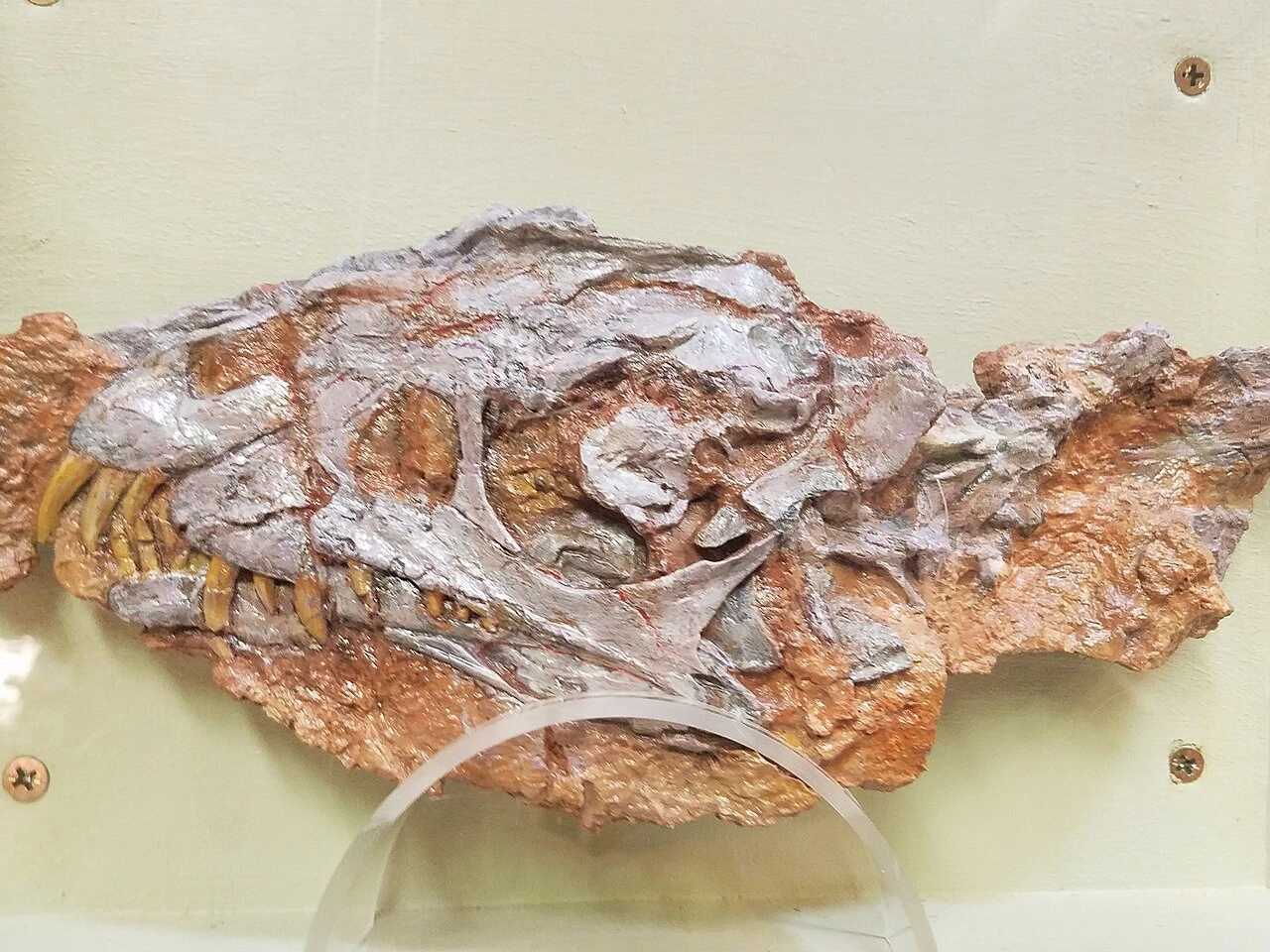
Cast of Daemonosaurus chauliodus holotype CM 76821, photographed by Neil Pezzoni at the Ruth Hall Museum of Paleontology, Ghost Ranch, New Mexico. The skull’s preserved crushed arrangement is reproduced in a display cast; this is neither original fossil material nor a measured whole body. The known animal includes skull and anterior neck remains. [2]
Daemonosaurus skull cast displayed at Ruth Hall Museum of Paleontology (Ghost Ranch).jpg · Neil Pezzoni. CC BY 4.0. Current Commons 1280 px preview converted to WebP with proportional thumbnail reduction. No cropping, mirroring, anatomical edits or compositing. CC BY 4.0 applies to these versions.
The photograph or figure shows the credited fossil material; displayed mounts and labels can include interpretation.
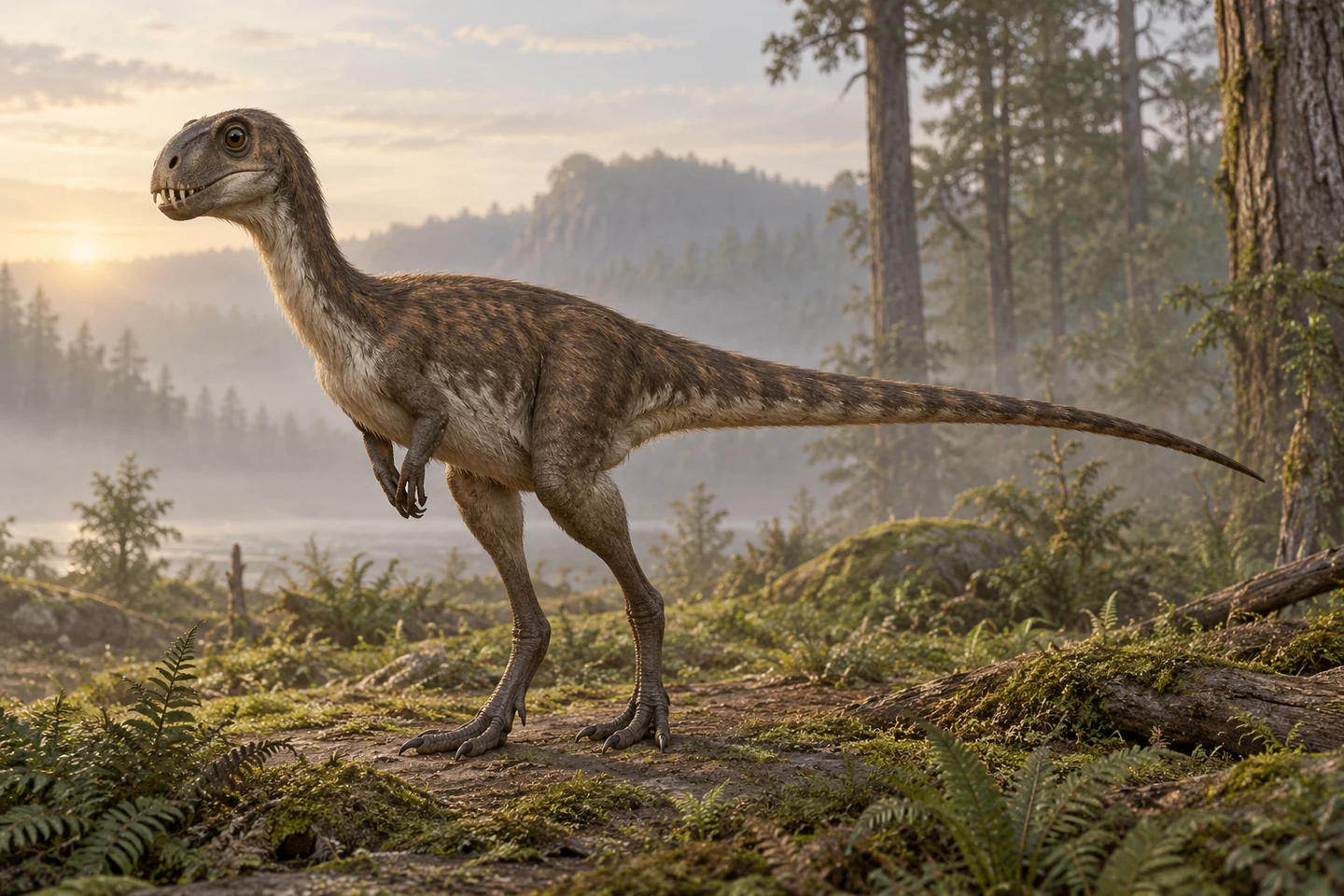
Original cinematic interpretation of Daemonosaurus. The short, deep skull and enlarged front teeth are fossil-guided; the missing body, limbs and feather-like covering are comparative artistic hypotheses. Lighting, colors and scenery are artistic choices; this image does not document directly observed behavior. Lighting, coloration and scenery are artistic choices. This image does not document a fossil locality or behavior.
Original artwork · artistic interpretation.
Scientific view: source-informed reconstruction, credited paleoart or specimen-based imagery. Movie-style view: Original artistic interpretation. Reconstructions involve uncertainty.
MEET THE ANIMAL
Daemonosaurus was a Late Triassic dinosaur with a short, deep skull and conspicuously enlarged front teeth. Its fossils were found in the Coelophysis Quarry at Ghost Ranch, New Mexico. The original description introduced a distinctive animal rather than merely another specimen of the dinosaur that dominates that quarry. Its unusual head provides the clearest part of the profile. [D1]
Large teeth angled forward from the front of the mouth, supporting a carnivorous interpretation. However, the known remains include the head and neck rather than a complete body. A comparison with a dog's size in an institutional account is an analogy, not a measured body length. A fully restored torso and legs therefore require evidence from related dinosaurs. [D3]
The quarry's deposits record remains transported by water into an abandoned river channel and covered by sediment. This setting explains why bones from different animals can occur together. It does not show that Daemonosaurus lived in a pack or socialized with Coelophysis. Understanding how a fossil deposit formed is essential before turning an association of bones into a behavioral story. [D4]
PREHISTORIC ANIMAL DOSSIER
The animal, the evidence, and the questions still open.
The body remains unknown. Its proposed placement in Morphoraptora is part of an unsettled early dinosaur family tree. [D5] [D3]
Profile scope: Genus — Daemonosaurus; profile limited to D. chauliodus, CM 76821. [D2]
Source supported identifies a description documented by the cited source. Inferred marks a reconstruction or functional estimate. Debated marks competing interpretations. Not established means the sources reviewed for this dossier do not support a firm conclusion; it does not mean a behavior never occurred.
A size reference is an estimate, not a population range. Nesting evidence does not by itself establish courtship, mate choice, or lifelong pairing.
Not established here
The skull measures about 140 mm from premaxilla tip to quadrate; no preserved body establishes total length. [D2]
Not established here
Known skull and neck remains do not supply a defensible whole-body mass model. The institutional dog-size analogy is not a measurement. [D3]
Animal prey inferred
Enlarged, forward-angled front teeth support carnivory, but no gut contents or taxon-specific hunting behavior were identified. [D3]
Coelophysis Quarry river-channel deposit
Ghost Ranch, New Mexico, latest Triassic; regional sediments represent an abandoned channel buried by overbank silt. [D2] [D4]
Two-legged restoration by comparison
The type lacks limbs and pelvis. A bipedal body is reconstructed through dinosaur comparisons rather than preserved Daemonosaurus leg anatomy. [D2]
Short, deep skull; enlarged front teeth
Large eye openings and a short snout distinguish the preserved cranium; the type is crushed, incomplete and partly reconstructed. [D2]
Not established here
The skull-and-neck type does not establish sexual maturity, breeding age, eggs, nests or care of offspring. [D2]
Not established here
The enlarged teeth are anatomical evidence; no reviewed source identifies a sex-linked display or mating ritual. [D1]
Not established here
The quarry is dominated by Coelophysis and includes transported remains. Sharing a deposit does not establish Daemonosaurus pack behavior. [D4]
Sources and inspection notes for the claims in this profile.
THE STORY IN THE FOSSILS
The osteological study separates a measured 140 mm skull length from the 145 mm estimate in the diagnosis. Neither is total body length. [2]
The 2026 analysis groups Daemonosaurus with several other early saurischians while leaving their deeper evolutionary relationships uncertain. [5]
The dossier identifies the scope of each reference estimate. A mount, an individual fossil and a species-wide adult range are different measurements. Comparison metrics remain unavailable where adult scope has not been established. Unknown does not mean zero.
Sources support the stated claims and scopes. Refer to the evidence notes for uncertainty.
KEEP EXPLORING
Tawa hallae
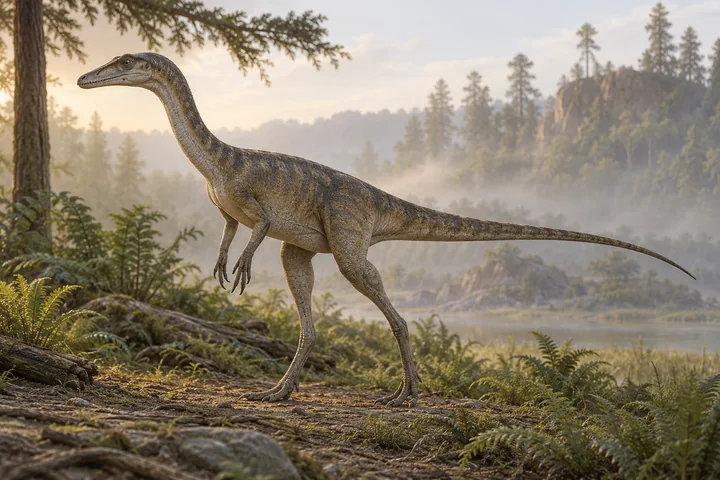
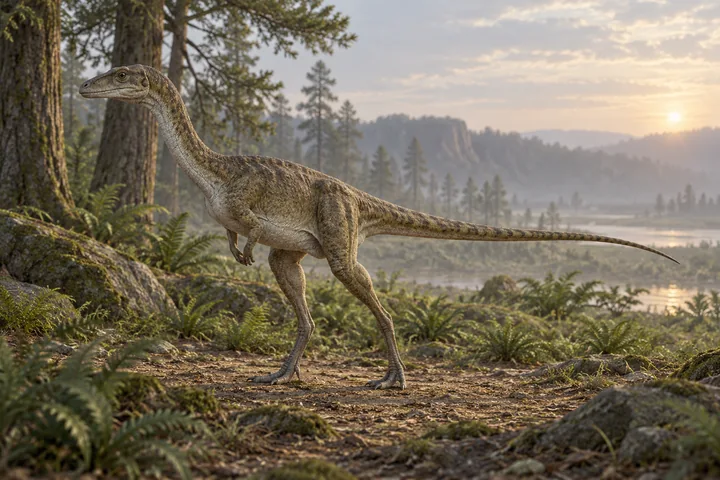
Tawa combined a long snout, slender limbs and a hand with three functional fingers.
Chindesaurus bryansmalli
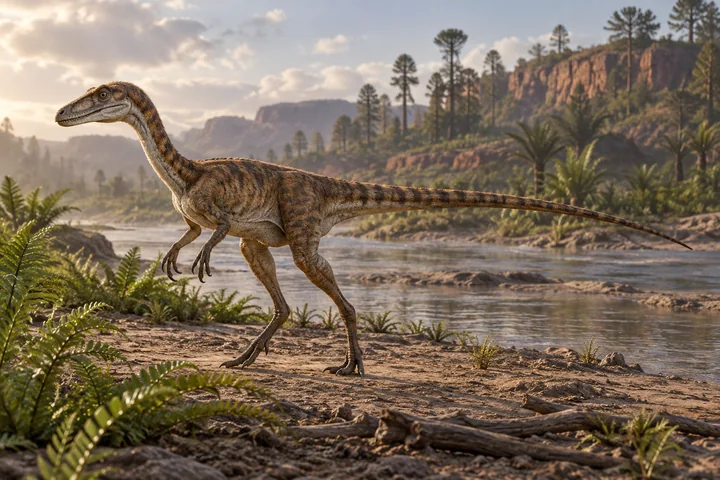
Chindesaurus is anchored to a partial postcranial skeleton from Arizona, rather than a complete skull-and-body fossil.
Eoraptor lunensis
Eoraptor was a small, early dinosaur from Argentina's Ischigualasto Formation. Its mixed dental features have produced competing feeding interpretations, and later studies place it near the origin of sauropodomorphs.