
Length
InferredAbout 5.5 m (institutional reference)
Holtz’s university-hosted genus list gives this reconstruction without a specimen, method or maturity assessment. A complete measured adult body is not represented. [D4]
EXHIBIT 114
Diabloceratops eatoni
Diabloceratops is known for a horned skull with long brow horns and a pair of prominent rear frill spines. [2]
TWO WAYS TO PICTURE THE PAST
Compare the evidence with the familiar movie image. The illustrations are not to a shared scale.
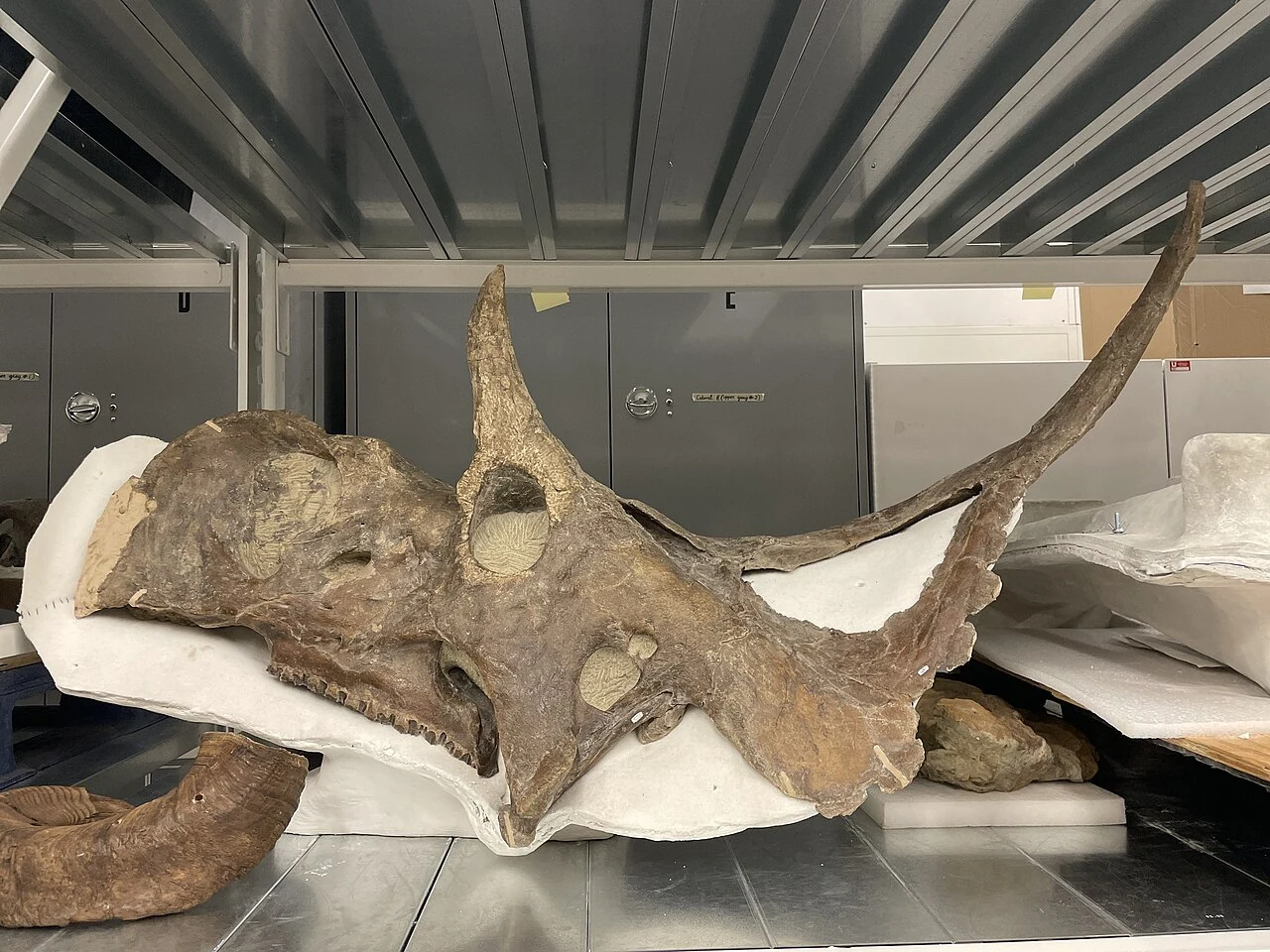
D. eatoni holotype skull, UMNH VP 16699, with missing and reconstructed areas visible. Horn sheaths, living colors and the complete body remain uncertain. [2]
Diabloceratops eatoni by Nick Longrich · Nick Longrich. CC BY-SA 4.0. Commons-listed 1280 px preview converted to WebP; smaller responsive copy proportionally resized. Original image preserved without anatomy alterations.
The photograph or figure shows the credited fossil material; displayed mounts and labels can include interpretation.
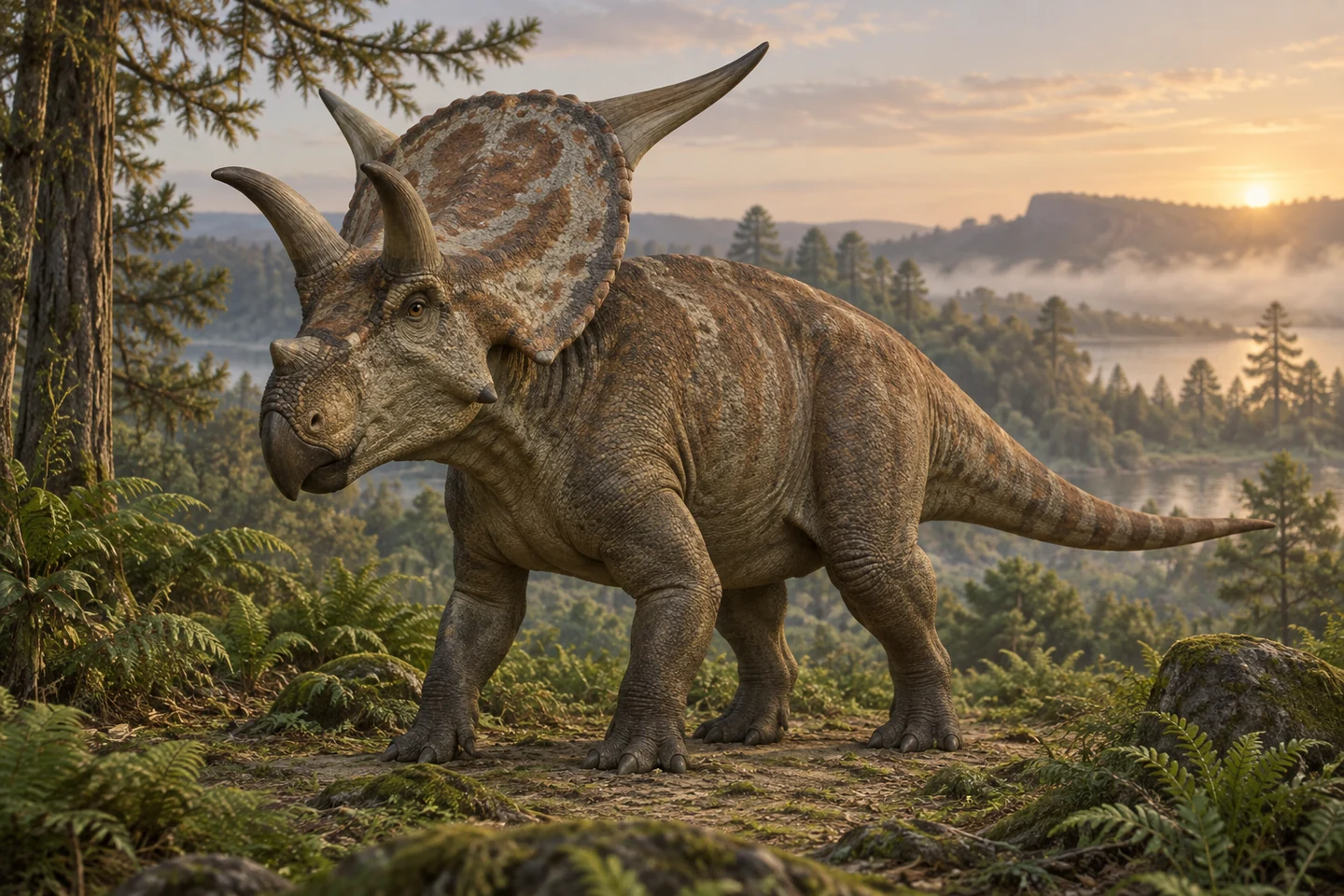
Original cinematic interpretation of Diabloceratops eatoni. Colors, soft tissues, scenery and missing anatomy are reconstructed artistic choices; this is not a directly observed individual or behavior. Lighting, coloration and scenery are artistic choices. This image does not document a fossil locality or behavior.
Original artwork · artistic interpretation.
Scientific view: source-informed reconstruction, credited paleoart or specimen-based imagery. Movie-style view: Original artistic interpretation. Reconstructions involve uncertainty.
MEET THE ANIMAL
Diabloceratops was a horned dinosaur from southern Utah's Wahweap Formation. Its skull combines brow horns with prominent spines projecting from the back of the neck frill. That combination makes it recognizable among its relatives. The preserved head is a stronger source for its distinctive outline than a fully restored body assembled by comparison with other horned dinosaurs. [D1]
The Last Chance skull and nearby Wahweap discoveries were described separately before this dinosaur received its name. Those neighboring specimens should not all become additional Diabloceratops individuals simply because their skulls have horns. Anatomical comparison is needed to establish identity. Keeping the original finds separate preserves the difference between a local community and one species' fossil record. [D5]
Geological work places the original fossil horizon in the Reynolds Point Member of the formation. A stratigraphic model estimates an age around 81 million years for its setting. This is a calculated age for the rock context, not a date read from the skull itself. The fossil establishes anatomy, while its surrounding layers help establish when that animal lived. [D3]
PREHISTORIC ANIMAL DOSSIER
The animal, the evidence, and the questions still open.
The skull distinguishes this early horned dinosaur, but gives only a partial view of its body. Revised Wahweap geology supplies a more precise context for when the type was buried. [D3] [D2]
Profile scope: D. eatoni, anchored by the partial holotype skull UMNH VP 16699; unconfirmed nearby horned-dinosaur material is excluded. [D2]
Source supported identifies a description documented by the cited source. Inferred marks a reconstruction or functional estimate. Debated marks competing interpretations. Not established means the sources reviewed for this dossier do not support a firm conclusion; it does not mean a behavior never occurred.
A size reference is an estimate, not a population range. Nesting evidence does not by itself establish courtship, mate choice, or lifelong pairing.
About 5.5 m (institutional reference)
Holtz’s university-hosted genus list gives this reconstruction without a specimen, method or maturity assessment. A complete measured adult body is not represented. [D4]
Not established here
No numeric mass model with an inspectable specimen or reconstruction basis was found. A qualitative rhinoceros comparison cannot supply kilograms.
Plant-eating inferred from ceratopsid anatomy
Its horned-dinosaur skull and beak support herbivory by comparison with ceratopsids. Specific food plants and feeding behavior are not directly established. [D2]
Wahweap Formation; southern Utah
The type horizon lies in the Reynolds Point Member. A stratigraphic model estimates 81.27 Ma, with +0.15/−0.26 Ma uncertainty; this dates its depositional context. [D3]
Four-legged walking inferred
Quadrupedality is inferred from the ceratopsid body plan; the partial type skull does not preserve a complete Diabloceratops limb skeleton. [D2]
Long brow horns; prominent posterior frill spines
The type skull has paired brow horns and upward/outward-projecting rear frill processes, with modest nasal ornament. Horn sheaths and complete soft tissues remain uncertain. [D2] [D1]
Not established here
No securely assigned eggs, nests, incubation pattern or parental care were established in the focused review.
Not established here
Horn and frill shapes cannot alone establish sexes, mate preference or a particular display. No genus-specific courtship evidence was demonstrated.
Not established here
The skull material does not demonstrate herd structure, family groups or solitary behavior. Evidence from other ceratopsids is not transferred here.
Sources and inspection notes for the claims in this profile.
THE STORY IN THE FOSSILS
The Last Chance skull preserves a distinctive combination of brow horns and rear frill spines. Nearby Wahweap horned-dinosaur discoveries should not all be treated as additional individuals of this same species. [5]
Geochronological work revises the type’s setting to the Reynolds Point Member and an age around 81 million years. The modeled horizon, rather than the skull alone, anchors that interpretation. [3]
The dossier identifies the scope of each reference estimate. A mount, an individual fossil and a species-wide adult range are different measurements. Comparison metrics remain unavailable where adult scope has not been established. Unknown does not mean zero.
Sources support the stated claims and scopes. Refer to the evidence notes for uncertainty.
KEEP EXPLORING
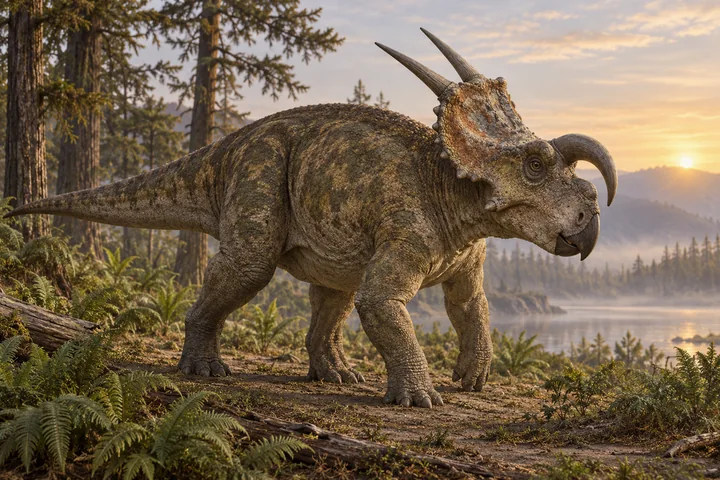
Einiosaurus procurvicornis
Einiosaurus was a Montana horned plant-eater with a distinctive nasal horn curving forward and downward.
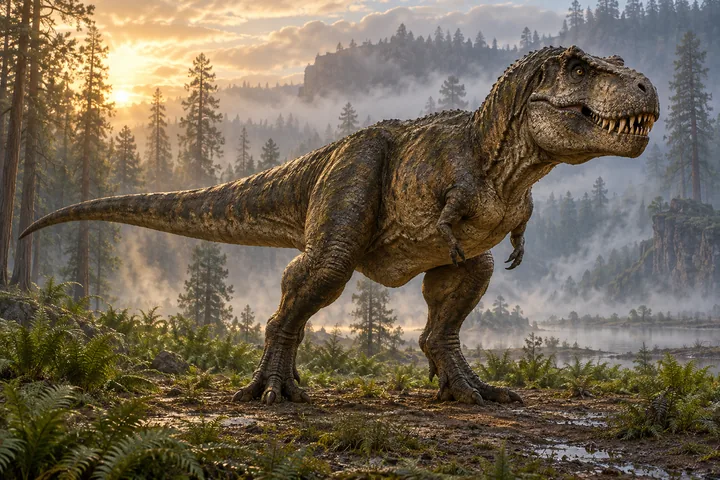
Tyrannosaurus rex
Tyrannosaurus rex was a large meat-eating dinosaur from the final part of the Cretaceous in western North America. Fossil teeth, bite marks and skeletons reveal a powerful animal whose behaviour still invites questions.
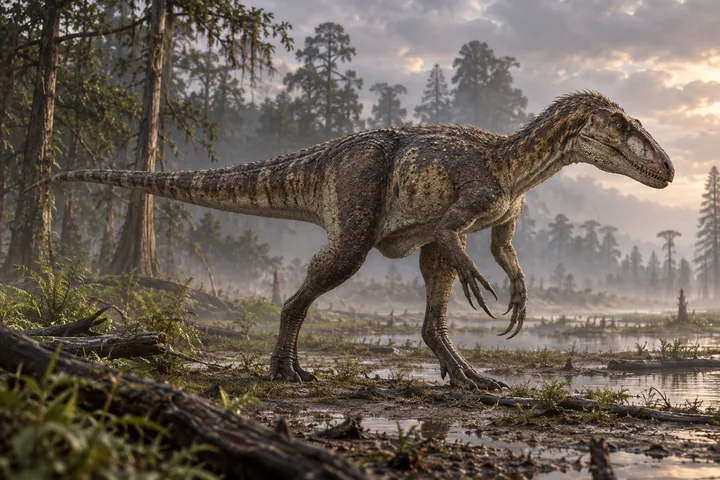
Dryptosaurus aquilunguis
Dryptosaurus was an eastern North American tyrannosauroid with a short upper arm and unusually large hand. Its partial skeleton and changing restorations reveal how evidence and imagination interact.