EXPLORE PREHISTORY 220 prehistoric animal profiles · Scientific & movie-style image galleries

EXHIBIT 165

Dicraeosaurus

Dicraeosaurus hansemanni

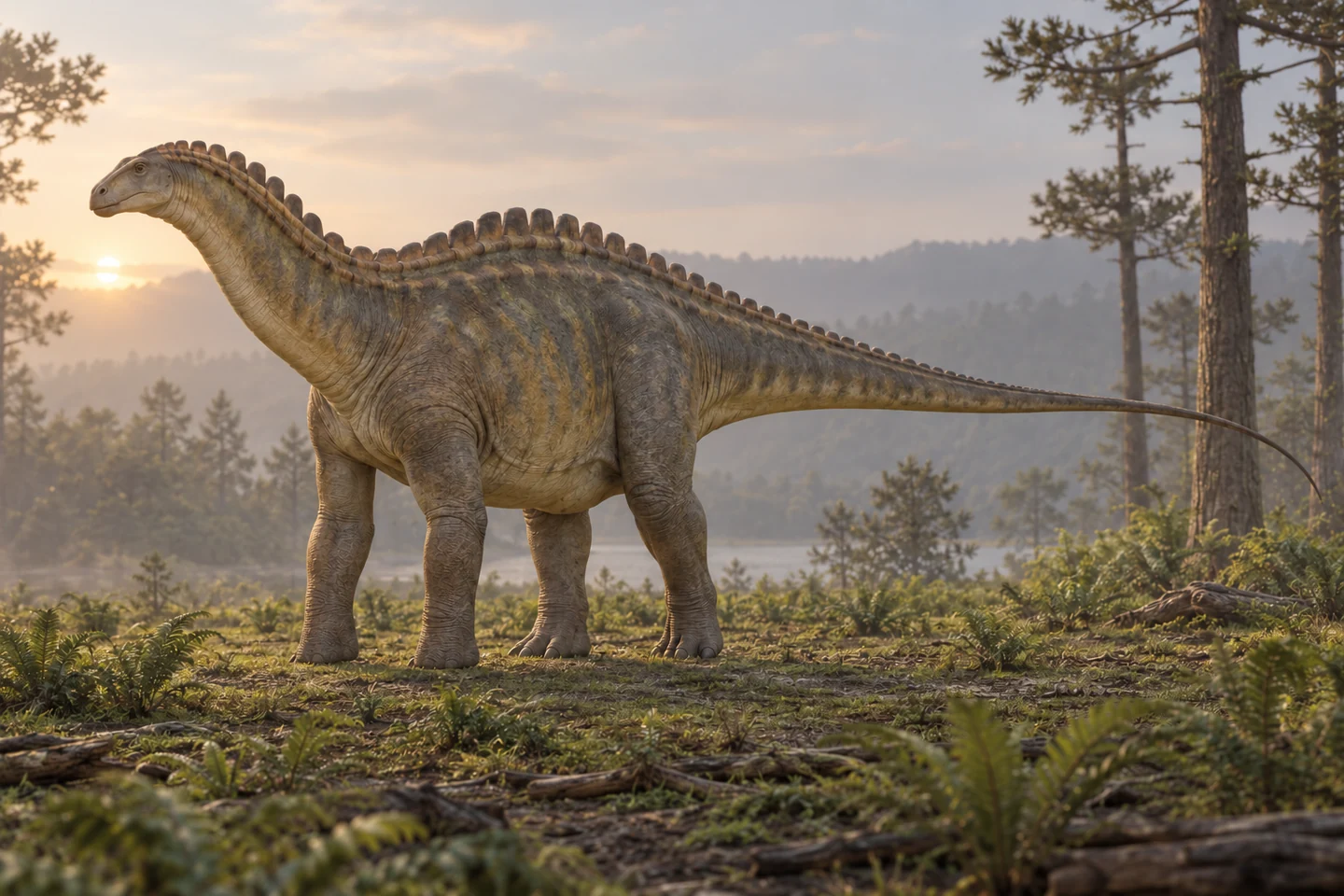
Dicraeosaurus was a comparatively short-necked Tanzanian sauropod, distinguished by divided vertebral spines and a narrow feeding apparatus. [1]

Evidence profile
PERIODLate Jurassic[1]
DIETHerbivoreEvidence and uncertainty in the dossier
TOTAL LENGTHSee the dossierEstimate scope matters
FOSSILS FOUNDTanzania[1]
CompareRead the dossierView the sources

MEET THE ANIMAL

Meet Dicraeosaurus

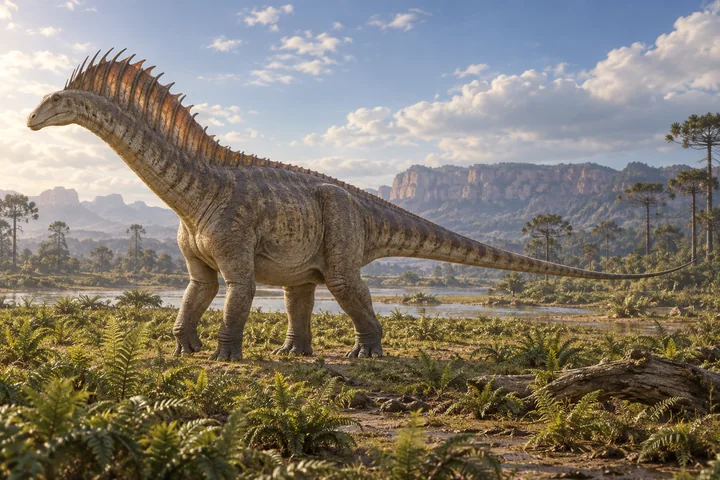
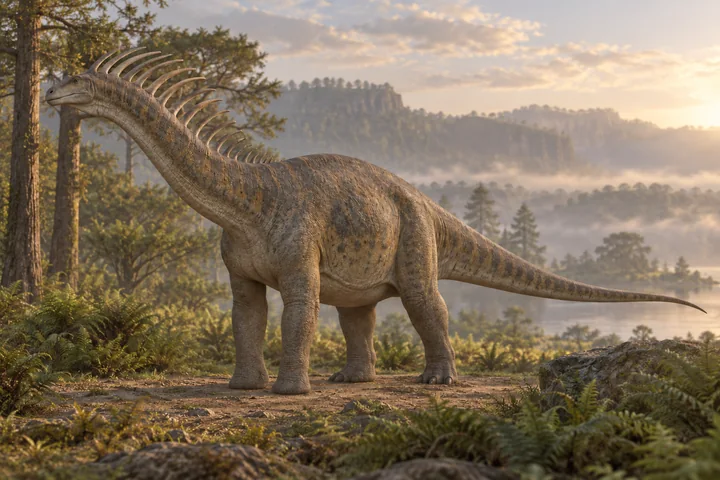
Dicraeosaurus was a Late Jurassic sauropod from Tanzania with a comparatively short neck and divided vertebral spines. This profile centers on Dicraeosaurus hansemanni, keeping the later-occurring Dicraeosaurus sattleri separate. A genus can include different species and fossil horizons; combining them indiscriminately can create a body or size range that no actual individual possessed. [D1]

Scans of tooth-bearing bones reveal replacement teeth developing inside the jaws. Computed tomography, or CT, allows researchers to investigate structures hidden within a fossil. This helps them estimate tooth-replacement schedules rather than assuming that every tooth was replaced at exactly the same rate. The calculations concern how the feeding apparatus renewed itself, not a preserved record of individual meals. [D5]

Its relatively narrow snout has been used to propose selective feeding at intermediate heights. Selective browsing means choosing parts of vegetation rather than simply cropping everything within reach. This is a functional interpretation of skull shape and teeth. It does not identify the exact plants eaten, establish one fixed feeding height or show how the animal held its neck all day. [D7]

PREHISTORIC ANIMAL DOSSIER

A life in profile.

The animal, the evidence, and the questions still open.

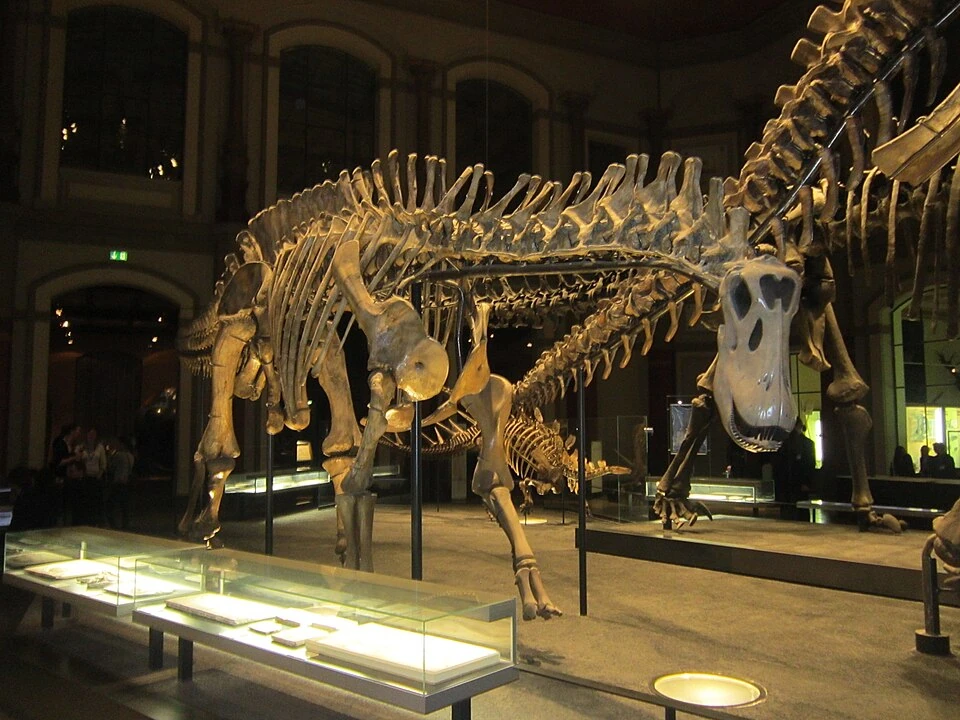
Berlin’s familiar mount combines bones and restoration. Dental CT and long-bone histology offer separate evidence about feeding and growth, while the animal’s social and reproductive habits remain uncertain. [D2] [D5] [D6]

Profile scope: Genus profile centered on Dicraeosaurus hansemanni, including type skeleton m, MB.R.4886. D. sattleri comes from a later Tendaguru horizon; its measurements are not blended into a species range. [D1]

Time
Late Jurassic
Fossil locations in this exhibit
Tanzania
How to read the evidence

Source supported identifies a description documented by the cited source. Inferred marks a reconstruction or functional estimate. Debated marks competing interpretations. Not established means the sources reviewed for this dossier do not support a firm conclusion; it does not mean a behavior never occurred.

A size reference is an estimate, not a population range. Nesting evidence does not by itself establish courtship, mate choice, or lifelong pairing.

Body length

Inferred

13.2 m; displayed composite skeleton

The museum-origin register gives the Berlin mount’s length. Its assembled bones and restored portions are a display reference, not the measured body of one complete individual or a maximum adult length. [D4]
Body mass

Inferred

About 5.5 tonnes; later volume-density model

Table 10 models HMN m at 5,535 kg using restored volumes and regional densities. The 1999 contour model returned 12.8 tonnes. Different reconstruction assumptions produce these estimates; they are not a measured individual’s mass or a species range. [D3] [D2]

Diet

Inferred

Selective plant browsing proposed

Snout shape and dental wear support relatively selective, mid-height feeding. They do not identify individual plant species, a fixed browsing height or stomach contents. [D7]

Habitat & fossil setting

Source supported

Late Jurassic Tendaguru, Tanzania

D. hansemanni occurs in the Middle Dinosaur Member; D. sattleri occurs in the later Upper Dinosaur Member. Keeping those horizons separate avoids treating species differences as one contemporary population. [D1]

Movement

Inferred

Four-legged sauropod reconstruction

The assembled skeleton supports quadrupedal reconstruction. Replacement and modeled bones in the mount do not measure a living gait, speed or a unique habitual head position. [D2]

Distinctive anatomy

Inferred

Rapid but unequal tooth replacement

CT-based estimates differ along the jaws: approximately 20 days for upper anterior replacement and 50 days for anterior lower teeth. These are modeled local rates, not one universal mouth-wide interval. [D5]

Reproduction & life together

Reproduction & nesting

Inferred

Growth-based maturation hypotheses

Long-bone histology suggests continued growth after an inferred maturation transition. That transition is not directly observed sexual maturity; securely assigned eggs, nests, embryos and parental behavior were not established here. [D6]

Courtship & mating

Not established

Not established here

The reviewed samples do not establish sexes or mate-choice displays. Growth differences and separate species should not be treated as observed courtship or a male–female pair. [D6] [D1]

Social behavior

Not established

Not established here

Bones from different individuals were combined in the museum mount. Their assembly documents reconstruction history rather than a fossilized social group, herd structure or coordinated behavior. [D2]

Dossier research & sources

Sources and inspection notes for the claims in this profile.

  1. Introduction to DiplodocoideaPalaeontologia Electronica; Van der Linden and colleagues (2025) · Accessed 2026-10-02Original full technical review inspected: current genus, type skeleton m/MB.R.4886, separate species and Tendaguru horizons, short neck and divided spines. · Inspected: page
  2. Body Size and Body Volume Distribution in Two Sauropods from the Upper Jurassic of Tendaguru (Tanzania)Mitteilungen aus dem Museum für Naturkunde in Berlin, Geowissenschaftliche Reihe; Gunga and colleagues (1999), published paper · Accessed 2026-10-02Original twelve-page PDF inspected: photogrammetry/laser scanning of Berlin’s composite mount, restored body contours and 12.8 tonne estimate; publication year is 1999. · Inspected: page
  3. A review and reappraisal of the specific gravities of present and past multicellular organisms, with an emphasis on tetrapodsThe Anatomical Record; Larramendi, Paul & Hsu (2021 issue; 2020 online) · Accessed 2026-10-02Original full publisher text inspected, Methods and Table10: HMN m restored volume 5,672 L and modeled mass 5,535 kg with regional densities. Its restored outline differs from the historical Gunga model. · Inspected: page
  4. Skelett des Dinosauriers Dicraeosaurus hansemanniGerman national cultural-property register; Museum für Naturkunde, Berlin · Accessed 2026-10-02Museum-origin register text inspected through indexed excerpts: displayed length 13.20 m, height 3.2 m and composite bones. Direct page retrieval subsequently returned 403. · Inspected: excerpt
  5. Dentition and tooth replacement of Dicraeosaurus hansemanni (Dinosauria, Sauropoda, Diplodocoidea) from the Tendaguru Formation of TanzaniaJournal of Vertebrate Paleontology; Schwarz, Kosch, Fritsch & Hildebrandt (2015) · Accessed 2026-10-02Publisher abstract inspected: CT of separate tooth-bearing elements, replacement numbers and differential modeled replacement rates; full PDF unavailable. · Inspected: abstract
  6. Life History of Tendaguru Sauropods as Inferred from Long Bone HistologyMitteilungen aus dem Museum für Naturkunde in Berlin, Geowissenschaftliche Reihe; Sander (1999) · Accessed 2026-10-02Original ten-page histological paper inspected: sampled D. sattleri and D. hansemanni long bones, growth curves and inferred maturation; sexual maturity is interpreted, not directly observed. · Inspected: page
  7. Inferences of Diplodocoid (Sauropoda: Dinosauria) Feeding Behavior from Snout Shape and Microwear AnalysesPLOS ONE; Whitlock (2011) · Accessed 2026-10-02Original full text inspected: narrow snout and proposed selective, mid-height feeding in Dicraeosaurus; this is a functional dietary inference. · Inspected: page

THE STORY IN THE FOSSILS

Meet Dicraeosaurus.

CT reveals teeth developing inside the jaws, allowing replacement schedules to be estimated without assuming every tooth followed the same timetable. [5]

A mounted skeleton is an interpretation with a history. Here, substituted bones and a restored skull matter when comparing body size or reconstructing movement. [2]

A note on scale and time

The dossier identifies the scope of each reference estimate. A mount, an individual fossil and a species-wide adult range are different measurements. Comparison metrics remain unavailable where adult scope has not been established. Unknown does not mean zero.

Sources & editorial notes

Sources support the stated claims and scopes. Refer to the evidence notes for uncertainty.

  1. Introduction to DiplodocoideaPalaeontologia Electronica; Van der Linden and colleagues (2025) · Accessed 2026-10-02Original full technical review inspected: current genus, type skeleton m/MB.R.4886, separate species and Tendaguru horizons, short neck and divided spines. · Inspected: page
  2. Body Size and Body Volume Distribution in Two Sauropods from the Upper Jurassic of Tendaguru (Tanzania)Mitteilungen aus dem Museum für Naturkunde in Berlin, Geowissenschaftliche Reihe; Gunga and colleagues (1999), published paper · Accessed 2026-10-02Original twelve-page PDF inspected: photogrammetry/laser scanning of Berlin’s composite mount, restored body contours and 12.8 tonne estimate; publication year is 1999. · Inspected: page
  3. A review and reappraisal of the specific gravities of present and past multicellular organisms, with an emphasis on tetrapodsThe Anatomical Record; Larramendi, Paul & Hsu (2021 issue; 2020 online) · Accessed 2026-10-02Original full publisher text inspected, Methods and Table10: HMN m restored volume 5,672 L and modeled mass 5,535 kg with regional densities. Its restored outline differs from the historical Gunga model. · Inspected: page
  4. Skelett des Dinosauriers Dicraeosaurus hansemanniGerman national cultural-property register; Museum für Naturkunde, Berlin · Accessed 2026-10-02Museum-origin register text inspected through indexed excerpts: displayed length 13.20 m, height 3.2 m and composite bones. Direct page retrieval subsequently returned 403. · Inspected: excerpt
  5. Dentition and tooth replacement of Dicraeosaurus hansemanni (Dinosauria, Sauropoda, Diplodocoidea) from the Tendaguru Formation of TanzaniaJournal of Vertebrate Paleontology; Schwarz, Kosch, Fritsch & Hildebrandt (2015) · Accessed 2026-10-02Publisher abstract inspected: CT of separate tooth-bearing elements, replacement numbers and differential modeled replacement rates; full PDF unavailable. · Inspected: abstract
  6. Life History of Tendaguru Sauropods as Inferred from Long Bone HistologyMitteilungen aus dem Museum für Naturkunde in Berlin, Geowissenschaftliche Reihe; Sander (1999) · Accessed 2026-10-02Original ten-page histological paper inspected: sampled D. sattleri and D. hansemanni long bones, growth curves and inferred maturation; sexual maturity is interpreted, not directly observed. · Inspected: page
  7. Inferences of Diplodocoid (Sauropoda: Dinosauria) Feeding Behavior from Snout Shape and Microwear AnalysesPLOS ONE; Whitlock (2011) · Accessed 2026-10-02Original full text inspected: narrow snout and proposed selective, mid-height feeding in Dicraeosaurus; this is a functional dietary inference. · Inspected: page

FOLLOW YOUR CURIOSITY

Who will you meet next?

KEEP EXPLORING

More from the collection

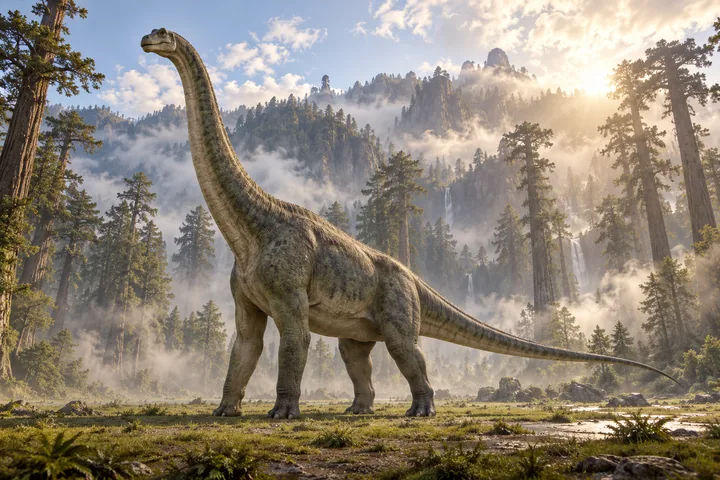
Long-necked Brachiosaurus standing on four legs in a misty conifer valley, with high shoulders and its head above the trees.
Movie-style interpretation
Late Jurassic

Brachiosaurus

Brachiosaurus altithorax

Brachiosaurus altithorax was a giant sauropod from Late Jurassic North America. Its name-bearing skeleton is incomplete, and many familiar reconstructions borrow details from the separate African dinosaur Giraffatitan.