
Body length
Not establishedNot established here
The legacy museum's 4 m genus reference is not tied to a revised D. altus adult specimen, so it is excluded from numerical comparison. [D2] [D1]
EXHIBIT 66
Dryosaurus altus
Dryosaurus altus was a small bipedal plant-eater from the Late Jurassic of western North America. Revised identifications separate it from famous Utah skeletons assigned to Dryosaurus elderae.
TWO WAYS TO PICTURE THE PAST
Compare the evidence with the familiar movie image. The illustrations are not to a shared scale.
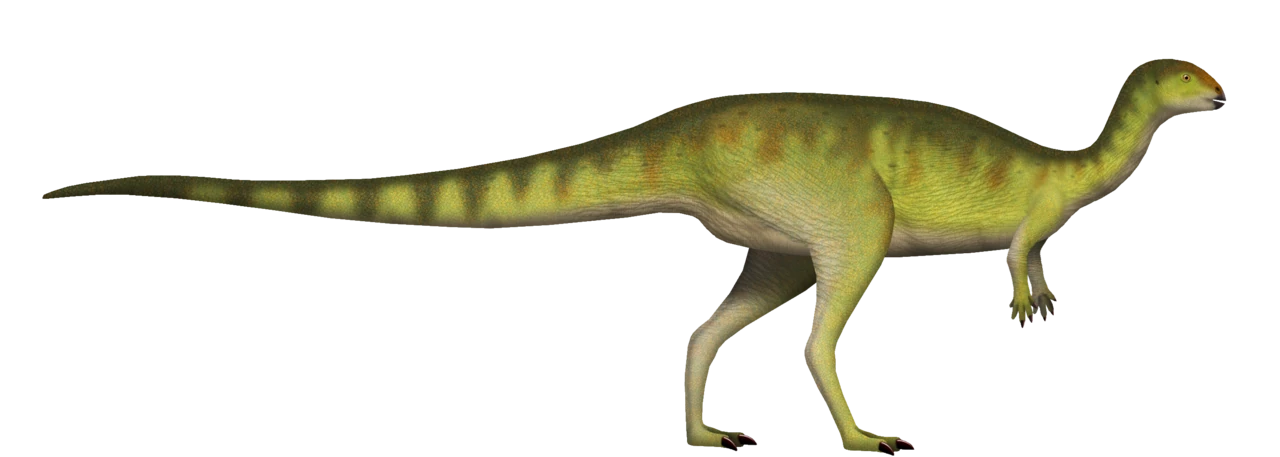
Artist reconstruction explicitly identified as Dryosaurus altus, rather than the Utah species D. elderae. Colours and soft tissues are interpretive; the artwork is not a size measurement. [1]
Dryosaurus TD.png · TotalDino. CC BY 4.0. Resized proportionally and converted to WebP; no anatomical edits. Same source license applies.
Scientific reconstruction is an interpretation; source credit does not certify every anatomical detail.
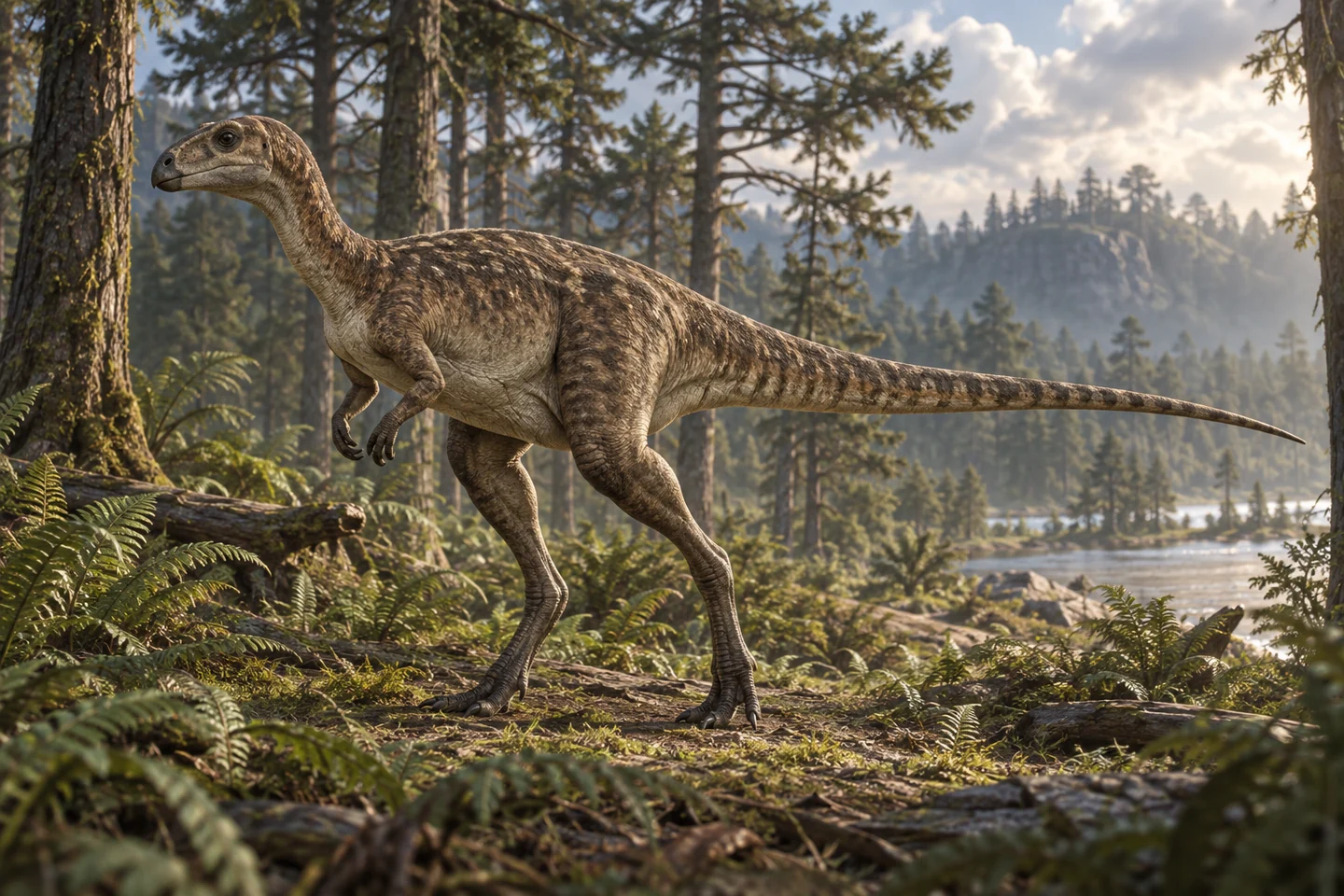
Original cinematic interpretation of Dryosaurus. Anatomy, soft tissues and colors are reconstructed choices. Lighting, coloration and scenery are artistic choices. This image does not document a fossil locality or behavior.
Original artwork · artistic interpretation.
Scientific view: source-informed reconstruction, credited paleoart or specimen-based imagery. Movie-style view: Original artistic interpretation. Reconstructions involve uncertainty.
MEET THE ANIMAL
Dryosaurus altus was a small plant eater in the Late Jurassic Morrison Formation of North America. It shared that broader fossil landscape with giant sauropods. A studied Wyoming specimen preserves much of the skull and skeleton, including substantial parts of both hindlimbs. Such well-preserved material helps explain the body of an animal otherwise often known from incomplete pieces. [S1]
The Amherst museum account describes a two-legged dinosaur with a beak and teeth farther back in its jaws. These were suited to picking and processing vegetation. A reconstructed agile body is consistent with that account, but its published speed suggestion should not be treated as a measured running record. The preserved skull and limbs are firmer evidence than an exact top speed. [S2]
Some Colorado bones were described as juvenile material and compared with the original Como Bluff specimen. Young individuals help show the animal at another stage of life. They should not be substituted for adult dimensions, and a collection of separate bones does not automatically preserve a family group or demonstrate parental care. [D3]
PREHISTORIC ANIMAL DOSSIER
The animal, the evidence, and the questions still open.
Dryosaurus altus is a small Morrison plant-eater. Historically grouped dryosaurids require separate identification.
Profile scope: Species: Dryosaurus altus, including the Como Bluff holotype. Utah skeletons reassigned to D. elderae are excluded.
Source supported identifies a description documented by the cited source. Inferred marks a reconstruction or functional estimate. Debated marks competing interpretations. Not established means the sources reviewed for this dossier do not support a firm conclusion; it does not mean a behavior never occurred.
A size reference is an estimate, not a population range. Nesting evidence does not by itself establish courtship, mate choice, or lifelong pairing.
Not established here
The legacy museum's 4 m genus reference is not tied to a revised D. altus adult specimen, so it is excluded from numerical comparison. [D2] [D1]
Not established here
No species- and life-stage-scoped mass reconstruction was verified in the reviewed sources.
Plant-eater
The museum identifies herbivory at genus level; the revised species account documents the form of the cheek teeth. [D2] [D1]
Morrison Formation, western USA
The name-bearing partial skeleton comes from Como Bluff, Wyoming. The 2018 review notes that the species' exact stratigraphic range remains uncertain. [D1]
Bipedal ornithopod
The anatomical review includes D. altus among Morrison bipedal ornithischians. A precise speed is not established. [D1]
Distinctively ridged cheek teeth
Upper and lower teeth differ in ridge development; these features help distinguish D. altus from the Utah species D. elderae. [D1]
Not established here
The reviewed sources do not establish nests, clutch size or parental care specifically for D. altus.
Not established here
The reviewed sources do not establish mating displays or a mating system.
Not established here
The reviewed sources do not establish groups specifically attributable to D. altus; evidence from other dryosaurids is not imported.
Sources and inspection notes for the claims in this profile.
THE STORY IN THE FOSSILS
Dryosaurus altus is anchored by a partial skeleton from Como Bluff, Wyoming. Juvenile bones described from Colorado extend the fossil picture without supplying adult measurements. [3]
Utah skeletons once displayed under this name were assigned to Dryosaurus elderae in 2018. This exhibit keeps their measurements and growth evidence separate. [1]
The dossier identifies the scope of each reference estimate. A mount, an individual fossil and a species-wide adult range are different measurements. Comparison metrics remain unavailable where adult scope has not been established. Unknown does not mean zero.
Sources support the stated claims and scopes. Refer to the evidence notes for uncertainty.
KEEP EXPLORING
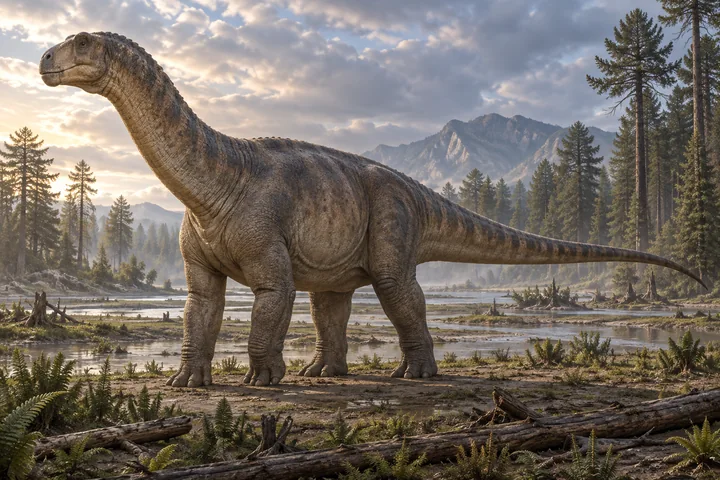
Camarasaurus
Camarasaurus was a Late Jurassic North American sauropod with broad teeth, a boxy skull and air-filled vertebrae.
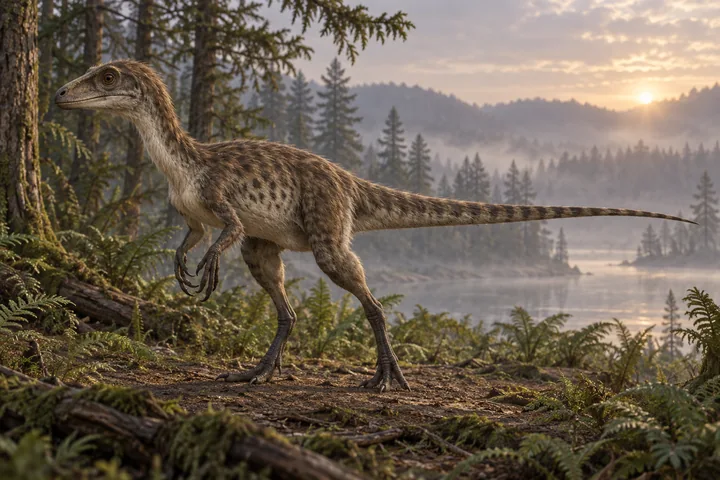
Ornitholestes hermanni
Ornitholestes is a small Morrison theropod with a historically misleading nose restoration.
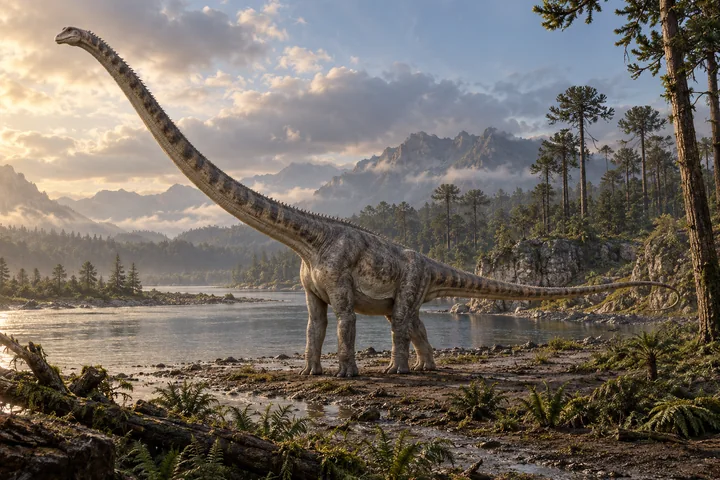
Mamenchisaurus
Mamenchisaurus includes long-necked Chinese sauropods. Differing species and recent research require revision of the traditional genus.