Body length
InferredAbout 6.2 m (museum reference)
Educational reconstruction without individual or maturity scope; incomplete type anatomy prevents treating it as a measured adult maximum. [D3]
TWO WAYS TO PICTURE THE PAST
Compare the evidence with the familiar movie image. The illustrations are not to a shared scale.
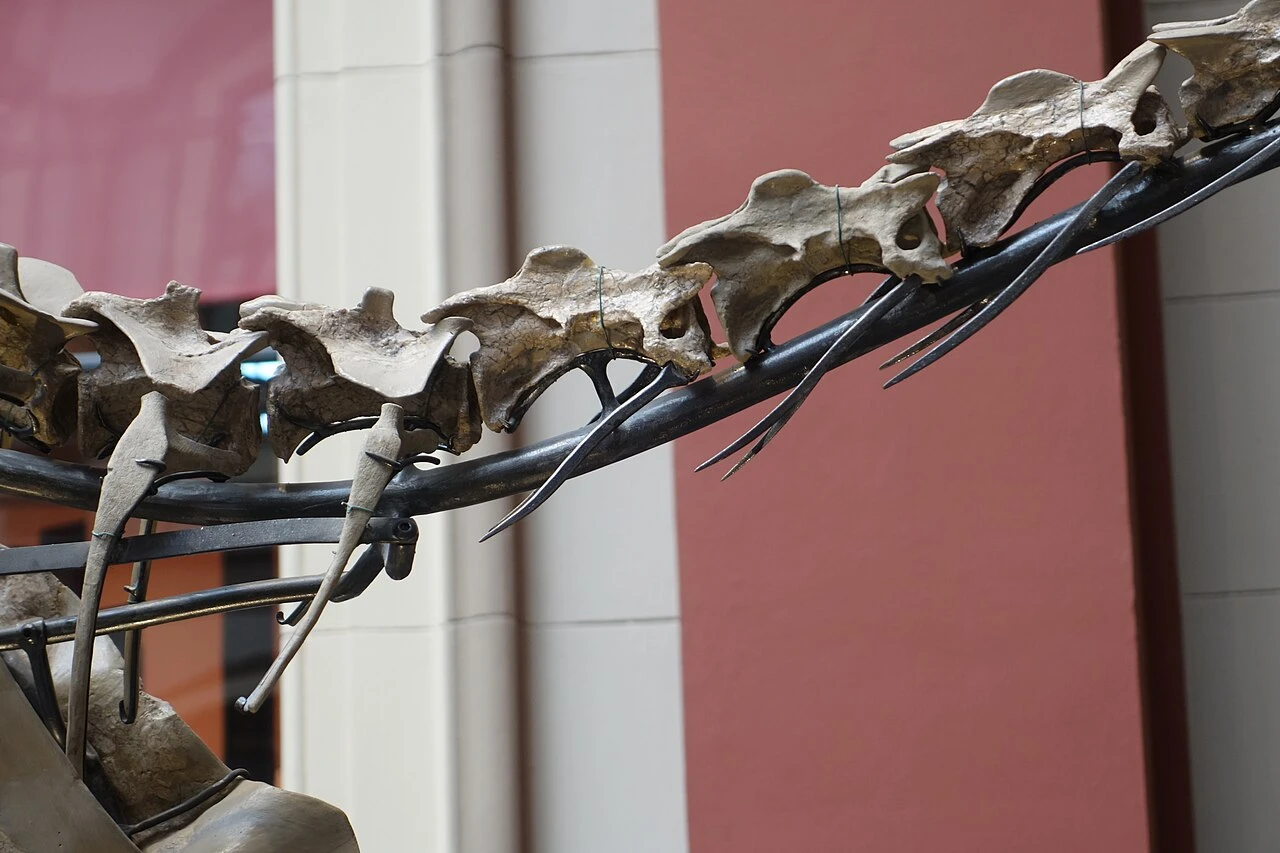
Detail of the neck vertebrae in the Elaphrosaurus mount at Museum für Naturkunde Berlin, photographed by Etemenanki3. The view shows neck anatomy represented in a supported museum restoration. The Commons record gives no element-authenticity key; missing head, hand and soft tissues are not documented by this view, and it supplies no adult measurement. [1]
Elaphrosaurus mount MfN Berlin 2018 neck detail.jpg · Etemenanki3. CC BY-SA 4.0. Current Commons 1280 px preview converted to WebP with proportional thumbnail reduction. No cropping, mirroring, anatomical edits or compositing. Derivatives retain CC BY-SA 4.0.
Skeletal mounts and drawings may restore missing parts; the caption identifies the displayed material.
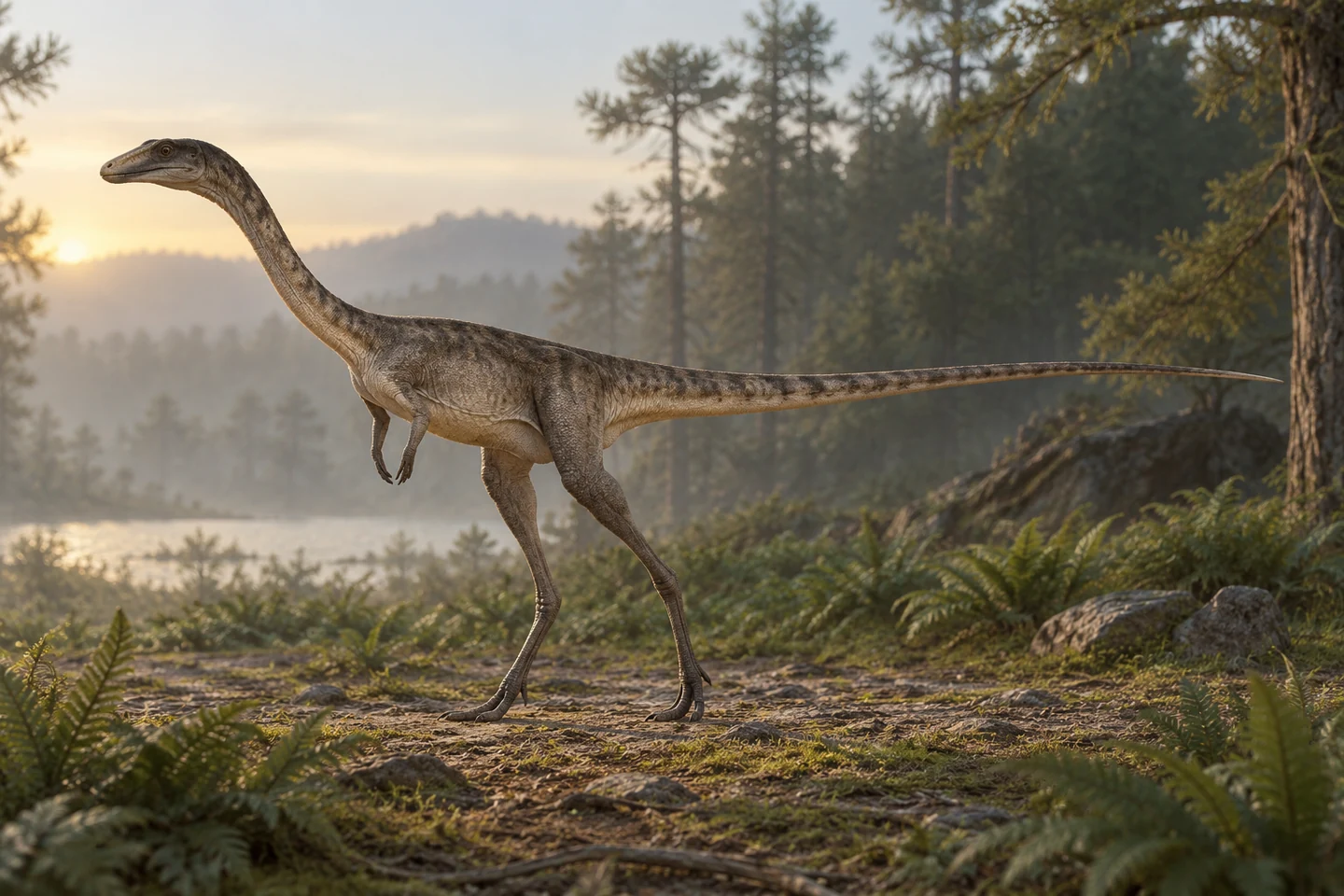
Original cinematic interpretation of Elaphrosaurus. Preserved long neck and hindlimbs guide the silhouette; missing head and much of the hands remain comparative and cannot settle diet. Lighting, colors and scenery are artistic choices; this image does not document directly observed behavior. Lighting, coloration and scenery are artistic choices. This image does not document a fossil locality or behavior.
Original artwork · artistic interpretation.
Scientific view: source-informed reconstruction, credited paleoart or specimen-based imagery. Movie-style view: Original artistic interpretation. Reconstructions involve uncertainty.
MEET THE ANIMAL
Elaphrosaurus was a Late Jurassic dinosaur from Tanzania. The museum gives a general length reference of about 6.2 metres, without specifying the individual's age or the reconstruction method. Its directory label describes a carnivore, but that label should not be treated as a directly identified meal. A general size and feeding category provide a starting point, rather than a fully demonstrated account of the animal's daily life. [D3]
Its fossils come from the Tendaguru region, in deposits that record a coastal landscape. Tidal flats, small channels and lagoonal settings alternated with more terrestrial conditions. This environmental mixture gives context for the animal's burial, while leaving room for different habitat preferences. Finding a dinosaur in marine-influenced sediment does not, by itself, show that it was adapted to swimming or spent its life in water. [D4]
A later revision highlighted its long, constricted neck, distinctive upper arm and long hindlimbs. These proportions support a two-legged, relatively running-adapted reconstruction, without supplying a measured speed. [D1]
PREHISTORIC ANIMAL DOSSIER
The animal, the evidence, and the questions still open.
A revised noasaurid placement invites comparisons with Limusaurus; those comparisons do not directly establish a beak or feeding strategy. [D1]
Profile scope: Genus — Elaphrosaurus; profile centered on the Tendaguru E. bambergi type skeleton. [D1]
Source supported identifies a description documented by the cited source. Inferred marks a reconstruction or functional estimate. Debated marks competing interpretations. Not established means the sources reviewed for this dossier do not support a firm conclusion; it does not mean a behavior never occurred.
A size reference is an estimate, not a population range. Nesting evidence does not by itself establish courtship, mate choice, or lifelong pairing.
About 6.2 m (museum reference)
Educational reconstruction without individual or maturity scope; incomplete type anatomy prevents treating it as a measured adult maximum. [D3]
About 263 kg (limb model)
HMN Gr. S. 38–44; measured femoral circumference, maturity unestablished. [D5]
Not established here
The skull is unknown. A museum carnivore label and comparisons with Limusaurus do not securely resolve this animal’s feeding strategy. [D2] [D3] [D1]
Tendaguru coastal plain
Late Kimmeridgian remains from Tanzania’s Middle Dinosaur Member occur in a regional mosaic of tidal flats, channels and lagoonal settings. [D4]
Two-legged; long hindlimbs
Leg proportions support relatively cursorial movement by comparison; no reliable running speed follows from the available fossils. [D1]
Long, constricted neck; modified upper arm
Known postcranial features are distinctive, but a restored beak, skull or complete fingers cannot be treated as preserved anatomy. [D1] [D2]
Not established here
The postcranial type does not establish reproductive maturity, eggs, nests or parental care; focused searches found no direct taxon-specific evidence. [D2]
Not established here
Neither a skull nor diagnostic soft tissues are known for the type; a display structure or mating sequence is unestablished. [D2]
Not established here
A described individual does not establish solitary life or a herd. Regional dinosaur assemblages do not supply a taxon-specific social association. [D4]
Sources and inspection notes for the claims in this profile.
THE STORY IN THE FOSSILS
The 2016 revision changed its proposed position in the dinosaur family tree. Resemblance to a better-known relative does not fill missing skull anatomy as fact. [1]
Tendaguru beds alternate terrestrial and marine-influenced conditions. The fossil’s coastal setting does not demonstrate a specialized aquatic lifestyle. [4]
The dossier identifies the scope of each reference estimate. A mount, an individual fossil and a species-wide adult range are different measurements. Comparison metrics remain unavailable where adult scope has not been established. Unknown does not mean zero.
Sources support the stated claims and scopes. Refer to the evidence notes for uncertainty.
KEEP EXPLORING
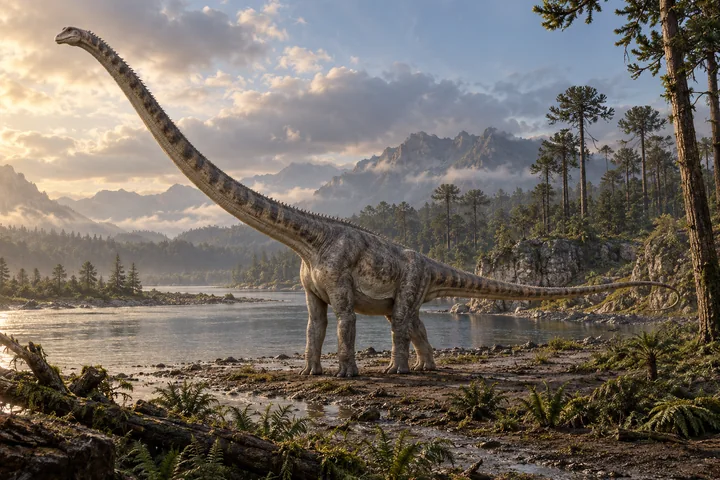
Mamenchisaurus
Mamenchisaurus includes long-necked Chinese sauropods. Differing species and recent research require revision of the traditional genus.
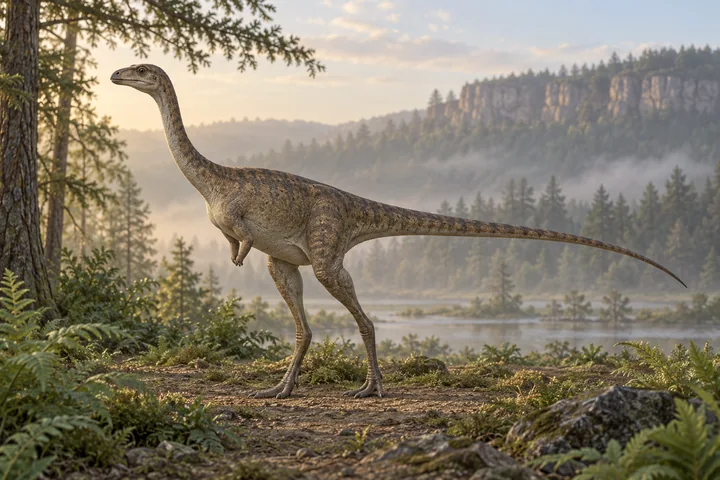
Limusaurus inextricabilis
Limusaurus lost its teeth as it grew, transforming toothed young jaws into the beak of older animals.
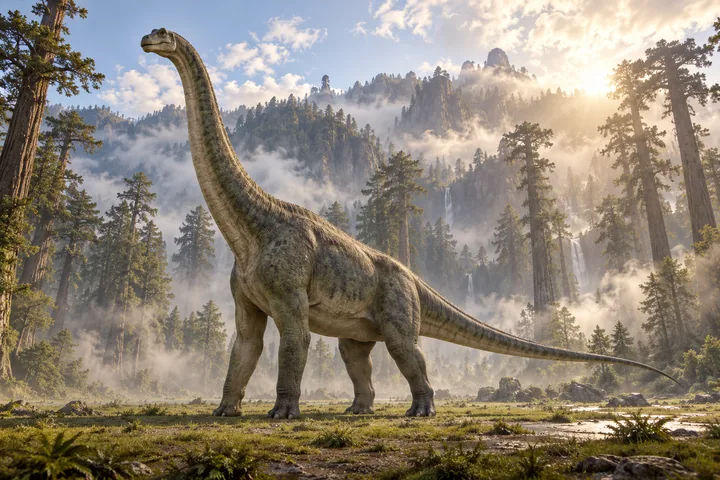
Brachiosaurus altithorax
Brachiosaurus altithorax was a giant sauropod from Late Jurassic North America. Its name-bearing skeleton is incomplete, and many familiar reconstructions borrow details from the separate African dinosaur Giraffatitan.