
Body length
InferredAbout 1.7 m (comparative reference)
Published comparison without specimen or maturity scope; not a mature maximum or measured species range. [D5]
EXHIBIT 163
Limusaurus inextricabilis
Limusaurus lost its teeth as it grew, transforming toothed young jaws into the beak of older animals. [2]
TWO WAYS TO PICTURE THE PAST
Compare the evidence with the familiar movie image. The illustrations are not to a shared scale.
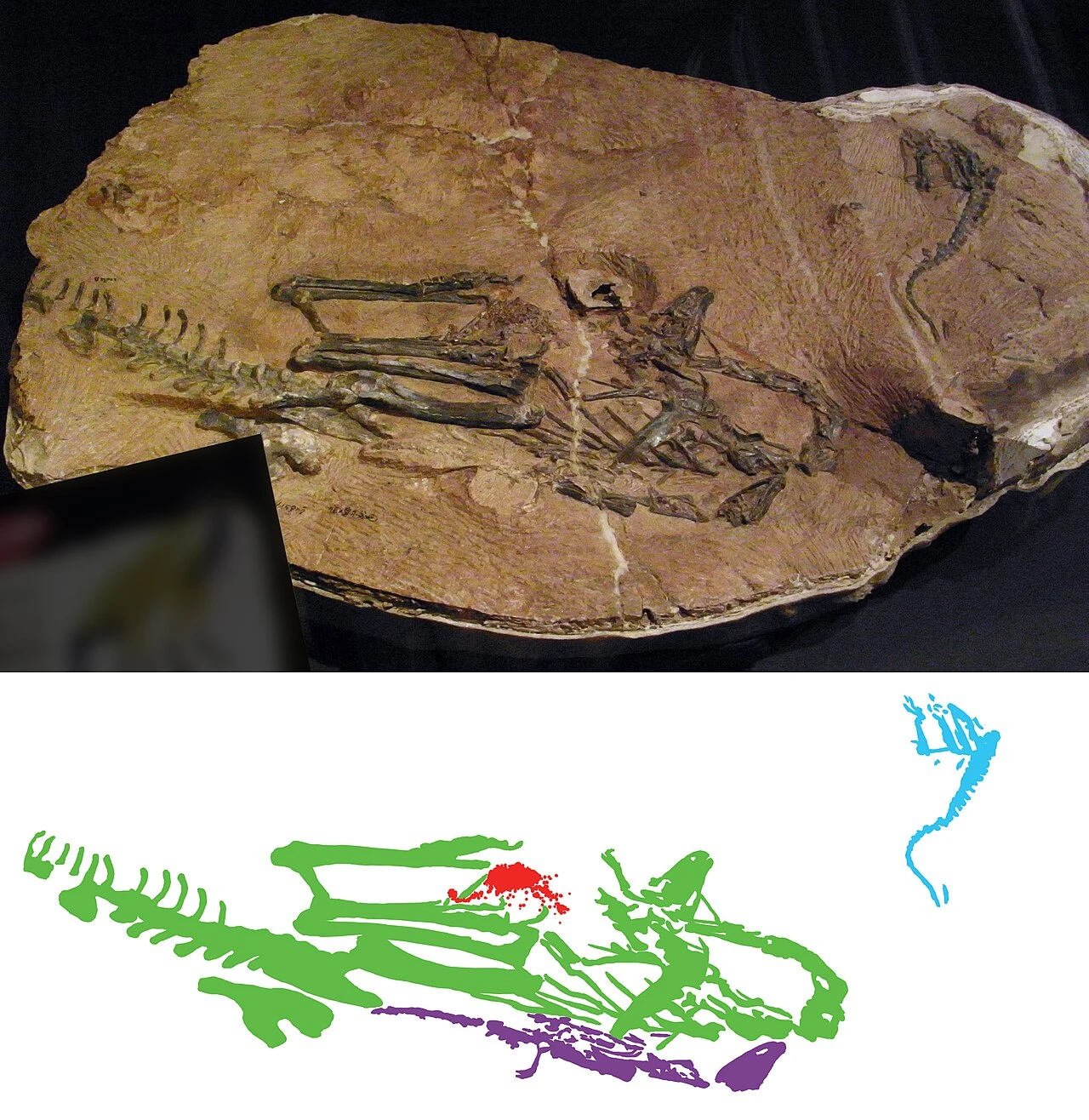
Limusaurus fossil slab photographed by ★Kumiko★, with existing Commons annotations by FunkMonk. Green marks L. inextricabilis type IVPP V15923, independently classified as subadult; red marks gastroliths, blue another referred skeleton and purple a crocodyliform. The diagram’s color overlays are identification aids, not living skin colors. This association is neither one complete animal nor demonstrated nesting evidence. [1]
Limusaurus slab colour coded.jpg · ★Kumiko★; existing annotations by FunkMonk. CC BY-SA 2.0. Current Commons 1280 px preview converted to WebP, with a proportionally reduced thumbnail; existing color annotations retained. No additional cropping, mirroring, anatomical edits or compositing. Derivatives retain CC BY-SA 2.0.
The photograph or figure shows the credited fossil material; displayed mounts and labels can include interpretation.
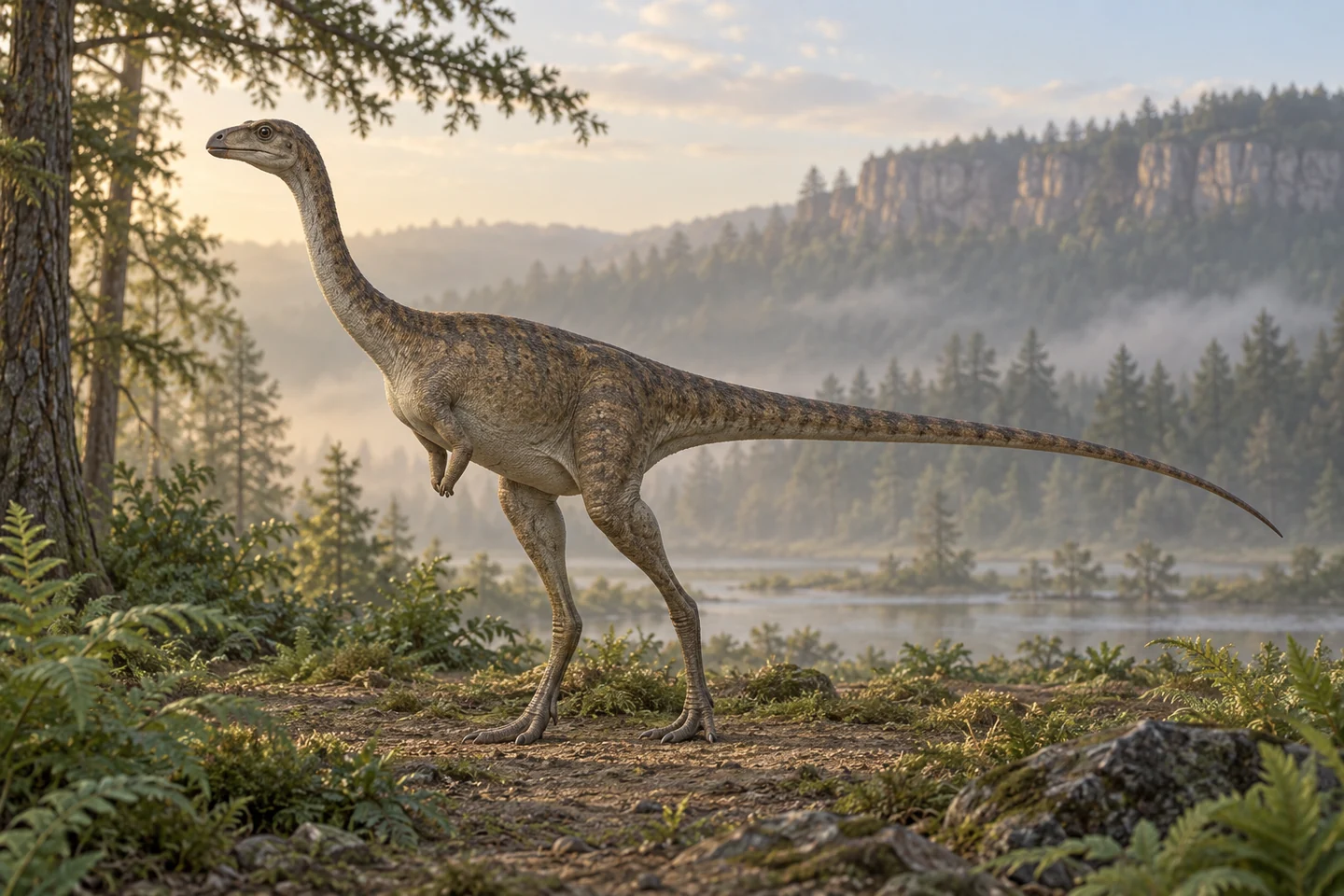
Original cinematic interpretation of Limusaurus. This adult-stage toothless reconstruction differs from toothed juvenile fossils; fine skin, beak covering, colors and pose remain interpretive. Lighting, colors and scenery are artistic choices; this image does not document directly observed behavior. Lighting, coloration and scenery are artistic choices. This image does not document a fossil locality or behavior.
Original artwork · artistic interpretation.
Scientific view: source-informed reconstruction, credited paleoart or specimen-based imagery. Movie-style view: Original artistic interpretation. Reconstructions involve uncertainty.
MEET THE ANIMAL
Limusaurus was a Late Jurassic dinosaur from Xinjiang, China, with long hindlimbs and unusually short forelimbs. Its hands were reduced, including a first hand ray that was only a stub of bone without finger segments. The skeleton supports a two-legged reconstruction, but its proportions alone do not give a reliable running speed or reveal every use of the arms. [D1]
A series of nineteen fossils documents a striking change during growth: young animals had teeth, while mature animals were toothless. Swallowed stones and chemical evidence helped researchers propose a dietary shift from mixed feeding toward plant eating. That interpretation concerns changing feeding abilities. It does not identify a fixed menu, the exact prey eaten by youngsters or the plants preferred by adults. [D2]
Older jaws still contained enclosed traces of tooth sockets. These vestiges help explain how a toothless beak developed as tooth replacement stopped. The growing and older fossils are therefore not simply unrelated toothed and toothless dinosaurs. Their developmental differences provide evidence about changes during life, without independently identifying males and females or demonstrating a courtship display. [D3]
PREHISTORIC ANIMAL DOSSIER
The animal, the evidence, and the questions still open.
Nineteen fossils record a changing anatomy and inferred diet. Several death pits preserve animals trapped successively rather than a demonstrated nesting colony. [D2] [D4]
Profile scope: Genus — Limusaurus; profile centered on L. inextricabilis, with juvenile, subadult and adult evidence distinguished. [D1] [D3]
Source supported identifies a description documented by the cited source. Inferred marks a reconstruction or functional estimate. Debated marks competing interpretations. Not established means the sources reviewed for this dossier do not support a firm conclusion; it does not mean a behavior never occurred.
A size reference is an estimate, not a population range. Nesting evidence does not by itself establish courtship, mate choice, or lifelong pairing.
About 1.7 m (comparative reference)
Published comparison without specimen or maturity scope; not a mature maximum or measured species range. [D5]
About 17 kg (limb model)
IVPP V15923; estimated femoral circumference. Type independently identified as subadult. [D6] [D3]
Inferred omnivory shifting to herbivory
Tooth loss, gastroliths and isotopic evidence support a dietary shift with growth; no specific plants or prey are securely identified. [D2]
Shishugou seasonal alluvial setting
Oxfordian Wucaiwan, Xinjiang, China. Regional deposits include channels, wetlands and shallow lakes in a warm, seasonally dry landscape. [D1] [D4]
Two-legged, with long hindlimbs
The skeleton has short forelimbs and comparatively long legs; these proportions do not establish a measured running speed. [D1]
Growing tooth loss; short, reduced hands
The first manual ray is a metacarpal stub without phalanges. Older jaws are toothless; juvenile jaws retain teeth. [D1] [D3]
Not established here
A six-stage growth series includes hatchlings and older animals. This documents development, not a nest, breeding age or parental behavior. [D2]
Not established here
Growth-related tooth loss does not establish sexual dimorphism, a mating display or a courtship sequence. [D3]
Possible gregarious population, unconfirmed
The death-pit study proposed local gregariousness. Sequential trapping of many small animals does not demonstrate a single traveling herd or family group. [D4]
Sources and inspection notes for the claims in this profile.
THE STORY IN THE FOSSILS
Vestigial tooth sockets remain enclosed in older jaws. The growth series supports cessation of tooth replacement rather than a fossil sample of unrelated toothed and toothless species. [3]
Mud-pit carcasses accumulated successively. Their striking association records trapping and burial, while reproductive and social explanations need additional evidence. [4]
The dossier identifies the scope of each reference estimate. A mount, an individual fossil and a species-wide adult range are different measurements. Comparison metrics remain unavailable where adult scope has not been established. Unknown does not mean zero.
Sources support the stated claims and scopes. Refer to the evidence notes for uncertainty.
KEEP EXPLORING
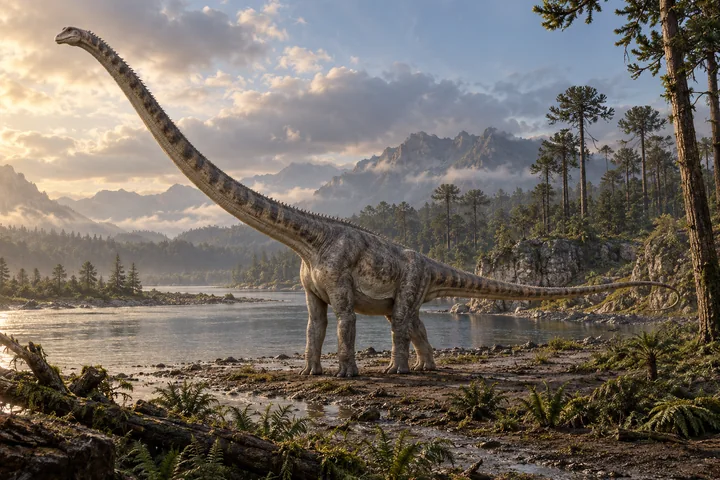
Mamenchisaurus
Mamenchisaurus includes long-necked Chinese sauropods. Differing species and recent research require revision of the traditional genus.
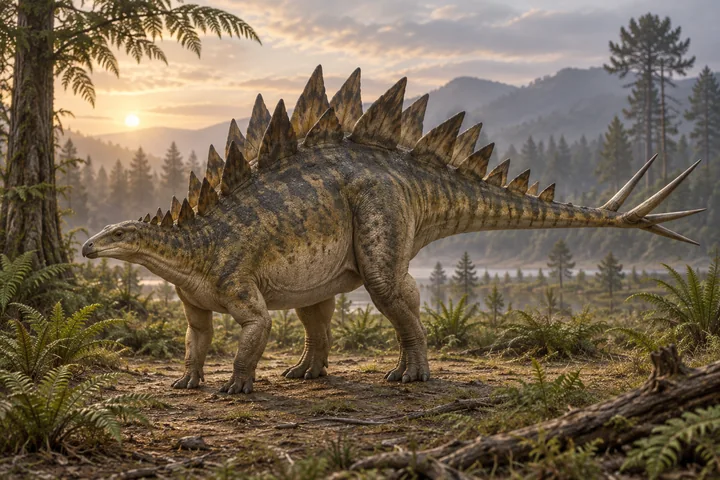
Tuojiangosaurus multispinus
Tuojiangosaurus was a Late Jurassic Chinese plant-eating stegosaur with varied bony plates along its body.
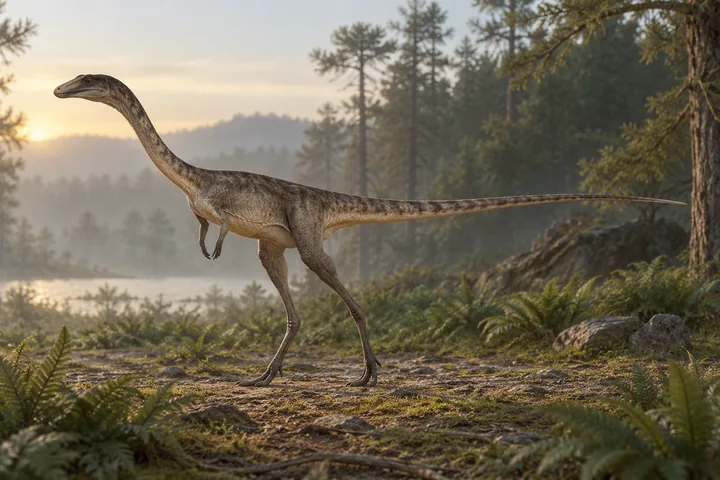
Elaphrosaurus bambergi
Elaphrosaurus had an exceptionally elongated neck and long hindlimbs, but its skull and hand are unknown.