EXPLORE PREHISTORY 220 prehistoric animal profiles · Scientific & movie-style image galleries

EXHIBIT 107

Europasaurus

Europasaurus holgeri

Europasaurus was a small-bodied sauropod from Jurassic Germany. Bone tissue confirms that some small individuals were fully grown, rather than juveniles of a giant species. [1]

Evidence profile
PERIODLate Jurassic[1]
DIETHerbivoreEvidence and uncertainty in the dossier
TOTAL LENGTH6.2–6.2 mEstimate scope matters
FOSSILS FOUNDGermany[1]
CompareRead the dossierView the sources

MEET THE ANIMAL

Meet Europasaurus

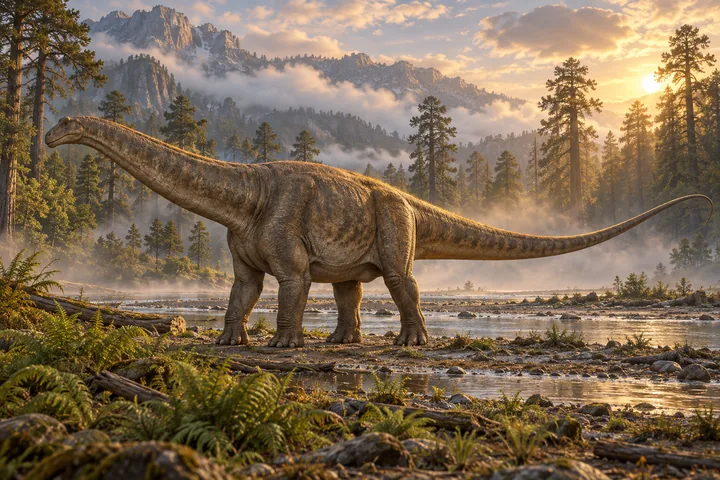
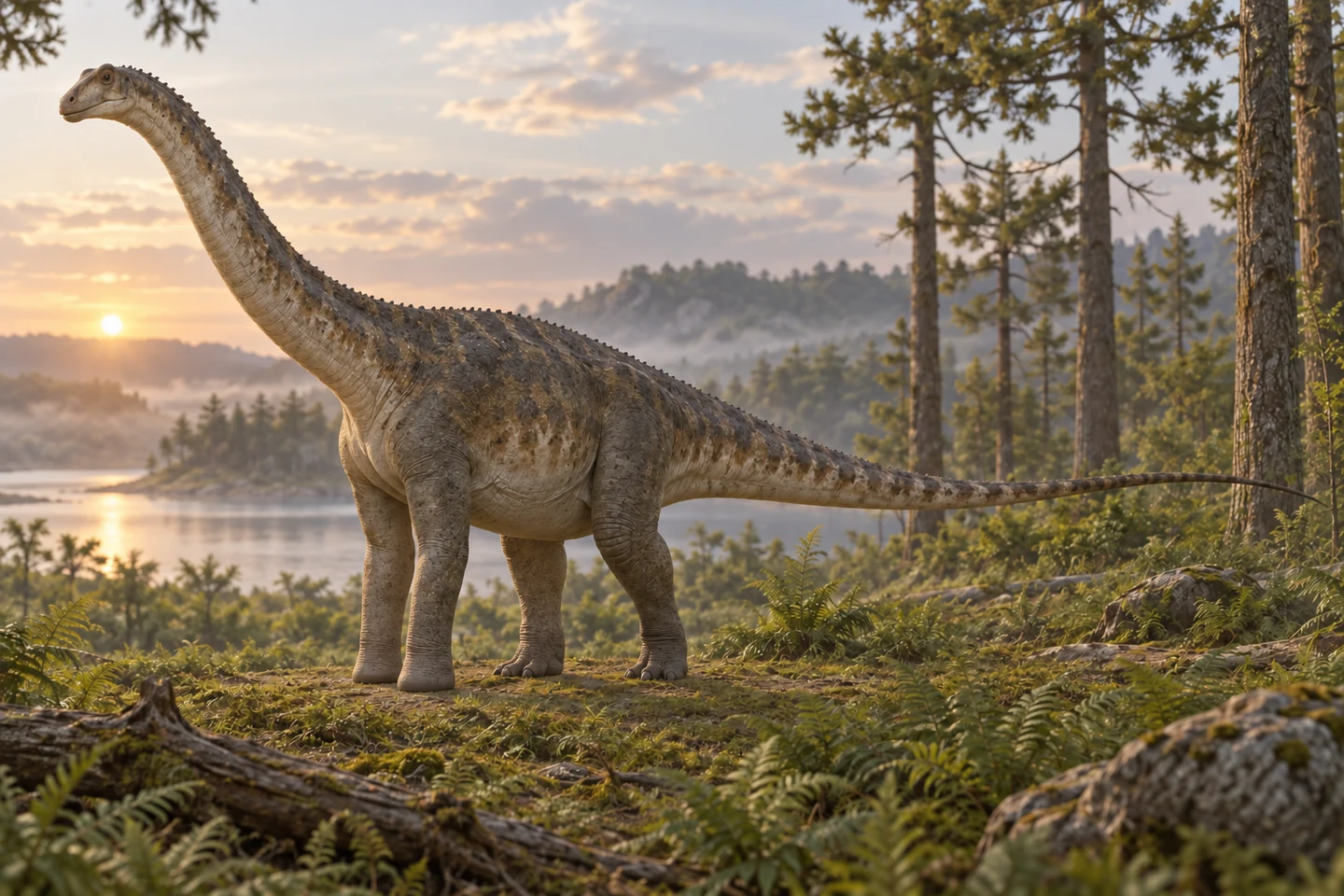
Europasaurus was a small plant-eating sauropod, reconstructed walking on four legs. Its size makes it a useful reminder that not every long-necked dinosaur was a giant. The institutional account distinguishes its plant-eating body plan from evidence about its younger animals, letting anatomy and development contribute different parts of the portrait. [D5]

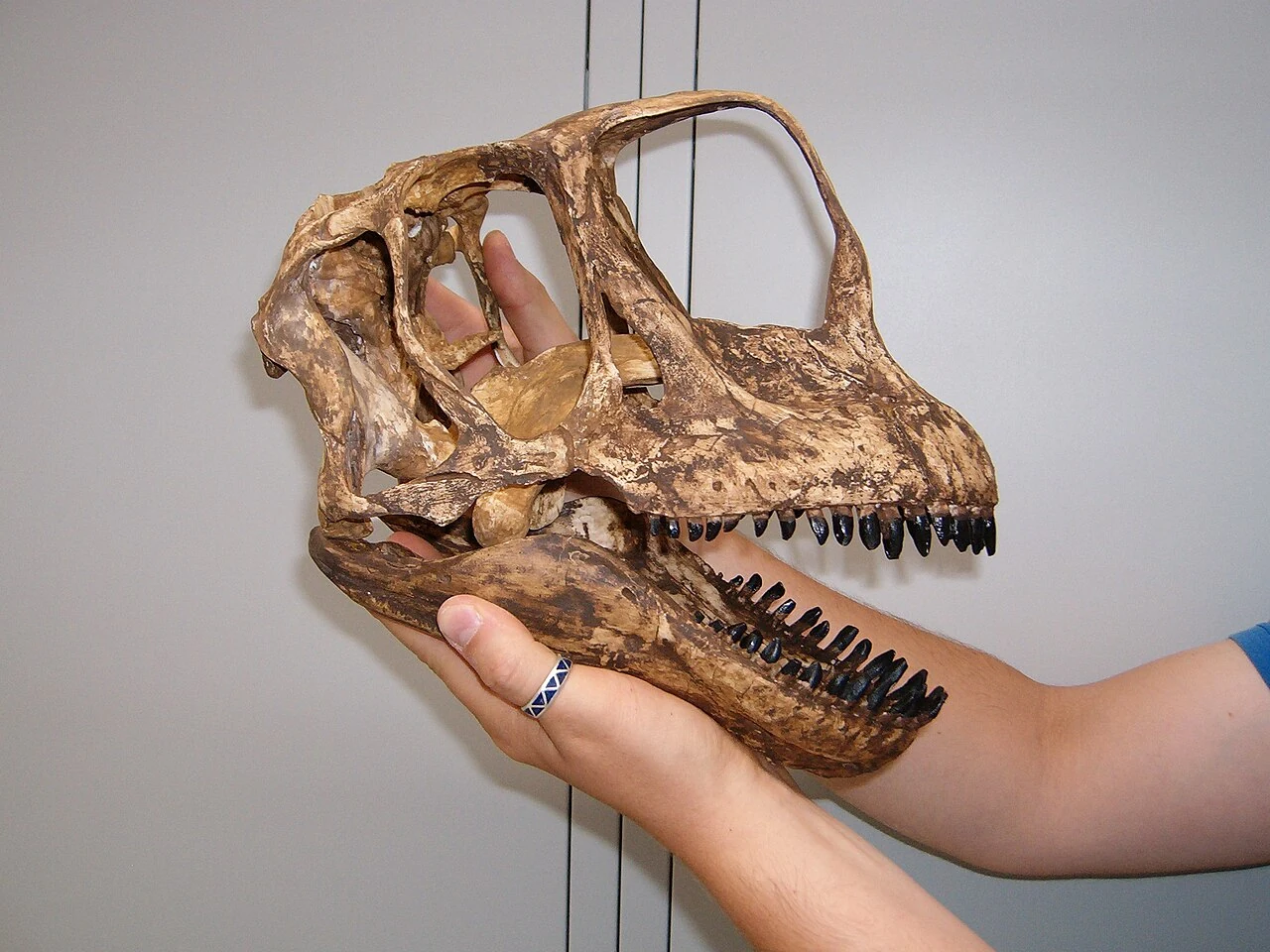
Studies of its skull describe adult features that resemble those of younger ancestral animals, including relatively large eye openings. Two different forms are recognized in the fossil material, but their cause is unresolved. They cannot confidently be labeled male and female. Similar-looking features can arise through growth and variation, so a striking difference needs evidence before it becomes a story about sex or courtship. [D4]

CT scans of young and adult braincases reveal the inner ears. Adult-like development in young animals suggests early mobility. Proposed nesting colonies remain interpretations rather than discoveries of assigned nests. These internal structures test ideas about early life without preserving a direct record of the animals walking or nesting. [D3]

PREHISTORIC ANIMAL DOSSIER

A life in profile.

The animal, the evidence, and the questions still open.

Its island-dwarf interpretation rests on bone histology and regional geography. Later skull and inner-ear studies explore development and possible social behavior without establishing observed nesting or mating. [D4] [D3]

Profile scope: Genus profile centered on Europasaurus holgeri from Langenberg. Growth stages and multiple individuals are distinguished; the adult length reference is not a species-wide size range. [D1]

Time
Late Jurassic
Fossil locations in this exhibit
Germany
How to read the evidence

Source supported identifies a description documented by the cited source. Inferred marks a reconstruction or functional estimate. Debated marks competing interpretations. Not established means the sources reviewed for this dossier do not support a firm conclusion; it does not mean a behavior never occurred.

A size reference is an estimate, not a population range. Nesting evidence does not by itself establish courtship, mate choice, or lifelong pairing.

Body length

Inferred

6.2 m; reconstructed adult individual

The original study scales a skeletal reconstruction to DFMMh/FV 415, whose femoral histology indicates completed growth. Smaller estimates include juveniles; they do not define the adult species range. [D1]
Body mass

Inferred

About 0.8 tonnes; published reference

The sauropod synthesis reports this estimate without naming an individual or method in that passage. It is not automatically the mass of DFMMh/FV 415. [D2]

Diet

Inferred

Plants

The institutional research account identifies herbivory. No specific plant menu or directly preserved stomach contents are established in the reviewed material. [D5]

Habitat & fossil setting

Inferred

Jurassic islands around the Lower Saxony Basin

The fossils occur in middle Kimmeridgian marine carbonate beds at Langenberg, northern Germany. Regional geography and dwarfism support island habitation; marine burial does not mean an aquatic lifestyle. [D1]

Movement

Inferred

Four-legged terrestrial walker

The institutional account reconstructs a quadrupedal sauropod. Inner-ear development offers additional evidence about juvenile mobility, rather than a measured walking speed. [D5]

Distinctive anatomy

Source supported

Small adult body with juvenile-like skull features

Skull growth studies describe relatively large adult eye openings and other retained ancestral juvenile-like features. Two morphotypes are recognized, but their cause is unresolved. [D4]

Reproduction & life together

Reproduction & nesting

Inferred

Early mobility inferred; nesting unresolved

Large, adult-like inner ears in juveniles suggest precocial development. Colonial nesting is proposed by comparison and taphonomy, not demonstrated by a genus-assigned nest in this study. [D3]

Courtship & mating

Not established

Not established here

Different skull morphotypes may reflect sex, population differences or variation. Neither the skull study nor inferred hearing capabilities establishes mating calls, display rituals or mate choice. [D4] [D3]

Social behavior

Inferred

Social cohesion plausible

The inner-ear study combines auditory estimates with an assemblage of multiple individuals to suggest group association. Permanent herds, seasonal aggregations and family structure cannot be distinguished confidently. [D3]

Dossier research & sources

Sources and inspection notes for the claims in this profile.

  1. Bone histology indicates insular dwarfism in a new Late Jurassic sauropod dinosaurNature; Sander, Mateus, Laven & Knötschke (2006), author-hosted published paper · Accessed 2026-10-02Original diagnosis and histology: middle Kimmeridgian Langenberg material, juvenile-to-adult estimates and fully grown DFMMh/FV 415 at reconstructed 6.2 m. Not an adult population range. · Inspected: excerpt
  2. Biology of the sauropod dinosaurs: the evolution of gigantismBiological Reviews; Sander and colleagues (2011) · Accessed 2026-10-02Dwarfism section reports approximately 800 kg for Europasaurus; that passage does not specify an individual, maturity or estimation method. · Inspected: excerpt
  3. Neurovascular anatomy of dwarf dinosaur implies precociality in sauropodseLife; Schade and colleagues (2022) · Accessed 2026-10-02Full published PDF excerpts inspected through the accessible archived paper: adult and juvenile braincases, precociality inference, auditory estimates and qualified social/colonial-nesting discussion. · Inspected: excerpt
  4. Cranial anatomy of the Late Jurassic dwarf sauropod Europasaurus holgeri: ontogenetic changes and size dimorphismJournal of Systematic Palaeontology; Marpmann, Carballido, Sander & Knötschke (online 2014, issue 2015) · Accessed 2026-10-02Original full-paper excerpts: skull reconstruction, retained juvenile-like characters, two morphotypes and competing explanations; neither morphotype establishes sex or courtship. · Inspected: excerpt
  5. Island dwarves and inner ears: long-necked dinosaur from Germany was probably precocialUniversity of Greifswald (2022) · Accessed 2026-10-02Institutional research account identifies herbivory and four-legged posture; explanatory nesting artwork is not fossil nest evidence. · Inspected: page

THE STORY IN THE FOSSILS

Meet Europasaurus.

Histology supplies the crucial distinction between a small adult and a young giant. DFMMh/FV 415 preserves an external fundamental system, indicating that growth had essentially finished. [1]

Researchers later scanned adult and juvenile braincases. Their inner ears suggest that young Europasaurus could become mobile early, while proposed nesting colonies remain an interpretation to test. [3]

A note on scale and time

The dossier identifies the scope of each reference estimate. A mount, an individual fossil and a species-wide adult range are different measurements. Comparison metrics remain unavailable where adult scope has not been established. Unknown does not mean zero.

Sources & editorial notes

Sources support the stated claims and scopes. Refer to the evidence notes for uncertainty.

  1. Bone histology indicates insular dwarfism in a new Late Jurassic sauropod dinosaurNature; Sander, Mateus, Laven & Knötschke (2006), author-hosted published paper · Accessed 2026-10-02Original diagnosis and histology: middle Kimmeridgian Langenberg material, juvenile-to-adult estimates and fully grown DFMMh/FV 415 at reconstructed 6.2 m. Not an adult population range. · Inspected: excerpt
  2. Biology of the sauropod dinosaurs: the evolution of gigantismBiological Reviews; Sander and colleagues (2011) · Accessed 2026-10-02Dwarfism section reports approximately 800 kg for Europasaurus; that passage does not specify an individual, maturity or estimation method. · Inspected: excerpt
  3. Neurovascular anatomy of dwarf dinosaur implies precociality in sauropodseLife; Schade and colleagues (2022) · Accessed 2026-10-02Full published PDF excerpts inspected through the accessible archived paper: adult and juvenile braincases, precociality inference, auditory estimates and qualified social/colonial-nesting discussion. · Inspected: excerpt
  4. Cranial anatomy of the Late Jurassic dwarf sauropod Europasaurus holgeri: ontogenetic changes and size dimorphismJournal of Systematic Palaeontology; Marpmann, Carballido, Sander & Knötschke (online 2014, issue 2015) · Accessed 2026-10-02Original full-paper excerpts: skull reconstruction, retained juvenile-like characters, two morphotypes and competing explanations; neither morphotype establishes sex or courtship. · Inspected: excerpt
  5. Island dwarves and inner ears: long-necked dinosaur from Germany was probably precocialUniversity of Greifswald (2022) · Accessed 2026-10-02Institutional research account identifies herbivory and four-legged posture; explanatory nesting artwork is not fossil nest evidence. · Inspected: page

FOLLOW YOUR CURIOSITY

Who will you meet next?

KEEP EXPLORING

More from the collection

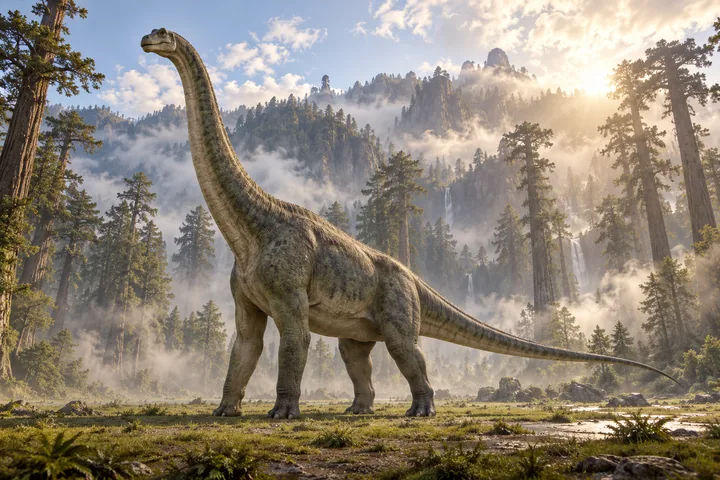
Long-necked Brachiosaurus standing on four legs in a misty conifer valley, with high shoulders and its head above the trees.
Movie-style interpretation
Late Jurassic

Brachiosaurus

Brachiosaurus altithorax

Brachiosaurus altithorax was a giant sauropod from Late Jurassic North America. Its name-bearing skeleton is incomplete, and many familiar reconstructions borrow details from the separate African dinosaur Giraffatitan.