
Body length
InferredAbout 0.65–0.75 m (known individual estimates)
Original reconstructions of the largest known individuals; histology identifies a near-sized specimen as a young adult, not a proven species maximum. [D1]
EXHIBIT 237
Fruitadens haagarorum
Dinosaur
Fruitadens was a tiny heterodontosaurid with teeth that suggest a possible mixed diet. [2]
TWO WAYS TO PICTURE THE PAST
Compare the evidence with the familiar movie image. The illustrations are not to a shared scale.
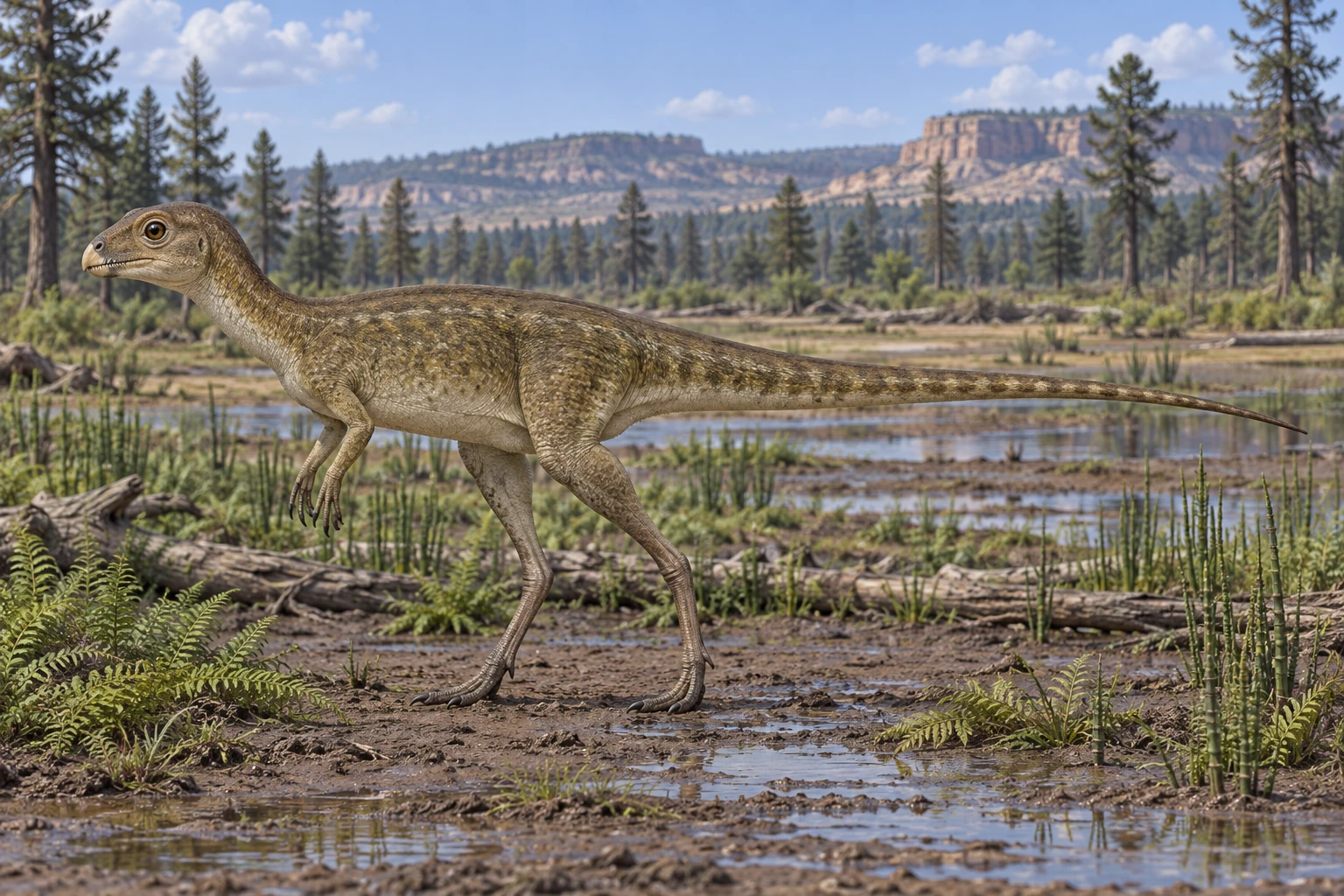
An illustrative reconstruction. Compare its anatomy with the evidence and limitations in the dossier. [2]
Source-informed reconstruction. Appearance evidence [2]. Original illustration; missing anatomy, coloration and scenery include interpretation.
Fossils constrain this life reconstruction. Missing anatomy, coloration and the environmental scene include interpretation; the dossier explains the evidence limits.
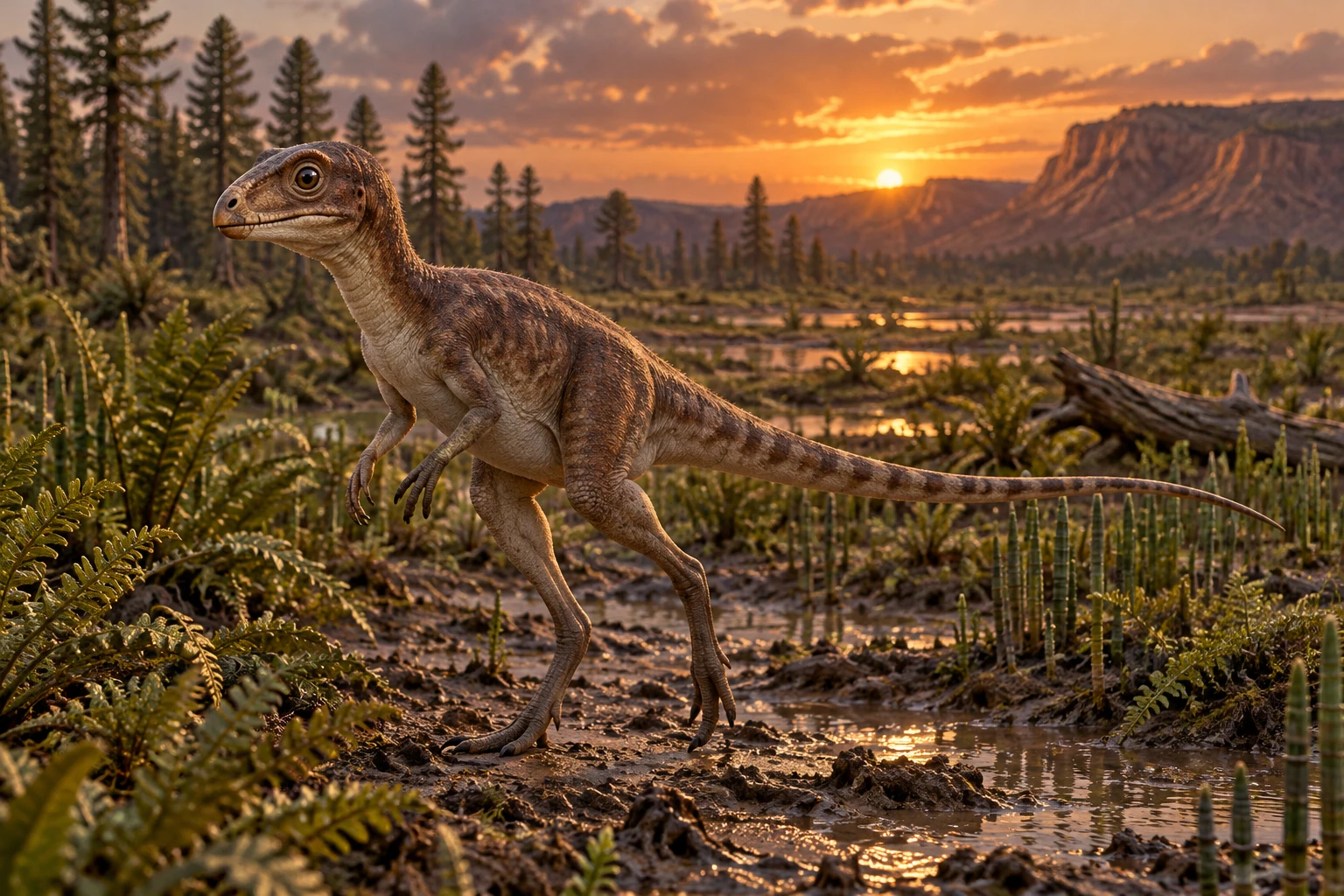
An illustrative reconstruction. Compare its anatomy with the evidence and limitations in the dossier. Lighting, coloration and scenery are artistic choices. This image does not document a fossil locality or behavior.
Original artwork · artistic interpretation.
Scientific view: source-informed reconstruction, credited paleoart or specimen-based imagery. Movie-style view: Original artistic interpretation. Reconstructions involve uncertainty.
MEET THE ANIMAL
Fruitadens was a very small dinosaur from western Colorado during the Late Jurassic. Researchers estimated the largest known individuals at roughly 65 to 75 centimeters long and around half to three-quarters of a kilogram. Thin sections of a similarly sized bone showed a young adult in its fifth year. This helps explain why small size cannot simply be dismissed as a baby dinosaur. [D1]
Its teeth and jaws provide clues to a possible mixed diet. Fruitadens lacked the impressive upper tusks seen in some relatives, and its lower canine-like tooth was modest. Researchers reconstructed a jaw suited to relatively quick, wide opening. Plants and small invertebrates are plausible foods, but that conclusion comes from anatomy and mechanics rather than a preserved stomach full of food. [D2]
The Natural History Museum of Los Angeles County includes Fruitadens in its Dinosaur Hall and compares its size with a chicken. Such comparisons help visitors picture an animal that could easily be overshadowed by giant skeletons. They are useful introductions, while the scientific details still depend on the actual teeth, limb fragments and growth evidence rather than the size of a familiar living animal. [D3]
PREHISTORIC ANIMAL DOSSIER
The animal, the evidence, and the questions still open.
Jaw mechanics suggest flexible feeding, while bone histology helps distinguish small young adults from juveniles. [D2]
Profile scope: Genus — Fruitadens haagarorum; partial Fruita fossils including holotype LACM 115747. [D1]
Source supported identifies a description documented by the cited source. Inferred marks a reconstruction or functional estimate. Debated marks competing interpretations. Not established means the sources reviewed for this dossier do not support a firm conclusion; it does not mean a behavior never occurred.
A size reference is an estimate, not a population range. Nesting evidence does not by itself establish courtship, mate choice, or lifelong pairing.
About 0.65–0.75 m (known individual estimates)
Original reconstructions of the largest known individuals; histology identifies a near-sized specimen as a young adult, not a proven species maximum. [D1]
About 0.5–0.75 kg (reconstructed individuals)
Estimates from the original study, not measured weights or a species-wide range. [D1]
Possible mixed diet
Tooth form and jaw mechanics suggest plants and small invertebrates; exclusive herbivory or a particular meal is not demonstrated. [D2]
Western Colorado Morrison setting
Fossils come from the Fruita locality in the lower Brushy Basin Member, early Tithonian Late Jurassic. [D1]
Small bipedal reconstruction
Preserved hindlimb and ankle anatomy supports two-legged movement; speed is not measured. [D2]
Small, varied teeth
There is no large upper tusk; the lower canine-like tooth is no taller than the largest cheek teeth. [D2]
Not established here
Reviewed material provides no assigned egg, nest or embryo. [D1]
Not established here
Reviewed skull and jaw evidence does not reveal mating displays. [D2]
Not established here
Several museum specimens do not establish a living group or family structure. [D3]
Sources and inspection notes for the claims in this profile.
THE STORY IN THE FOSSILS
The museum's chicken-size comparison makes the display accessible, while the measurements retain their individual-estimate scope. [3]
The dossier identifies the scope of each reference estimate. A mount, an individual fossil and a species-wide adult range are different measurements. Comparison metrics remain unavailable where adult scope has not been established. Unknown does not mean zero.
Sources support the stated claims and scopes. Refer to the evidence notes for uncertainty.
KEEP EXPLORING
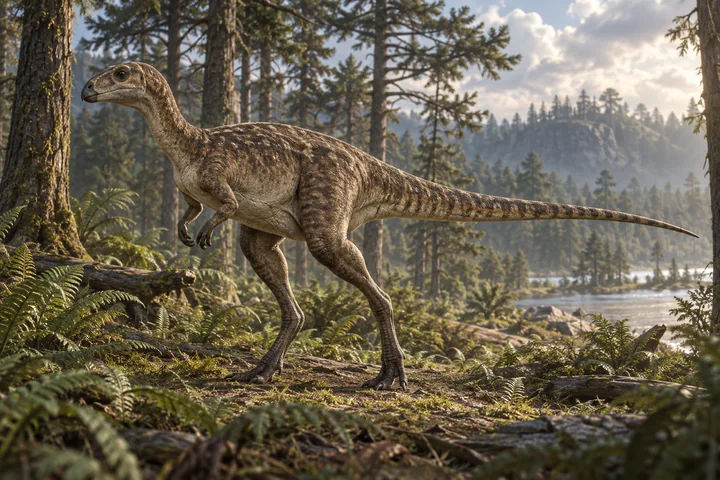
Dryosaurus altus
Dryosaurus altus was a small bipedal plant-eater from the Late Jurassic of western North America. Revised identifications separate it from famous Utah skeletons assigned to Dryosaurus elderae.
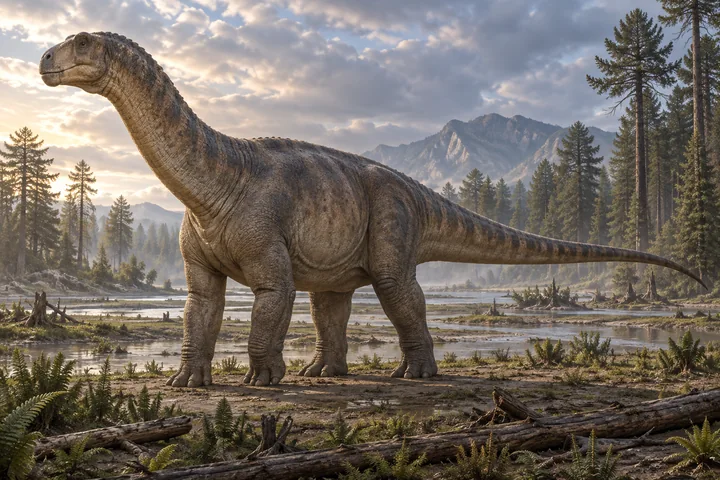
Camarasaurus
Camarasaurus was a Late Jurassic North American sauropod with broad teeth, a boxy skull and air-filled vertebrae.
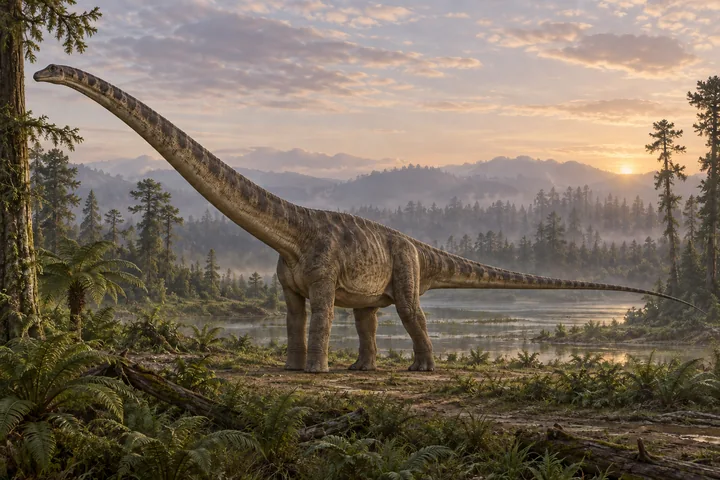
Barosaurus lentus
Barosaurus was a long-necked plant-eater. Its dramatic New York display is an imagined encounter built from skeletal casts.