
Body length
InferredAbout 4.2 m; immature holotype
The reconstruction refers to FPDM-V97122. The growth-series study identifies immaturity despite an earlier near-adult interpretation; this is not a mature species maximum. [D1]
EXHIBIT 129
Fukuiraptor kitadaniensis
Fukuiraptor was a Japanese meat-eater with long hands and large, thin claws. Its well-known reconstructed individual was still growing. [4]
TWO WAYS TO PICTURE THE PAST
Compare the evidence with the familiar movie image. The illustrations are not to a shared scale.
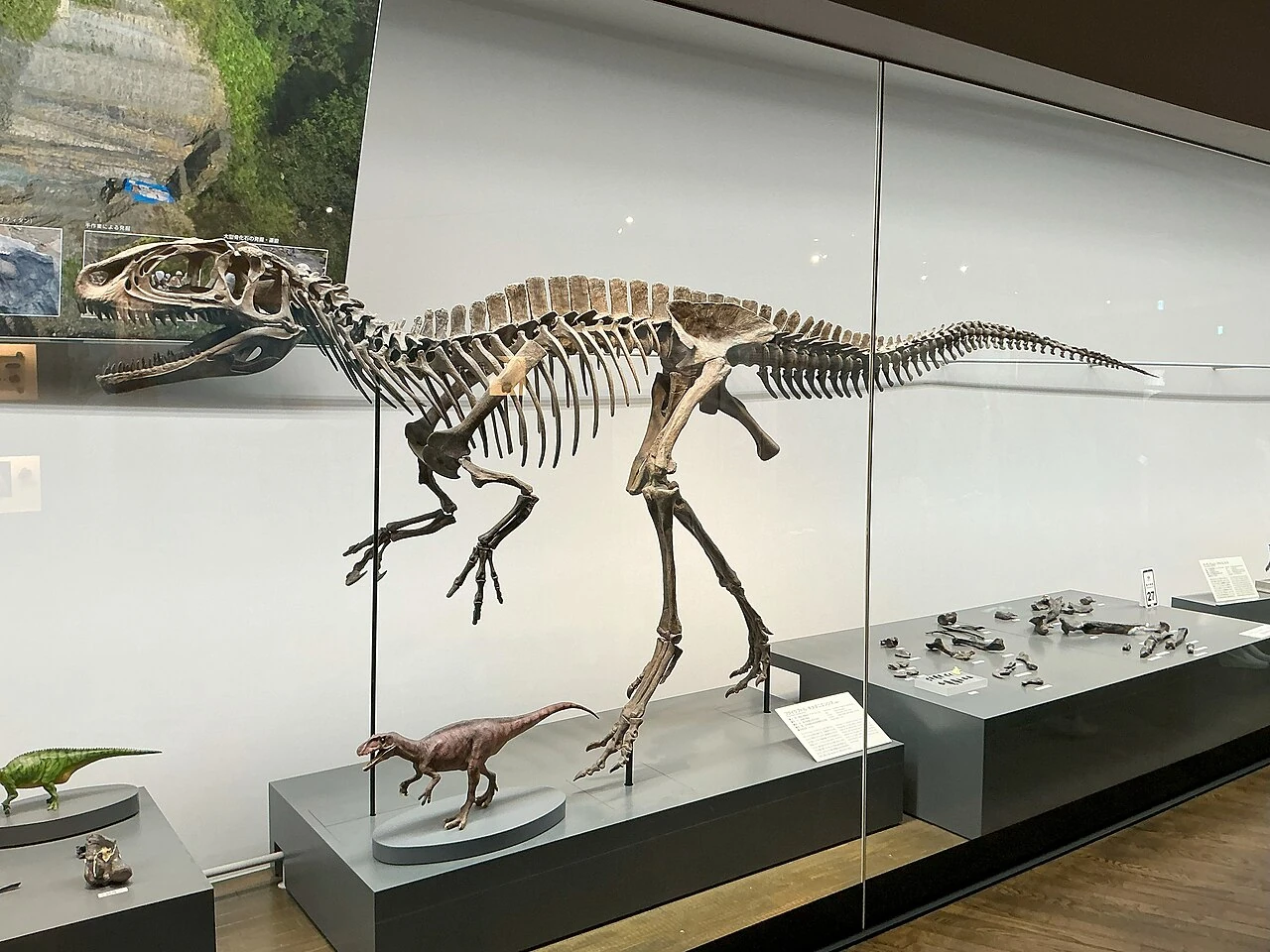
Fukuiraptor skeletal reconstruction and holotype fossils at the Fukui Prefectural Dinosaur Museum. The mount restores missing anatomy and posture; its 4.2 m reference individual is immature. [4]
Fukuiraptor skeletal mount and holotype fossils · Palaeotaku. CC BY 4.0. Resized proportionally and converted to WebP; no anatomical edits. Same source license applies.
Skeletal mounts and drawings may restore missing parts; the caption identifies the displayed material.
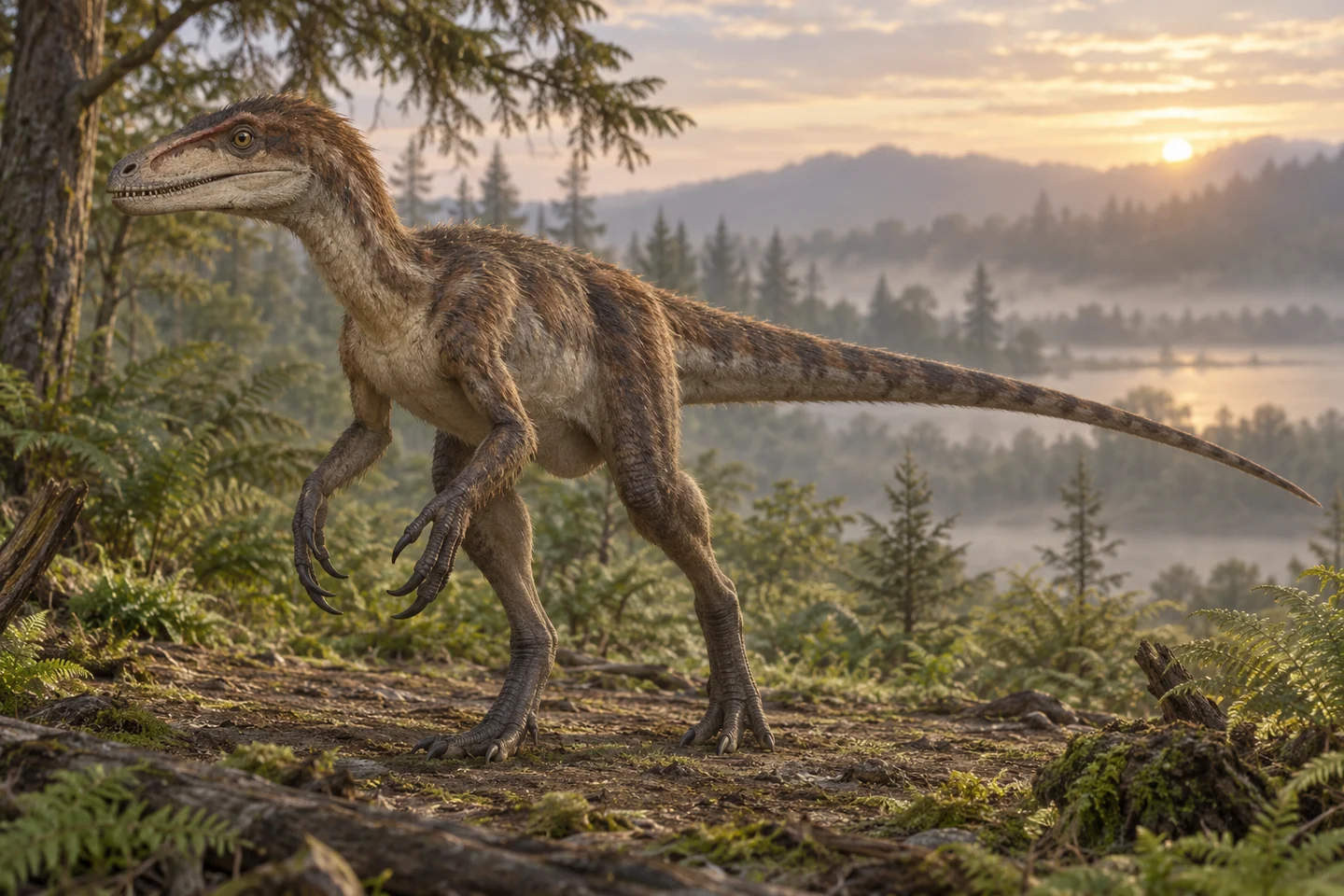
Original cinematic interpretation of Fukuiraptor kitadaniensis — immature interpretation. Colors, soft tissues, scenery and missing anatomy are reconstructed artistic choices; this is not a directly observed individual or behavior. The type is immature; complete proportions and soft tissues are reconstructed, and adult size is not depicted as established. Feathering is a comparative artistic scenario rather than directly preserved plumage. Lighting, coloration and scenery are artistic choices. This image does not document a fossil locality or behavior.
Original artwork · artistic interpretation.
Scientific view: source-informed reconstruction, credited paleoart or specimen-based imagery. Movie-style view: Original artistic interpretation. Reconstructions involve uncertainty.
MEET THE ANIMAL
Fukuiraptor was a dinosaur from the Kitadani Formation near Katsuyama in Fukui, Japan. Current research places that formation in the Aptian part of the Early Cretaceous. The local rock record helps establish its time and place, but other dinosaurs found there retain their own identities and biology. A shared quarry is not one species' complete fossil collection. [D5]
The museum identifies it as a meat eater with unusually large, thin hand claws and relatively long hands. Those are the striking claws in its profile, rather than a familiar raptor-style second-toe weapon. The displayed animal is also described as still growing. A reconstruction of that individual should not silently become the maximum size of a fully grown animal. [D4]
Research on additional teeth and limb bones provides a growth series and suggests at least fourteen individuals from the thigh-bone evidence. Their preservation leaves different burial explanations open. Counting individuals helps reveal the sample available for comparison, but does not by itself demonstrate pack hunting or a lasting social group. Fukuiraptor combines distinctive hands with a fossil record that makes growth an important part of interpretation. [D1]
PREHISTORIC ANIMAL DOSSIER
The animal, the evidence, and the questions still open.
A fragmentary skull and associated limbs support a theropod reconstruction. The conspicuous claws belong to the hands rather than a raptor-style enlarged second toe. [D2] [D4]
Profile scope: Genus profile centered on Fukuiraptor kitadaniensis, immature holotype FPDM-V97122 and provisionally referred growth-series material from Kitadani. [D1]
Source supported identifies a description documented by the cited source. Inferred marks a reconstruction or functional estimate. Debated marks competing interpretations. Not established means the sources reviewed for this dossier do not support a firm conclusion; it does not mean a behavior never occurred.
A size reference is an estimate, not a population range. Nesting evidence does not by itself establish courtship, mate choice, or lifelong pairing.
About 4.2 m; immature holotype
The reconstruction refers to FPDM-V97122. The growth-series study identifies immaturity despite an earlier near-adult interpretation; this is not a mature species maximum. [D1]
About 250 kg; immature individual model
Benson’s supporting data estimate 250.43 kg for FPDM-V97122 using measured femoral dimensions and flag it juvenile. Model error and growth prevent treating this as adult mass. [D3]
Animal foods
The museum identifies carnivory. Reviewed evidence does not establish a preferred prey species, habitual scavenging or cooperative hunting. [D4]
Aptian Kitadani Formation, central Japan
Current primary research places the quarry’s formation in the Aptian Early Cretaceous, in Katsuyama, Fukui. Earlier age assignments in old descriptions should not become a precise fossil-individual date. [D5]
Terrestrial bipedal reconstruction
Preserved hindlimb elements support a two-legged theropod reconstruction. The incomplete skeleton does not measure running speed; mounted posture and restored vertebrae remain interpretive. [D2]
Relatively long hands and large thin claws
The museum emphasizes elongated hands and large, thin manual claws. A dromaeosaur-style second-toe sickle claw is not the feature supporting this profile. [D4]
Not established here
Juvenile concentration prompted a breeding- or nesting-site hypothesis, but no assigned clutch establishes it. The study could not exclude a predator trap or a social-group catastrophe. [D1]
Not established here
Focused searches and reviewed descriptions did not establish sex-specific skeletons, display feathers, mating calls or mate choice. Hand claws do not by themselves demonstrate courtship.
Not established here
Femora imply at least 14 individuals. The authors explicitly could not distinguish nesting, predator-trap or social-group explanations; this accumulation does not prove coordinated hunting. [D1]
Sources and inspection notes for the claims in this profile.
THE STORY IN THE FOSSILS
Fukuiraptor’s most striking claws are in its hands. The museum explains their unusually large, thin form while also identifying the familiar reconstructed animal as still growing. [4]
An associated type helps anchor identification. Isolated quarry bones and teeth require separate referral decisions rather than becoming interchangeable parts of one complete skeleton. [2]
The dossier identifies the scope of each reference estimate. A mount, an individual fossil and a species-wide adult range are different measurements. Comparison metrics remain unavailable where adult scope has not been established. Unknown does not mean zero.
Sources support the stated claims and scopes. Refer to the evidence notes for uncertainty.
KEEP EXPLORING
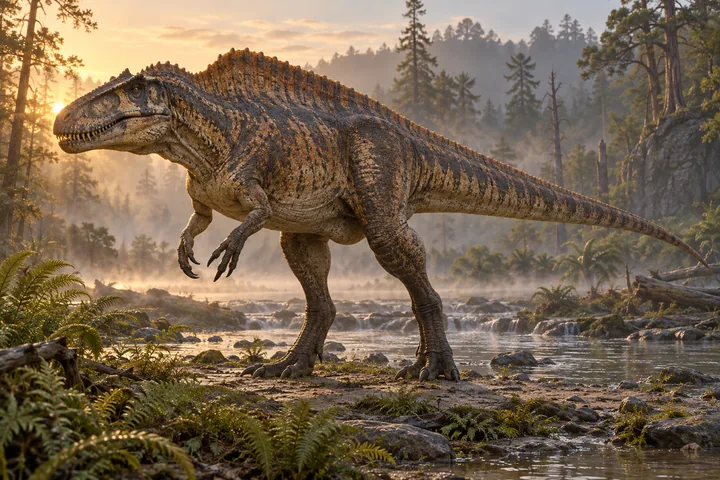
Acrocanthosaurus
This Early Cretaceous carnivore is known from North American fossils. Its high vertebral spines give it a distinctive raised back profile.
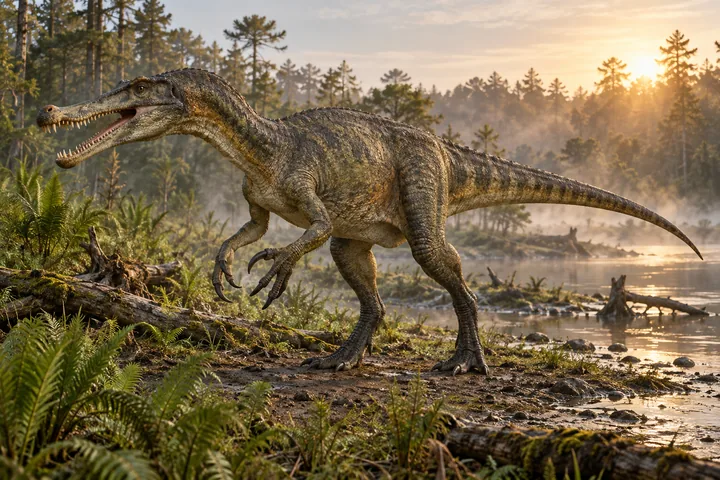
Baryonyx
Baryonyx had a crocodile-like snout and an enlarged hand claw. Its preserved last meal supports a carnivorous diet that included more than fish.
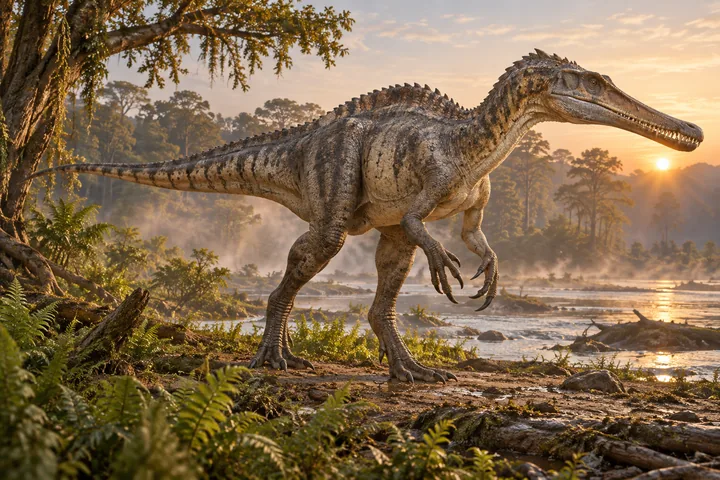
Suchomimus
This Niger spinosaur was closely similar to Baryonyx. Its hooked, rounded teeth suggest a role catching fish in ancient river environments.