Body length
InferredAbout 23 m; museum reference
The museum gives an exhibit reference without a named individual or method. The mounted skeleton combines animals and restored parts; this is not an adult species maximum. [D4] [D2]
EXHIBIT 104
Giraffatitan brancai
Giraffatitan was a tall-shouldered plant-eater from Tanzania, famous for the reconstructed skeleton displayed in Berlin. [4]
TWO WAYS TO PICTURE THE PAST
Compare the evidence with the familiar movie image. The illustrations are not to a shared scale.
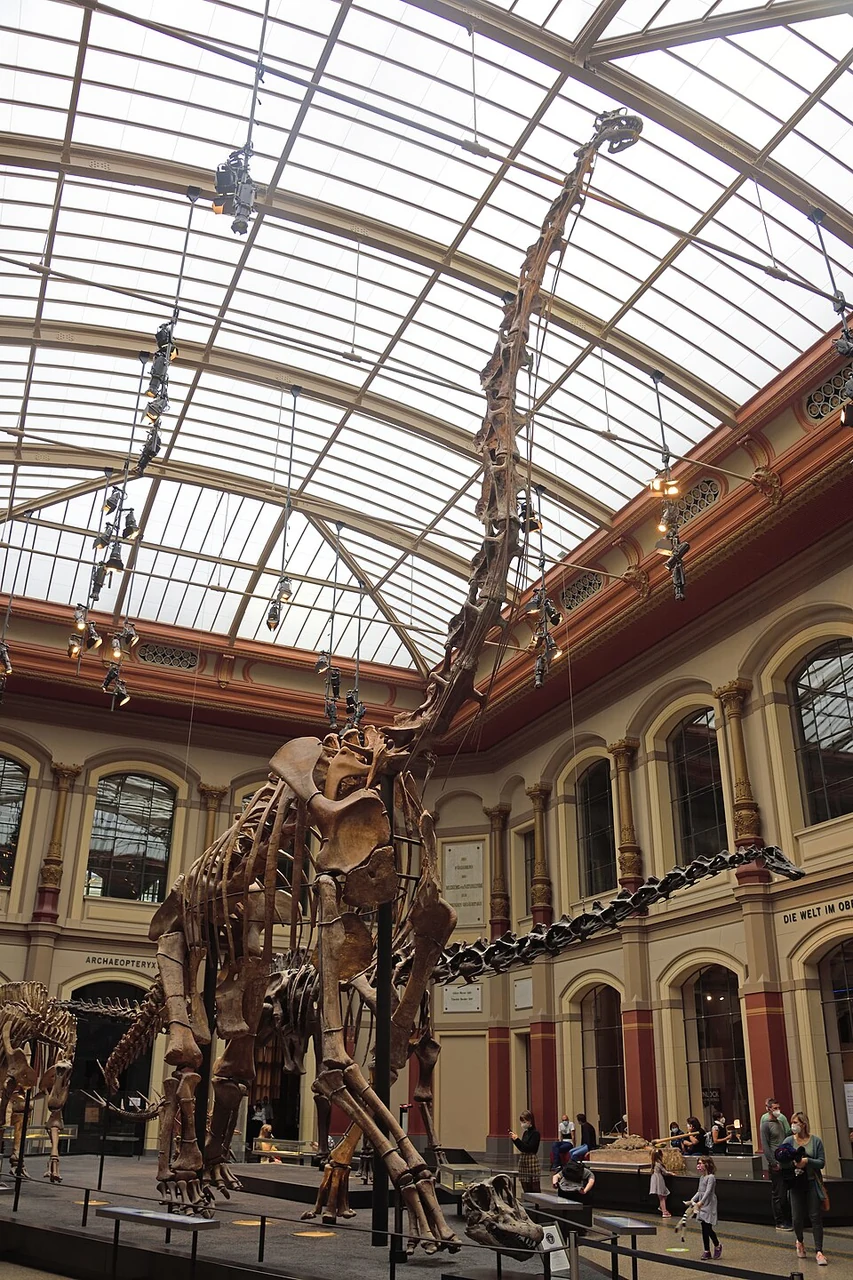
Giraffatitan brancai composite mount at the Museum für Naturkunde, Berlin. Bones from different individuals and restored parts contribute to the display; mounted pose and body completeness are interpretive. [1]
Giraffatitan skeleton in Museum für Naturkunde Berlin 0816 · Dosseman (Dick Osseman). CC BY-SA 4.0. Resized proportionally and converted to WebP; no anatomical edits. Same source license applies.
Skeletal mounts and drawings may restore missing parts; the caption identifies the displayed material.
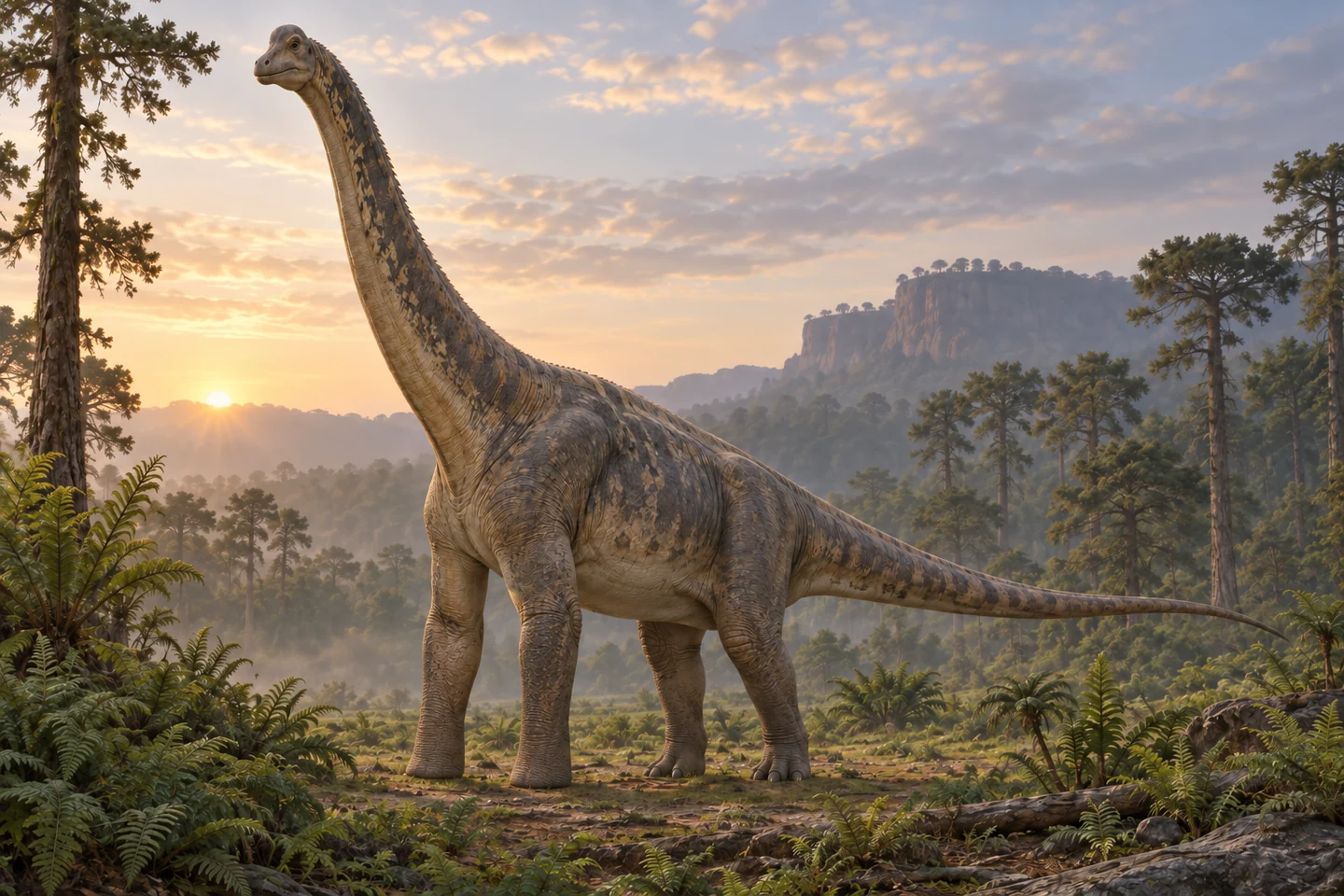
Original cinematic interpretation of Giraffatitan brancai. Colors, soft tissues, scenery and missing anatomy are reconstructed artistic choices; this is not a directly observed individual or behavior. Lighting, coloration and scenery are artistic choices. This image does not document a fossil locality or behavior.
Original artwork · artistic interpretation.
Scientific view: source-informed reconstruction, credited paleoart or specimen-based imagery. Movie-style view: Original artistic interpretation. Reconstructions involve uncertainty.
MEET THE ANIMAL
Giraffatitan was a plant-eating sauropod from Late Jurassic Tanzania. Its fossils are associated with Tendaguru, and the Berlin exhibit offers a familiar picture of its enormous body. A museum length reference introduces its scale without identifying one complete measured individual. [D4]
The museum describes a remarkably long neck, small head and column-like limbs. Together these features outline a terrestrial sauropod whose bulk was supported above the ground. A display makes those proportions easy to appreciate, while a mounted pose still includes choices about missing anatomy. [D4]
The towering Berlin skeleton combines bones from several animals and restored parts. Its original name-bearing specimen is a skull and front-neck skeleton, not the entire mounted display. Keeping that distinction visible explains what identifies the dinosaur and what information was assembled to produce the full reconstruction. [D2]
Researchers estimated the mass of the mounted composite using laser scans and a model calibrated with mammals. The result applies to that reconstruction, rather than a weighed animal or an adult population. A spectacular display can be a useful research subject while still requiring careful explanation of its restored pieces. [D3]
PREHISTORIC ANIMAL DOSSIER
The animal, the evidence, and the questions still open.
Long forelimbs, a deep chest and an extended neck gave this brachiosaurid distinctive proportions. Fossil anatomy supports its separation from Brachiosaurus. [D1]
Profile scope: Genus profile centered on Giraffatitan brancai from Tendaguru. The North American Brachiosaurus altithorax is a separate taxon; the Berlin mount combines individuals. [D2]
Source supported identifies a description documented by the cited source. Inferred marks a reconstruction or functional estimate. Debated marks competing interpretations. Not established means the sources reviewed for this dossier do not support a firm conclusion; it does not mean a behavior never occurred.
A size reference is an estimate, not a population range. Nesting evidence does not by itself establish courtship, mate choice, or lifelong pairing.
About 23 m; museum reference
The museum gives an exhibit reference without a named individual or method. The mounted skeleton combines animals and restored parts; this is not an adult species maximum. [D4] [D2]
About 23.2 tonnes; mounted-composite model
Sellers’ laser-scan model uses a minimum convex hull and a correction calibrated on mammals. Its subject is the Berlin reconstruction, not a single fossil animal or an adult population. [D3]
Plants
The museum identifies herbivory. Long forelimbs and neck are compatible with elevated browsing, but neither a fixed feeding height nor a specific plant menu is established here. [D4]
Tendaguru coastal plains
The formation records coastal and tidal plains alternating with shallow marine deposits. These sediments reconstruct a regional setting, not evidence that Giraffatitan lived submerged; its reviewed material is Late Jurassic. [D5] [D4]
Four-legged terrestrial walker
The skeleton’s weight-bearing limbs and unusually long forelimbs support quadrupedal reconstruction. Habitual neck angle and walking speed are not directly measured by a museum mount. [D1]
Long forelimbs and high shoulders
Comparison with Brachiosaurus finds differences in the trunk, tail and limb proportions. The familiar African skeleton should not supply interchangeable measurements for the American genus. [D1]
Not established here
Reviewed genus-specific research does not establish clutch size, nesting arrangement, incubation behavior or parental care. Broader sauropod nesting discoveries cannot supply those details.
Not established here
Focused searches and reviewed anatomy do not establish mate choice, displays or sex-specific coloration. Comparisons with living giraffes are not direct dinosaur evidence.
Not established here
Numerous Tendaguru specimens are known, but the reviewed sources do not establish persistent herds or the relationships between the individuals used in the mount.
Sources and inspection notes for the claims in this profile.
THE STORY IN THE FOSSILS
The towering Berlin reconstruction brings together bones from several animals. The actual holotype is MB.R.2180, a skull and anterior neck skeleton; the larger MB.R.2181 is referred material, rather than a valid lectotype. [2]
Separating Giraffatitan from Brachiosaurus makes the catalog more informative: their similar silhouettes conceal distinct trunk, tail and limb proportions. [1]
The dossier identifies the scope of each reference estimate. A mount, an individual fossil and a species-wide adult range are different measurements. Comparison metrics remain unavailable where adult scope has not been established. Unknown does not mean zero.
Sources support the stated claims and scopes. Refer to the evidence notes for uncertainty.
KEEP EXPLORING
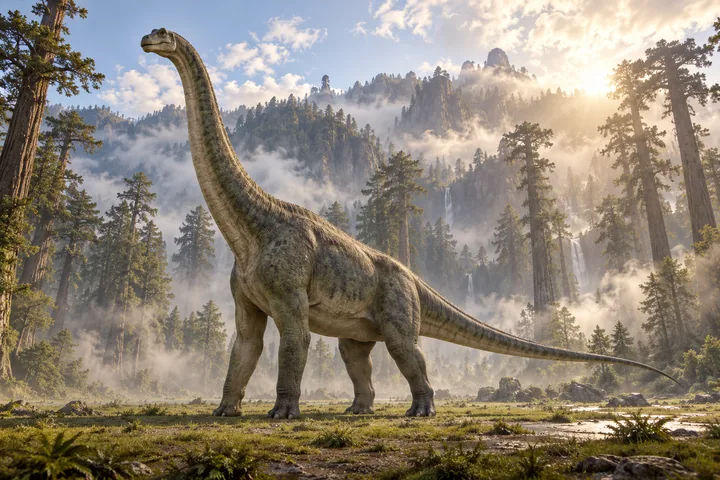
Brachiosaurus altithorax
Brachiosaurus altithorax was a giant sauropod from Late Jurassic North America. Its name-bearing skeleton is incomplete, and many familiar reconstructions borrow details from the separate African dinosaur Giraffatitan.
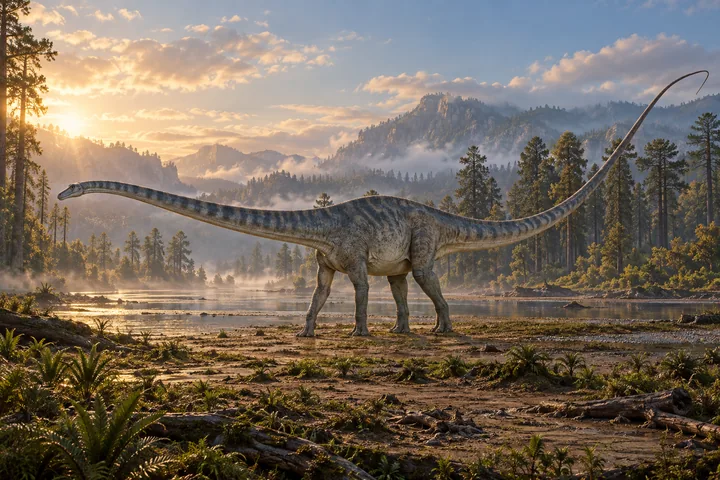
Diplodocus
Diplodocus was a long-necked plant eater from the Late Jurassic Morrison Formation. Its exceptionally long tail and distinctive double-beamed bones gave it both its silhouette and its name.
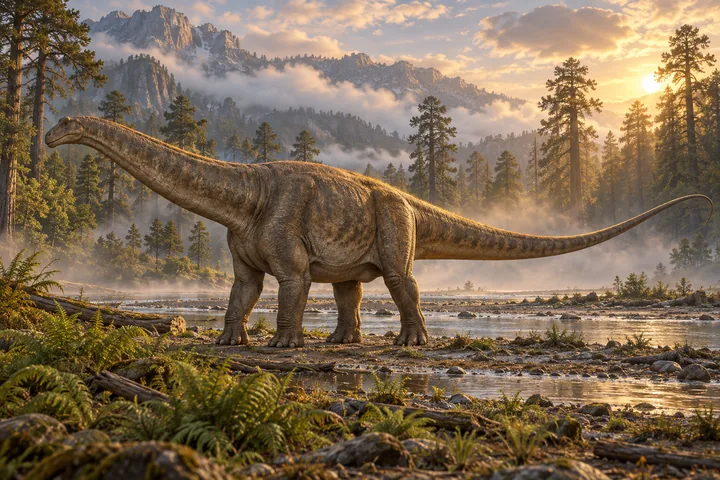
Apatosaurus
Apatosaurus was a plant-eating sauropod from the Late Jurassic of North America. Its discovery history includes a famous skeleton displayed with a Camarasaurus head before a narrow Apatosaurus skull was restored.