Body length
Not establishedNot established here
No unsupported 7.5 m generalization is adopted from fragmentary old-individual material. [D2]
EXHIBIT 296
Gobihadros mongoliensis
Dinosaur
A Mongolian plant-eating relative of duck-billed dinosaurs with a preserved thumb spike and informative skeleton. [3]
TWO WAYS TO PICTURE THE PAST
Compare the evidence with the familiar movie image. The illustrations are not to a shared scale.
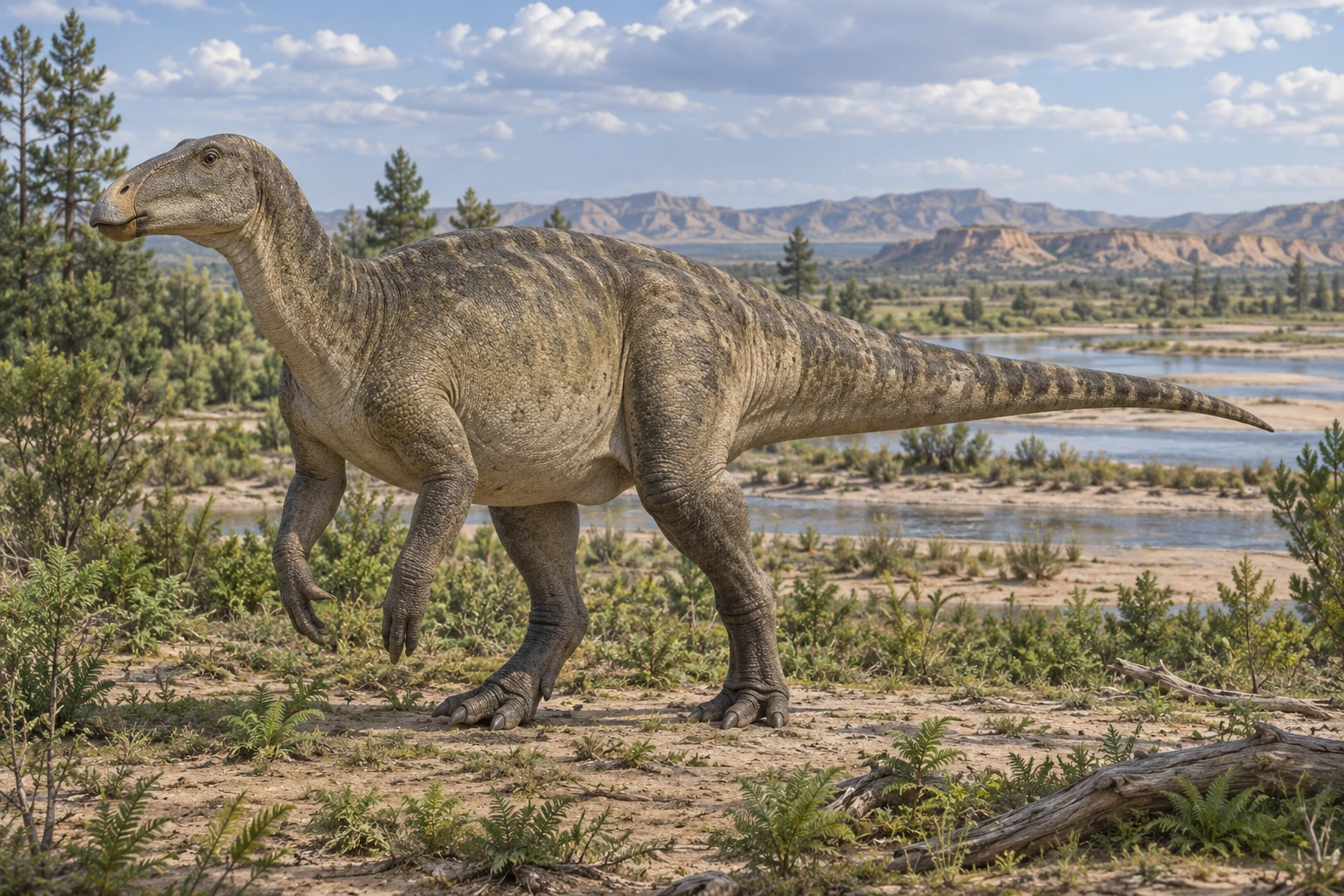
An illustrative reconstruction. Compare its anatomy with the evidence and limitations in the dossier. [1]
Source-informed reconstruction. Appearance evidence [1]. Original illustration; missing anatomy, coloration and scenery include interpretation.
Fossils constrain this life reconstruction. Missing anatomy, coloration and the environmental scene include interpretation; the dossier explains the evidence limits.
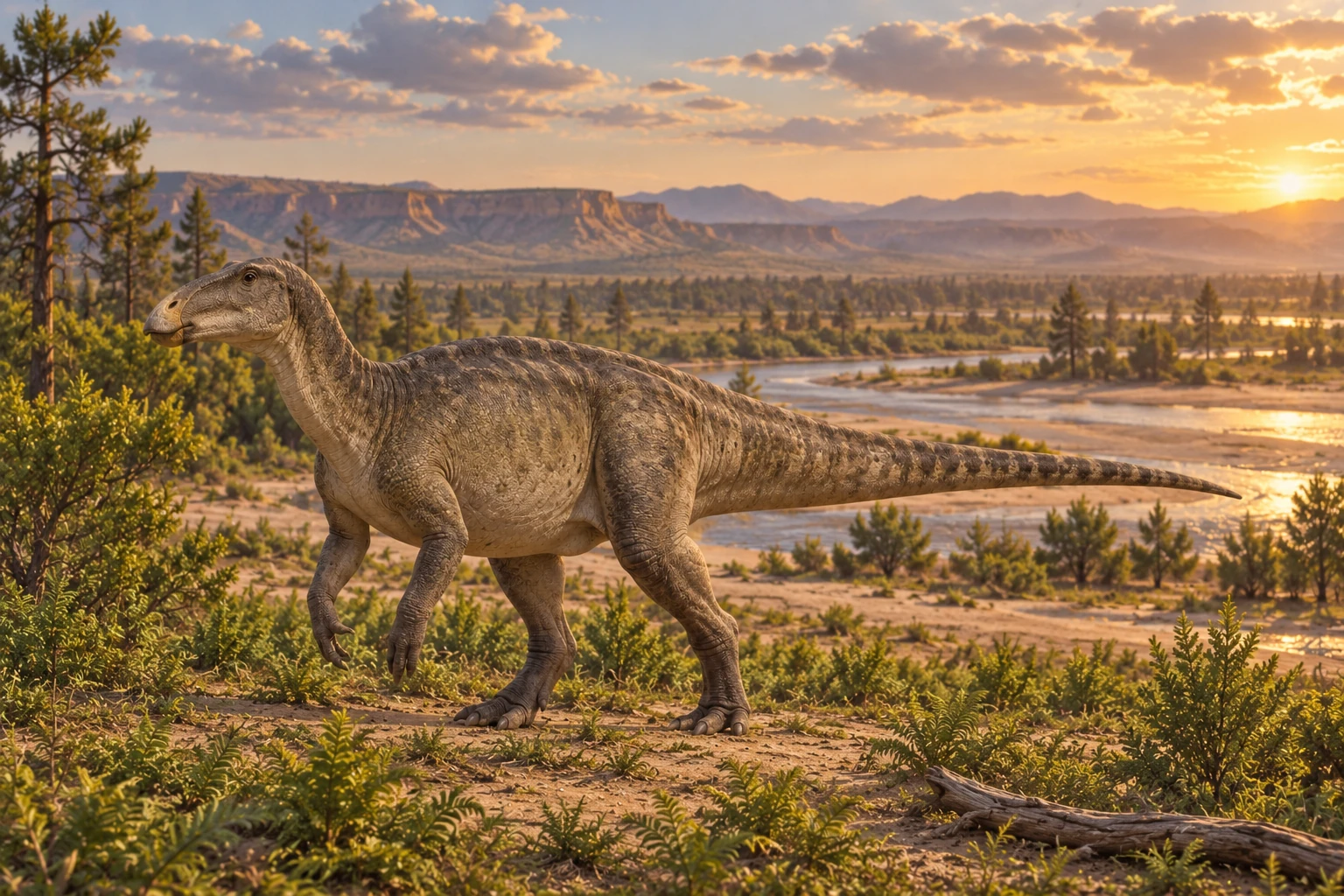
An illustrative reconstruction. Compare its anatomy with the evidence and limitations in the dossier. Lighting, coloration and scenery are artistic choices. This image does not document a fossil locality or behavior.
Original artwork · artistic interpretation.
Scientific view: source-informed reconstruction, credited paleoart or specimen-based imagery. Movie-style view: Original artistic interpretation. Reconstructions involve uncertainty.
MEET THE ANIMAL
Gobihadros lived in Late Cretaceous Mongolia. It belonged to the hadrosauroids, the larger family of relatives surrounding the familiar duck-billed dinosaurs. Researchers named it in 2019 using unusually informative fossils, including a nearly complete skeleton. This helped fill a gap in the record of these plant-eating dinosaurs, showing that useful discoveries need not be the biggest or most dramatic animals. [D3]
Its broad mouth and closely packed chewing teeth suggest a plant eater. A pointed thumb bone remained on the hand, unlike the hands of more advanced hadrosaurids. The shape of its jaw, teeth and hip bones helped distinguish it from close relatives. Its fossils occur in river-related deposits, but a mixed collection of bones there cannot prove a herd. [D1]
A later study examined a different, much older individual. Microscopic bone structure indicated that growth had stopped, and several bones showed changes consistent with age-related disease. These traces provide a rare view of aging in dinosaurs. They cannot tell us an exact lifespan for the whole species, and the old individual should not be confused with the younger name-bearing skeleton. [D2]
PREHISTORIC ANIMAL DOSSIER
The animal, the evidence, and the questions still open.
An older individual’s bone tissue records ceased growth and age-related disease. [D2]
Profile scope: This exhibit concerns Gobihadros mongoliensis from the Baynshire Formation, keeping its differently aged individuals separate. [D1]
Source supported identifies a description documented by the cited source. Inferred marks a reconstruction or functional estimate. Debated marks competing interpretations. Not established means the sources reviewed for this dossier do not support a firm conclusion; it does not mean a behavior never occurred.
A size reference is an estimate, not a population range. Nesting evidence does not by itself establish courtship, mate choice, or lifelong pairing.
Not established here
No unsupported 7.5 m generalization is adopted from fragmentary old-individual material. [D2]
Not established here
The inspected aging study establishes no adopted body-mass model. [D2]
Herbivory inferred from oral and dental anatomy.
Chewing teeth do not identify a complete menu of plant species. [D1]
River-related terrestrial deposits.
Point-bar sandstones and mixed bonebeds describe burial settings. [D1]
Land movement on weight-bearing limbs.
Preserved forelimbs and hindlimbs support reconstruction; no speed estimate adopted. [D1]
Broad beak, tooth batteries and a thumb spike.
The spike distinguishes its hand from more derived hadrosaurids. [D1]
Not established here
Somatic maturity and senescence do not establish assigned eggs or nesting behavior. [D2]
Not established here
Age-related disease supplies no evidence of mating displays or sexual dimorphism. [D2]
Not established here
Mixed vertebrate bonebeds do not demonstrate a Gobihadros herd. [D1]
Sources and inspection notes for the claims in this profile.
THE STORY IN THE FOSSILS
A near-complete skeleton makes an early branch of duck-billed dinosaur evolution unusually accessible for comparison. [3]
Growth stopping and old age are separate questions; histology and pathology informed the later study. [2]
The dossier identifies the scope of each reference estimate. A mount, an individual fossil and a species-wide adult range are different measurements. Comparison metrics remain unavailable where adult scope has not been established. Unknown does not mean zero.
Sources support the stated claims and scopes. Refer to the evidence notes for uncertainty.
KEEP EXPLORING
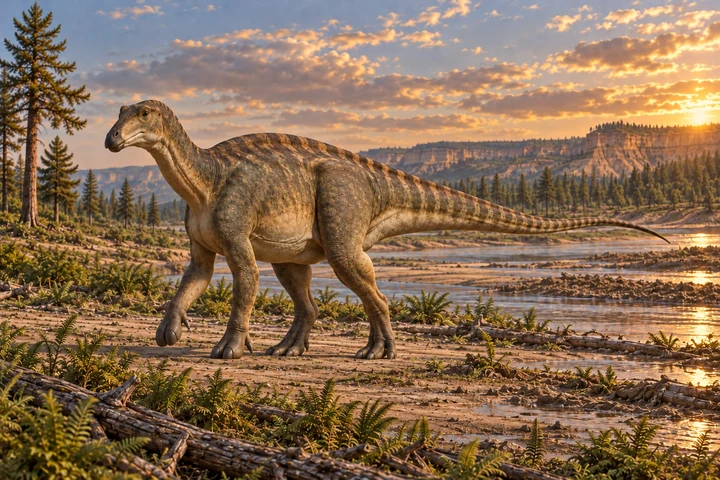
Eolambia caroljonesa
Dinosaur
A plant-eating Utah dinosaur related to duck-billed dinosaurs, known from complementary adult and juvenile fossils.
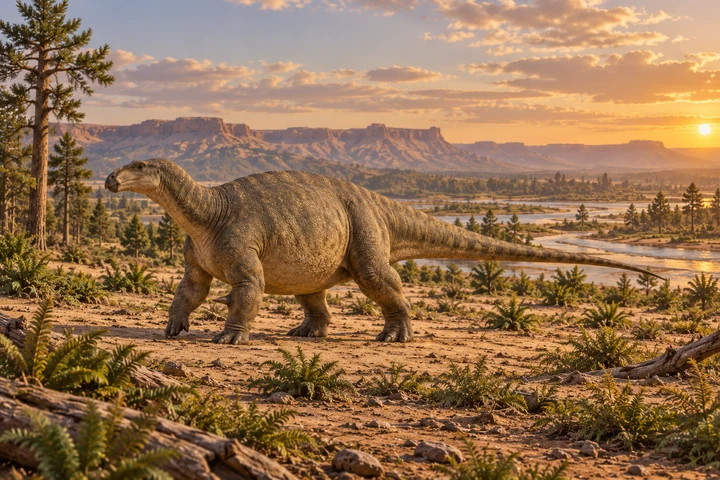
Lurdusaurus arenatus
Dinosaur
A plant-eating Nigerien iguanodontian with unusually thick limbs and a massive low-slung build.
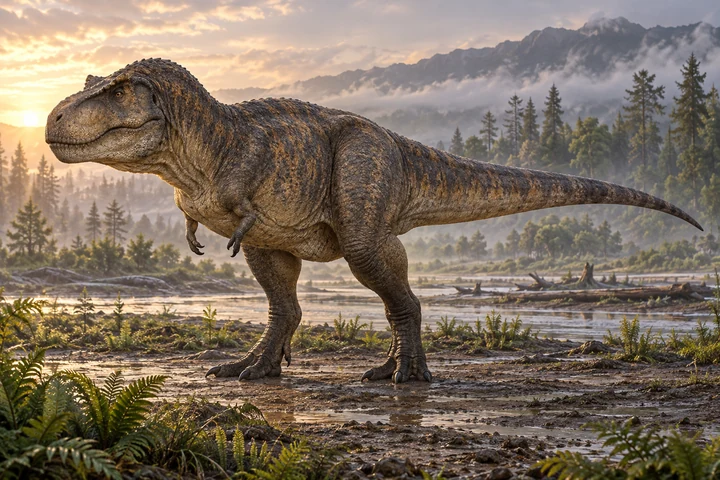
Tyrannosaurus rex
Tyrannosaurus rex was a large meat-eating dinosaur from the final part of the Cretaceous in western North America. Fossil teeth, bite marks and skeletons reveal a powerful animal whose behaviour still invites questions.