Body length
InferredMuseum reference estimate: 9 m.
Educational reconstruction rather than an observed adult population range. [D2]
EXHIBIT 299
Lurdusaurus arenatus
Dinosaur
A plant-eating Nigerien iguanodontian with unusually thick limbs and a massive low-slung build. [2]
TWO WAYS TO PICTURE THE PAST
Compare the evidence with the familiar movie image. The illustrations are not to a shared scale.
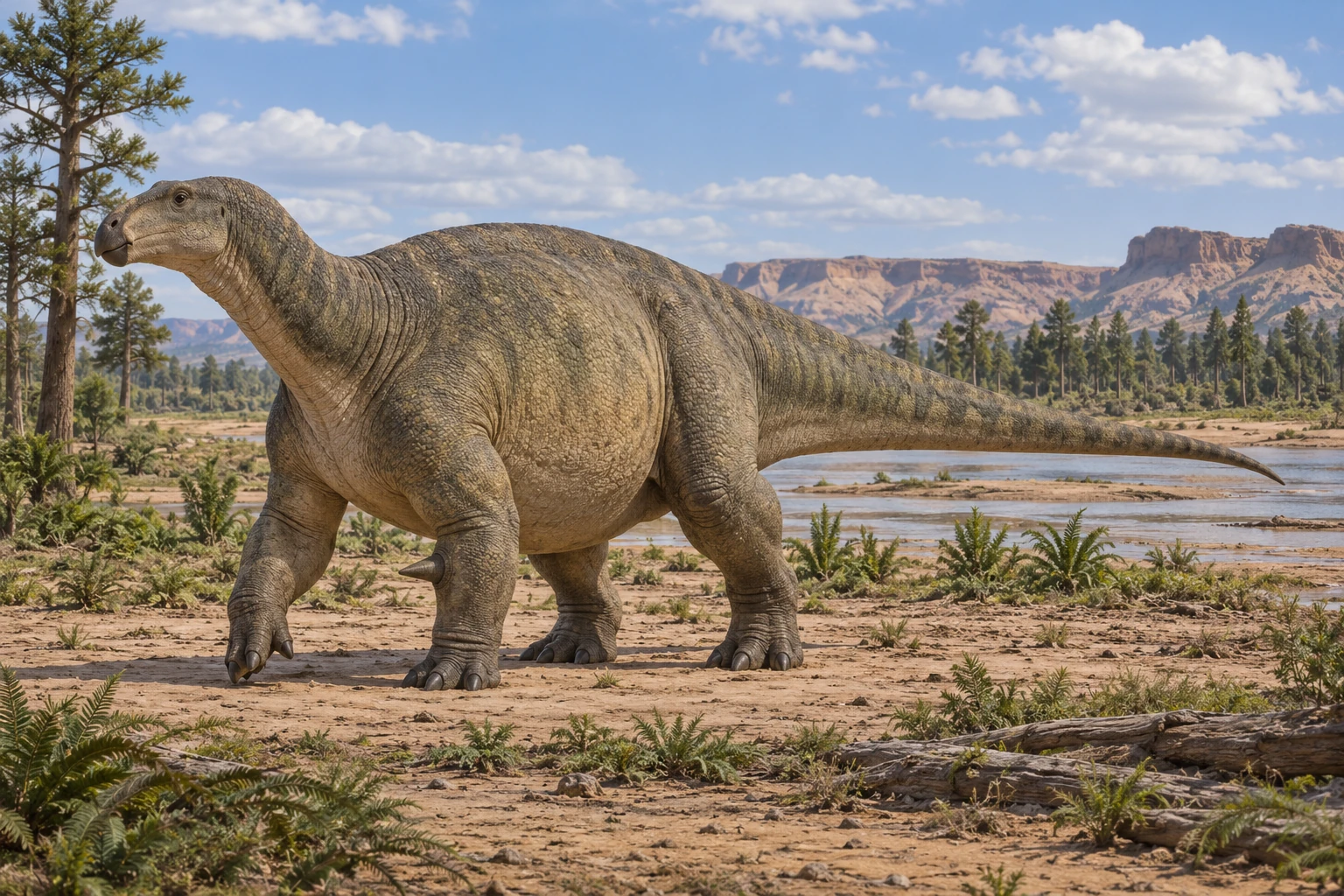
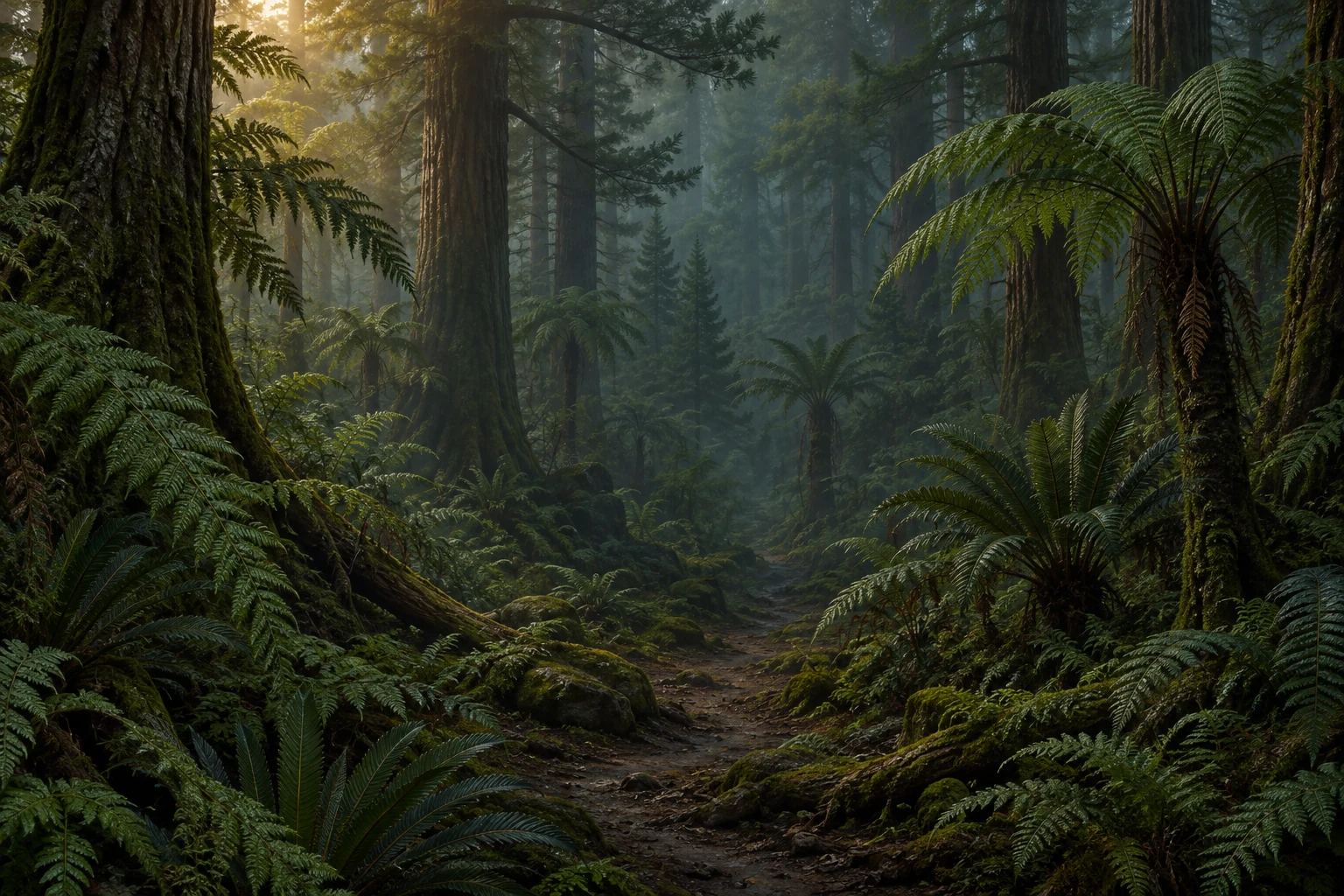
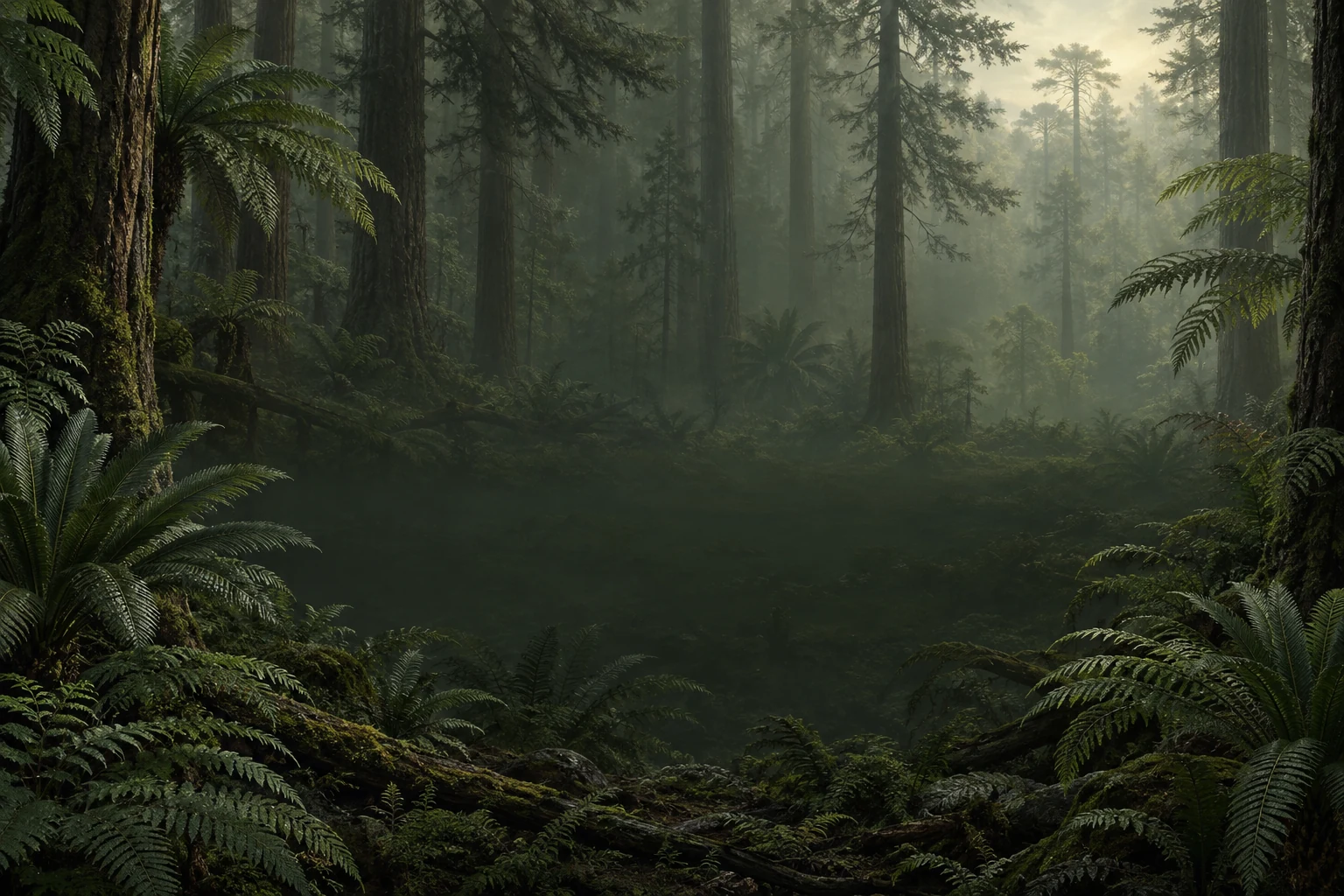
An illustrative reconstruction. Compare its anatomy with the evidence and limitations in the dossier. [1]
Source-informed reconstruction. Appearance evidence [1]. Original illustration; missing anatomy, coloration and scenery include interpretation.
Fossils constrain this life reconstruction. Missing anatomy, coloration and the environmental scene include interpretation; the dossier explains the evidence limits.
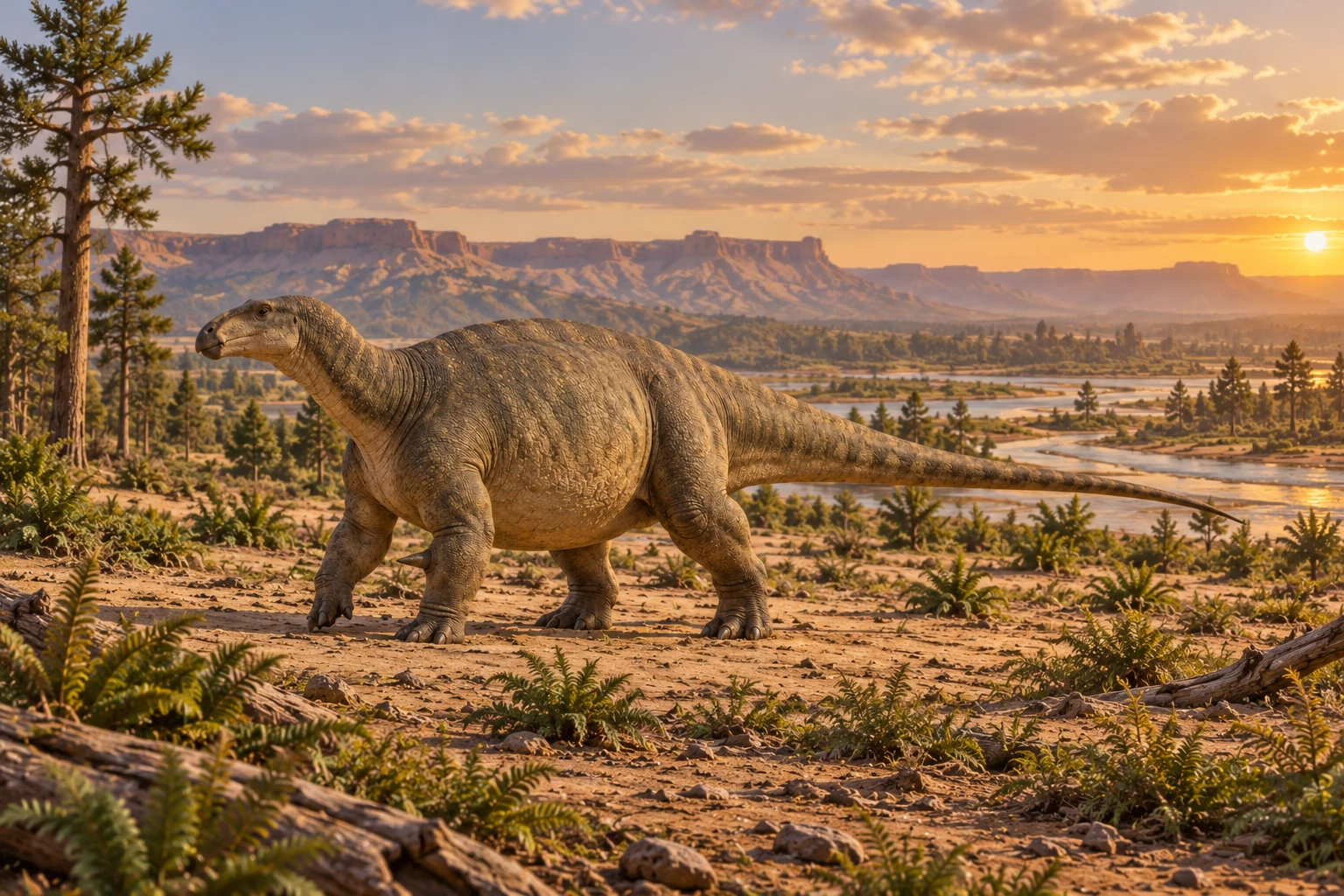
An illustrative reconstruction. Compare its anatomy with the evidence and limitations in the dossier. Lighting, coloration and scenery are artistic choices. This image does not document a fossil locality or behavior.
Original artwork · artistic interpretation.
Scientific view: source-informed reconstruction, credited paleoart or specimen-based imagery. Movie-style view: Original artistic interpretation. Reconstructions involve uncertainty.
MEET THE ANIMAL
Lurdusaurus was a large plant-eating dinosaur from Niger in Africa. The Natural History Museum lists an approximate length of 9 meters as a reference reconstruction. Its name means heavy lizard, which suits its unusual build. That museum figure gives a sense of scale, but should not be read as the measured length of every fully grown animal. [D2]
A 2026 study examined the limb skeleton and compared it with dinosaurs whose walking posture is better understood. All eleven skeletal comparisons supported movement on four legs for the adult Lurdusaurus specimen. Its unusually broad limb bones and short feet also supported the interpretation of a body adapted to bearing heavy weight. Those findings do not establish an exact speed or show how a young animal walked. [D5]
Museum records place the name-bearing remains at Gadoufaoua in the Ténéré region, in Early Cretaceous rocks assigned to the Aptian stage. Finding a fossil in today’s desert does not mean the animal lived in a desert. Researchers also keep track of individual skeletal pieces, allowing later studies to revisit the evidence instead of treating a complete-looking illustration as the specimen itself. [D3]
PREHISTORIC ANIMAL DOSSIER
The animal, the evidence, and the questions still open.
A fragmentary head accompanies a heavily built skeleton with short, thick forearm and hand bones. [D1]
Profile scope: This exhibit concerns Lurdusaurus arenatus, the name-bearing holotype from Gadoufaoua, Niger. [D1]
Source supported identifies a description documented by the cited source. Inferred marks a reconstruction or functional estimate. Debated marks competing interpretations. Not established means the sources reviewed for this dossier do not support a firm conclusion; it does not mean a behavior never occurred.
A size reference is an estimate, not a population range. Nesting evidence does not by itself establish courtship, mate choice, or lifelong pairing.
Museum reference estimate: 9 m.
Educational reconstruction rather than an observed adult population range. [D2]
Not established here
No adequately inspected whole-body model is adopted from the limited original excerpts. [D1]
Plant-eating iguanodontian.
The museum classification does not identify preferred plant species. [D2]
Aptian terrestrial Gadoufaoua setting.
Current Ténéré desert locality is not proof of an ancient desert habitat. [D3]
Adult obligate quadrupedality inferred in a 2026 study.
Eleven skeletal comparisons support weight-bearing adaptations; exact speed and juvenile gait remain unestablished. [D5]
Massive forelimbs, short metacarpals and large thumb spike.
Incomplete skull and soft tissues need restoration. [D1]
Not established here
The inspected holotype inventory records no assigned egg or nest. [D3]
Not established here
Specimen determination history supplies no mating ritual or sexual dimorphism. [D4]
Not established here
An individual skeleton does not establish a Lurdusaurus herd. [D1]
Sources and inspection notes for the claims in this profile.
THE STORY IN THE FOSSILS
The original diagnosis describes a mature but incompletely fused skeleton; maturity is assessed from several features together. [1]
The dossier identifies the scope of each reference estimate. A mount, an individual fossil and a species-wide adult range are different measurements. Comparison metrics remain unavailable where adult scope has not been established. Unknown does not mean zero.
Sources support the stated claims and scopes. Refer to the evidence notes for uncertainty.
KEEP EXPLORING
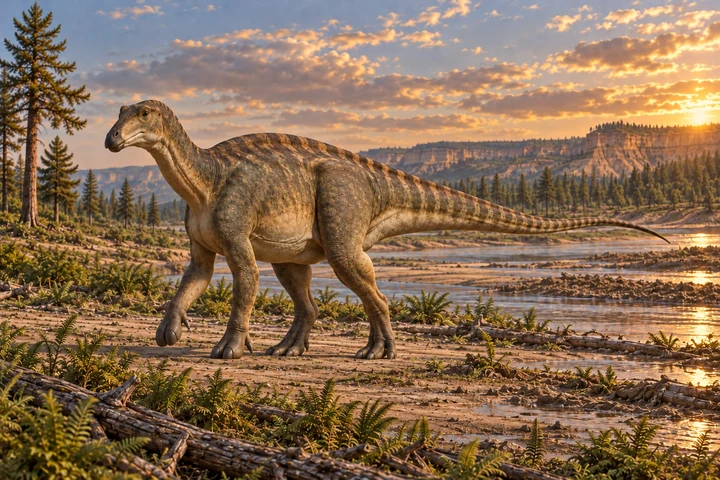
Eolambia caroljonesa
Dinosaur
A plant-eating Utah dinosaur related to duck-billed dinosaurs, known from complementary adult and juvenile fossils.
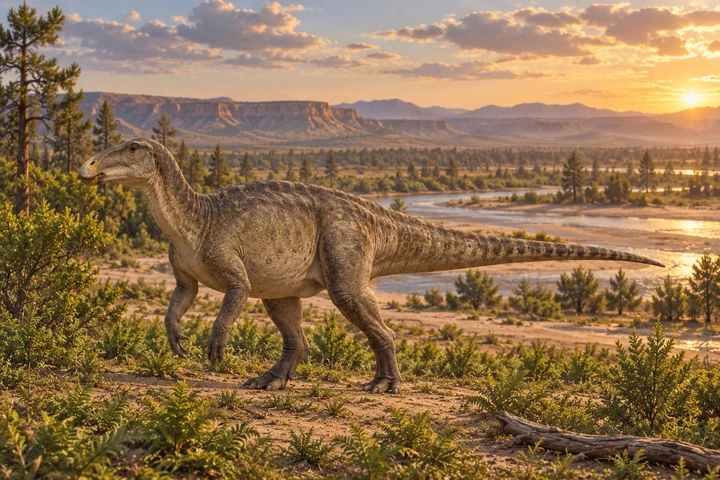
Gobihadros mongoliensis
Dinosaur
A Mongolian plant-eating relative of duck-billed dinosaurs with a preserved thumb spike and informative skeleton.
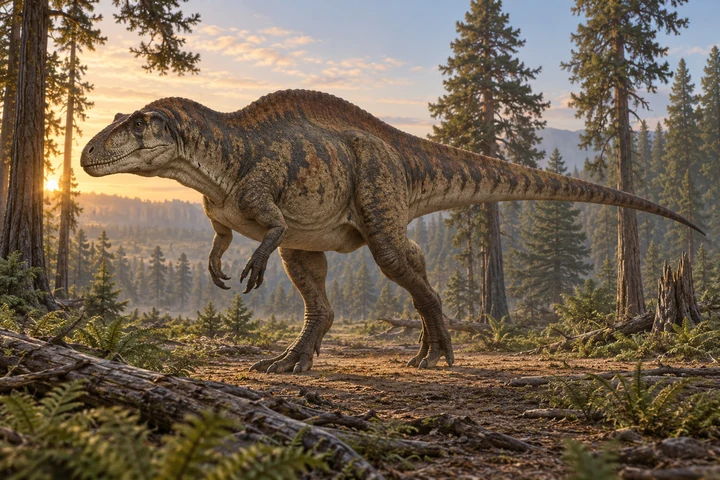
Acrocanthosaurus
This Early Cretaceous carnivore is known from North American fossils. Its high vertebral spines give it a distinctive raised back profile.