
Body length
InferredAbout 3 m (adult type reconstruction)
Original estimate for IVPP V14531; an individual reference rather than a species maximum. [D1]
EXHIBIT 177
Guanlong wucaii
Guanlong was a slender predator with long, three-fingered arms and a delicate crest along its skull. [4]
TWO WAYS TO PICTURE THE PAST
Compare the evidence with the familiar movie image. The illustrations are not to a shared scale.
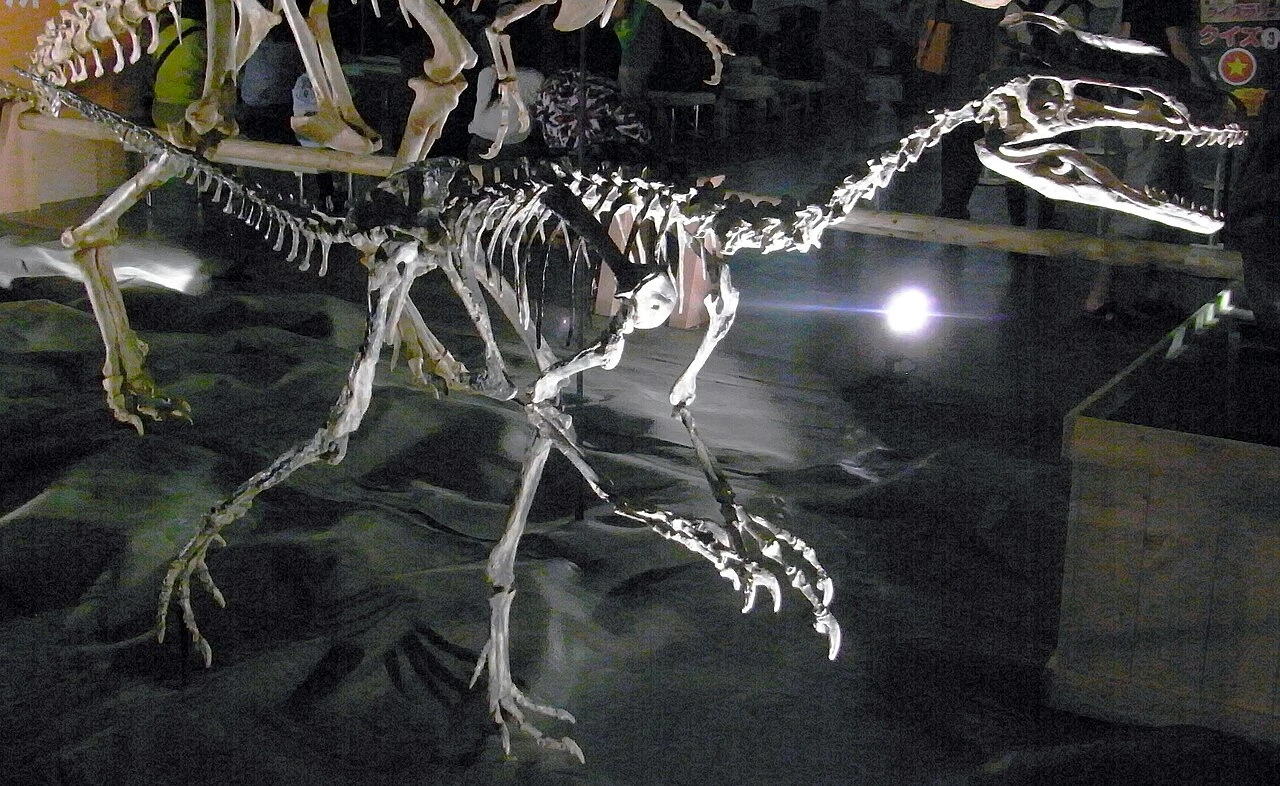
Guanlong wucaii mounted skeletal reconstruction photographed by ★Kumiko★ at Dino Kingdom 2012. The Commons version has an existing crop and lighting adjustment by FunkMonk. The source supplies no specimen number or original-versus-cast key: missing regions are reconstructed, and the other skeletons in the background are separate exhibits. The mount is not a measured complete adult fossil. [1]
Guanlong Mounted Skeleton.jpg · ★Kumiko★; existing cropping and lightening by FunkMonk. CC BY-SA 2.0. Current licensed Commons image converted to WebP and proportionally reduced for the thumbnail, without upsampling. No additional cropping, mirroring, anatomical edits or compositing. Existing source restoration and scale annotations retained. CC BY-SA 2.0 applies to these versions.
Skeletal mounts and drawings may restore missing parts; the caption identifies the displayed material.
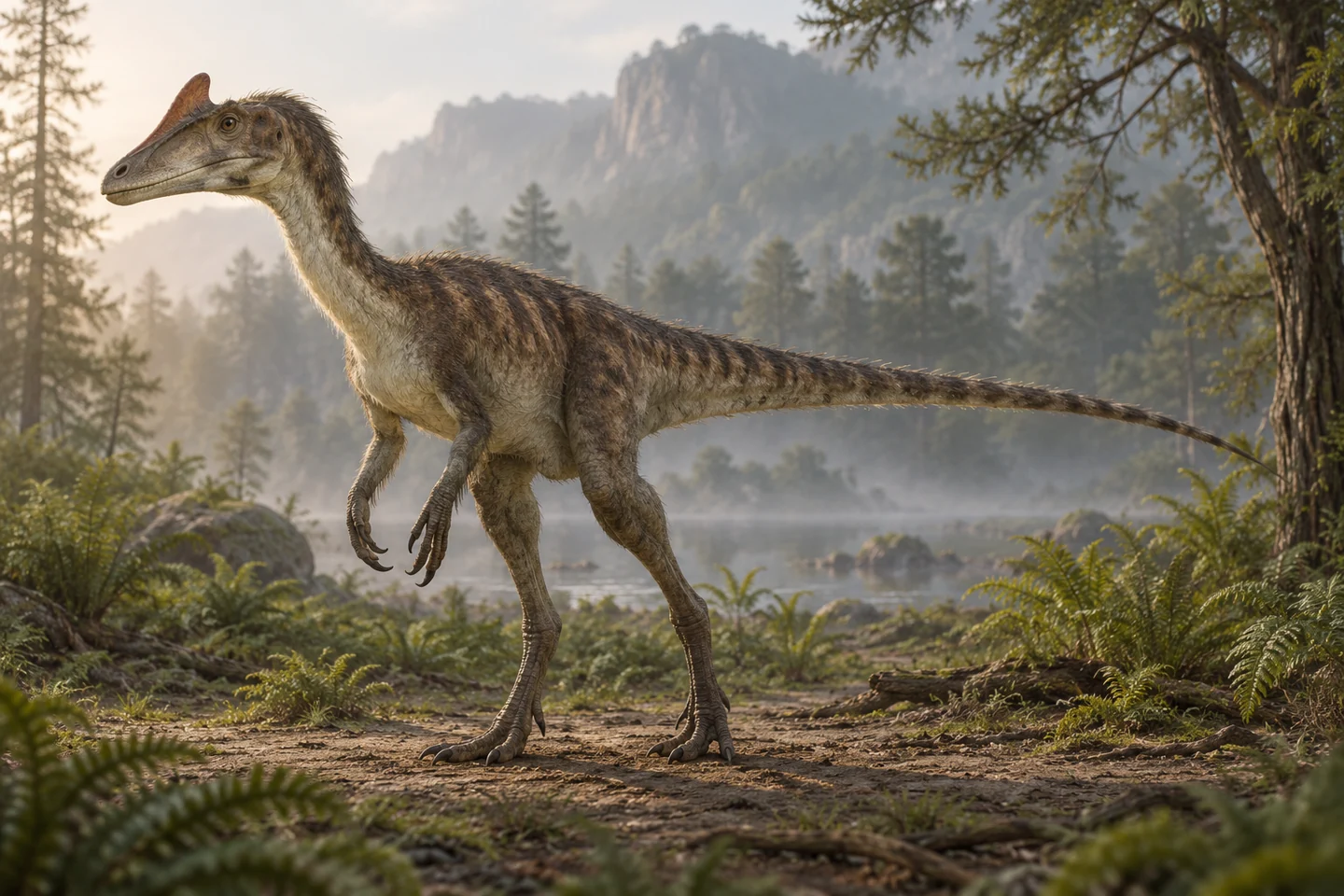
Original cinematic interpretation of Guanlong. The adult type guides the thin median crest and long three-fingered arms. Its living covering, crest colors and pose are comparative choices; crest use in display remains a hypothesis. Lighting, colors and scenery are artistic choices; this image does not document directly observed behavior. Lighting, coloration and scenery are artistic choices. This image does not document a fossil locality or behavior.
Original artwork · artistic interpretation.
Scientific view: source-informed reconstruction, credited paleoart or specimen-based imagery. Movie-style view: Original artistic interpretation. Reconstructions involve uncertainty.
MEET THE ANIMAL
Guanlong was a Late Jurassic tyrannosauroid from China, an early relative of the group that later included Tyrannosaurus. It had relatively long arms and three clawed fingers on each hand, contrasting with the much smaller forelimbs of giant tyrannosaurids. Serrated teeth support a predatory interpretation. The exact prey and hunting method remain uncertain, rather than being established by its family name or a dramatic illustration. [D4]
Its median skull crest was exceptionally thin and contained air spaces. Much of the bony structure was only about 1.5 millimetres thick. Researchers proposed a display function, but the ornament alone does not establish sex differences or a courtship routine. [D1]
The fossils came from Wucaiwan in northwestern China, in a landscape interpreted as seasonal forest with rivers, conifers and ferns. Its species name refers to the colorful rocks there, not to preserved skin colors. Two nearly complete skeletons include an adult and a smaller animal. Their preservation offers unusually useful comparisons of growth, without revealing a lifetime of hunting or interactions. [D4]
PREHISTORIC ANIMAL DOSSIER
The animal, the evidence, and the questions still open.
Its two original skeletons preserve different growth stages. The crest’s display function is a hypothesis, and their burial association does not establish family life. [D1] [D2]
Profile scope: Genus — Guanlong; G. wucaii, with adult IVPP V14531 distinguished from growing V14532. [D1]
Source supported identifies a description documented by the cited source. Inferred marks a reconstruction or functional estimate. Debated marks competing interpretations. Not established means the sources reviewed for this dossier do not support a firm conclusion; it does not mean a behavior never occurred.
A size reference is an estimate, not a population range. Nesting evidence does not by itself establish courtship, mate choice, or lifelong pairing.
About 3 m (adult type reconstruction)
Original estimate for IVPP V14531; an individual reference rather than a species maximum. [D1]
About 72 kg (limb model)
IVPP V14531; measured femoral circumference, independently adult. [D5] [D1]
Animal prey inferred
Serrated teeth support predatory feeding; particular prey, hunting style and stomach contents are not established. [D4]
Upper Shishugou Formation, Xinjiang
Oxfordian deposits at Wucaiwan record a seasonal alluvial landscape with wet, locally trampled depressions. [D2]
Two-legged; long grasping arms
Slender hindlimbs supported terrestrial movement. Three clawed fingers and relatively long arms contrast with the reduced forelimbs of giant tyrannosaurids. [D4]
Thin, air-filled median crest
Much of the crest is only about 1.5 mm thick; pneumatic openings and slender supporting sheets form a fragile structure. [D1]
Not established here
Histology distinguishes a twelve-year individual from a six-year growing one. These growth ages do not demonstrate first breeding, nests or parental care. [D1]
Crest display proposed
Sexual selection was suggested for the delicate ornament. Sex differences and a mating display have not been demonstrated. [D1]
Not established here
Adult and younger skeletons occur in a mixed-species trap deposit. Sequential accumulation offers an explanation without requiring a family or hunting group. [D2]
Sources and inspection notes for the claims in this profile.
THE STORY IN THE FOSSILS
The burial interpretation matters: a younger skeleton below an older one can reflect separate accidents. It is insufficient evidence for parenting or pack behavior. [2]
The original adult growth diagnosis also helps reject the historical claim that Guanlong was merely a young Monolophosaurus. [3]
The dossier identifies the scope of each reference estimate. A mount, an individual fossil and a species-wide adult range are different measurements. Comparison metrics remain unavailable where adult scope has not been established. Unknown does not mean zero.
Sources support the stated claims and scopes. Refer to the evidence notes for uncertainty.
KEEP EXPLORING
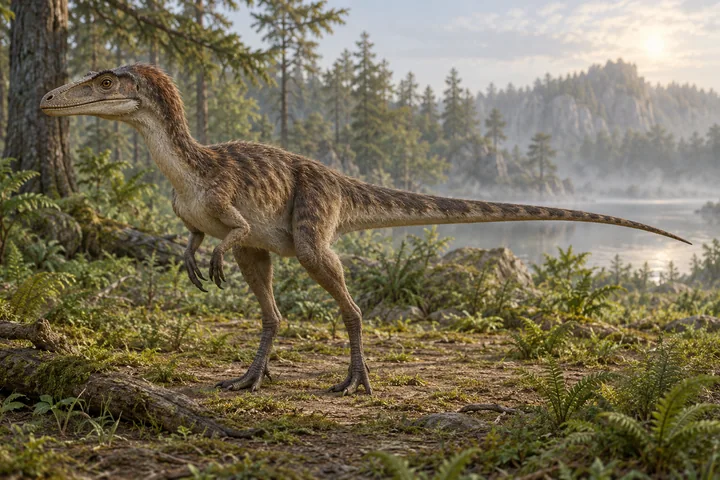
Dilong paradoxus
Dilong was a small tyrannosauroid with long arms; a referred fossil preserves branching skin filaments.
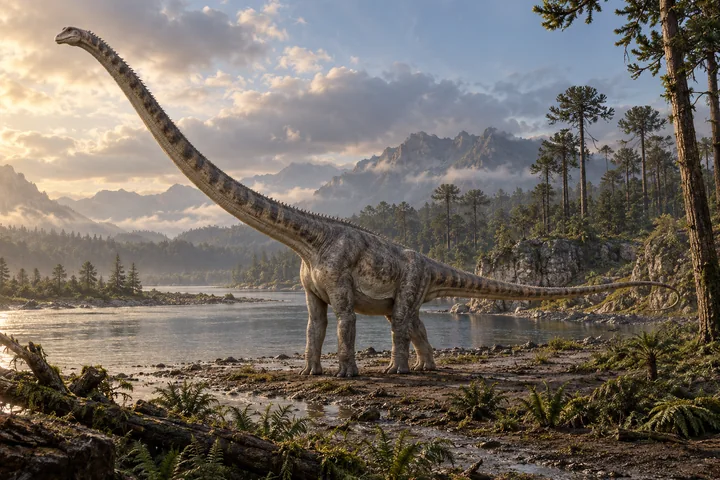
Mamenchisaurus
Mamenchisaurus includes long-necked Chinese sauropods. Differing species and recent research require revision of the traditional genus.
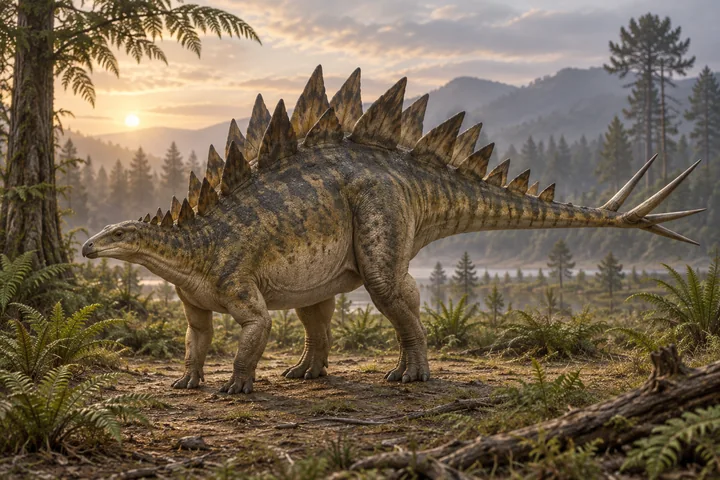
Tuojiangosaurus multispinus
Tuojiangosaurus was a Late Jurassic Chinese plant-eating stegosaur with varied bony plates along its body.