
Body length
Not establishedNot established here
Known material is juvenile to subadult; mature body length remains unknown. [D1]
EXHIBIT 238
Haya griva
Dinosaur
Haya was a small Mongolian dinosaur known from detailed skulls, growing skeletons and stomach-stone associations. [1]
TWO WAYS TO PICTURE THE PAST
Compare the evidence with the familiar movie image. The illustrations are not to a shared scale.
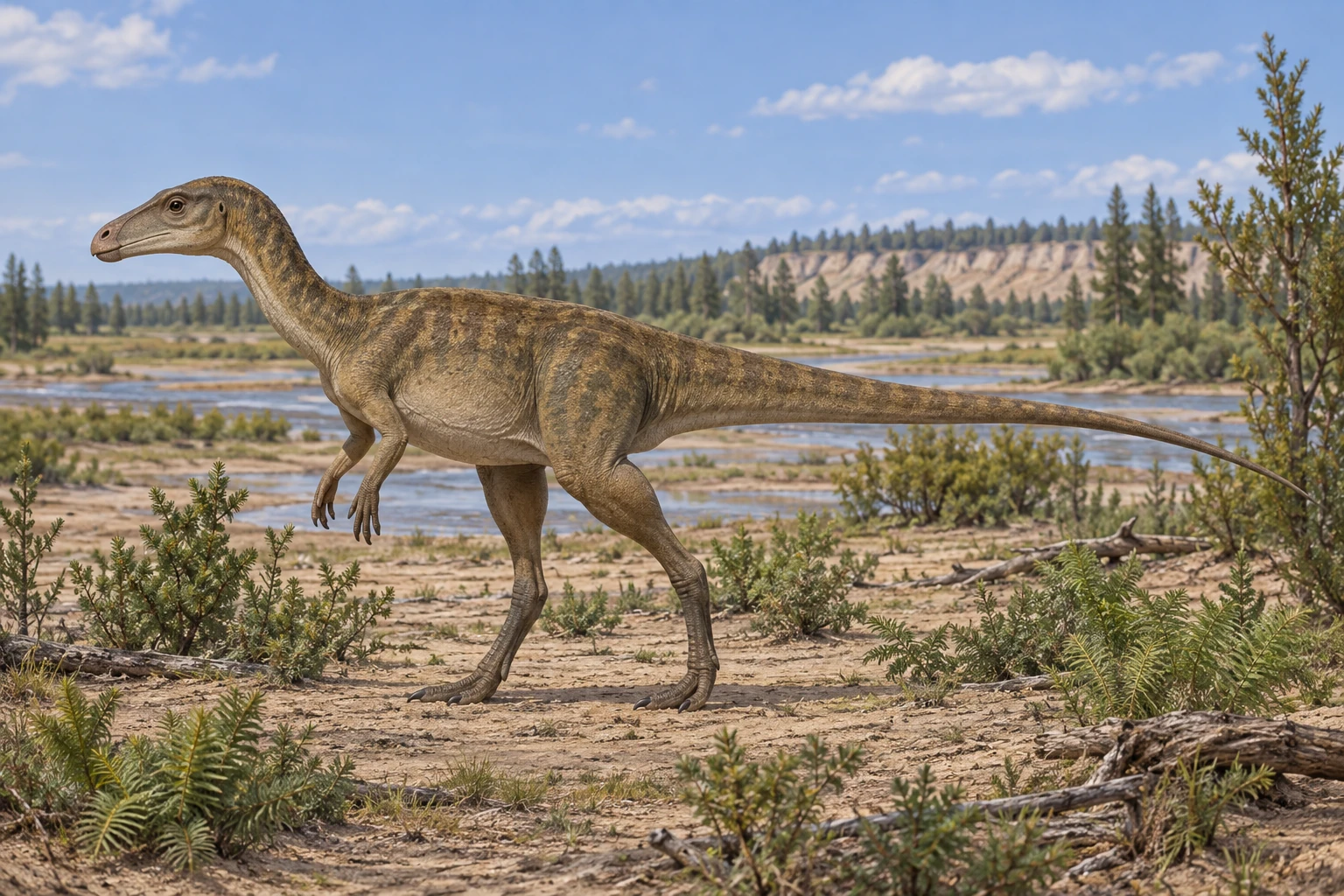
An illustrative reconstruction. Compare its anatomy with the evidence and limitations in the dossier. [2]
Source-informed reconstruction. Appearance evidence [2]. Original illustration; missing anatomy, coloration and scenery include interpretation.
Fossils constrain this life reconstruction. Missing anatomy, coloration and the environmental scene include interpretation; the dossier explains the evidence limits.
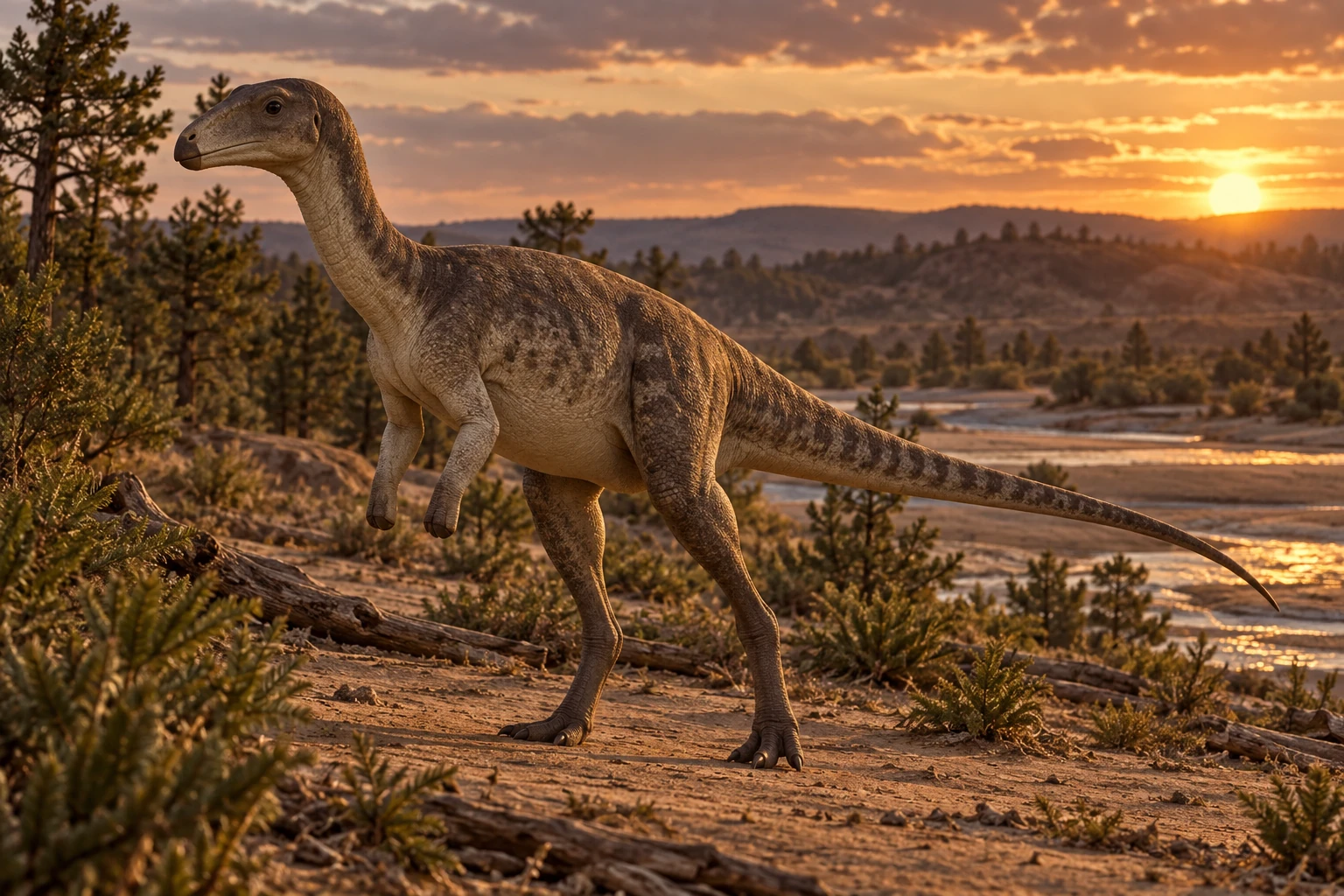
An illustrative reconstruction. Compare its anatomy with the evidence and limitations in the dossier. Lighting, coloration and scenery are artistic choices. This image does not document a fossil locality or behavior.
Original artwork · artistic interpretation.
Scientific view: source-informed reconstruction, credited paleoart or specimen-based imagery. Movie-style view: Original artistic interpretation. Reconstructions involve uncertainty.
MEET THE ANIMAL
Haya was a small, lightly built dinosaur from Mongolia, with an elongated head and a long tail. The detailed study of its skeletons gives researchers unusually rich anatomical information. Yet the known individuals were still growing. Even the larger sampled bones belonged to subadults, so scientists cannot simply call the biggest fossil the final adult size or use it to establish the species' maximum length. [D1]
The front of Haya's upper jaw carried small teeth, while other teeth farther back helped process food. Several skeletons also have clusters of swallowed stones near the abdomen. These discoveries are clues to feeding and digestion, although they do not preserve a complete daily menu. The hand bones are less complete than the skull, so illustrations must treat some finger details as restorations. [D2]
A recent study compared the shapes of dinosaur stomach stones with those of living birds. Haya was among the fossils examined, and its predicted diet differed from the usual plant-feeding interpretation. The researchers explain that stone shape is more directly a clue to how the stomach worked, and their models can misidentify diets. This leaves room for uncertainty instead of proving that Haya ate one particular food. [D4]
PREHISTORIC ANIMAL DOSSIER
The animal, the evidence, and the questions still open.
Stomach stones offer clues to digestion, but a recent shape model does not establish an exact menu. [D4]
Profile scope: Genus — Haya griva; type IGM 100/2017 and referred juvenile-to-subadult material. [D1]
Source supported identifies a description documented by the cited source. Inferred marks a reconstruction or functional estimate. Debated marks competing interpretations. Not established means the sources reviewed for this dossier do not support a firm conclusion; it does not mean a behavior never occurred.
A size reference is an estimate, not a population range. Nesting evidence does not by itself establish courtship, mate choice, or lifelong pairing.
Not established here
Known material is juvenile to subadult; mature body length remains unknown. [D1]
Not established here
No mature specimen or comparable maturity-qualified body-mass estimate is adopted. [D1]
Plant feeding inferred; exact diet uncertain
Tooth wear supports oral processing. A gastrolith-shape model differs from conventional herbivory and has acknowledged predictive limits; no particular meal is known. [D4]
Mongolian terrestrial deposits
Santonian–Campanian Javkhlant and correlated Zos records include river-deposited sediments. Modern desert geography is not automatically the animal's habitat. [D3]
Slender bipedal reconstruction
Hindlimb and tail anatomy support two-legged movement; complete finger details remain uncertain. [D2]
Elongated skull and front upper teeth
Small bulbous premaxillary teeth distinguish the snout from a large toothless upper beak; cheek teeth and slender limbs complete the profile. [D2]
Not established here
The reviewed skeletons do not assign an egg or nest to Haya. [D2]
Not established here
Reviewed anatomy does not establish mating displays or sexual color differences. [D2]
Not established here
Multiple fossil individuals do not by themselves establish stable herds. [D2]
Sources and inspection notes for the claims in this profile.
THE STORY IN THE FOSSILS
The detailed growth study contains no fully mature individual, so the size of the largest fossil is not declared an adult maximum. [1]
Correlated river deposits guide the landscape reconstruction; present-day Gobi dunes are not substituted for its ancient setting. [3]
The dossier identifies the scope of each reference estimate. A mount, an individual fossil and a species-wide adult range are different measurements. Comparison metrics remain unavailable where adult scope has not been established. Unknown does not mean zero.
Sources support the stated claims and scopes. Refer to the evidence notes for uncertainty.
KEEP EXPLORING
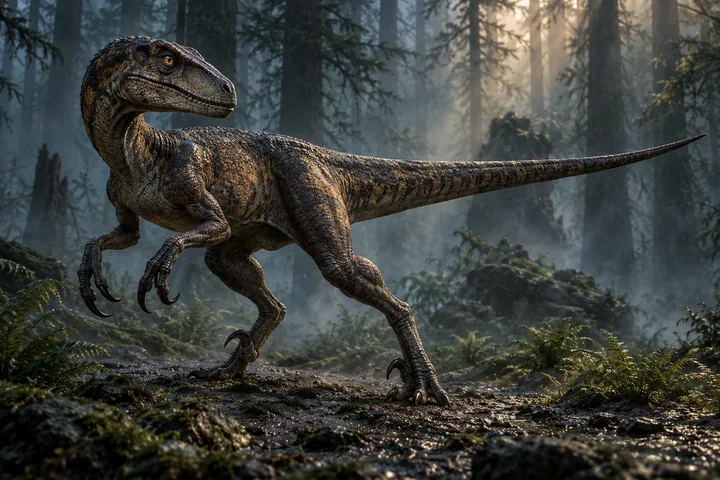
Velociraptor mongoliensis
Velociraptor mongoliensis was a lightly built meat-eater from Late Cretaceous Mongolia. Its long limbs, teeth and enlarged foot claws made it distinctive, while the Fighting Dinosaurs specimen records a remarkable interaction with a horned dinosaur.
Avimimus portentosus
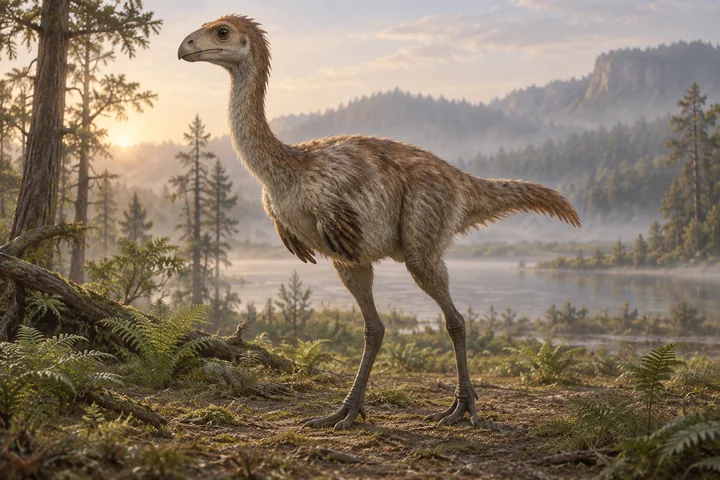
Avimimus has a compact head and an unusually informative bonebed.
Adasaurus mongoliensis
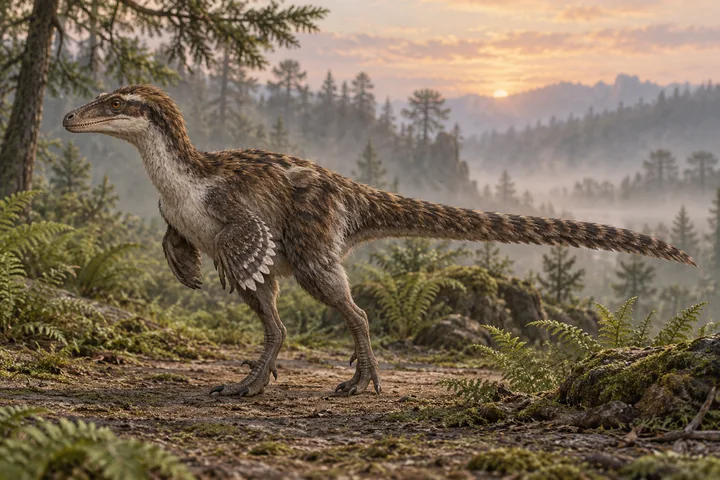
Adasaurus is distinguished by a reduced claw on its second toe.