

Length
Inferred2–3 m (broad museum reference)
Museum reference for historical Hybodus species; not a measured H. reticulatus adult or a species-wide range. [D2]
EXHIBIT 287
Hybodus reticulatus; H. hauffianus comparative evidence
Fish
An extinct hybodont shark with fin spines; the exhibit separates its type species from historically assigned sharks. [1]
TWO WAYS TO PICTURE THE PAST
Compare the evidence with the familiar movie image. The illustrations are not to a shared scale.
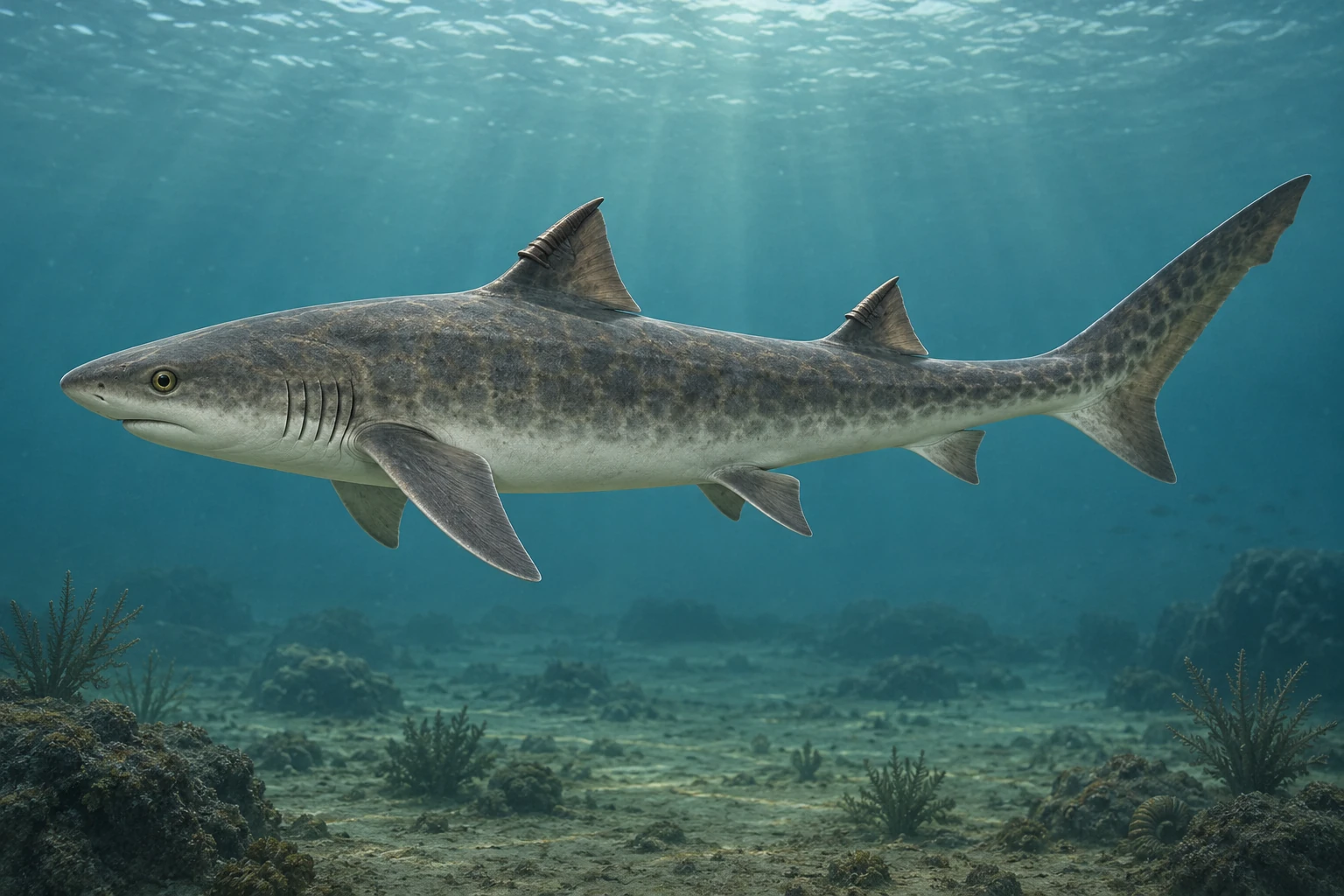
An illustrative reconstruction. Compare its anatomy with the evidence and limitations in the dossier. [5]
Source-informed reconstruction. Appearance evidence [5]. Original illustration; missing anatomy, coloration and scenery include interpretation.
Fossils constrain this life reconstruction. Missing anatomy, coloration and the environmental scene include interpretation; the dossier explains the evidence limits.
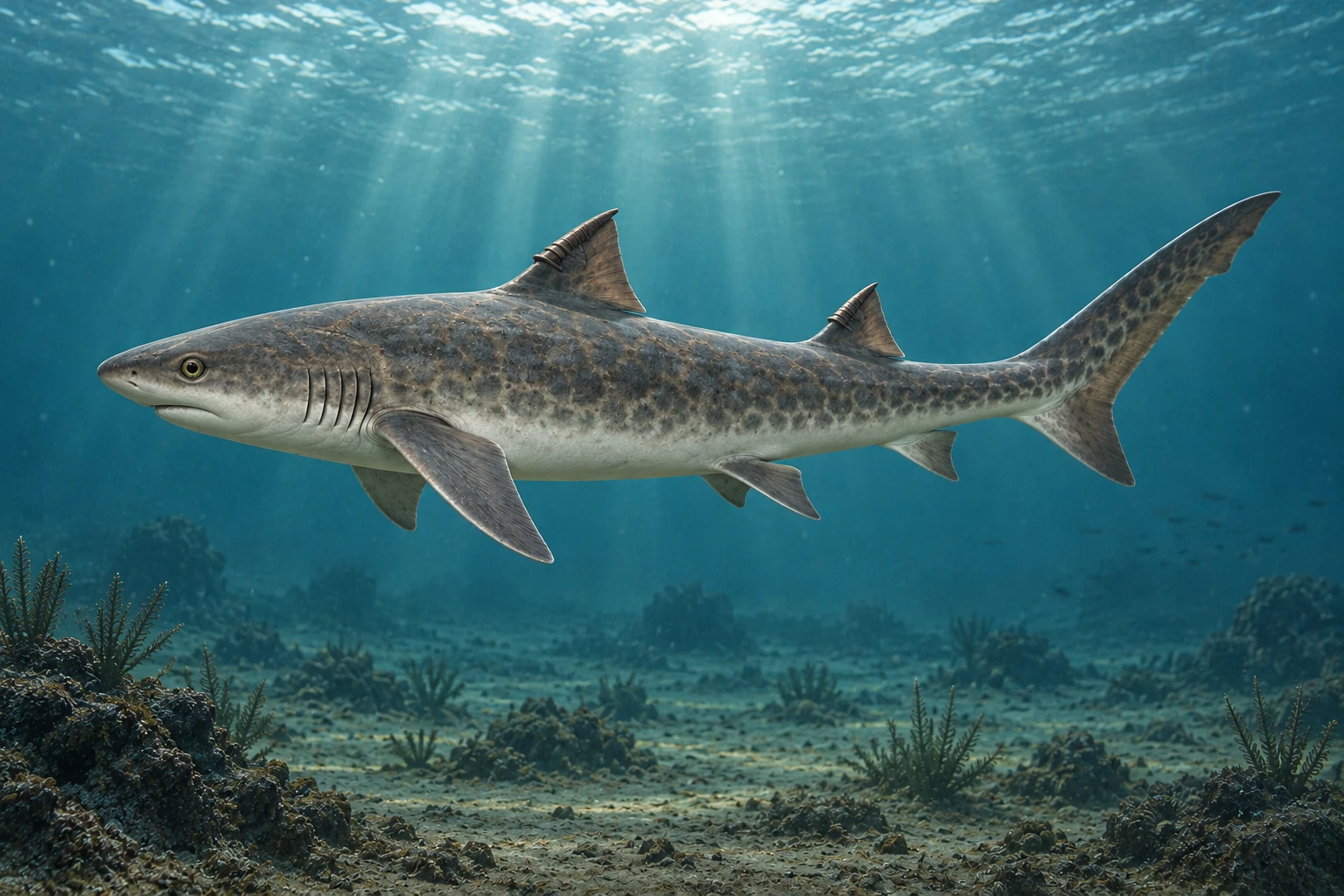
An illustrative reconstruction. Compare its anatomy with the evidence and limitations in the dossier. Lighting, coloration and scenery are artistic choices. This image does not document a fossil locality or behavior.
Original artwork · artistic interpretation.
Scientific view: source-informed reconstruction, credited paleoart or specimen-based imagery. Movie-style view: Original artistic interpretation. Reconstructions involve uncertainty.
MEET THE ANIMAL
Hybodus was a shark from the age of dinosaurs. Its skeleton belonged to an extinct shark group called hybodonts. The name is especially tricky because many older discoveries were placed in this genus from only teeth or spines, even when their complete bodies were unknown. [D4]
The type species, Hybodus reticulatus, anchors this exhibit. A type species is the species used to define a genus name. Researchers studied incomplete skulls from Early Jurassic England and separated some former Hybodus species into Egertonodus because their anatomy differed. [D1]
Two large dorsal fins each had a strong spine at the front. Descriptions of the genus also emphasize teeth with a main cusp and smaller side cusps. Detached teeth and spines can preserve useful details, yet they may not reveal which complete body they originally belonged to. [D5]
One fossil named Hybodus hauffianus contains more than a hundred hard pieces from belemnites, squid-like animals, inside its stomach. This gives unusually direct evidence of a meal. A separate damaged belemnite has been interpreted as a predator’s leftover, but identifying its attacker remains a hypothesis. [D3]
PREHISTORIC ANIMAL DOSSIER
The animal, the evidence, and the questions still open.
The historical genus includes uncertain tooth-based identifications. A careful account keeps those names separate from more informative skeletal evidence. [D4]
Profile scope: One genus exhibit anchored to H. reticulatus; H. hauffianus supplies explicitly separate dietary evidence. Egertonodus basanus and E. fraasi are excluded. [D1]
Source supported identifies a description documented by the cited source. Inferred marks a reconstruction or functional estimate. Debated marks competing interpretations. Not established means the sources reviewed for this dossier do not support a firm conclusion; it does not mean a behavior never occurred.
A size reference is an estimate, not a population range. Nesting evidence does not by itself establish courtship, mate choice, or lifelong pairing.
2–3 m (broad museum reference)
Museum reference for historical Hybodus species; not a measured H. reticulatus adult or a species-wide range. [D2]
Not established here
The inspected cranial abstract supplies no attributable body-mass estimate or method. [D1]
Animal prey; belemnites directly recorded
SMNS10062, H. hauffianus, preserves over 100 belemnite hard parts in its stomach; this is not direct H. reticulatus diet evidence. [D3]
Early Jurassic European marine settings
H. reticulatus cranial fossils are English Lower Jurassic; German specimens in the anatomical account are only H. cf. reticulatus. [D1]
Fin-and-tail swimming inferred
Two dorsal fins and reconstructed shark form support swimming; the inspected description establishes no speed. [D5]
Two dorsal fins with anterior spines
The published generic description records supporting spines. Tooth-based assignments require care; no Egertonodus body is silently adopted. [D5]
Not established here
Focused egg, embryo and clasper searches found no inspected taxon-specific reproductive fossil in the reviewed cranial abstract. [D1]
Not established here
Food-web evidence does not reveal courtship displays, mating sequence or sex-specific colors. [D3]
Not established here
A stomach-content fossil records one meal, not schooling, cooperative hunting or parental care. [D3]
Sources and inspection notes for the claims in this profile.
THE STORY IN THE FOSSILS
Separating skull anatomy from isolated tooth names reduces the risk of combining different sharks into a single reconstruction. [1]
The Posidonia Shale preserved a marine food web above periodically oxygen-poor bottom waters; fossil burial conditions are not the shark’s breathing habitat. [3]
The dossier identifies the scope of each reference estimate. A mount, an individual fossil and a species-wide adult range are different measurements. Comparison metrics remain unavailable where adult scope has not been established. Unknown does not mean zero.
Sources support the stated claims and scopes. Refer to the evidence notes for uncertainty.
KEEP EXPLORING
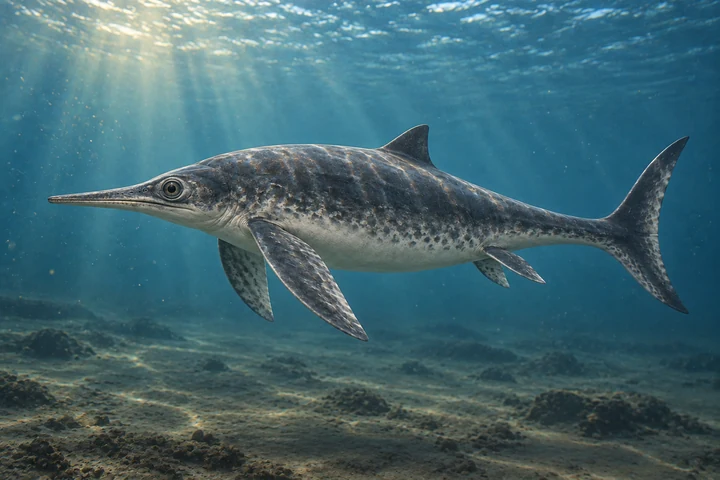
Stenopterygius quadriscissus
Marine reptile
A fish-shaped marine reptile with direct pregnancy fossils and teeth that changed as it grew.
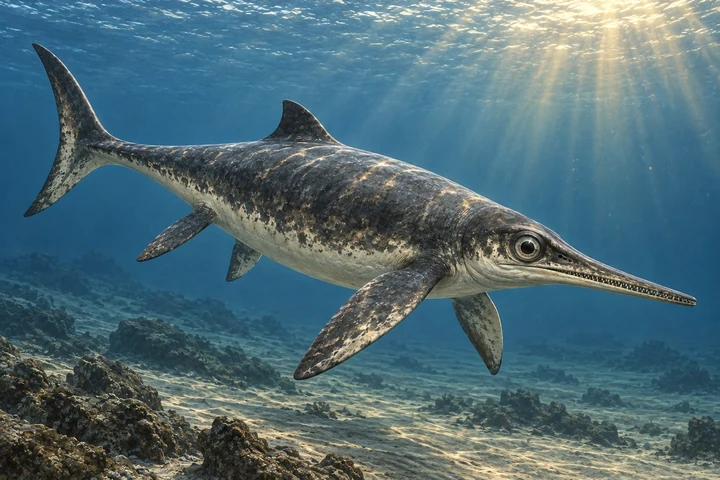
Temnodontosaurus platyodon
Marine reptile
An Early Jurassic ichthyosaur whose jaws and teeth reveal specialized prey-processing anatomy.
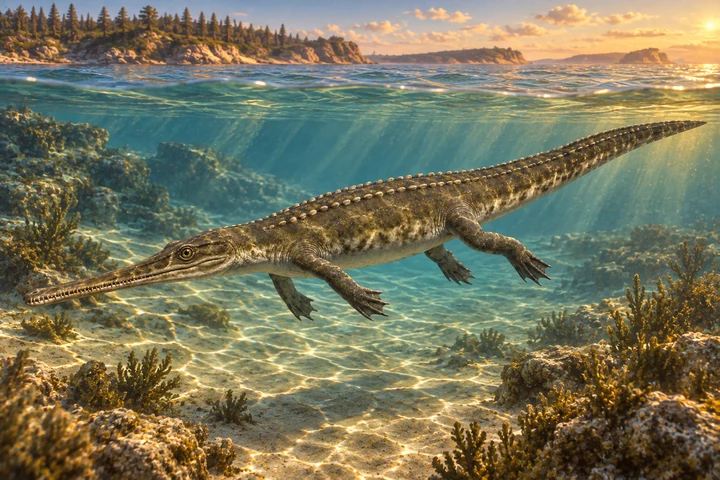
Pelagosaurus typus
Marine reptile
A slender-snouted marine crocodylomorph whose bones suggest an amphibious life along shallow Jurassic seas.