EXPLORE PREHISTORY 220 prehistoric animal profiles · Scientific & movie-style image galleries

EXHIBIT 126

Isisaurus

Isisaurus colberti

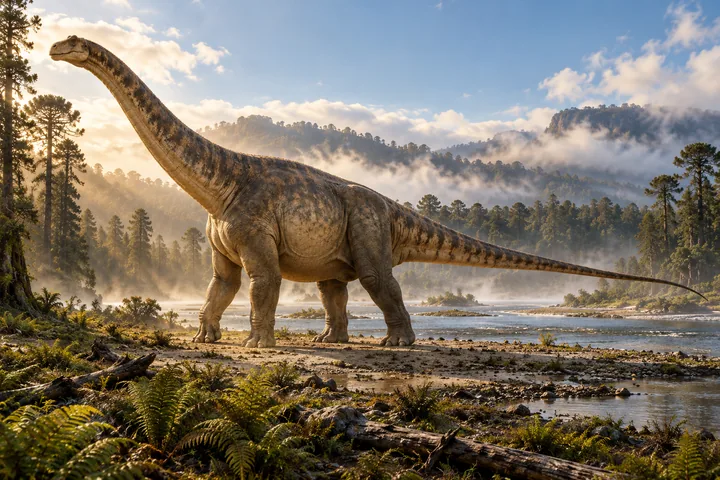
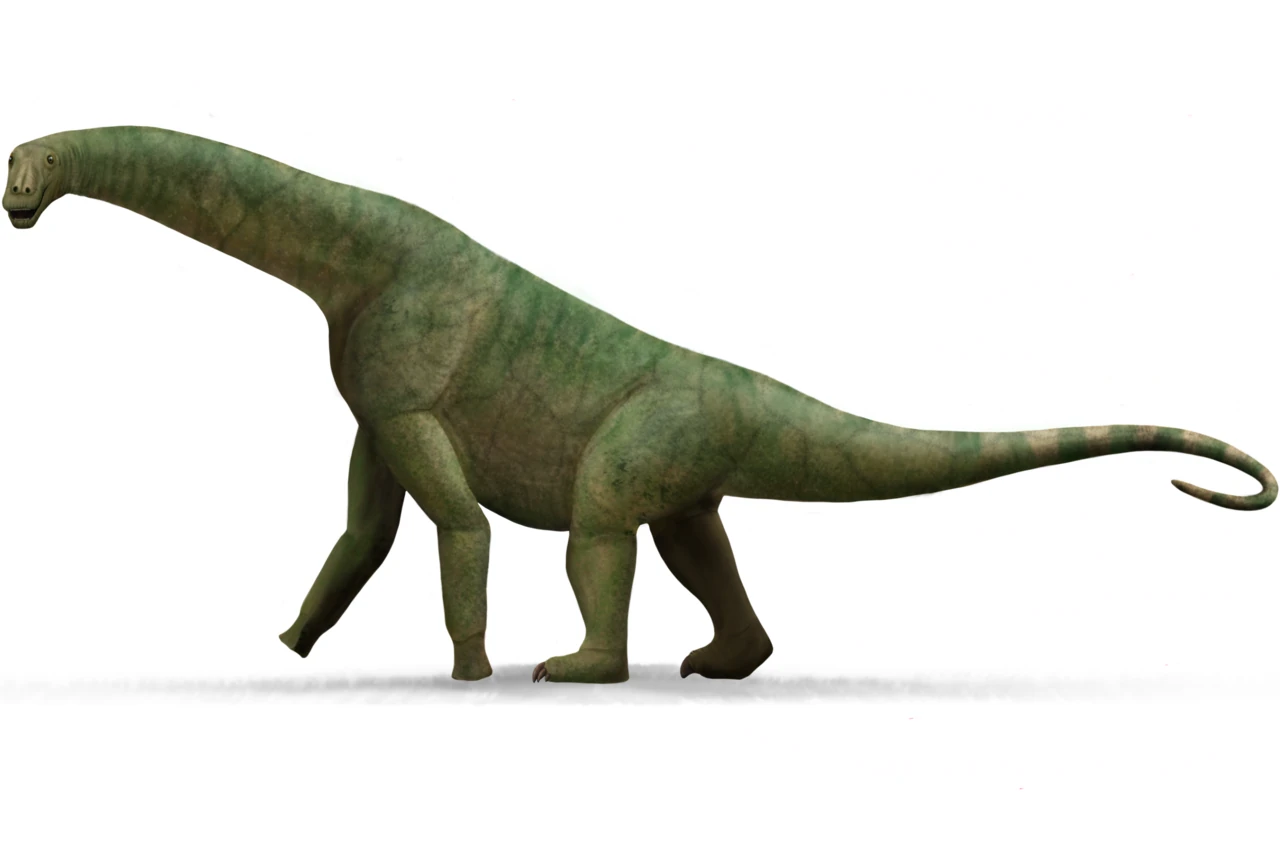
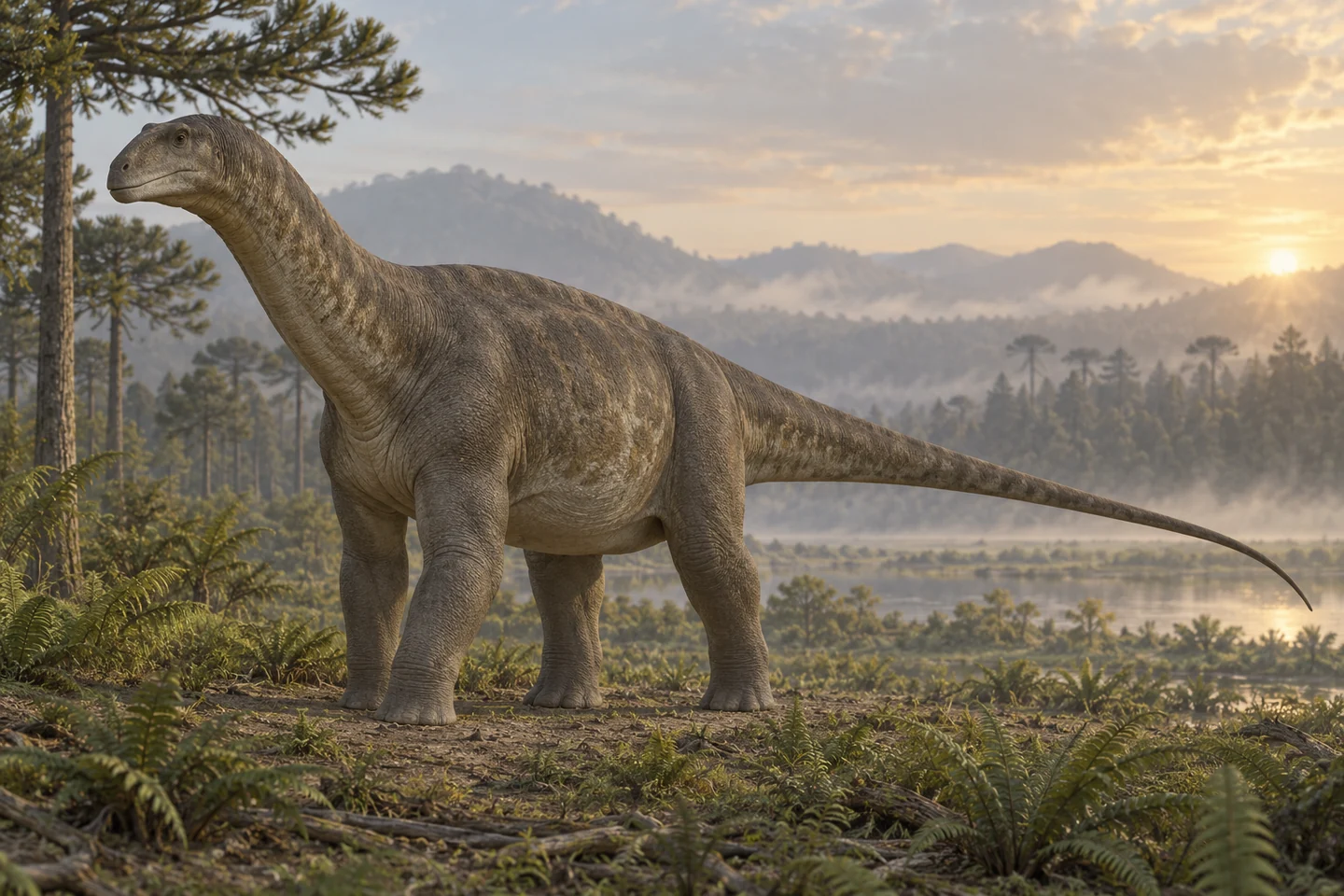
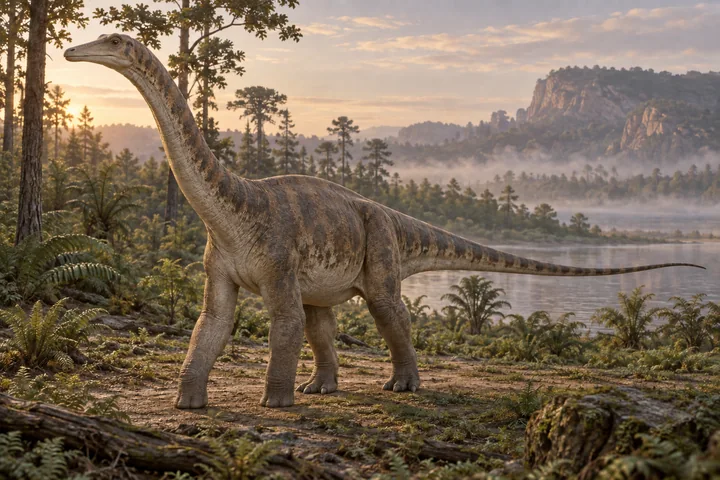
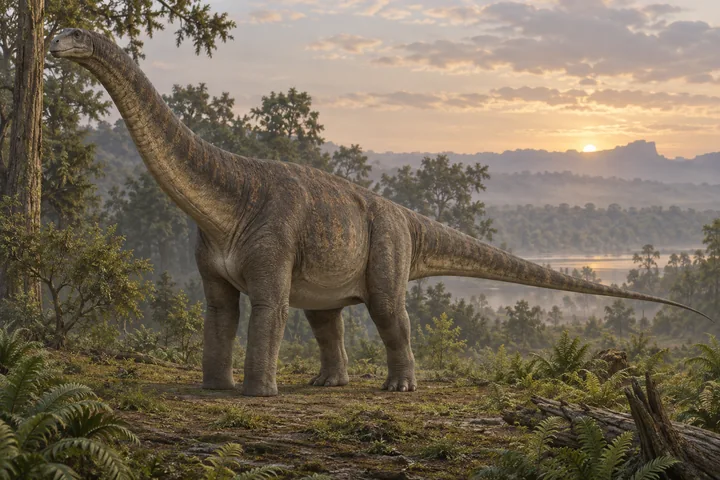
Isisaurus was an Indian titanosaur whose partial skeleton preserves distinctive neck vertebrae, shoulders and forelimbs. [1]

Evidence profile
PERIODLate Cretaceous[1]
DIETHerbivoreEvidence and uncertainty in the dossier
TOTAL LENGTHSee the dossierEstimate scope matters
FOSSILS FOUNDIndia[1]
CompareRead the dossierView the sources

MEET THE ANIMAL

Meet Isisaurus

Isisaurus was a plant-eating sauropod from Late Cretaceous India. Plant eating describes a broad feeding role. The reviewed evidence does not establish its preferred plants, how much it ate or its daily feeding routines. [D6]

The original description dealt with associated body bones and distinctive skeletal anatomy. Associated remains are especially useful because researchers can compare connected evidence from one discovery, instead of assuming that every regional sauropod bone belongs to the same dinosaur. A partial body still requires restoration when shown as a complete animal, and preserved parts do not automatically supply missing head or limb details. [D2]

Fossil dung, called coprolites, has been provisionally attributed to Isisaurus. Leaf-associated fungi in those remains are intriguing dietary clues, but the animal that produced them was uncertain, and later fungal growth is also a possibility. The contents cannot become a confirmed genus-specific menu. Keeping the proposed producer visible preserves an interesting finding without making the identification or feeding story more certain than the study allows. [D3]

PREHISTORIC ANIMAL DOSSIER

A life in profile.

The animal, the evidence, and the questions still open.

The original associated skeleton includes vertebrae, girdles and forelimb material. Missing head and hindlimb evidence limit confident whole-body reconstruction. [D2]

Profile scope: Genus profile centered on Isisaurus colberti and associated type ISI R335/1–65. Unassociated braincases are not automatically part of that skeleton. [D1]

Time
Late Cretaceous
Fossil locations in this exhibit
India
How to read the evidence

Source supported identifies a description documented by the cited source. Inferred marks a reconstruction or functional estimate. Debated marks competing interpretations. Not established means the sources reviewed for this dossier do not support a firm conclusion; it does not mean a behavior never occurred.

A size reference is an estimate, not a population range. Nesting evidence does not by itself establish courtship, mate choice, or lifelong pairing.

Body length

Inferred

About 18 m; historical compiled reference

The 2023 review repeats Montague’s reference based on the type specimen. Montague compiled internet databases; a transparent whole-body reconstruction and maturity assessment were not obtained here. [D4] [D5]
Body mass

Inferred

About 14 tonnes; historical compiled reference

This is the same secondary numerical reference repeated in the primary review, not a newly validated volume or limb-circumference model. Its uncertainty and individual maturity are unspecified. [D4] [D5]

Diet

Inferred

Plants; coprolite producer uncertain

The museum identifies herbivory. Leaf-associated fungi occur in coprolites provisionally attributed to Isisaurus; their producer is uncertain, so they cannot establish a confirmed genus-specific menu. [D6] [D3]

Habitat & fossil setting

Source supported

Maastrichtian Lameta deposits, central India

The associated type comes from Dongargaon Hill, Maharashtra, in infratrappean Lameta deposits. This profile centers on that documented material rather than transferring every regional titanosaur referral. [D1]

Movement

Inferred

Four-legged reconstruction; missing parts matter

Forelimb and girdle anatomy support a quadrupedal sauropod reconstruction. The type lacks its radius, hand and hindlimbs, so exact foot form, complete stance and speed remain untested. [D1]

Distinctive anatomy

Source supported

Distinctive cervical vertebrae and robust ulna

Neck vertebrae, broad caudal neural spines and a robust ulna characterize the type. Its absent skull cannot be reconstructed confidently from the unassociated Dongargaon braincase alone. [D1]

Reproduction & life together

Reproduction & nesting

Not established

Not established here

A thermometry study tentatively assigns regional eggshells to Isisaurus through stratigraphic association, without an embryo or hatchling linking the producer. That proposal does not securely establish genus-specific clutch size, incubation or parental care. [D7]

Courtship & mating

Not established

Not established here

No reviewed genus-specific evidence establishes displays, mate choice, vocalizations or sexual dimorphism. Giraffe comparisons cannot demonstrate courtship in Isisaurus.

Social behavior

Not established

Not established here

The partial type skeleton represents one individual. Regional occurrences do not resolve persistent herds, hierarchy or family relationships. [D1]

Dossier research & sources

Sources and inspection notes for the claims in this profile.

  1. A revision of Titanosaurus Lydekker (Dinosauria–Sauropoda), the first dinosaur genus with a Gondwanan distributionJournal of Systematic Palaeontology; Wilson & Upchurch (2003), published paper · Accessed 2026-10-02Inspected full paper: Isisaurus genus erection, type inventory, Dongargaon locality, Maastrichtian Lameta and unassociated braincase referral limits. · Inspected: excerpt
  2. A new titanosaurid (Dinosauria: Sauropoda) from the Late Cretaceous of central India with comments on its pelvic girdleJournal of Vertebrate Paleontology; Jain & Bandyopadhyay (1997) · Accessed 2026-10-02Publisher abstract: associated original Titanosaurus colberti postcranial material and distinctive anatomy; full original paper was not obtained. · Inspected: abstract
  3. Fungi in dinosaurian (Isisaurus) coprolites from the Lameta Formation (Maastrichtian) and its reflection on food habit and environmentMicropaleontology; Sharma and colleagues (2005) · Accessed 2026-10-02Original abstract: coprolites only supposed to be Isisaurus, leaf-associated fungi and possible later fungal colonization. · Inspected: abstract
  4. Review of the Cretaceous dinosaurs from India and their paleobiogeographic significanceActa Geologica Polonica; Khosla & Lucas (2023) · Accessed 2026-10-02Original review p722: type humerus and historical 18 m/14,000 kg reference attributed to Montague; referral/cranial summaries are not substituted for secure type association. · Inspected: excerpt
  5. Estimates of body size and geological time of origin for 612 genera of dinosaurs (Saurischia, Ornithischia)Florida Scientist; Montague (2006) · Accessed 2026-10-02Original abstract establishes internet-database compilation rather than a new specimen-volume model. The numerical Isisaurus reference was checked in the 2023 primary review. · Inspected: abstract
  6. IsisaurusNatural History Museum, London · Accessed 2026-10-02Current museum page: herbivory, Late Cretaceous and India; its simplified coprolite claim is narrowed using the original study. · Inspected: page
  7. Variable thermoregulation of Late Cretaceous dinosaurs inferred by clumped isotope analysis of fossilized eggshell carbonatesHeliyon; Laskar and colleagues (2020) · Accessed 2026-10-02Indexed original §4.1 and Figure7 inspected: provisional eggshell producers inferred by stratigraphic association; tentative masses cite Benson and personal communication, without a disclosed specimen-specific reconstruction. · Inspected: excerpt

THE STORY IN THE FOSSILS

Meet Isisaurus.

The animal first described as Titanosaurus colberti was assigned its own genus in the 2003 revision. Its former species combination belongs to this profile, while Titanosaurus remains a separate taxonomic question. [1]

The coprolites are intriguing dietary evidence, but their authors described the Isisaurus attribution as provisional. That uncertainty remains attached to the leaf-fungus interpretation. [3]

A note on scale and time

The dossier identifies the scope of each reference estimate. A mount, an individual fossil and a species-wide adult range are different measurements. Comparison metrics remain unavailable where adult scope has not been established. Unknown does not mean zero.

Sources & editorial notes

Sources support the stated claims and scopes. Refer to the evidence notes for uncertainty.

  1. A revision of Titanosaurus Lydekker (Dinosauria–Sauropoda), the first dinosaur genus with a Gondwanan distributionJournal of Systematic Palaeontology; Wilson & Upchurch (2003), published paper · Accessed 2026-10-02Inspected full paper: Isisaurus genus erection, type inventory, Dongargaon locality, Maastrichtian Lameta and unassociated braincase referral limits. · Inspected: excerpt
  2. A new titanosaurid (Dinosauria: Sauropoda) from the Late Cretaceous of central India with comments on its pelvic girdleJournal of Vertebrate Paleontology; Jain & Bandyopadhyay (1997) · Accessed 2026-10-02Publisher abstract: associated original Titanosaurus colberti postcranial material and distinctive anatomy; full original paper was not obtained. · Inspected: abstract
  3. Fungi in dinosaurian (Isisaurus) coprolites from the Lameta Formation (Maastrichtian) and its reflection on food habit and environmentMicropaleontology; Sharma and colleagues (2005) · Accessed 2026-10-02Original abstract: coprolites only supposed to be Isisaurus, leaf-associated fungi and possible later fungal colonization. · Inspected: abstract
  4. Review of the Cretaceous dinosaurs from India and their paleobiogeographic significanceActa Geologica Polonica; Khosla & Lucas (2023) · Accessed 2026-10-02Original review p722: type humerus and historical 18 m/14,000 kg reference attributed to Montague; referral/cranial summaries are not substituted for secure type association. · Inspected: excerpt
  5. Estimates of body size and geological time of origin for 612 genera of dinosaurs (Saurischia, Ornithischia)Florida Scientist; Montague (2006) · Accessed 2026-10-02Original abstract establishes internet-database compilation rather than a new specimen-volume model. The numerical Isisaurus reference was checked in the 2023 primary review. · Inspected: abstract
  6. IsisaurusNatural History Museum, London · Accessed 2026-10-02Current museum page: herbivory, Late Cretaceous and India; its simplified coprolite claim is narrowed using the original study. · Inspected: page
  7. Variable thermoregulation of Late Cretaceous dinosaurs inferred by clumped isotope analysis of fossilized eggshell carbonatesHeliyon; Laskar and colleagues (2020) · Accessed 2026-10-02Indexed original §4.1 and Figure7 inspected: provisional eggshell producers inferred by stratigraphic association; tentative masses cite Benson and personal communication, without a disclosed specimen-specific reconstruction. · Inspected: excerpt

FOLLOW YOUR CURIOSITY

Who will you meet next?

KEEP EXPLORING

More from the collection