
Body length
InferredAbout 9 m; museum reference
The directory supplies a whole-body reference without an individual, life stage or estimation method. It is not a measured adult maximum or a population range. [D4]
EXHIBIT 125
Malawisaurus dixeyi
Malawisaurus was a plant-eating titanosaur from Malawi, known from skull elements, vertebrae, limb bones and dermal armor. [4]
TWO WAYS TO PICTURE THE PAST
Compare the evidence with the familiar movie image. The illustrations are not to a shared scale.
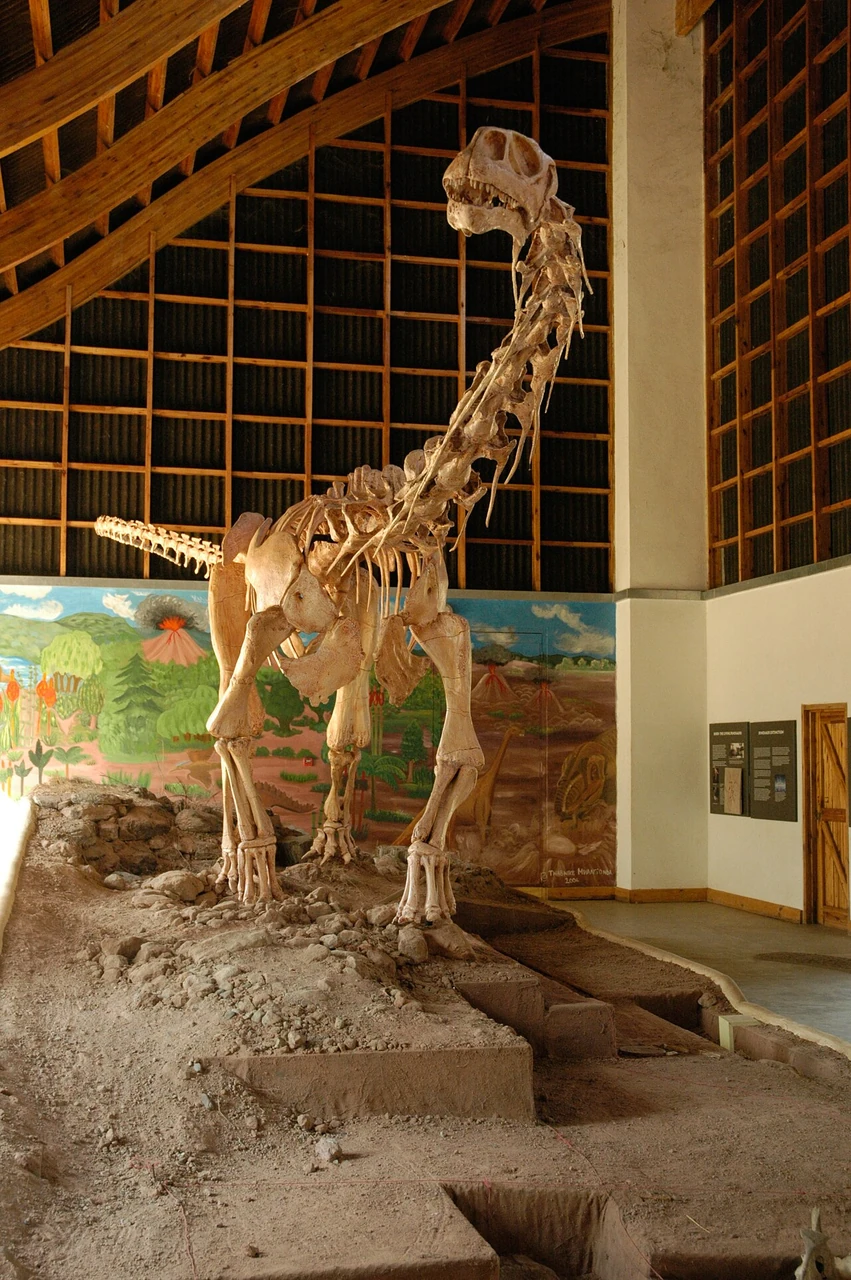
Malawisaurus reconstruction displayed at Karonga Museum, Malawi. The mount includes restored anatomy and an interpreted posture; the source file does not identify one complete individual or its maturity. [2]
Malawisaurus at Karonga Museum · Alexander Leisser. CC BY-SA 4.0. Resized proportionally and converted to WebP; no anatomical edits. Same source license applies.
Skeletal mounts and drawings may restore missing parts; the caption identifies the displayed material.
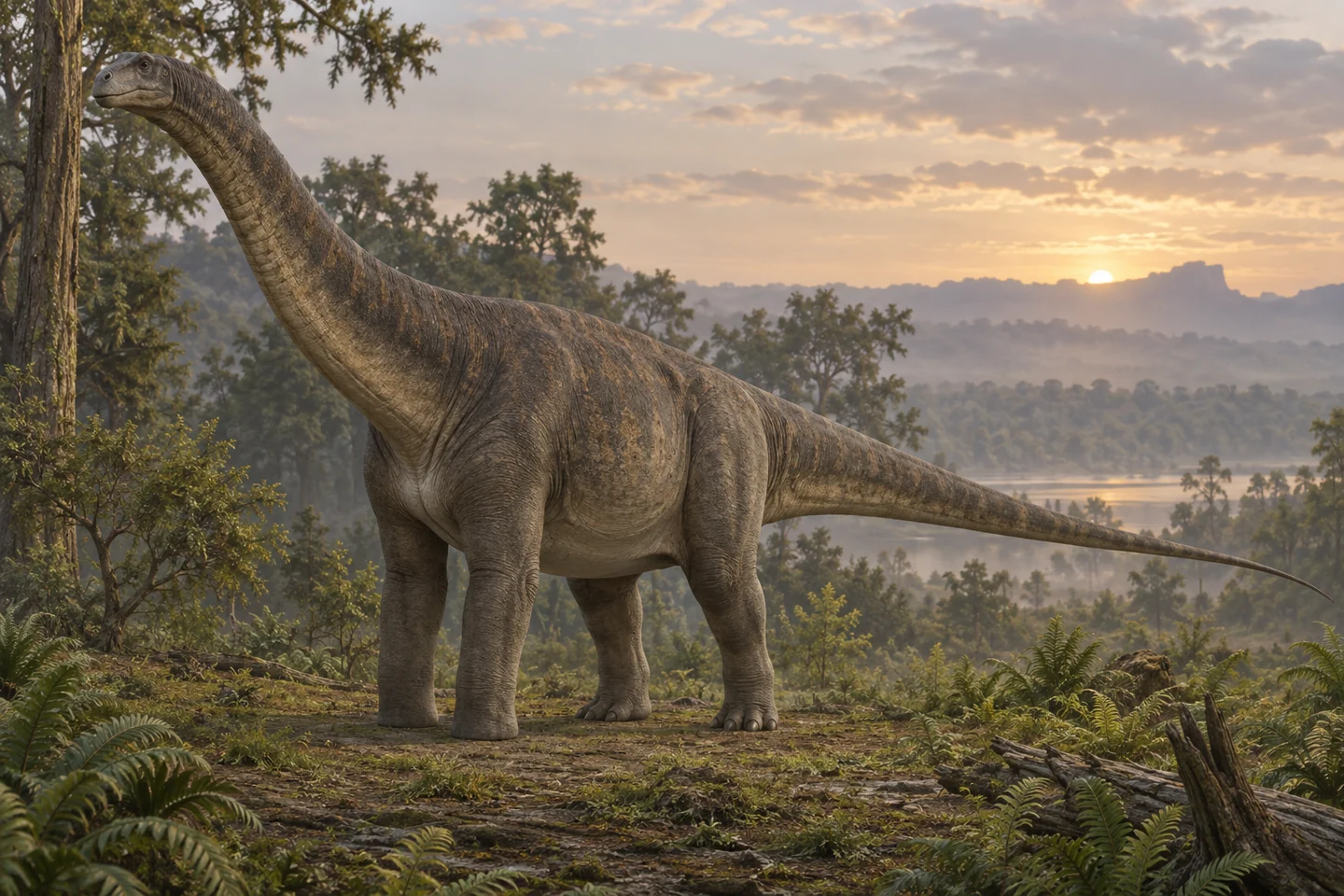
Original cinematic interpretation of Malawisaurus dixeyi. Colors, soft tissues, scenery and missing anatomy are reconstructed artistic choices; this is not a directly observed individual or behavior. Whole-body proportions and any osteoderm arrangement use comparative reconstruction. Lighting, coloration and scenery are artistic choices. This image does not document a fossil locality or behavior.
Original artwork · artistic interpretation.
Scientific view: source-informed reconstruction, credited paleoart or specimen-based imagery. Movie-style view: Original artistic interpretation. Reconstructions involve uncertainty.
MEET THE ANIMAL
Malawisaurus was a plant-eating sauropod from Malawi. Its museum profile gives a length reference of about nine metres, without identifying a complete measured adult or a growth stage. That figure introduces the body at a broad scale. More detailed questions about anatomy and maturity depend on the individual bones examined in research. [D4]
A blunt front of the snout and flattened teeth helped distinguish it from sauropods once grouped under older names. These features are consistent with gathering plants, but they do not identify a precise menu or a particular feeding height. The fossil teeth preserve the food-gathering equipment more securely than a scene showing the animal choosing vegetation. [D1]
Another study examined a fused braincase and an associated upper-arm bone. The braincase suggested maturity, and the limb measurement supported a model of body mass. Association and calculation still leave uncertainty; the result is not an adult population range. The same work acknowledges disagreement about the age of the Dinosaur Beds. The fossil's identification, maturity and geological age all affect how its body is reconstructed. [D3]
PREHISTORIC ANIMAL DOSSIER
The animal, the evidence, and the questions still open.
Its blunt snout, flattened teeth and distinctive tail joints distinguish an early titanosaur with unusually informative cranial remains. [D1]
Profile scope: Genus profile centered on Malawisaurus dixeyi. Dinosaur Beds quarries contain several sauropod taxa; not every bone belongs to this genus. [D2]
Source supported identifies a description documented by the cited source. Inferred marks a reconstruction or functional estimate. Debated marks competing interpretations. Not established means the sources reviewed for this dossier do not support a firm conclusion; it does not mean a behavior never occurred.
A size reference is an estimate, not a population range. Nesting evidence does not by itself establish courtship, mate choice, or lifelong pairing.
About 9 m; museum reference
The directory supplies a whole-body reference without an individual, life stage or estimation method. It is not a measured adult maximum or a population range. [D4]
About 4.73 tonnes; associated-limb model
The estimate uses humerus Mal-221 circumference and a published regression. Its associated braincase Mal-202-1 has fused bones suggesting maturity; association and modeled mass retain uncertainty. [D3]
Plants
Flattened teeth and the blunt snout are consistent with plant cropping. Tooth shape does not establish exact foods, preferred height or a daily consumption rate. [D1]
Dinosaur Beds near Karonga; age debated
The study adopts Early Cretaceous, commonly Aptian, for Malawi’s Dinosaur Beds but acknowledges a proposed Late Cretaceous correlation. The catalog’s Early Cretaceous category does not erase that disagreement. [D3]
Four-legged sauropod reconstruction
The referred limb and girdle material supports terrestrial quadrupedal reconstruction. No reviewed genus-specific trackway establishes speed or habitual neck posture. [D2]
Blunt snout and contrasting tail joints
Anterior tail centra are procoelous, whereas middle and distal centra are comparatively flat-ended. Dermal osteoderm Mal-204 is referred to the genus, but it does not establish a complete armor pattern. [D2]
Not established here
Focused nesting and reproduction searches found no securely assigned egg clutch, nest architecture, incubation behavior or parental-care evidence in the reviewed genus-specific sources.
Not established here
Reviewed descriptions and focused searches do not establish calls, displays, mate choice or sex-specific coloration. The presence of dermal bones does not by itself identify a mating signal. [D2]
Not established here
Multiple individuals occur in quarries also containing other sauropod taxa. That association does not demonstrate stable Malawisaurus herds or family relationships. [D2]
Sources and inspection notes for the claims in this profile.
THE STORY IN THE FOSSILS
The museum’s size reference and a limb-based mass model answer different questions. Only the latter links its measurement to a humerus associated with a braincase judged mature. [3]
A blunt premaxilla and flattened teeth helped separate Malawisaurus from other sauropods historically grouped under older names. [1]
The dossier identifies the scope of each reference estimate. A mount, an individual fossil and a species-wide adult range are different measurements. Comparison metrics remain unavailable where adult scope has not been established. Unknown does not mean zero.
Sources support the stated claims and scopes. Refer to the evidence notes for uncertainty.
KEEP EXPLORING
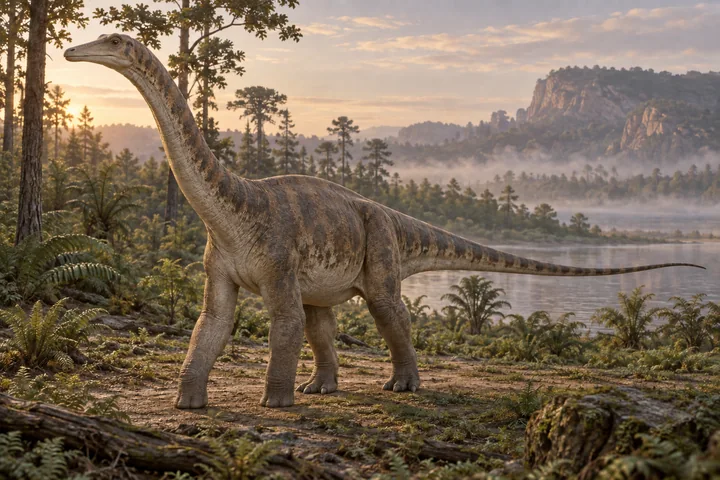
Rapetosaurus krausei
Rapetosaurus was a Malagasy titanosaur. Its famous Field Museum skeleton belonged to a growing youngster.
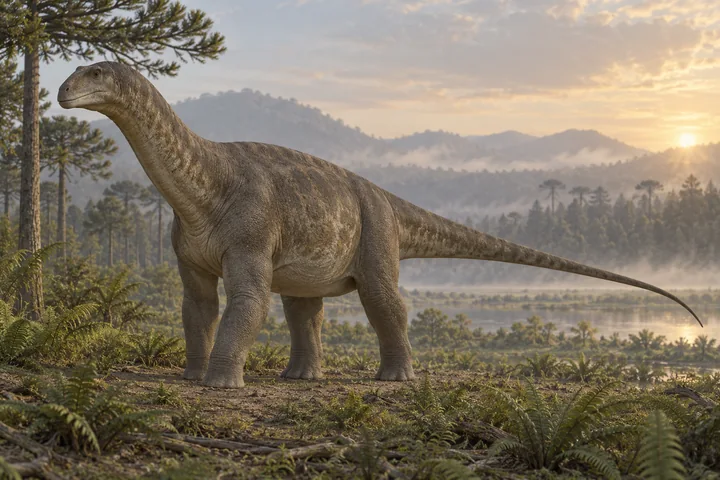
Isisaurus colberti
Isisaurus was an Indian titanosaur whose partial skeleton preserves distinctive neck vertebrae, shoulders and forelimbs.
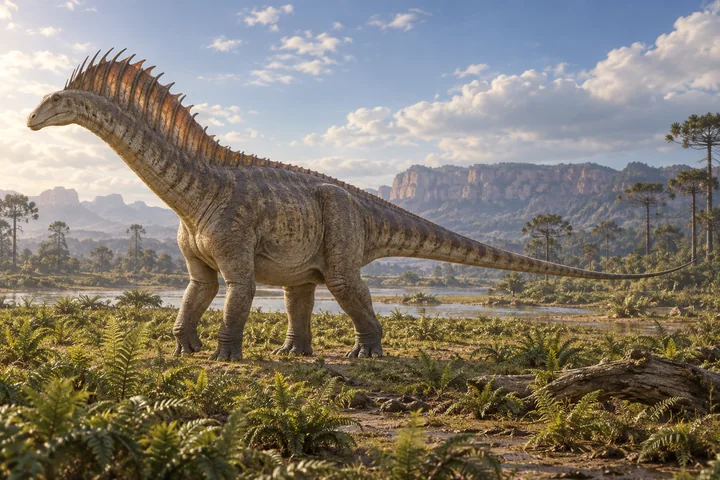
Amargasaurus cazaui
Amargasaurus cazaui was an Early Cretaceous sauropod from Argentina with paired elongated neck spines. Bone histology supports connected soft tissue rather than separate horn sheaths.