
Body length
InferredAbout 1.5 m (original reconstruction)
The naming paper reconstructs the small biped from fragmentary material; it does not establish a complete adult measurement or species maximum. [D1]
EXHIBIT 198
Kulindadromeus zabaikalicus
Kulindadromeus combined simple and compound feather-like appendages with scales on distinct regions of its small, two-legged body. [1]
TWO WAYS TO PICTURE THE PAST
Compare the evidence with the familiar movie image. The illustrations are not to a shared scale.
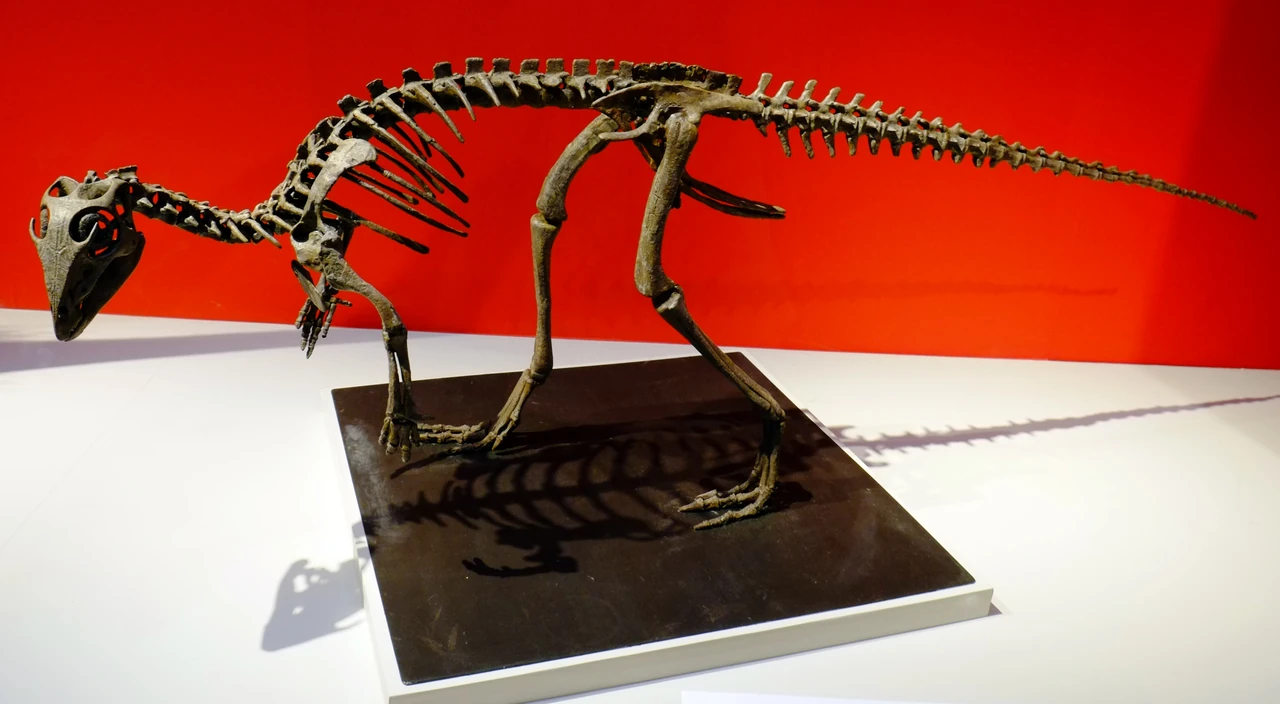
Kulindadromeus zabaikalicus skeletal reconstruction photographed by ★Kumiko★ at the 2016 Dinosaur Expo in Tokyo. The current Commons version retains an existing crop by FunkMonk. The source gives no specimen number or original-versus-cast key. The known fossils are fragmentary and mostly disarticulated, so this assembled outline represents reconstruction rather than one complete adult individual. It does not display the regionally preserved skin appendages or establish color. [1]
Kulindadromeus skeleton.jpg · ★Kumiko★; existing crop by FunkMonk. CC BY-SA 2.0. Current original Commons photograph converted to WebP and proportionally reduced for full view/thumbnail without upsampling. Existing source crop retained. No additional cropping, mirroring, anatomical edits or compositing. CC BY-SA 2.0 applies to these versions.
Skeletal mounts and drawings may restore missing parts; the caption identifies the displayed material.
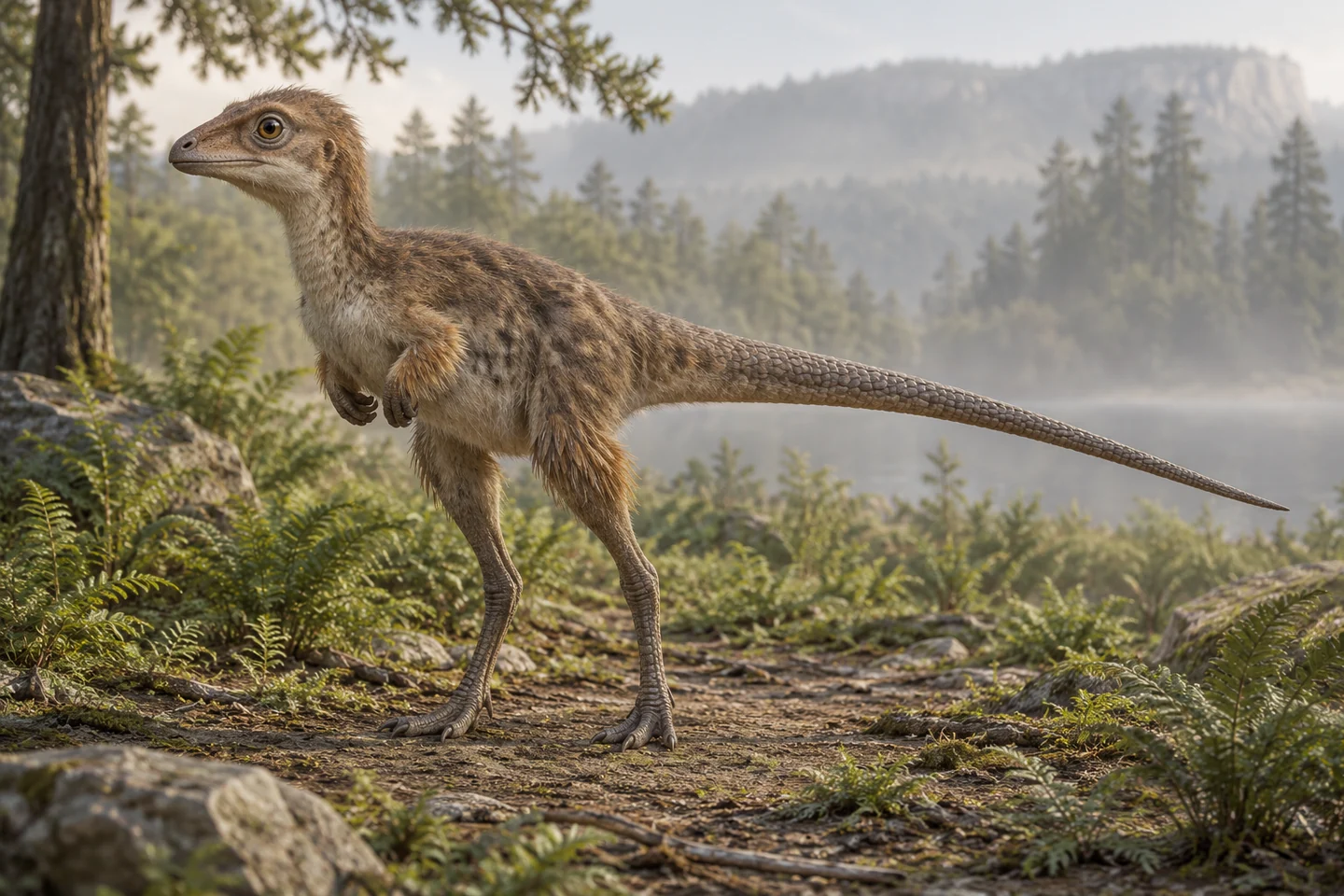
Original cinematic interpretation of Kulindadromeus. Fossils support a mosaic of filamentous and compound appendages alongside scales. This restoration keeps the long tail and distal legs visibly scaly. Covering density, missing anatomy, colors, pose and scenery are interpreted; no wings, flight or observed behavior are implied. Lighting, coloration and scenery are artistic choices. This image does not document a fossil locality or behavior.
Original artwork · artistic interpretation.
Scientific view: source-informed reconstruction, credited paleoart or specimen-based imagery. Movie-style view: Original artistic interpretation. Reconstructions involve uncertainty.
MEET THE ANIMAL
Kulindadromeus was a small, two-legged dinosaur from Siberia with teeth adapted for eating plants. Its hind legs were longer than its forelimbs. The discovery became especially interesting because preserved body coverings accompanied the bones. This gave researchers an opportunity to examine the surface of an animal that belonged outside the familiar feathered theropod group. [S1]
The covering was a mixture rather than one uniform coat. Short bristles occurred on the head and body, more complex structures on the arms and legs, and scales on parts of the tail and lower legs. Different regions therefore carried different structures. The fossils support that patchwork, but an illustration's overall colors and the appearance of unpreserved regions still require interpretation. [S1]
Later geological work places the locality in the Middle Jurassic and describes a lake setting with conifer-rich surroundings. Pollen and zircon evidence help establish that regional age. A date from volcanic particles is not automatically the precise date of a dinosaur's death. The environmental evidence adds a landscape to the anatomical picture while keeping its own dating limits clear. [D2]
PREHISTORIC ANIMAL DOSSIER
The animal, the evidence, and the questions still open.
Its integument expands the evidence for projecting appendages beyond theropod dinosaurs. Preservation varies by body region; a complete uniform coat is not observed. [D1]
Profile scope: Genus — Kulindadromeus; K. zabaikalicus, type partial skull INREC K3/109 and fragmentary referred material. Competing Kulinda names are conservatively reserved. [D1] [D3]
Source supported identifies a description documented by the cited source. Inferred marks a reconstruction or functional estimate. Debated marks competing interpretations. Not established means the sources reviewed for this dossier do not support a firm conclusion; it does not mean a behavior never occurred.
A size reference is an estimate, not a population range. Nesting evidence does not by itself establish courtship, mate choice, or lifelong pairing.
About 1.5 m (original reconstruction)
The naming paper reconstructs the small biped from fragmentary material; it does not establish a complete adult measurement or species maximum. [D1]
About 2 kg (composite volume model)
Paul’s INREC composite model uses volume and density, with limb scaling. It does not identify a single complete individual or establish maturity. [D7]
Herbivory inferred
Plant-adapted teeth support vegetation feeding. Specific plant preferences and stomach contents are not established by the reviewed description. [D3]
Bathonian lake deposits, Siberia
Basal Ukurey Formation, Olov Depression. Zircon ages constrain a maximum depositional age; palynology supports the Middle Jurassic Bathonian assignment. [D2]
Terrestrial biped inferred
Long hindlimbs, short forelimbs and an elongate balancing tail support a two-legged reconstruction. No measured speed or genus-specific trackway is established here. [D3]
Regional scales and feather-like appendages
Simple head/trunk filaments, compound upper-limb structures and scaly distal legs/tail occur in separate preserved patches. Neither uniform plumage nor color is established. [D1]
Not established here
The type skull probably represents an immature animal. Growing bones do not establish breeding age; focused searches found no attributable eggs, nests or parent–young association. [D1]
Visual display proposed
The chapter suggests display for organized ribbon-like appendages, alongside other possible functions. This does not demonstrate sex differences, mate choice or a courtship sequence. [D3]
Not established here
Young individuals dominate the bonebeds. Attritional accumulation is proposed but needs testing; this association does not directly establish a herd or family group. [D3]
Sources and inspection notes for the claims in this profile.
THE STORY IN THE FOSSILS
The original competing descriptions named Daurosaurus and Kulindapteryx. Their later proposed overlap requires an explicit reservation, rather than two additional exhibits. [4] [2]
A later author disputed the assumption of one Kulinda dinosaur taxon. That published disagreement limits how confidently disarticulated remains can be assembled into one animal. [5]
The dossier identifies the scope of each reference estimate. A mount, an individual fossil and a species-wide adult range are different measurements. Comparison metrics remain unavailable where adult scope has not been established. Unknown does not mean zero.
Sources support the stated claims and scopes. Refer to the evidence notes for uncertainty.
KEEP EXPLORING
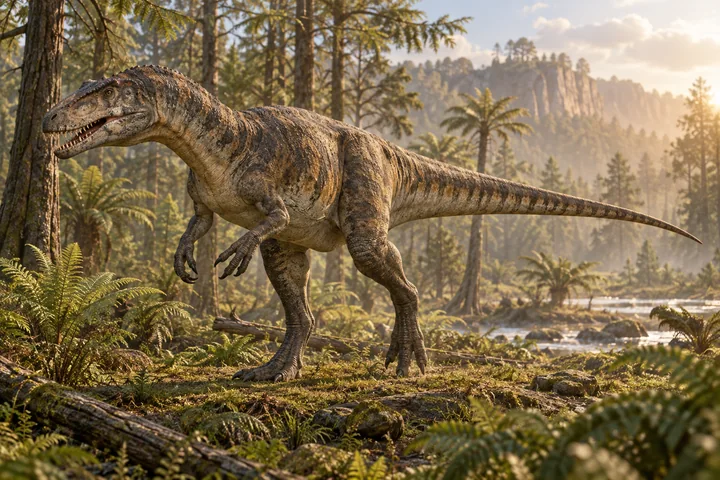
Megalosaurus bucklandii
Megalosaurus bucklandii was a Jurassic predator from England. Its fragmentary bones helped launch dinosaur science, while its modern identity is anchored by a distinctive lower jaw.
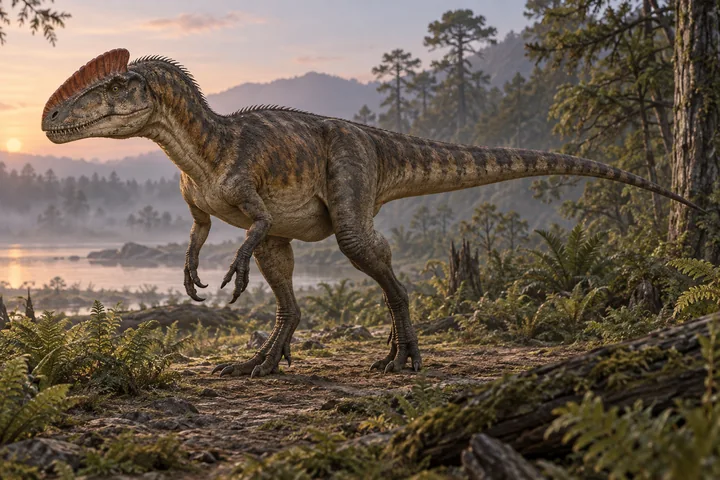
Monolophosaurus jiangi
Monolophosaurus is recognized by a single crest along its skull.
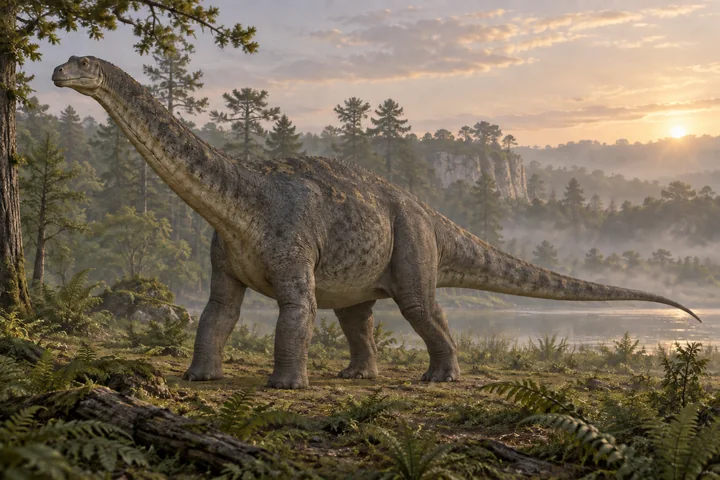
Cetiosaurus oxoniensis
Cetiosaurus was a large terrestrial plant-eater from Middle Jurassic England, represented by important partial skeletons rather than one complete fossil body.