Body length
InferredAbout 1 m (possibly juvenile reference)
Museum estimate relies on material that may be juvenile; it does not establish adult length or a species maximum. [D1]
EXHIBIT 216
Leaellynasaura amicagraphica
Dinosaur
Leaellynasaura was a small plant-eating dinosaur from the high-latitude forests of Cretaceous Australia. [1]
TWO WAYS TO PICTURE THE PAST
Compare the evidence with the familiar movie image. The illustrations are not to a shared scale.
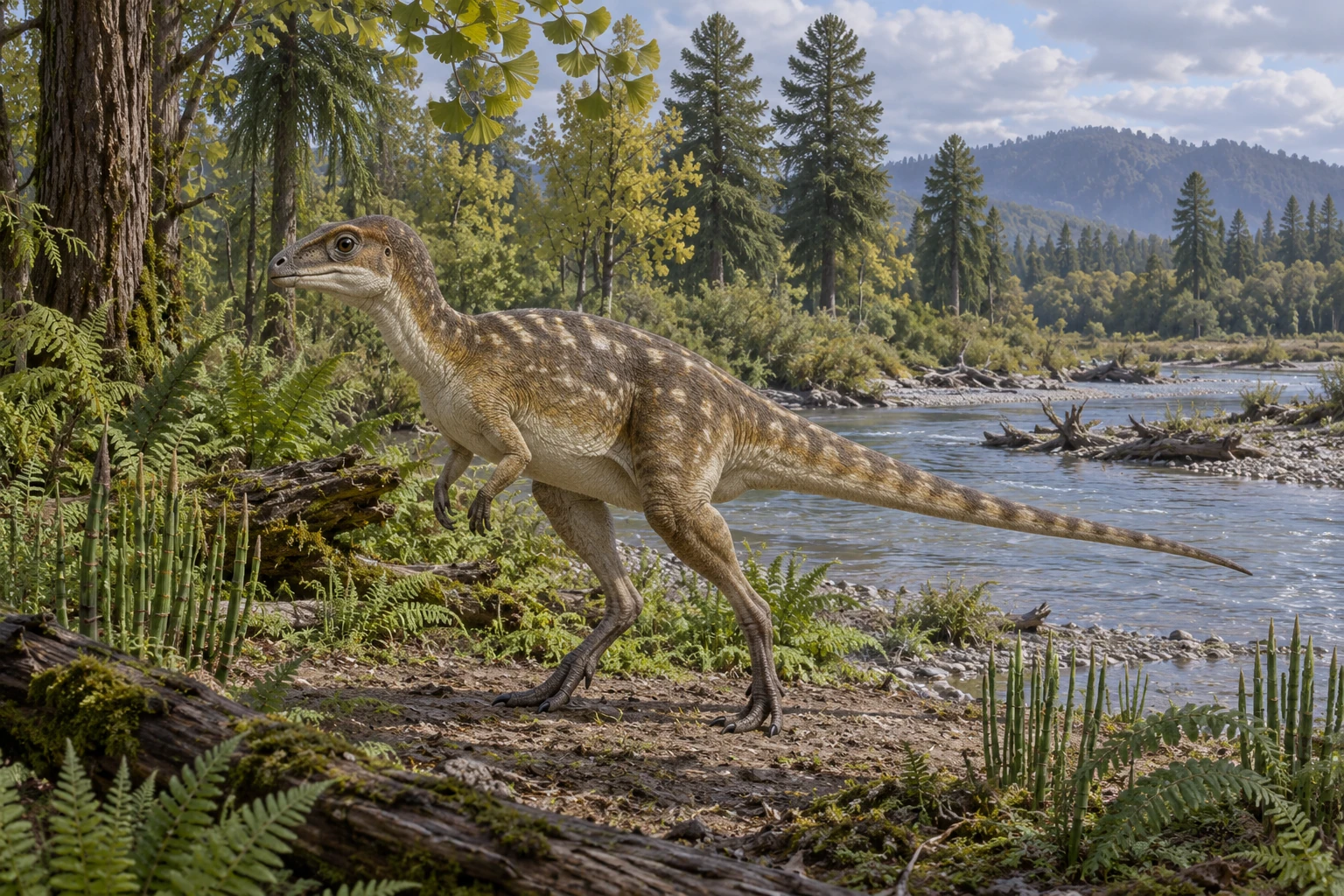
An illustrative reconstruction. Compare its anatomy with the evidence and limitations in the dossier. [2]
Source-informed reconstruction. Appearance evidence [2]. Original illustration; missing anatomy, coloration and scenery include interpretation.
Fossils constrain this life reconstruction. Missing anatomy, coloration and the environmental scene include interpretation; the dossier explains the evidence limits.
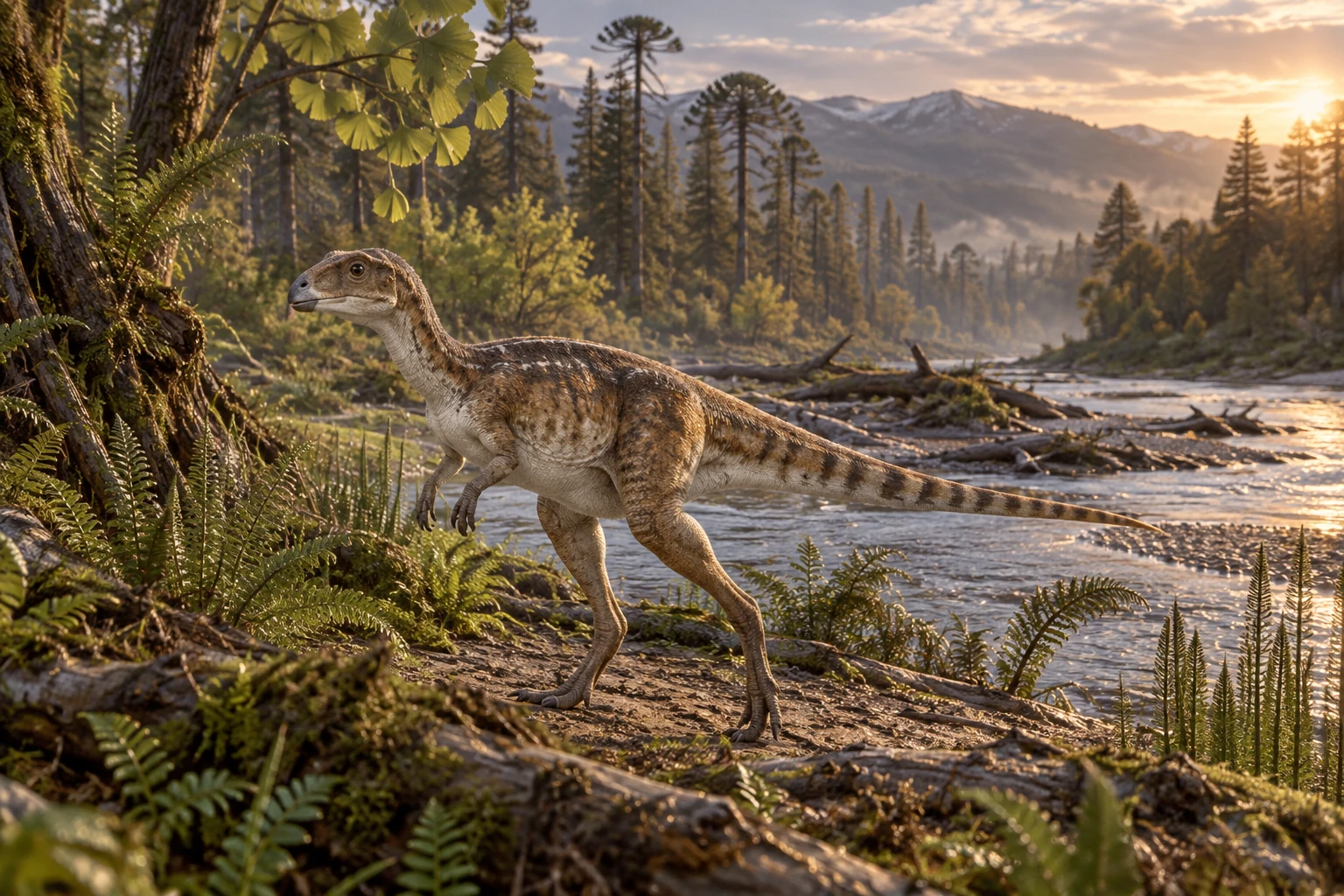
An illustrative reconstruction. Compare its anatomy with the evidence and limitations in the dossier. Lighting, coloration and scenery are artistic choices. This image does not document a fossil locality or behavior.
Original artwork · artistic interpretation.
Scientific view: source-informed reconstruction, credited paleoart or specimen-based imagery. Movie-style view: Original artistic interpretation. Reconstructions involve uncertainty.
MEET THE ANIMAL
Leaellynasaura lived in Early Cretaceous Australia, when Victoria lay much closer to Antarctica than it does today. Its world included forests, rivers and strongly seasonal daylight. Conifers and ginkgoes grew above an understory containing ferns and other low plants. The dinosaur’s ridged cheek teeth suggest plant feeding. Although the setting was at high latitude, picturing it on a modern Antarctic ice sheet would give the wrong impression. [D1]
The clearest fossil evidence is surprisingly small: a piece of a young animal’s upper jaw. Some other bones found nearby were once treated as parts of the same dinosaur. A later study showed that the river deposit could contain several individuals, possibly from different kinds of dinosaur. This makes a complete reconstruction uncertain and is a reason to treat spectacular eye and tail claims with caution. [D2]
Researchers have also studied growth marks in the bones of Australian polar dinosaurs. These marks record changes in how bone grew, but they do not prove that an animal slept through winter. The study concerns a broader sample, rather than a confirmed complete Leaellynasaura skeleton. Together, these examples show how scientists separate a useful comparison from direct evidence about one named dinosaur and leave room for new discoveries. [D3]
PREHISTORIC ANIMAL DOSSIER
The animal, the evidence, and the questions still open.
Some skull and limb bones traditionally linked to the type may belong to different individuals or taxa. [D2]
Profile scope: Genus — Leaellynasaura amicagraphica; secure type evidence centers on a juvenile maxillary fragment from Dinosaur Cove, Victoria. [D2]
Source supported identifies a description documented by the cited source. Inferred marks a reconstruction or functional estimate. Debated marks competing interpretations. Not established means the sources reviewed for this dossier do not support a firm conclusion; it does not mean a behavior never occurred.
A size reference is an estimate, not a population range. Nesting evidence does not by itself establish courtship, mate choice, or lifelong pairing.
About 1 m (possibly juvenile reference)
Museum estimate relies on material that may be juvenile; it does not establish adult length or a species maximum. [D1]
Not established here
Uncertain association of body bones prevents adopting a whole-body, maturity-qualified estimate here. [D2]
Plant feeding inferred
Small, ridged cheek teeth support herbivory; the reviewed account does not identify a fossilized meal. [D1]
High-latitude forest and river landscape
Early Cretaceous Victoria had conifers, ginkgoes and fern understory near the Australia–Antarctica rift, rather than a modern Antarctic ice sheet. [D1]
Bipedality inferred from comparison
The small-ornithopod reconstruction is plausible, but associated limb bones are not a secure complete Leaellynasaura skeleton. [D2]
Diagnostic ridged upper teeth
The juvenile maxillary fragment is secure. Large eyes and extremely long tails depend on disputed bone associations. [D2]
Not established here
The reviewed polar bone-growth study does not identify genus-specific eggs, nests or parental care. [D3]
Not established here
Growth rings are not evidence of courtship, mating posture or sexually distinct coloration. [D3]
Not established here
A time-averaged river deposit can mix individuals. That association alone cannot demonstrate a Leaellynasaura herd. [D2]
Sources and inspection notes for the claims in this profile.
THE STORY IN THE FOSSILS
High latitude does not mean the landscape resembled Antarctica today. Fossil plants support wooded river country in a different global climate. [1]
Growth marks in polar dinosaur bones do not, by themselves, prove winter hibernation. The sampled bones are broader-group evidence. [3]
The dossier identifies the scope of each reference estimate. A mount, an individual fossil and a species-wide adult range are different measurements. Comparison metrics remain unavailable where adult scope has not been established. Unknown does not mean zero.
Sources support the stated claims and scopes. Refer to the evidence notes for uncertainty.
KEEP EXPLORING
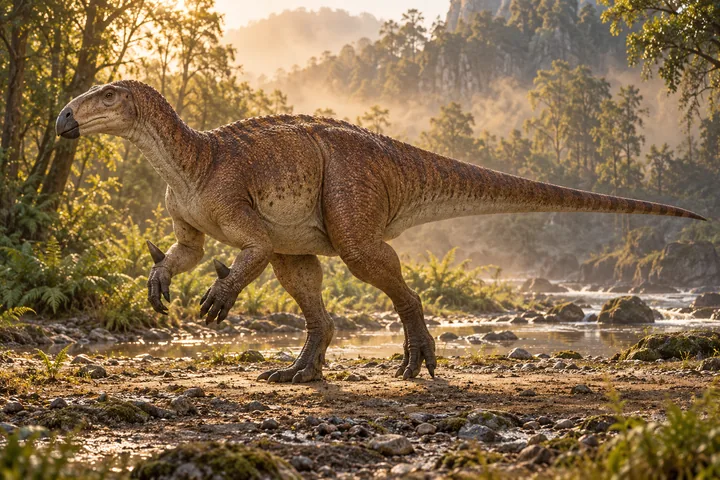
Iguanodon
Iguanodon was a large Early Cretaceous ornithopod with a beak, chewing teeth and prominent thumb spikes. Revisions of old fossils have narrowed a genus that once gathered many different dinosaurs.
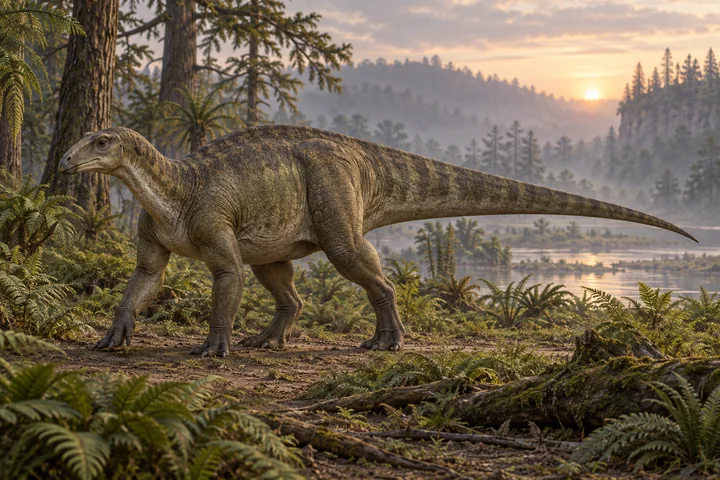
Tenontosaurus tilletti
Tenontosaurus offers evidence of growth, juvenile associations and reproduction before full skeletal maturity.
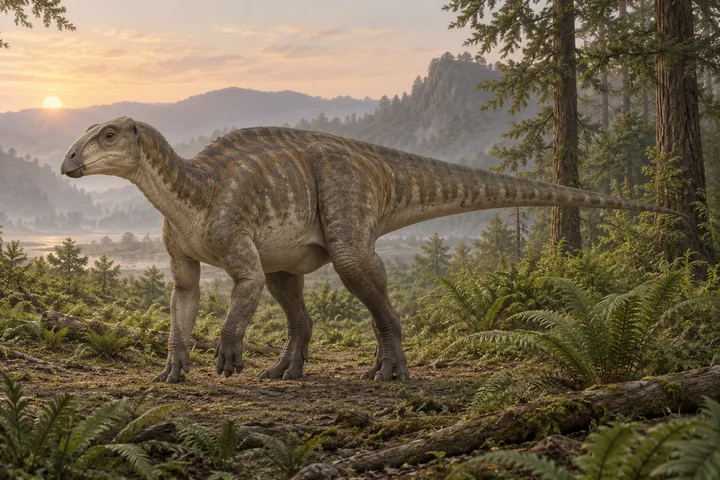
Fukuisaurus tetoriensis
Fukuisaurus was a plant-eating ornithopod from Japan. Newly recovered skull and forelimb parts have changed its museum reconstruction.