Body length
InferredAbout 7 m (museum reference)
A rounded profile estimate with no specimen or maturity assessment; it is not a verified adult maximum or a range for both Tenontosaurus species. [D1]
EXHIBIT 80
Tenontosaurus tilletti
Tenontosaurus offers evidence of growth, juvenile associations and reproduction before full skeletal maturity.
TWO WAYS TO PICTURE THE PAST
Compare the evidence with the familiar movie image. The illustrations are not to a shared scale.
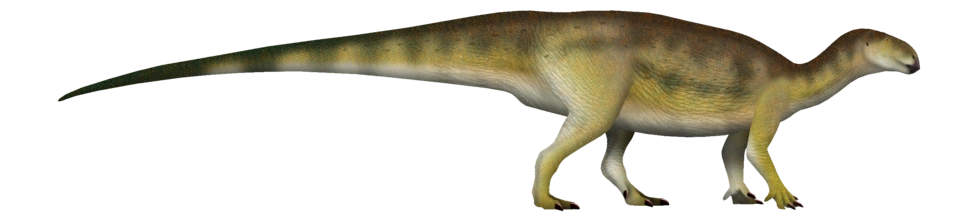
Life reconstruction of Tenontosaurus tilletti by TotalDino. Bones inform the distinctive tail and body proportions; missing anatomy, soft tissues and brown coloration are reconstructed. [4]
Tenontosaurus TD.png · TotalDino. CC BY 4.0. Commons-listed 960px current preview resized proportionally for the thumbnail and converted to WebP; no anatomical edits. Same source license applies.
Scientific reconstruction is an interpretation; source credit does not certify every anatomical detail.
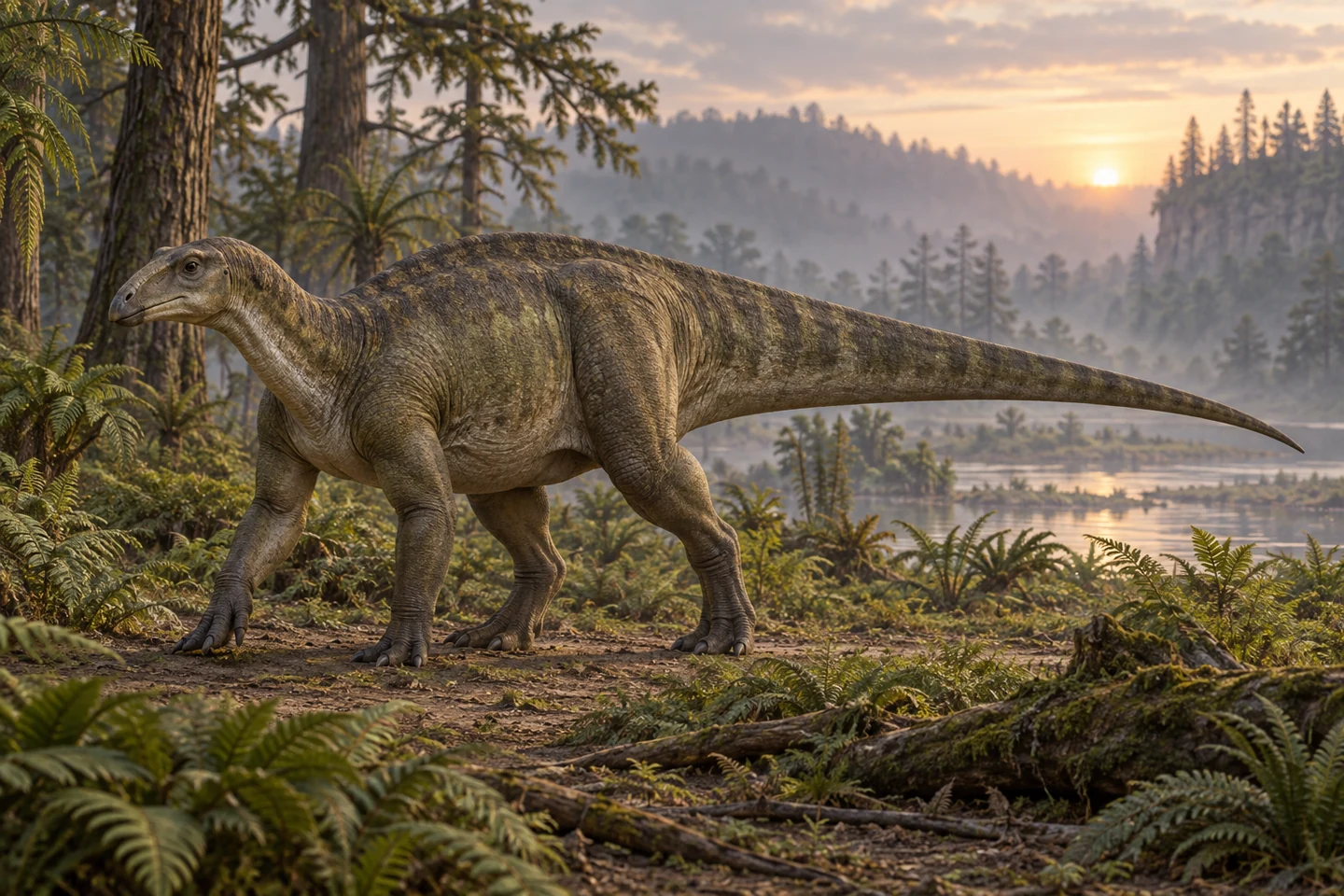
Original cinematic interpretation of Tenontosaurus tilletti. Coloration, soft tissues and scenery are artistic choices; reconstructed proportions do not establish a measured individual. Lighting, coloration and scenery are artistic choices. This image does not document a fossil locality or behavior.
Original artwork · artistic interpretation.
Scientific view: source-informed reconstruction, credited paleoart or specimen-based imagery. Movie-style view: Original artistic interpretation. Reconstructions involve uncertainty.
MEET THE ANIMAL
Tenontosaurus was a plant-eating dinosaur from Early Cretaceous North America. Its beak and chopping teeth were suited to gathering and processing vegetation. Reconstructions show both two-legged and four-legged postures, rather than one directly observed walking routine. Its fossils are useful for studying growth as well as rebuilding the animal's appearance. [D1]
One Tenontosaurus tilletti skull was examined with CT scanning to recover details that had been difficult to see or distorted in earlier reconstructions. The tooth arrangement helps distinguish it from Tenontosaurus dossi, another species. A genus name groups relatives together, but it does not mean that every skull or individual has exactly the same features. [D4]
A growing individual contained bone tissue interpreted as medullary bone, a temporary tissue associated with egg production. That interpretation suggests that reproduction could begin before the skeleton finished growing. Its estimated age of about eight years belongs to one animal, not a universal breeding timetable. Being young in terms of skeletal growth and being reproductively active are therefore questions that need separate evidence. [D3]
PREHISTORIC ANIMAL DOSSIER
The animal, the evidence, and the questions still open.
Its bones record life-stage differences; isolated associations require cautious behavioral interpretation.
Profile scope: Species — Tenontosaurus tilletti; findings are not automatically transferred to T. dossi.
Source supported identifies a description documented by the cited source. Inferred marks a reconstruction or functional estimate. Debated marks competing interpretations. Not established means the sources reviewed for this dossier do not support a firm conclusion; it does not mean a behavior never occurred.
A size reference is an estimate, not a population range. Nesting evidence does not by itself establish courtship, mate choice, or lifelong pairing.
About 7 m (museum reference)
A rounded profile estimate with no specimen or maturity assessment; it is not a verified adult maximum or a range for both Tenontosaurus species. [D1]
About 900 kg (museum reference)
The reference lacks an individual, reconstruction method and life-stage basis. Treat it as an approximate museum value, not measured mass. [D1]
Plant-eating
The museum identifies a beak and chopping teeth. Specific plants and habitual foods are not established by this anatomical profile. [D1]
Cloverly and Antlers Formation settings
T. tilletti fossils discussed in the growth study come from Montana, Wyoming and Oklahoma. The occurrence record should be distinguished from broader generic referrals. [D2]
Two- and four-legged reconstructions
The inspected summaries describe both postures. They do not establish a single exclusive gait, detailed movement sequence or speed for the species. [D4] [D1]
Distinctive skull and tooth arrangement
CT work on OMNH 58340 revises distorted earlier skull reconstructions. T. tilletti lacks premaxillary teeth, a feature distinguishing it from T. dossi in the reviewed comparison. [D4]
Reproductive tissue proposed in a growing individual
Bone in OMNH 34784 is interpreted as medullary tissue linked to egg production. Its estimated age was about eight years, before full growth. This individual does not establish the usual age at first breeding. [D3]
Not established here
The inspected anatomy, histology and reproductive-tissue studies do not demonstrate pairing, mate choice or mating displays.
Juvenile associations; family grouping uncertain
The growth study discusses similarly sized small juveniles associated with an adult. Same-clutch or family interpretations remain hypotheses; association does not establish parental care or permanent herds. [D2]
Sources and inspection notes for the claims in this profile.
THE STORY IN THE FOSSILS
A Tenontosaurus individual can be large enough to reproduce while its skeleton is still growing. The medullary-bone interpretation separates reproductive activity from complete skeletal maturity, without turning one animal’s age into a universal breeding timetable. [3]
Growth sections likewise distinguish fast-growing young animals from a prolonged period of slower growth. Size alone cannot reliably identify adulthood, which matters when comparing fossils or reconstructing a juvenile group. [2]
The dossier identifies the scope of each reference estimate. A mount, an individual fossil and a species-wide adult range are different measurements. Comparison metrics remain unavailable where adult scope has not been established. Unknown does not mean zero.
Sources support the stated claims and scopes. Refer to the evidence notes for uncertainty.
KEEP EXPLORING
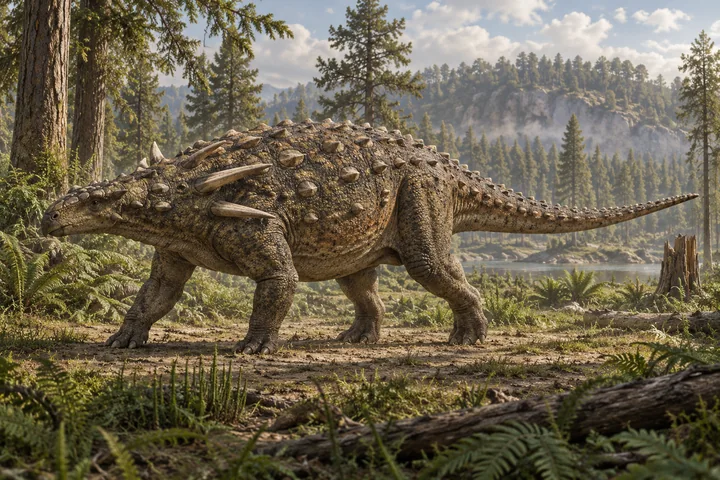
Sauropelta edwardsorum
Sauropelta was an armored plant eater from Early Cretaceous North America. Several partial skeletons preserve armor in place, helping researchers work out how its bony covering fitted around the body.
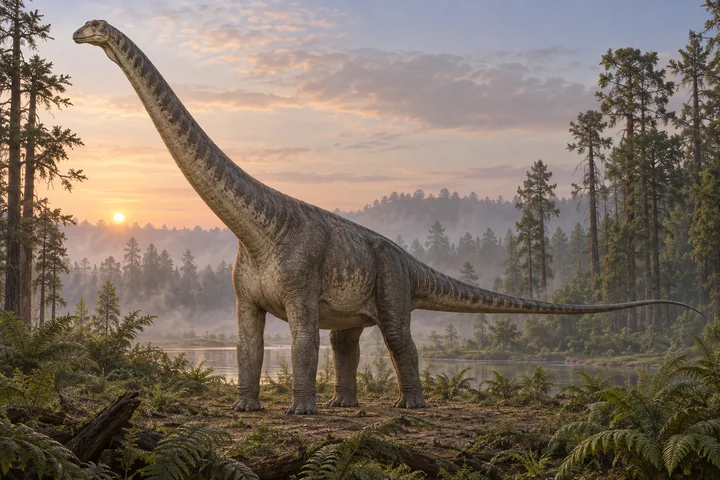
Sauroposeidon proteles
Sauroposeidon was an Early Cretaceous North American sauropod distinguished by extremely elongated, air-filled neck vertebrae.