
Body length
InferredAbout 5 m (museum reference)
Educational reconstruction without individual scope. The type pair were still growing; this is not an adult maximum. [D4] [D1]
EXHIBIT 160
Liliensternus liliensterni
Liliensternus is represented by two incomplete, still-growing skeletons from Late Triassic Germany. [1]
TWO WAYS TO PICTURE THE PAST
Compare the evidence with the familiar movie image. The illustrations are not to a shared scale.
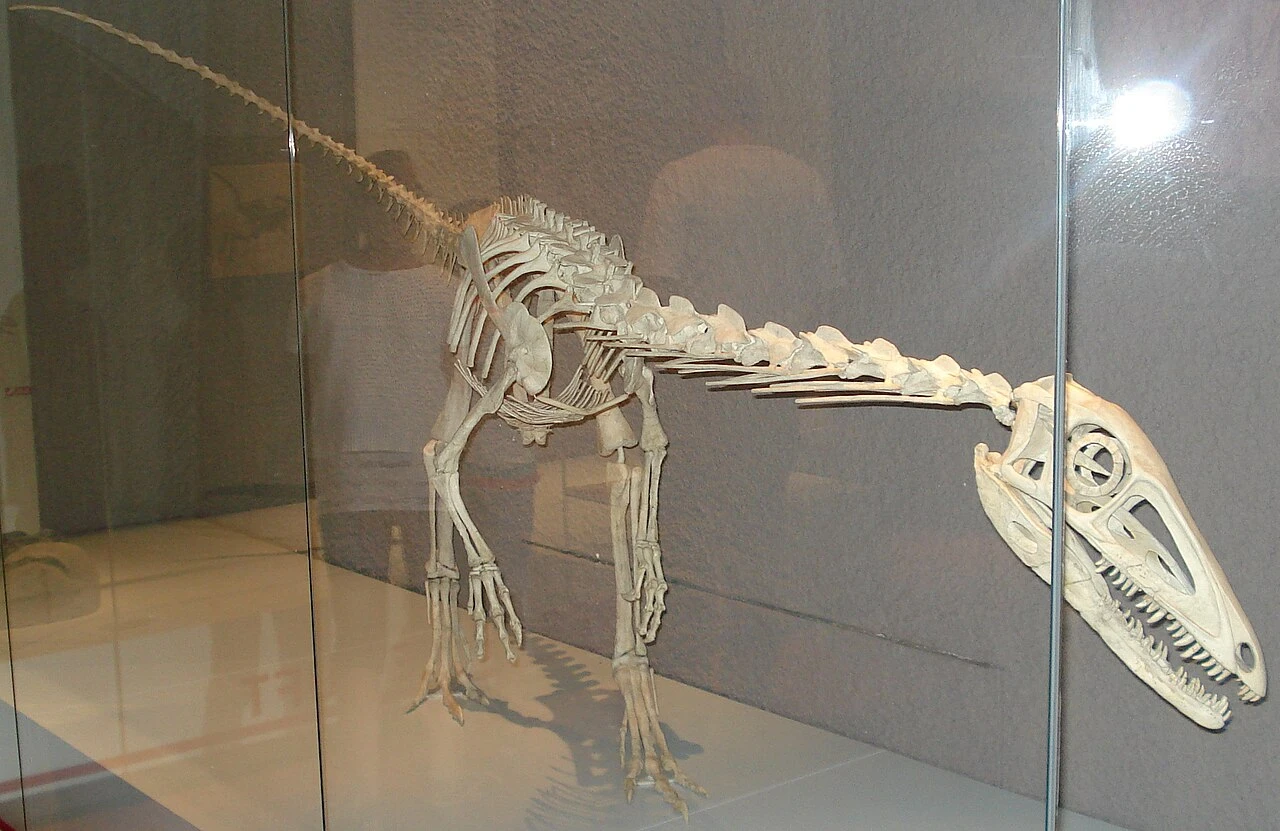
Liliensternus liliensterni display at the Staatliches Museum für Naturkunde Stuttgart, photographed by Ghedoghedo. This is a skeletal restoration: its complete head, crest profile and missing regions are supplied for display. The Commons page gives no specimen number or element-authenticity key. The growing, incomplete type skeletons do not establish every displayed bone or an adult maximum. [2]
Liliensternus liliensterni.JPG · Ghedoghedo; existing crop by Cropbot, operated by Reid,iain james. CC BY-SA 3.0. Current Commons cropped 1280 px preview converted to WebP, with proportional thumbnail reduction. No additional cropping, mirroring, anatomical edits or compositing. CC BY-SA 3.0 chosen from the offered licenses; derivatives retain that license.
Skeletal mounts and drawings may restore missing parts; the caption identifies the displayed material.
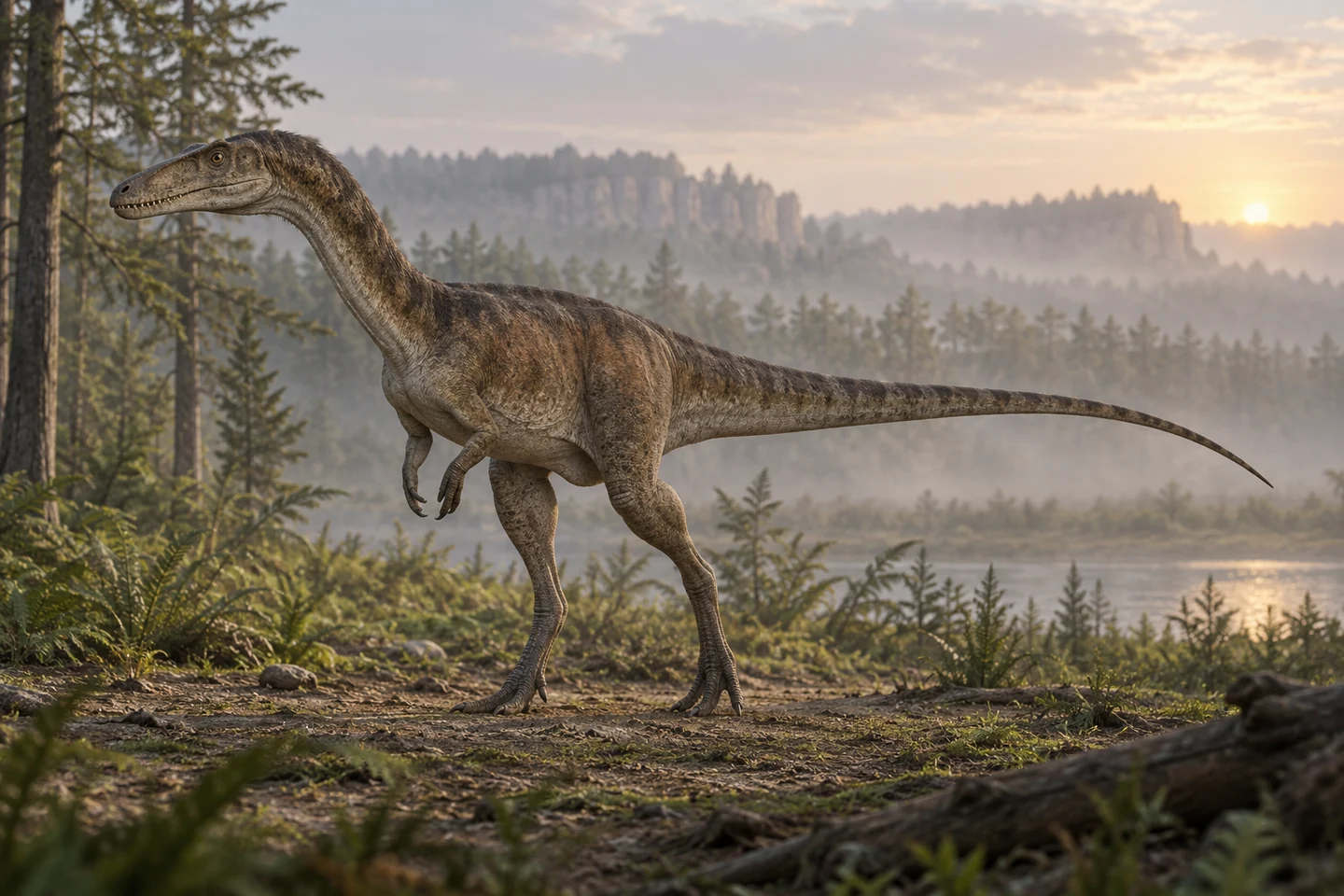
Original cinematic interpretation of Liliensternus. The fragmentary skull does not establish a Dilophosaurus-like paired crest; this image chooses a crestless comparative outline, without asserting crest absence. Lighting, colors and scenery are artistic choices; this image does not document directly observed behavior. Lighting, coloration and scenery are artistic choices. This image does not document a fossil locality or behavior.
Original artwork · artistic interpretation.
Scientific view: source-informed reconstruction, credited paleoart or specimen-based imagery. Movie-style view: Original artistic interpretation. Reconstructions involve uncertainty.
MEET THE ANIMAL
Liliensternus was a carnivorous dinosaur from Late Triassic Germany. The museum gives a general length reference of about five metres, but identifies no particular individual or growth stage for that reconstruction. This profile centers on Liliensternus liliensterni. Its broad carnivore category does not establish a particular prey animal or show how it hunted. [D4]
French fossils were once assigned to another species of Liliensternus. A later revision moved that animal into the distinct genus Lophostropheus. The older name therefore does not make France a secure home for the German dinosaur in this exhibit. Changing an identification can alter an animal's apparent geographic range without any of the fossil bones themselves changing. [D3]
The two incomplete German skeletons were still growing, indicated by open vertebral joins and limited fusion in the hips. [D1]
A general museum outline remains helpful for visualizing the animal's scale, provided its limits are understood. The stated length is an estimate without a documented method, rather than a direct measurement of a complete mature individual or a population of adults. [D4]
PREHISTORIC ANIMAL DOSSIER
The animal, the evidence, and the questions still open.
Long hindlimbs and incomplete skull material inform reconstructions, while growth and changing historical names complicate adult-size claims. [D1] [D2]
Profile scope: Genus — Liliensternus; profile limited to L. liliensterni, excluding the former French L. airelensis. [D3]
Source supported identifies a description documented by the cited source. Inferred marks a reconstruction or functional estimate. Debated marks competing interpretations. Not established means the sources reviewed for this dossier do not support a firm conclusion; it does not mean a behavior never occurred.
A size reference is an estimate, not a population range. Nesting evidence does not by itself establish courtship, mate choice, or lifelong pairing.
About 5 m (museum reference)
Educational reconstruction without individual scope. The type pair were still growing; this is not an adult maximum. [D4] [D1]
About 84 kg (limb model)
MBR 1291, larger individual; measured femoral circumference. Type pair immature. [D5] [D1]
Animal prey inferred
The museum profile classifies it as carnivorous; no particular prey is identified by the reviewed sources. [D4]
Norian deposits of Thuringia
Two incomplete skeletons came from Germany’s Late Triassic deposits. French material once called L. airelensis belongs to Lophostropheus. [D1] [D3]
Two-legged; relatively long lower legs
Hindlimb proportions support a cursorial interpretation, while speed and endurance remain unmeasured. [D1]
Partial skull; long neck and hindlimbs
The skull is incomplete. Reconstructions of large paired crests or a fully known hand exceed the preserved material. [D2]
Not established here
Open vertebral sutures and limited sacral fusion indicate growing individuals, not a measured breeding age or a nest association. [D1]
Not established here
Incomplete cranial anatomy does not establish a display structure, sexual dimorphism or a courtship sequence. [D2]
Not established here
Two incomplete skeletons are not evidence of siblings, a mating pair or a hunting group; focused searches located no diagnostic social evidence. [D1]
Sources and inspection notes for the claims in this profile.
THE STORY IN THE FOSSILS
The familiar museum outline completes missing bones. The anatomical reviews identify the German type pair as subadults, so restoration length cannot define a mature species range. [2]
A separate revision moved the Normandy animal into Lophostropheus. Its former name does not justify adding France to this genus profile. [3]
The dossier identifies the scope of each reference estimate. A mount, an individual fossil and a species-wide adult range are different measurements. Comparison metrics remain unavailable where adult scope has not been established. Unknown does not mean zero.
Sources support the stated claims and scopes. Refer to the evidence notes for uncertainty.
KEEP EXPLORING
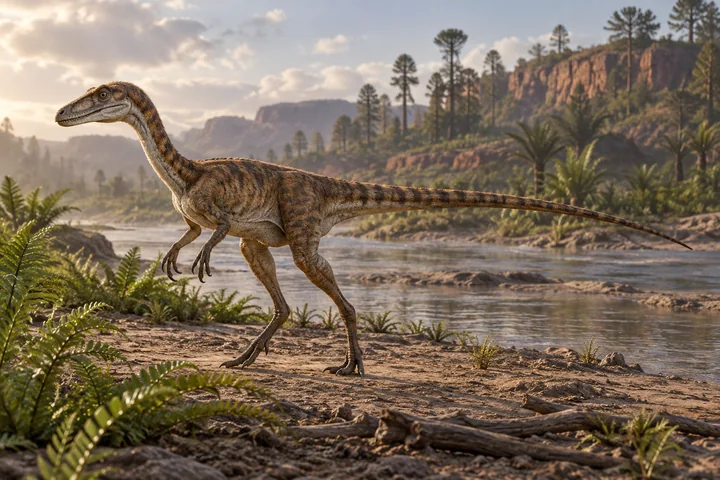
Eoraptor lunensis
Eoraptor was a small, early dinosaur from Argentina's Ischigualasto Formation. Its mixed dental features have produced competing feeding interpretations, and later studies place it near the origin of sauropodomorphs.
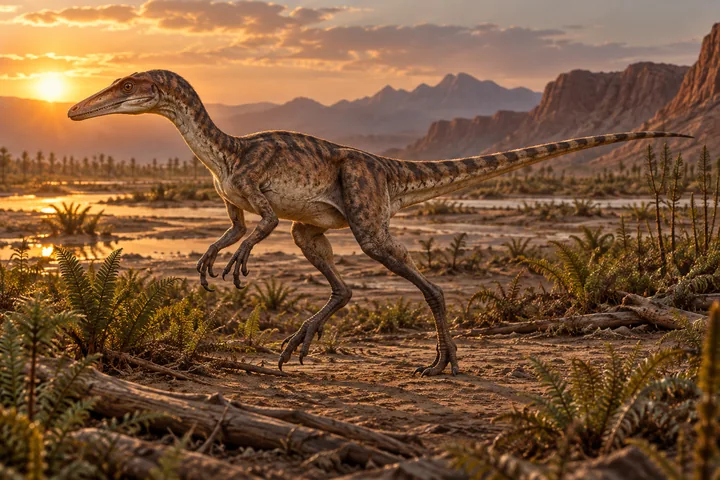
Eodromaeus murphi
Eodromaeus was a small predatory dinosaur from Argentina's Ischigualasto Formation. Curved teeth and grasping hands distinguish it from contemporary dinosaurs with different feeding adaptations.
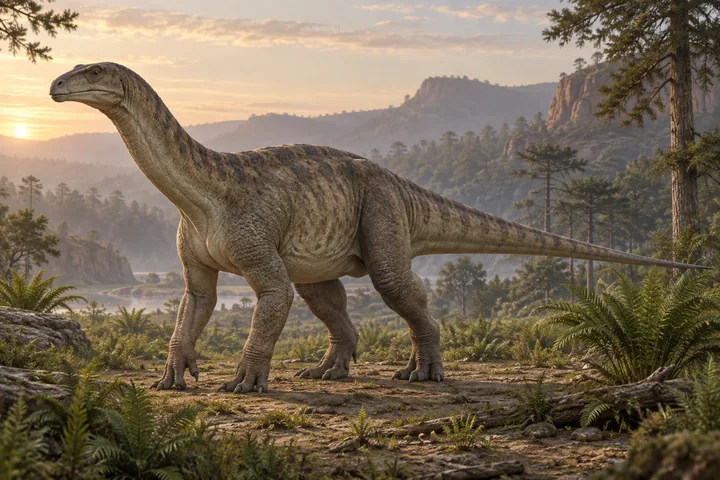
Riojasaurus incertus
Riojasaurus was a robust sauropodomorph from Late Triassic Argentina. Its small skull and unusual teeth became known through a skeleton smaller than the headless type.