EXPLORE PREHISTORY 220 prehistoric animal profiles · Scientific & movie-style image galleries

EXHIBIT 167

Limaysaurus

Limaysaurus tessonei

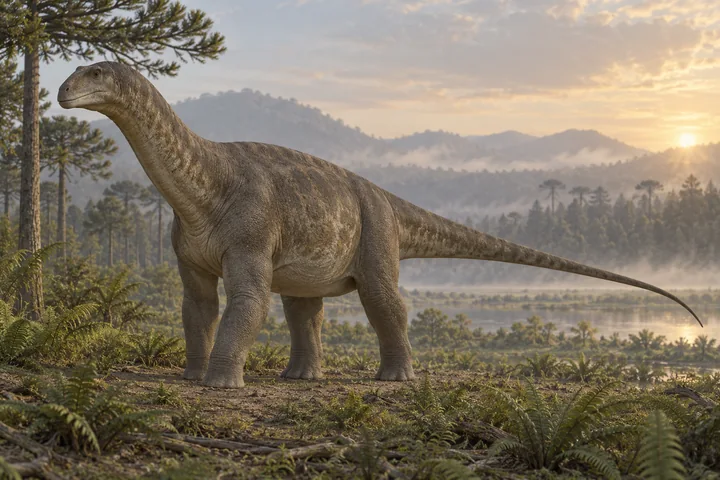
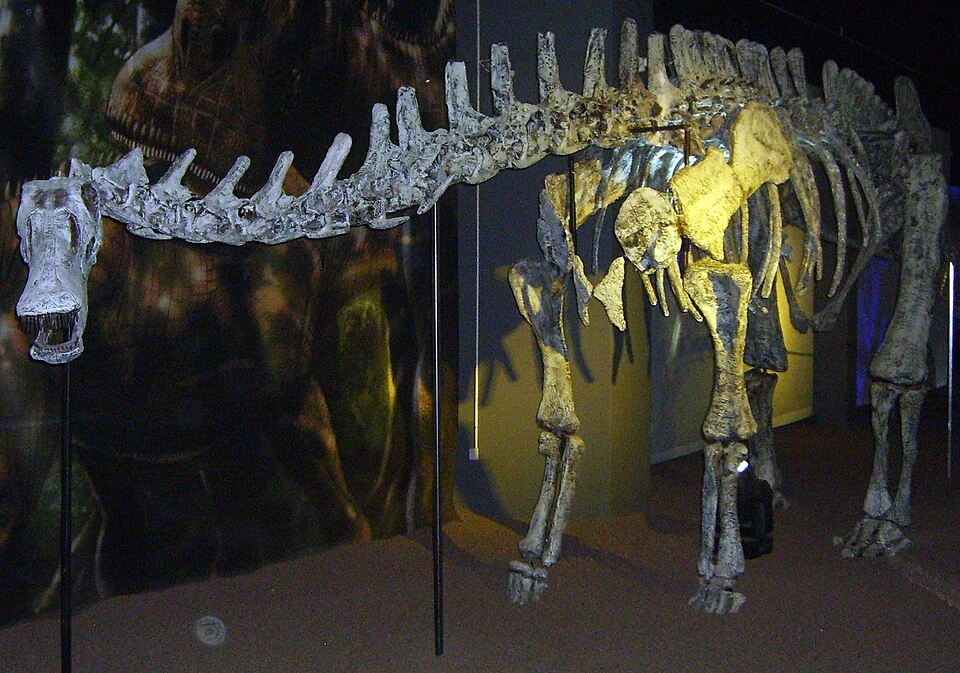
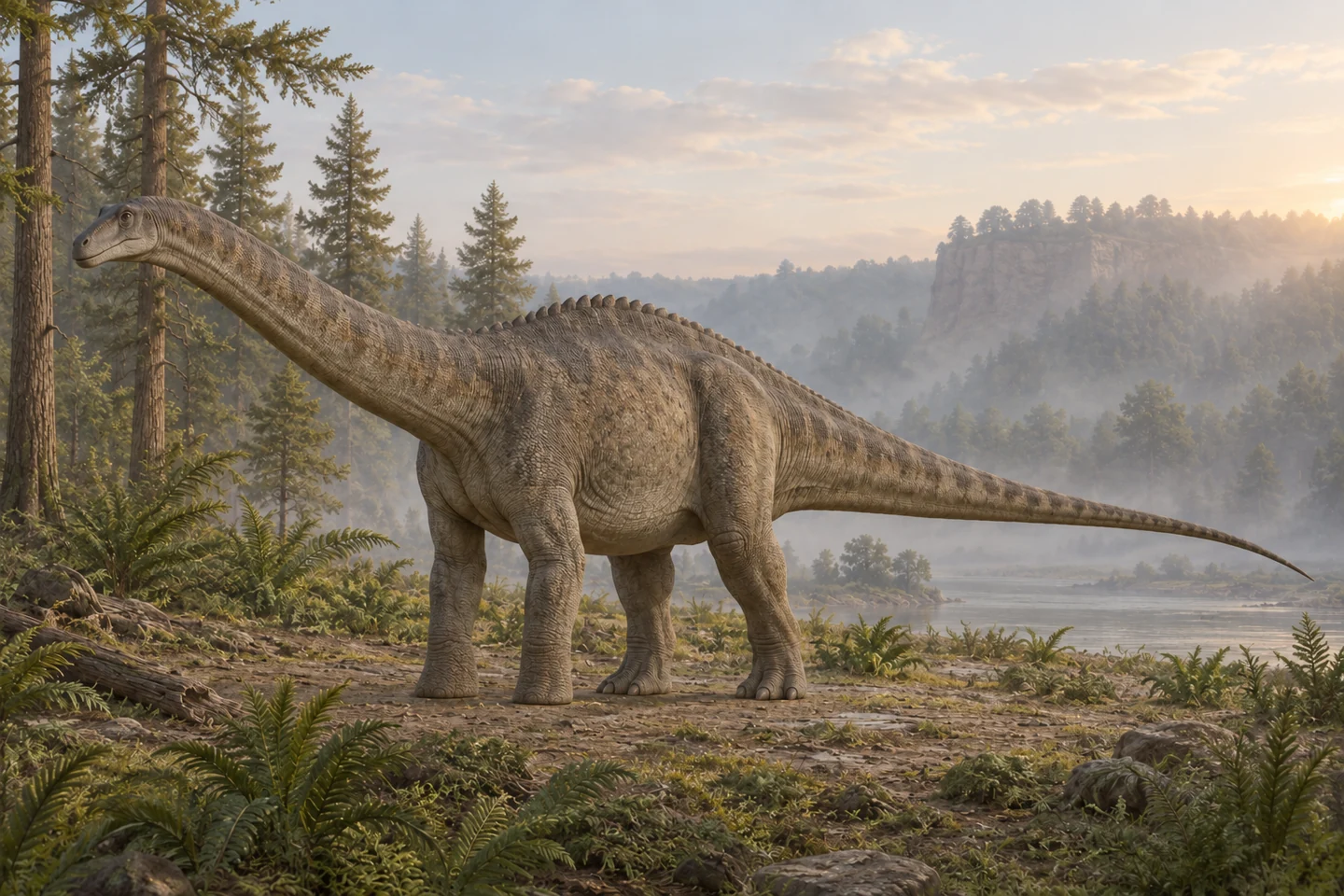
Limaysaurus was a Patagonian rebbachisaurid with tall vertebral spines and informative cranial remains. Its former name once linked it to Morocco’s Rebbachisaurus. [2] [1]

Evidence profile
PERIODLate Cretaceous[2]
DIETHerbivoreEvidence and uncertainty in the dossier
TOTAL LENGTHSee the dossierEstimate scope matters
FOSSILS FOUNDArgentina[2]
CompareRead the dossierView the sources

MEET THE ANIMAL

Meet Limaysaurus

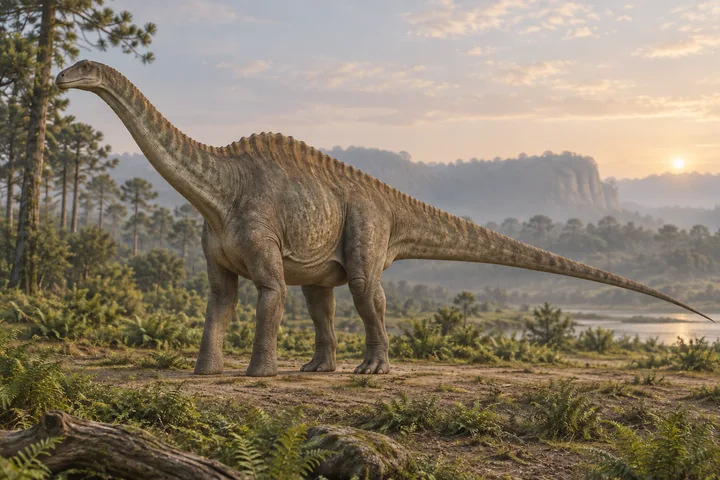
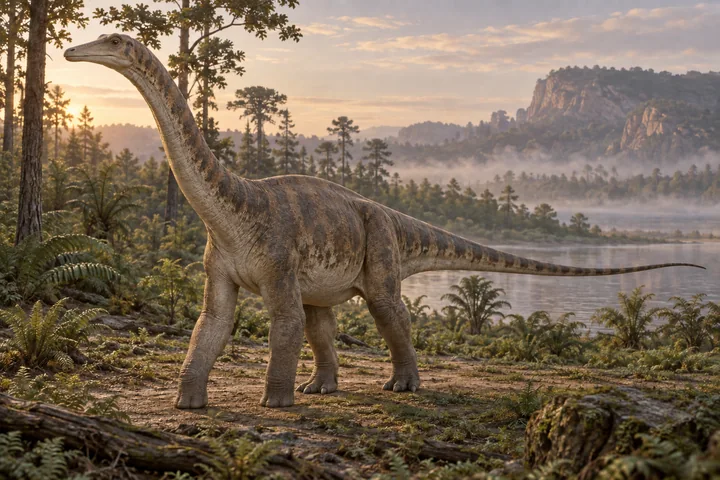
Limaysaurus was a long-necked sauropod from Late Cretaceous Patagonia in Argentina. Its species was once called Rebbachisaurus tessonei before receiving its own genus name. The renaming keeps the Argentine animal distinct from Morocco's Rebbachisaurus. A scientific name can change while the same inventory-numbered bones remain the reference, without turning a change of name into a change of specimen. [D2]

One published body model was scaled to about 10.9 metres for a biomechanics thought experiment. The animal was used as an illustrative prey example, not as evidence of a fossilized hunt. The model's size depends on its deliberately chosen scale. It should not be confused with a measured complete specimen, a mature maximum or proof that the imagined predator encounter really happened. [D6]

A study of fossil eggs discussed Limaysaurus among possible producer groups but identified the eggs only within the broader Neosauropoda. Without a genus-specific embryo, those eggs cannot securely establish Limaysaurus nesting behavior. General sauropod reproductive evidence may suggest questions to investigate, while leaving egg number, incubation conditions and parental care unresolved for this particular dinosaur. [D7]

PREHISTORIC ANIMAL DOSSIER

A life in profile.

The animal, the evidence, and the questions still open.

Renaming and revised referrals narrow the evidence to the actual genus. Body models, abdominal stones and quarry associations each answer different questions and carry distinct uncertainties. [D2]

Profile scope: Genus profile centered on Limaysaurus tessonei, especially type MUCPv-205. MUCPv-153 and MUCPv-206 are separate individuals; older Lohan Cura referrals now belong to Comahuesaurus. [D1] [D3]

Time
Late Cretaceous
Fossil locations in this exhibit
Argentina
How to read the evidence

Source supported identifies a description documented by the cited source. Inferred marks a reconstruction or functional estimate. Debated marks competing interpretations. Not established means the sources reviewed for this dossier do not support a firm conclusion; it does not mean a behavior never occurred.

A size reference is an estimate, not a population range. Nesting evidence does not by itself establish courtship, mate choice, or lifelong pairing.

Body length

Inferred

10.9 m; deliberately scaled comparative model

Henderson and Nicholls scaled a reconstructed body to an illustrated prey scenario. This is not MUCPv-205’s measured length, an established life stage or an adult maximum; the source does not document a real intercontinental predator encounter. [D6]
Body mass

Inferred

About 7.4 tonnes; type-based volume model

Paul lists MUCPv-205 under its historical Rebbachisaurus name. This restored-volume model concerns Limaysaurus, not R. garasbae. It differs from the smaller illustration-scaled model and does not define an adult population range. [D5]

Diet

Inferred

Plant feeding inferred; abdominal stones reported

Teeth are consistent with herbivory. Six rounded stones were described in the type’s abdominal region, two against ribs; interpreting them as swallowed stones does not by itself prove a gastric mill or identify eaten plants. [D1]

Habitat & fossil setting

Source supported

Cenomanian Candeleros Formation, Patagonia

L. tessonei is retained from Argentina’s Cenomanian Candeleros Formation. Former Early Cretaceous Lohan Cura material belongs to Comahuesaurus, so it does not extend this species’ age or locality range. [D2] [D3]

Movement

Inferred

Quadrupedal sauropod reconstruction

Limb and axial bones support four-legged reconstruction. Posture and missing regions are restored; a volume model does not establish walking speed or a fixed neck angle. [D1]

Distinctive anatomy

Source supported

Tall, undivided spines and an arched posterior skull

The original description documents tall cervical and dorsal neural spines rather than paired branches. Cranial remains principally document the posterior skull, leaving much of the muzzle to comparative restoration. [D1]

Reproduction & life together

Reproduction & nesting

Not established

Not established here

A Sanagasta egg study listed Limaysaurus among possible producer clades but retained a broad Neosauropoda attribution. No genus-specific embryo identification establishes these eggs, geothermal nesting or parental care for Limaysaurus. [D7]

Courtship & mating

Not established

Not established here

Focused searches did not establish sex-specific anatomy, calls, mate choice or mating displays. Vertebral height alone does not demonstrate a reproductive function.

Social behavior

Not established

Not established here

The original description includes separate adult-labeled individuals, not an observed herd. A multi-individual Lohan Cura assemblage once referred to Limaysaurus is now Comahuesaurus and cannot supply this genus’s social evidence. [D1] [D3]

Dossier research & sources

Sources and inspection notes for the claims in this profile.

  1. Rebbachisaurus tessonei sp. nov. A new Sauropoda from the Albian-Cenomanian of Argentina; new evidence on the origin of the DiplodocidaeGaia; Calvo & Salgado (1995), published original paper · Accessed 2026-10-02Original 21-page PDF inspected: MUCPv-205 cranial/postcranial inventory, separate adult-labeled individuals, abdominal stones and anatomy. Original broad stratigraphic terminology is not the current genus age. · Inspected: page
  2. Lower Cretaceous rebbachisaurid sauropods from Cerro Aguada del León (Lohan Cura Formation), Neuquén Province, northwestern Patagonia, ArgentinaJournal of Vertebrate Paleontology; Salgado, Garrido, Cocca & Cocca (2004) · Accessed 2026-10-02Publisher abstract and author-indexed original excerpts inspected: distinct genus Limaysaurus for former R. tessonei and Cenomanian Candeleros species; historical Lohan Cura genus-level referral superseded in 2012. · Inspected: excerpt
  3. A new basal rebbachisaurid (Sauropoda, Diplodocoidea) from the Early Cretaceous of the Neuquén Basin; evolution and biogeography of the groupHistorical Biology; Carballido, Salgado, Pol, Canudo & Garrido (2012), author-hosted published paper · Accessed 2026-10-02Original 24-page PDF inspected: Comahuesaurus windhauseni, formerly Limaysaurus sp. from Lohan Cura, and distinct multi-individual quarry material. · Inspected: page
  4. Redescription of Rayososaurus agrioensis Bonaparte (Sauropoda, Diplodocoidea), a rebbachisaurid from the early Late Cretaceous of NeuquénGeobios; Carballido, Garrido, Canudo & Salgado (2010) · Accessed 2026-10-02Original ten-page PDF inspected: historical Rayososaurus tessonei combination and separation of Rayososaurus agrioensis from Limaysaurus. · Inspected: page
  5. Mass estimates—dinosaurs etc. (online mass-model appendix)Princeton University Press; Gregory S. Paul, online appendix · Accessed 2026-10-02Original appendix inspected: historical “Rebbachisaurus MUCPv-205” row, approximately 7,400 kg. This inventory is Limaysaurus; the subsequent 14.40 is a limb-bone model input, not whole-body length. · Inspected: page
  6. Balance and Strength—Estimating the Maximum Prey-Lifting Potential of the Large Predatory Dinosaur Carcharodontosaurus saharicusThe Anatomical Record; Henderson & Nicholls (2015) · Accessed 2026-10-02Original full publisher text inspected, Methods and Table1: 10.9 m, 1,910 kg deliberately scaled Limaysaurus body model based on the 1995 reconstruction. It represents an illustrative comparative prey proxy, not a measured individual or observed encounter. · Inspected: page
  7. Water vapor conductance of the Lower Cretaceous dinosaurian eggs from Sanagasta, La Rioja, Argentina: Paleobiological and paleoecological implications for South American faveoloolithid and megaloolithid eggsPALAIOS; Grellet-Tinner, Fiorelli & Salvador (2012), author-hosted published paper · Accessed 2026-10-02Original thirteen-page PDF inspected: Limaysaurus appears among historical possible producer clades; actual eggs remain Neosauropoda, with no genus-specific embryo assignment. Its older genus chronology is not adopted. · Inspected: page

THE STORY IN THE FOSSILS

Meet Limaysaurus.

The name changed while the inventory number stayed the same: MUCPv-205 anchors the renamed species. Whole-genus Rebbachisaurus and Rayososaurus remain distinct despite older species combinations. [2] [4]

The 10.9 m body model was created for a biomechanics thought experiment. It should not be read as a fossilized hunt or paired with the larger type-based mass as one measured individual. [6]

A note on scale and time

The dossier identifies the scope of each reference estimate. A mount, an individual fossil and a species-wide adult range are different measurements. Comparison metrics remain unavailable where adult scope has not been established. Unknown does not mean zero.

Sources & editorial notes

Sources support the stated claims and scopes. Refer to the evidence notes for uncertainty.

  1. Rebbachisaurus tessonei sp. nov. A new Sauropoda from the Albian-Cenomanian of Argentina; new evidence on the origin of the DiplodocidaeGaia; Calvo & Salgado (1995), published original paper · Accessed 2026-10-02Original 21-page PDF inspected: MUCPv-205 cranial/postcranial inventory, separate adult-labeled individuals, abdominal stones and anatomy. Original broad stratigraphic terminology is not the current genus age. · Inspected: page
  2. Lower Cretaceous rebbachisaurid sauropods from Cerro Aguada del León (Lohan Cura Formation), Neuquén Province, northwestern Patagonia, ArgentinaJournal of Vertebrate Paleontology; Salgado, Garrido, Cocca & Cocca (2004) · Accessed 2026-10-02Publisher abstract and author-indexed original excerpts inspected: distinct genus Limaysaurus for former R. tessonei and Cenomanian Candeleros species; historical Lohan Cura genus-level referral superseded in 2012. · Inspected: excerpt
  3. A new basal rebbachisaurid (Sauropoda, Diplodocoidea) from the Early Cretaceous of the Neuquén Basin; evolution and biogeography of the groupHistorical Biology; Carballido, Salgado, Pol, Canudo & Garrido (2012), author-hosted published paper · Accessed 2026-10-02Original 24-page PDF inspected: Comahuesaurus windhauseni, formerly Limaysaurus sp. from Lohan Cura, and distinct multi-individual quarry material. · Inspected: page
  4. Redescription of Rayososaurus agrioensis Bonaparte (Sauropoda, Diplodocoidea), a rebbachisaurid from the early Late Cretaceous of NeuquénGeobios; Carballido, Garrido, Canudo & Salgado (2010) · Accessed 2026-10-02Original ten-page PDF inspected: historical Rayososaurus tessonei combination and separation of Rayososaurus agrioensis from Limaysaurus. · Inspected: page
  5. Mass estimates—dinosaurs etc. (online mass-model appendix)Princeton University Press; Gregory S. Paul, online appendix · Accessed 2026-10-02Original appendix inspected: historical “Rebbachisaurus MUCPv-205” row, approximately 7,400 kg. This inventory is Limaysaurus; the subsequent 14.40 is a limb-bone model input, not whole-body length. · Inspected: page
  6. Balance and Strength—Estimating the Maximum Prey-Lifting Potential of the Large Predatory Dinosaur Carcharodontosaurus saharicusThe Anatomical Record; Henderson & Nicholls (2015) · Accessed 2026-10-02Original full publisher text inspected, Methods and Table1: 10.9 m, 1,910 kg deliberately scaled Limaysaurus body model based on the 1995 reconstruction. It represents an illustrative comparative prey proxy, not a measured individual or observed encounter. · Inspected: page
  7. Water vapor conductance of the Lower Cretaceous dinosaurian eggs from Sanagasta, La Rioja, Argentina: Paleobiological and paleoecological implications for South American faveoloolithid and megaloolithid eggsPALAIOS; Grellet-Tinner, Fiorelli & Salvador (2012), author-hosted published paper · Accessed 2026-10-02Original thirteen-page PDF inspected: Limaysaurus appears among historical possible producer clades; actual eggs remain Neosauropoda, with no genus-specific embryo assignment. Its older genus chronology is not adopted. · Inspected: page

FOLLOW YOUR CURIOSITY

Who will you meet next?

KEEP EXPLORING

More from the collection