Body length
InferredAbout 20 m; broad museum reference
The museum supplies this reconstruction reference without a specimen, maturity assessment or calculation. It is not a measured complete type, an adult maximum or a verified species range. [D5]
EXHIBIT 164
Rebbachisaurus garasbae
Rebbachisaurus was a Moroccan sauropod with towering back vertebrae. Its head and much of its complete silhouette remain reconstructed. [1]
TWO WAYS TO PICTURE THE PAST
Compare the evidence with the familiar movie image. The illustrations are not to a shared scale.
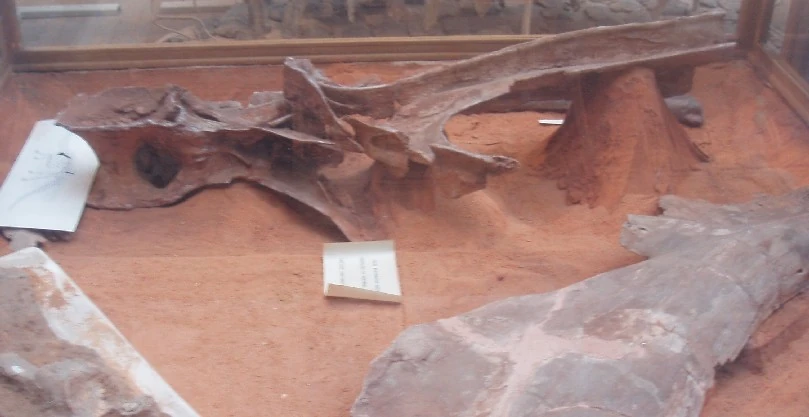
Displayed vertebra identified as Rebbachisaurus at the Muséum national d’Histoire naturelle, Paris. The photograph does not establish an inventory number, life stage or complete-individual identity; it is not used as a measurement of shoulder height. [1]
Displayed Rebbachisaurus vertebra · Ghedo. Public domain. Resized proportionally and converted to WebP; no anatomical edits. The downloaded Commons source already includes any uploader revisions or crops; its selected license applies.
The photograph or figure shows the credited fossil material; displayed mounts and labels can include interpretation.
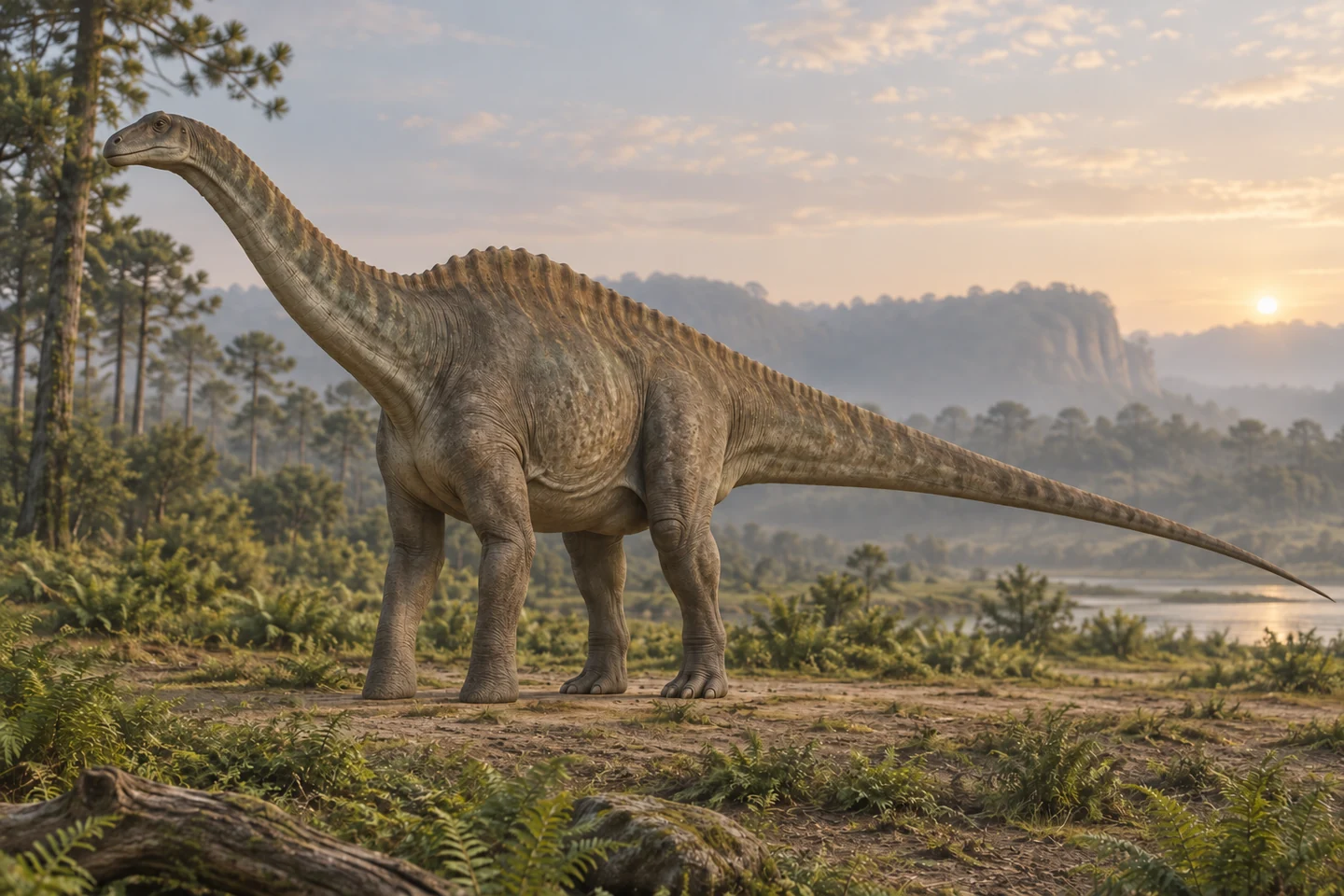
Original cinematic interpretation of Rebbachisaurus. The type is postcranial: head, complete neck, external spine expression and missing regions require comparative reconstruction. Colors, lighting and scenery are artistic choices; this is not directly observed behavior. Lighting, coloration and scenery are artistic choices. This image does not document a fossil locality or behavior.
Original artwork · artistic interpretation.
Scientific view: source-informed reconstruction, credited paleoart or specimen-based imagery. Movie-style view: Original artistic interpretation. Reconstructions involve uncertainty.
MEET THE ANIMAL
Rebbachisaurus was a large plant-eating sauropod from Morocco. Its incomplete skeleton has inspired whole-body reconstructions, including possible sail-like covering above the back. A proposed sail is an interpretation of the living outline, rather than directly preserved skin or proof of a mating display. [D5]
The associated type material came from Gara Sbaa in southeastern Morocco's Kem Kem deposits. Geological research places it in a Late Cretaceous river-and-delta system. That setting describes the landscape and processes surrounding burial, not an exclusively aquatic lifestyle for the animal itself. [D2]
Its back vertebrae were exceptionally tall. One described vertebra reaches 1.45 metres in total height. This is the dimension of a bone, rather than a direct measurement of shoulder height. The external covering and complete body silhouette still require restoration around the skeleton. [D1]
The type has no teeth. Isolated Moroccan teeth may be identifiable as belonging to its broader dinosaur family, but that does not securely assign them to Rebbachisaurus garasbae. Missing mouth anatomy limits detailed feeding claims, including wear patterns, particular plant foods and the shape of every tooth. [D3]
PREHISTORIC ANIMAL DOSSIER
The animal, the evidence, and the questions still open.
The Kem Kem fossils document a large plant-eater in a river-delta system. Isolated teeth from those deposits require separate attribution rather than automatically supplying its missing mouth. [D2] [D3]
Profile scope: Genus profile centered on Rebbachisaurus garasbae and its associated Gara Sbaa type material. Argentine “Rebbachisaurus tessonei” is the separate genus Limaysaurus. [D1] [D4]
Source supported identifies a description documented by the cited source. Inferred marks a reconstruction or functional estimate. Debated marks competing interpretations. Not established means the sources reviewed for this dossier do not support a firm conclusion; it does not mean a behavior never occurred.
A size reference is an estimate, not a population range. Nesting evidence does not by itself establish courtship, mate choice, or lifelong pairing.
About 20 m; broad museum reference
The museum supplies this reconstruction reference without a specimen, maturity assessment or calculation. It is not a measured complete type, an adult maximum or a verified species range. [D5]
About 7.9–12.0 tonnes; alternative type models
The osteological abstract estimates the holotype at 7,915–12,015 kg from vertebral and humeral measurements. These are alternative estimates for one incomplete individual, with unverified maturity, rather than a population range. [D1]
Plant feeding inferred; teeth uncertain
The museum identifies herbivory, but the holotype lacks teeth. Isolated Moroccan teeth referred to Rebbachisauridae do not securely supply this species’ mouth, feeding wear or particular eaten plants. [D5] [D3]
Cenomanian Kem Kem river-delta deposits
The associated type came from Gara Sbaa, southeastern Morocco, within the Cenomanian Kem Kem Group. Sediments record rivers and a delta system; fossils do not establish that the animal lived exclusively in water. [D2]
Quadrupedal sauropod reconstruction
Preserved shoulder, arm and axial bones support a large four-legged sauropod reconstruction. Missing feet and body regions require comparison; walking speed and a particular habitual neck angle are not measured. [D1]
Exceptionally tall dorsal vertebrae
A described back vertebra reaches 1.45 m in total height. This measures a bone, not shoulder height. The external outline and any sail-like covering above those bones remain interpretations. [D1]
Not established here
Focused searches did not establish securely assigned eggs, nests, embryos, clutch size, incubation or parental care. Broader sauropod egg evidence is insufficient to identify this genus.
Not established here
Tall vertebral spines do not identify sexes, mate choice or display behavior. The museum’s possible sail is a reconstruction hypothesis, not preserved courtship evidence. [D5]
Not established here
The associated type represents an incomplete individual. Isolated Kem Kem remains do not demonstrate an organized herd, family group or synchronized behavior. [D2]
Sources and inspection notes for the claims in this profile.
THE STORY IN THE FOSSILS
The missing mouth matters: the holotype has no teeth. Family-level identification of isolated teeth does not establish the dentition or feeding behavior of this named species. [3]
A second historical name, Rebbachisaurus tamesnensis, remains diagnostically uncertain in the 2025 reappraisal. Its widely scattered material is not used to expand this Moroccan species’ range. [4]
The dossier identifies the scope of each reference estimate. A mount, an individual fossil and a species-wide adult range are different measurements. Comparison metrics remain unavailable where adult scope has not been established. Unknown does not mean zero.
Sources support the stated claims and scopes. Refer to the evidence notes for uncertainty.
KEEP EXPLORING
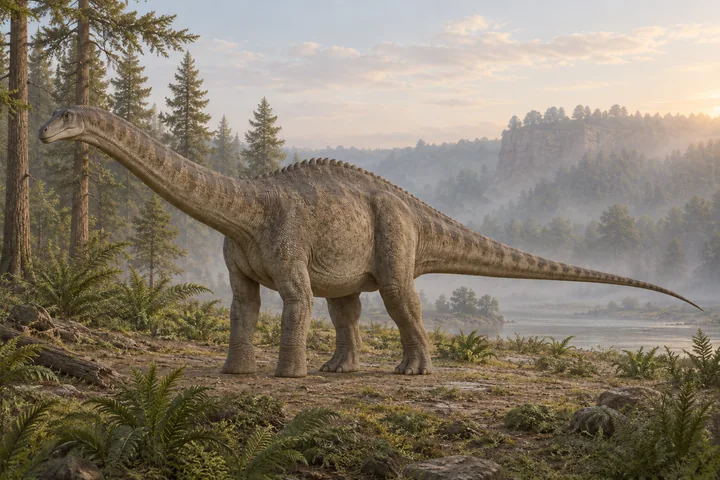
Limaysaurus tessonei
Limaysaurus was a Patagonian rebbachisaurid with tall vertebral spines and informative cranial remains. Its former name once linked it to Morocco’s Rebbachisaurus.
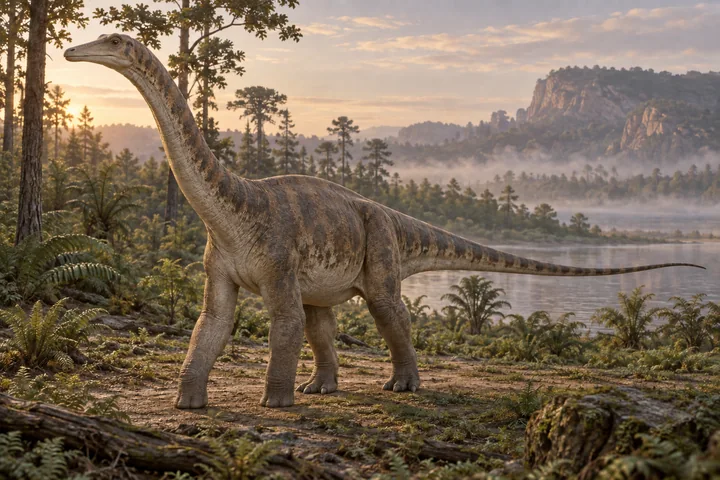
Rapetosaurus krausei
Rapetosaurus was a Malagasy titanosaur. Its famous Field Museum skeleton belonged to a growing youngster.
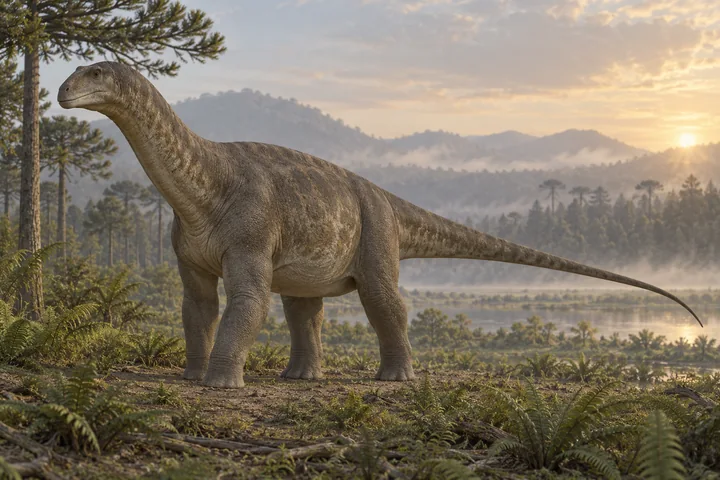
Isisaurus colberti
Isisaurus was an Indian titanosaur whose partial skeleton preserves distinctive neck vertebrae, shoulders and forelimbs.