
Body length
InferredAbout 2 m (museum reference)
Educational genus estimate; no particular fossil individual or growth stage is specified. [D4]
EXHIBIT 234
Masiakasaurus knopfleri
Dinosaur
Masiakasaurus was a small predatory dinosaur with an unusual row of forward-pointing front teeth. [2]
TWO WAYS TO PICTURE THE PAST
Compare the evidence with the familiar movie image. The illustrations are not to a shared scale.
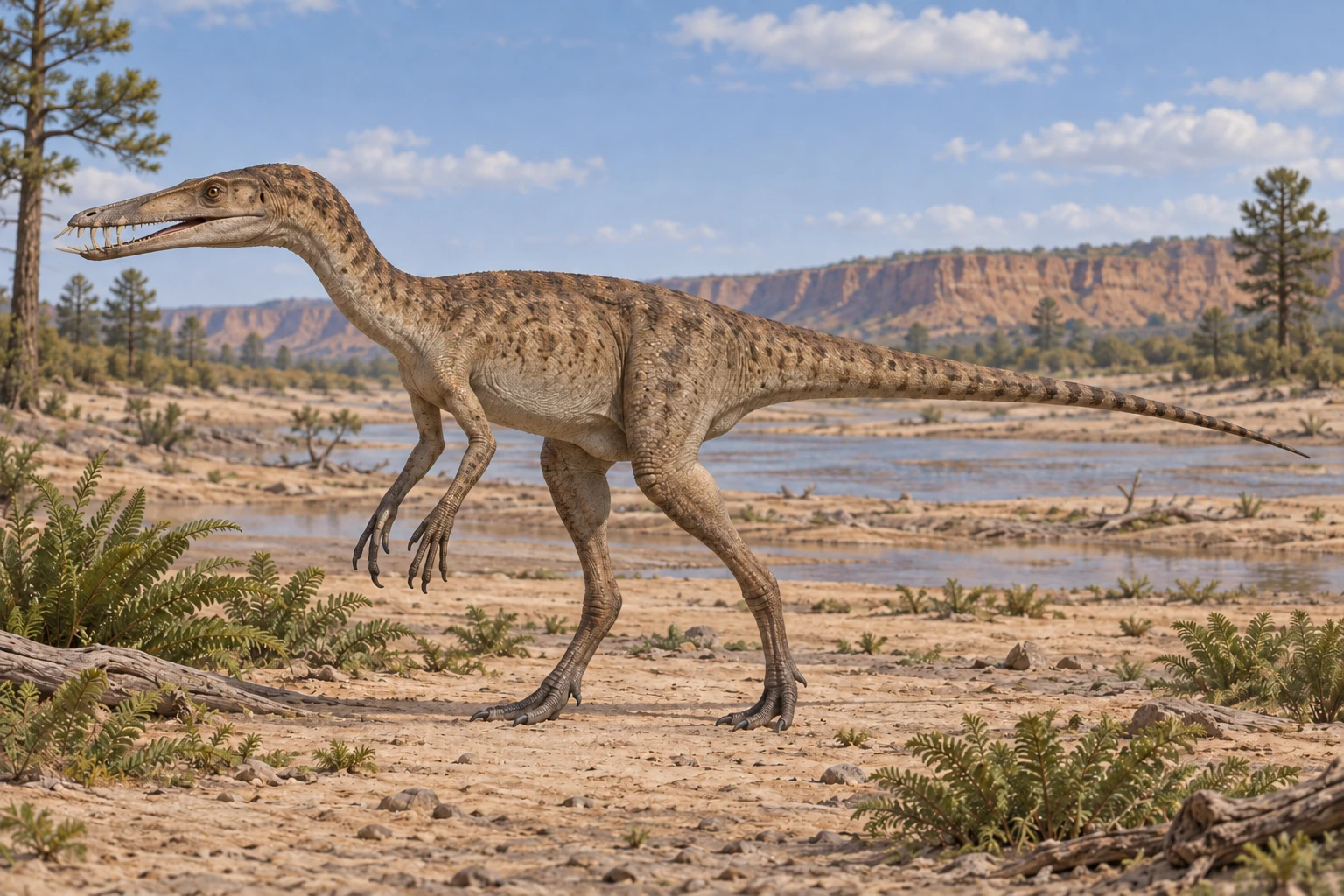
An illustrative reconstruction. Compare its anatomy with the evidence and limitations in the dossier. [2]
Source-informed reconstruction. Appearance evidence [2]. Original illustration; missing anatomy, coloration and scenery include interpretation.
Fossils constrain this life reconstruction. Missing anatomy, coloration and the environmental scene include interpretation; the dossier explains the evidence limits.
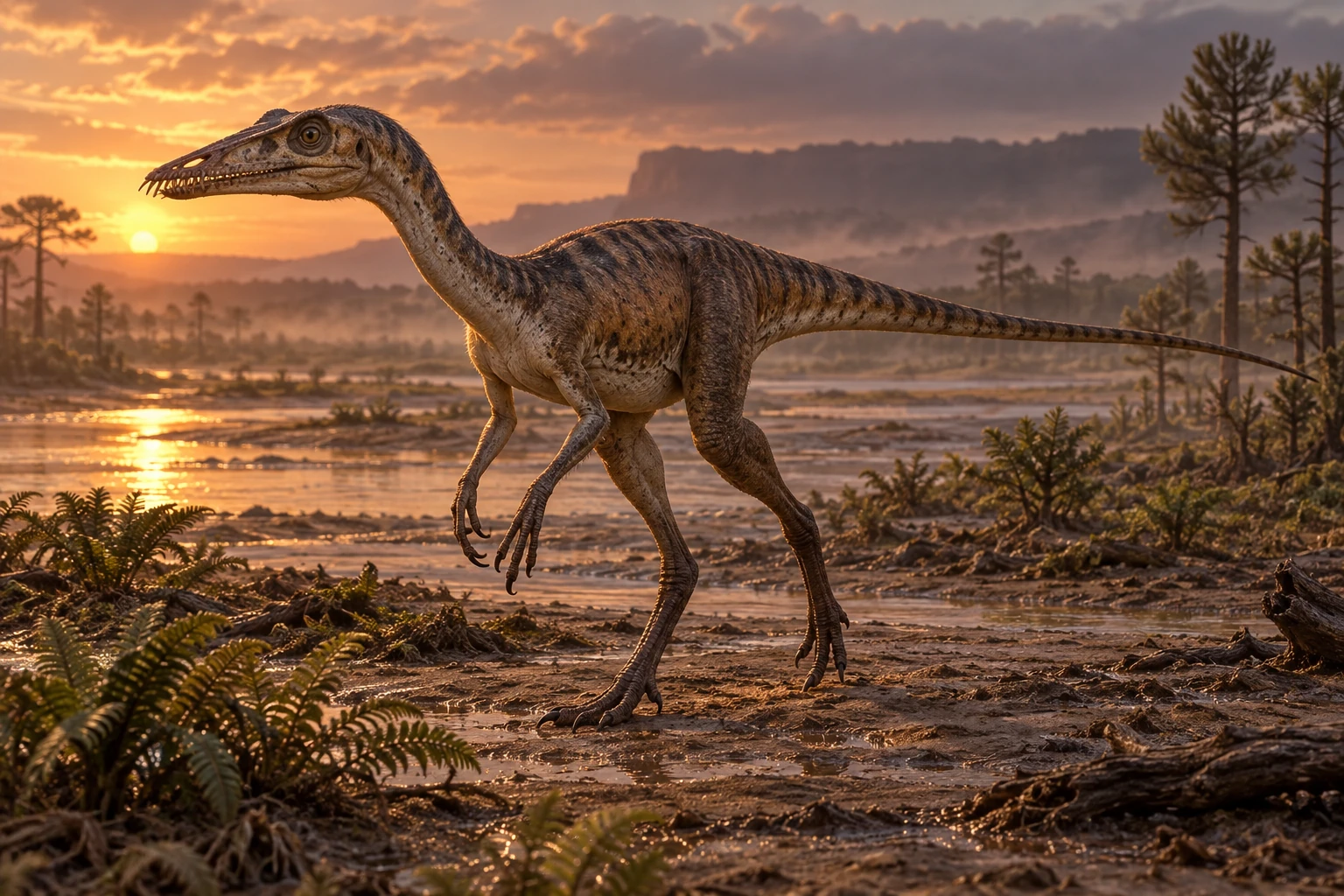
An illustrative reconstruction. Compare its anatomy with the evidence and limitations in the dossier. Lighting, coloration and scenery are artistic choices. This image does not document a fossil locality or behavior.
Original artwork · artistic interpretation.
Scientific view: source-informed reconstruction, credited paleoart or specimen-based imagery. Movie-style view: Original artistic interpretation. Reconstructions involve uncertainty.
MEET THE ANIMAL
Masiakasaurus lived in Madagascar near the end of the Cretaceous. Its front teeth pointed forward rather than standing in an ordinary upright row. Other teeth farther back had different shapes. This unusual dental arrangement makes it easy to recognize, but teeth alone cannot tell us every animal it ate or exactly how it caught a meal. [D2]
More discoveries helped scientists assemble a clearer picture of its skeleton. It had a long, low head, a balancing tail and forelimbs that were useful rather than extremely tiny. Some parts remain missing, including the lower arm bones discussed in the detailed study. Drawings must therefore combine real fossil observations with carefully identified comparisons to related dinosaurs. [D1]
Studies of thin bone sections show that small size was not simply the result of youth. The largest sampled shin bone had an outer layer associated with the end of skeletal growth. Researchers also found that growth was relatively slow. Its sturdy and slender bone forms do not establish male and female appearances, so the collection colors are imaginative choices. [D3]
PREHISTORIC ANIMAL DOSSIER
The animal, the evidence, and the questions still open.
Additional fossils revealed a long, low skull and useful forelimbs. Several missing bones still require comparative restoration. [D1]
Profile scope: Genus — Masiakasaurus knopfleri; type dentary UA 8680 and referred Maevarano material. [D1]
Source supported identifies a description documented by the cited source. Inferred marks a reconstruction or functional estimate. Debated marks competing interpretations. Not established means the sources reviewed for this dossier do not support a firm conclusion; it does not mean a behavior never occurred.
A size reference is an estimate, not a population range. Nesting evidence does not by itself establish courtship, mate choice, or lifelong pairing.
About 2 m (museum reference)
Educational genus estimate; no particular fossil individual or growth stage is specified. [D4]
Not established here
No maturity-qualified numerical mass is adopted from the reviewed directory. [D4]
Animal feeding inferred
Predatory teeth support carnivory; particular prey and hunting tactics remain unverified. [D2]
Seasonal terrestrial setting
The histology study discusses semiarid seasonal conditions as environmental context, not a measured preference. [D3]
Bipedal reconstruction
Hindlimb and vertebral anatomy support two-legged movement; useful arms differ from the tiny arms of some relatives. [D1]
Procumbent front teeth
The front lower teeth angle strongly forward; tooth shapes change along the jaw. [D2]
Not established here
Reviewed fossils do not identify a genus-specific nest or egg. [D2]
Not established here
Reviewed skeletal material does not establish mating displays. [D1]
Not established here
Several recovered individuals do not demonstrate packs or stable social groups. [D1]
Sources and inspection notes for the claims in this profile.
THE STORY IN THE FOSSILS
Forward-directed front teeth give this predator a distinctive profile, but they do not identify one specific food. [2]
Bone histology independently supports a genuinely small adult animal; the fossils are not merely babies of a giant theropod. [3]
The dossier identifies the scope of each reference estimate. A mount, an individual fossil and a species-wide adult range are different measurements. Comparison metrics remain unavailable where adult scope has not been established. Unknown does not mean zero.
Sources support the stated claims and scopes. Refer to the evidence notes for uncertainty.
KEEP EXPLORING
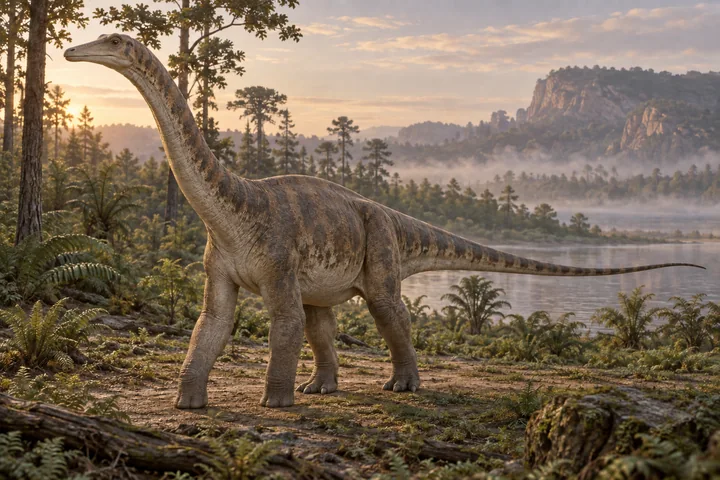
Rapetosaurus krausei
Rapetosaurus was a Malagasy titanosaur. Its famous Field Museum skeleton belonged to a growing youngster.
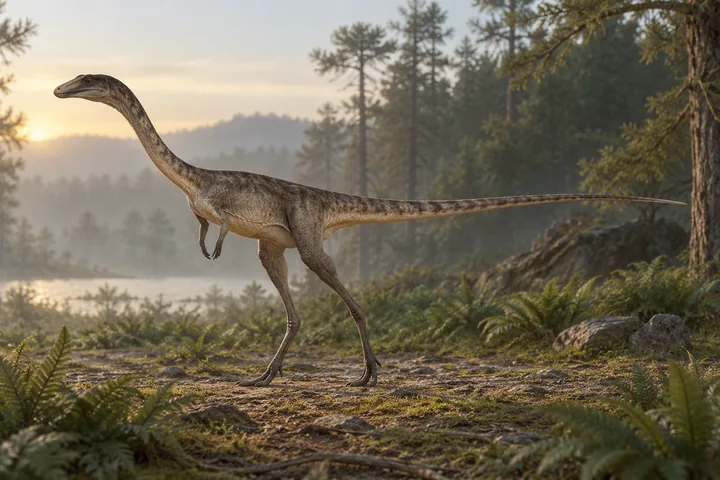
Elaphrosaurus bambergi
Elaphrosaurus had an exceptionally elongated neck and long hindlimbs, but its skull and hand are unknown.
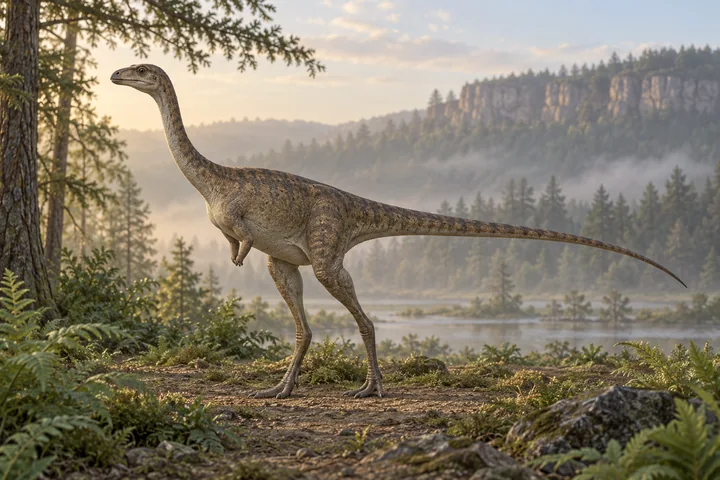
Limusaurus inextricabilis
Limusaurus lost its teeth as it grew, transforming toothed young jaws into the beak of older animals.