Length
Inferred2.94–4.25 m / 2.21–3.15 m (individual estimates)
Rostrum scaling gives these estimates for IPUW353500 and IGR2818 respectively, not an adult species range. [D1]
EXHIBIT 288
Onchopristis numida
Fish
A saw-snouted cartilaginous fish whose Moroccan skull material supports a more cautious size reconstruction. [1]
TWO WAYS TO PICTURE THE PAST
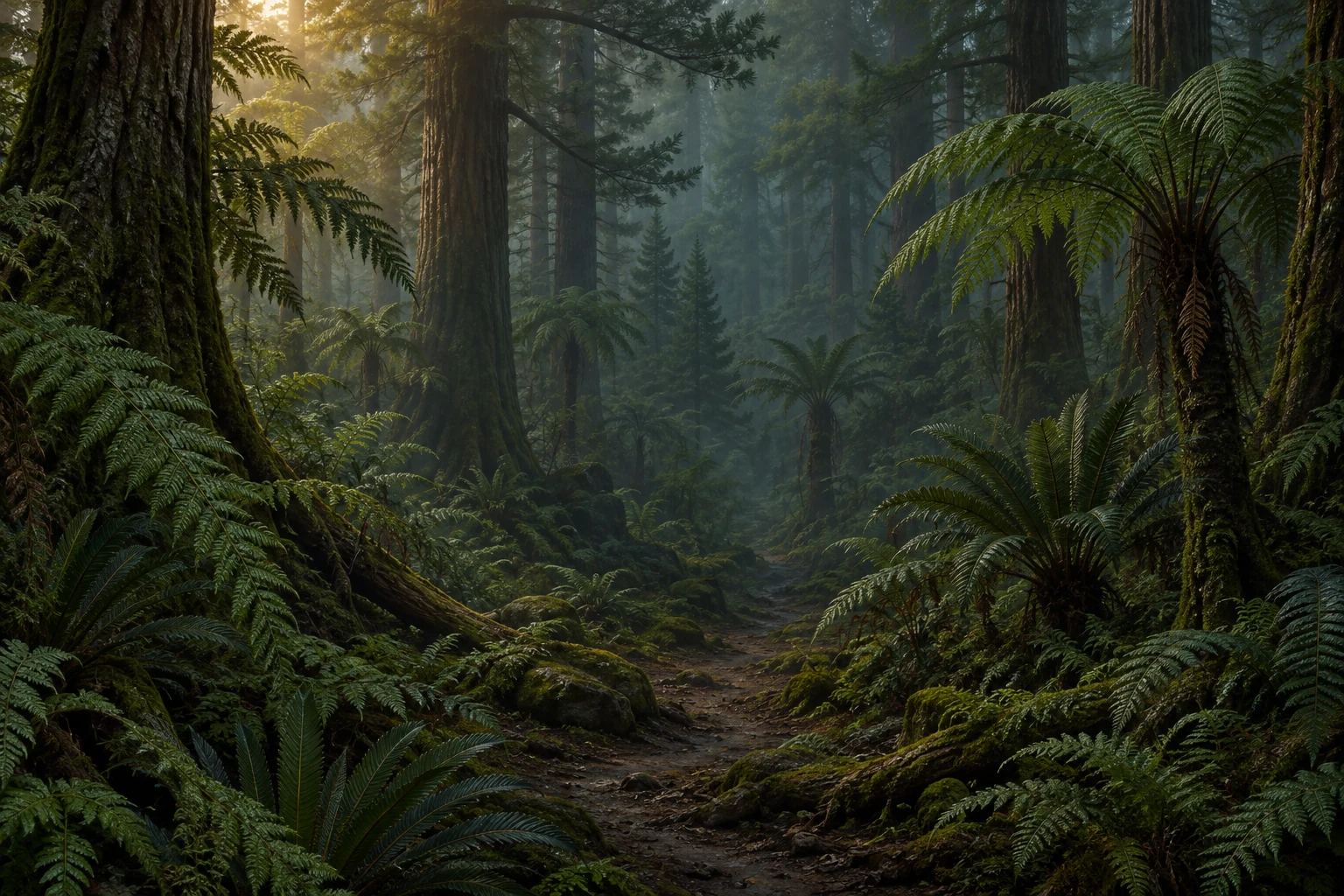
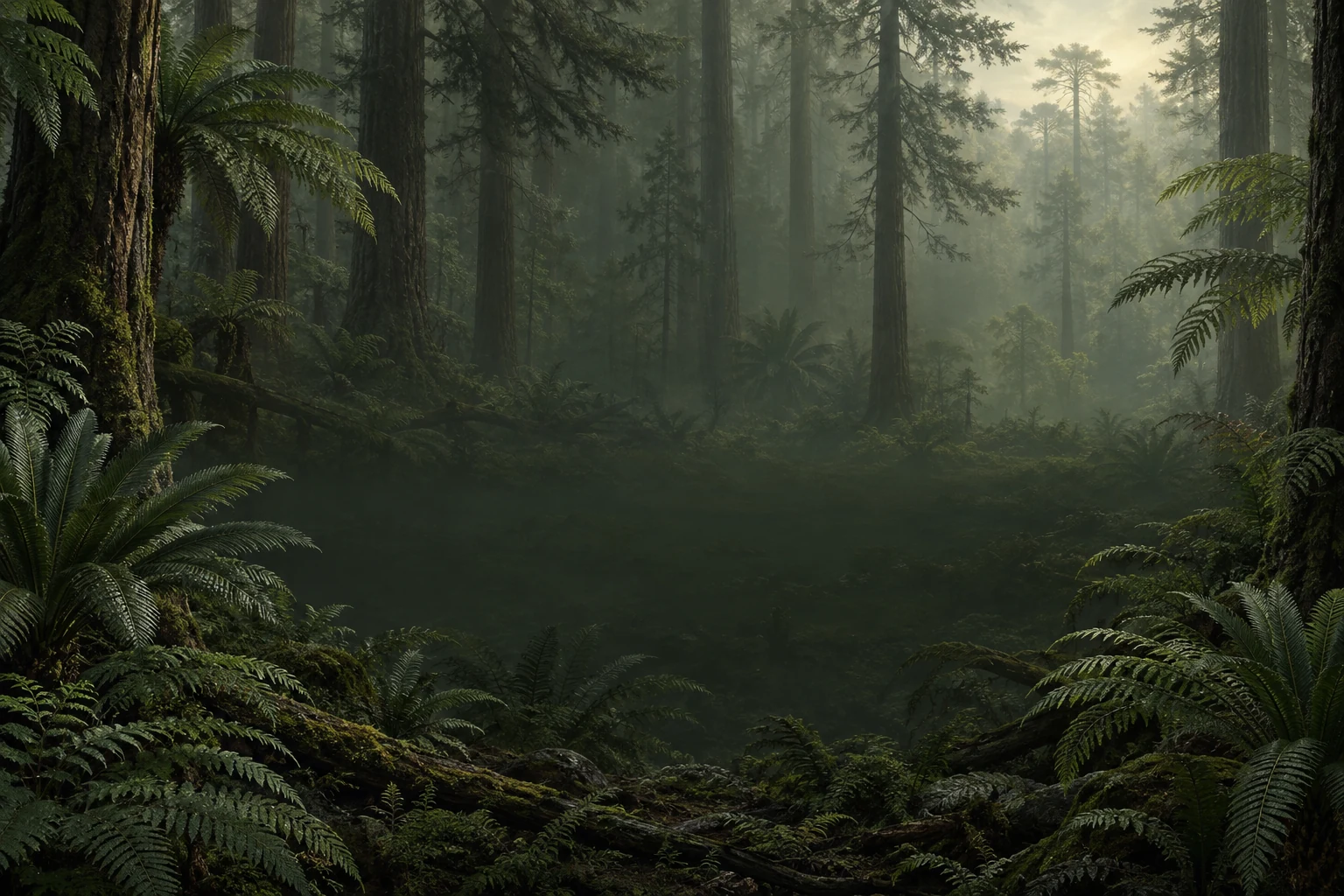
Compare the evidence with the familiar movie image. The illustrations are not to a shared scale.
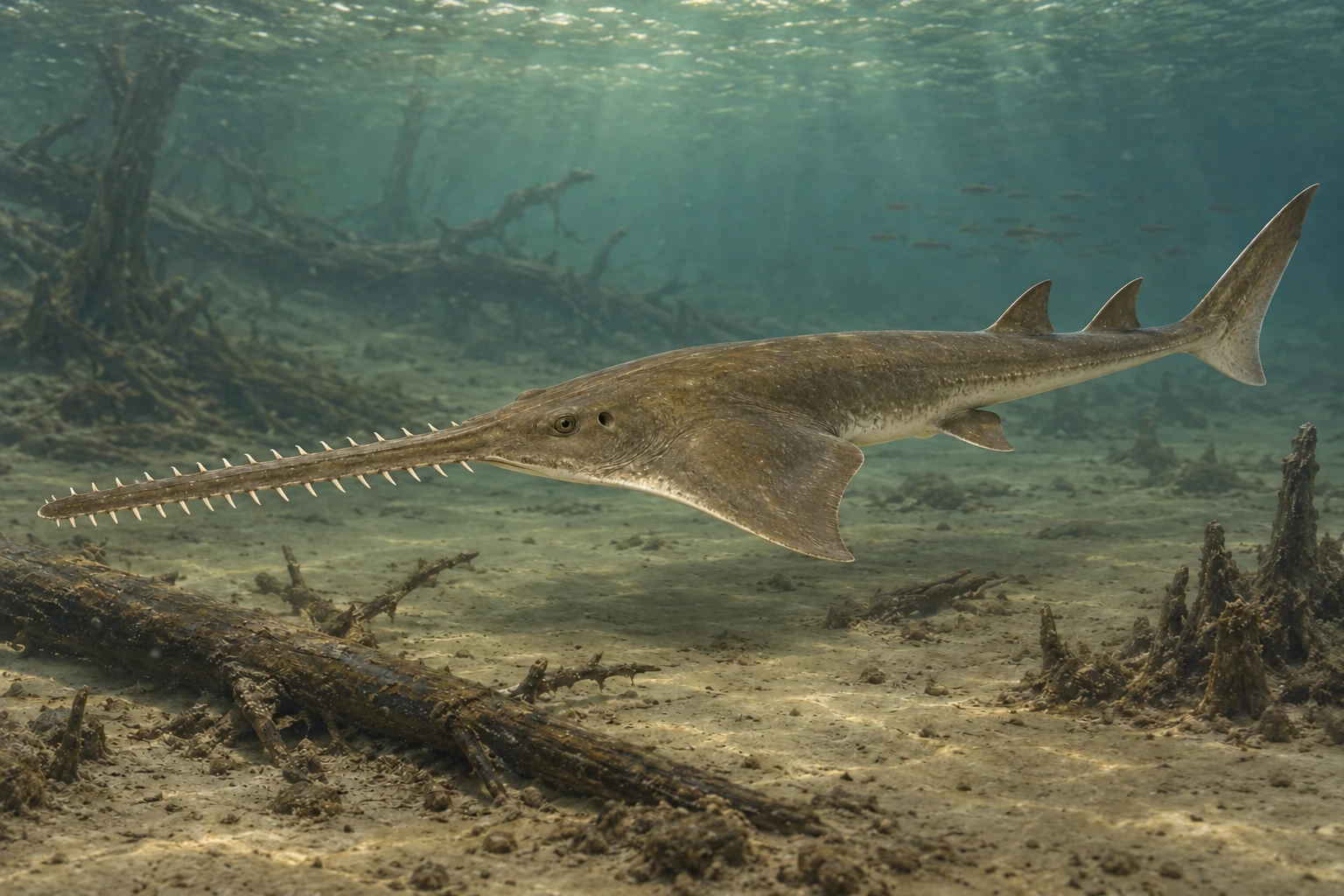
An illustrative reconstruction. Compare its anatomy with the evidence and limitations in the dossier. [1]
Source-informed reconstruction. Appearance evidence [1]. Original illustration; missing anatomy, coloration and scenery include interpretation.
Fossils constrain this life reconstruction. Missing anatomy, coloration and the environmental scene include interpretation; the dossier explains the evidence limits.
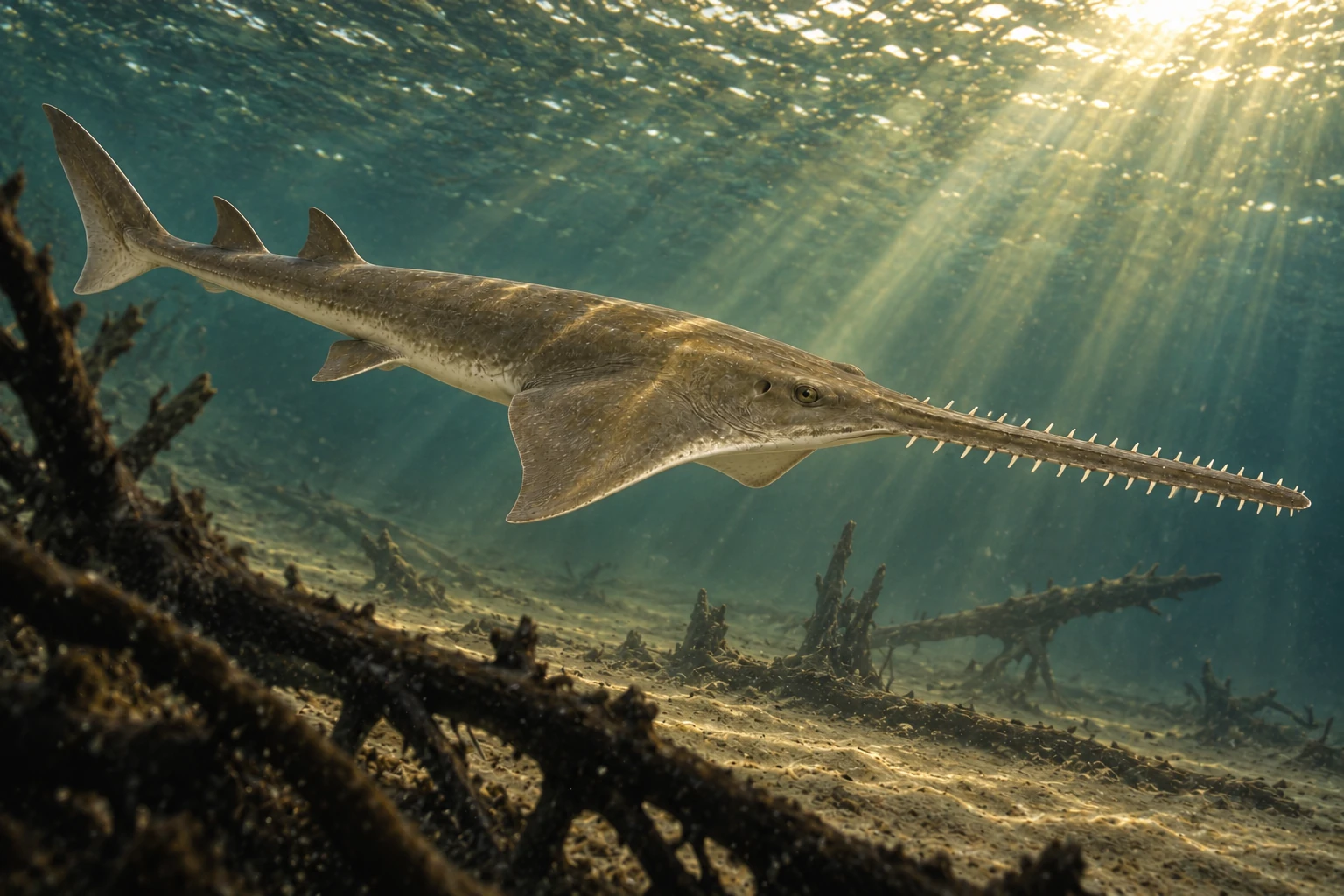
An illustrative reconstruction. Compare its anatomy with the evidence and limitations in the dossier. Lighting, coloration and scenery are artistic choices. This image does not document a fossil locality or behavior.
Original artwork · artistic interpretation.
Scientific view: source-informed reconstruction, credited paleoart or specimen-based imagery. Movie-style view: Original artistic interpretation. Reconstructions involve uncertainty.
MEET THE ANIMAL
Onchopristis was a cartilaginous fish, related to the wider ray and skate branch. Its long snout carried a row of projecting points on each side. Scientists call those points rostral denticles: they developed from modified scales rather than being the ordinary teeth inside its mouth. [D2]
Fossils occur in North Africa, including Egypt and Morocco. The Bahariya specimen displayed in Munich comes from Lower Cenomanian rocks. Shallow seas and river deltas occupied places that are desert today, so the modern landscape can be a misleading guide to the animal’s surroundings. [D2]
Two Moroccan skull discoveries helped researchers examine more than detached points from the saw. Comparisons with living rays estimate one individual at 2.94–4.25 metres and another at 2.21–3.15 metres. A broad mass estimate also depends on comparison. These are reconstructed individuals, rather than a measured range for every adult. [D1]
Algerian finds include denticles and calcified vertebrae. Their sediments record changing rivers and sandy environments, and moving water can gather remains together. A concentration of fossils therefore does not automatically show that the fish lived in groups. Its reproductive behavior and exact body colors remain unresolved by these discoveries. [D3]
PREHISTORIC ANIMAL DOSSIER
The animal, the evidence, and the questions still open.
Most finds are barbed rostral denticles. The long saw bears modified scales rather than ordinary mouth teeth. [D2]
Profile scope: One genus exhibit anchored to North African O. numida, also published as O. numidus. Later disputed Maastrichtian giant assignments are excluded. [D1]
Source supported identifies a description documented by the cited source. Inferred marks a reconstruction or functional estimate. Debated marks competing interpretations. Not established means the sources reviewed for this dossier do not support a firm conclusion; it does not mean a behavior never occurred.
A size reference is an estimate, not a population range. Nesting evidence does not by itself establish courtship, mate choice, or lifelong pairing.
2.94–4.25 m / 2.21–3.15 m (individual estimates)
Rostrum scaling gives these estimates for IPUW353500 and IGR2818 respectively, not an adult species range. [D1]
70–150 kg (comparative envelope)
Comparison with living rays of similar postrostral lengths supplies a broad envelope, not measured fossil mass. [D1]
Animal prey inferred
Modern sawfish use the snout to locate and strike prey. Applying this behavior to Onchopristis is comparison, not direct observed feeding. [D2]
North African river/delta systems
Bahariya occurrence is Lower Cenomanian; Gara Samani remains occur in fluvial incursions and lag deposits, distinct from full life habitat. [D2] [D3]
Swimming; detailed stroke unresolved
Batoid relationships support swimming; studied cranial material lacks a complete propulsion system. [D1]
Robust saw-like rostrum
Thick mineralized cartilage and denticle supports preserved; complete body restored comparatively. [D1]
Not established here
Focused egg/embryo searches found no attributable reproductive fossil in inspected North African material; modern sawfish reproduction is not direct evidence. [D3]
Not established here
The inspected nomenclatural correspondence establishes spelling, not displays, spawning grounds or mating behavior. [D4]
Not established here
Accumulated teeth in fluvial lag deposits can reflect transport and concentration; they do not demonstrate a school or family group. [D3]
Sources and inspection notes for the claims in this profile.
THE STORY IN THE FOSSILS
The corrected spelling numida and the older numidus refer to the same species, rather than two collectibles. [4]
Studied skulls constrain the saw; the remaining body requires comparative restoration. [1]
The dossier identifies the scope of each reference estimate. A mount, an individual fossil and a species-wide adult range are different measurements. Comparison metrics remain unavailable where adult scope has not been established. Unknown does not mean zero.
Sources support the stated claims and scopes. Refer to the evidence notes for uncertainty.
KEEP EXPLORING
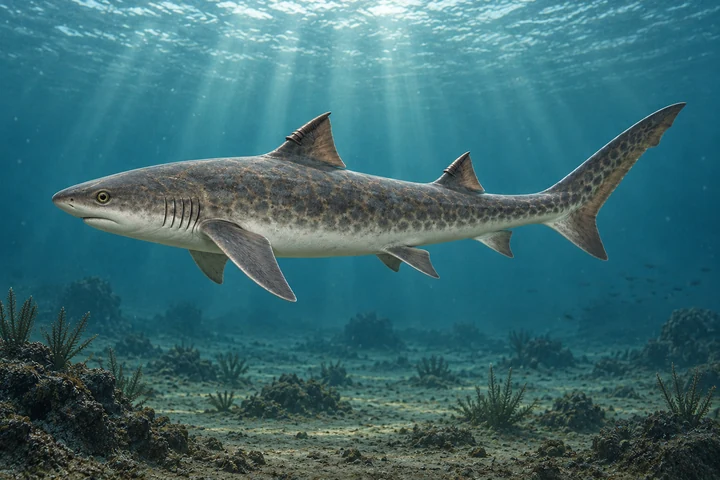
Hybodus reticulatus; H. hauffianus comparative evidence
Fish
An extinct hybodont shark with fin spines; the exhibit separates its type species from historically assigned sharks.
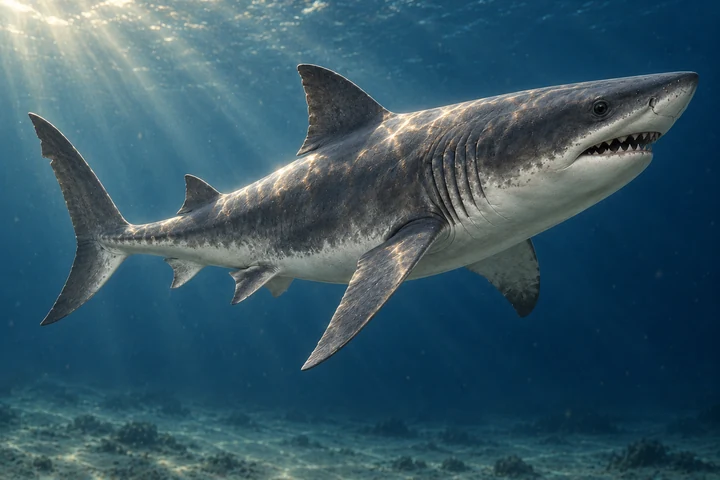
Squalicorax falcatus
Fish
An extinct shark known from teeth and skeletons, with evidence for eating other animals and scavenging.
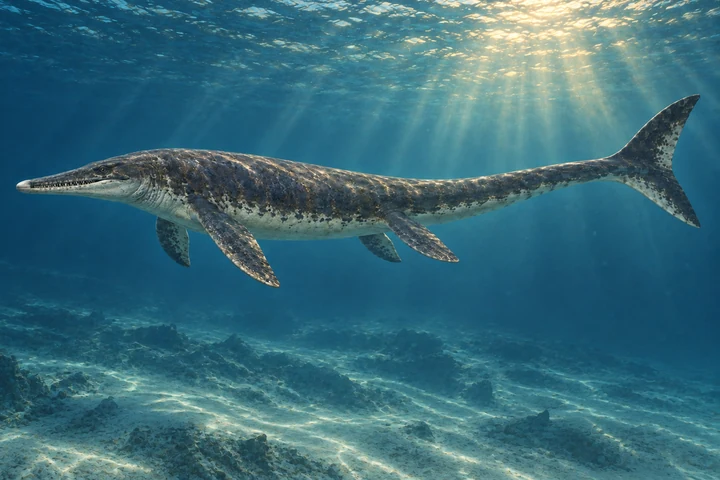
Tylosaurus proriger
Marine reptile
A marine lizard with an elongated adult snout tip, whose fossil identities are still being revised.