
Body length
InferredAbout 2.1 m (reconstructed adult)
Applies to the original burrow-associated adult reconstruction, not a species-wide maximum. [D1]
EXHIBIT 236
Oryctodromeus cubicularis
Dinosaur
Oryctodromeus is a small dinosaur whose fossils were found inside a matching underground burrow. [1]
TWO WAYS TO PICTURE THE PAST
Compare the evidence with the familiar movie image. The illustrations are not to a shared scale.
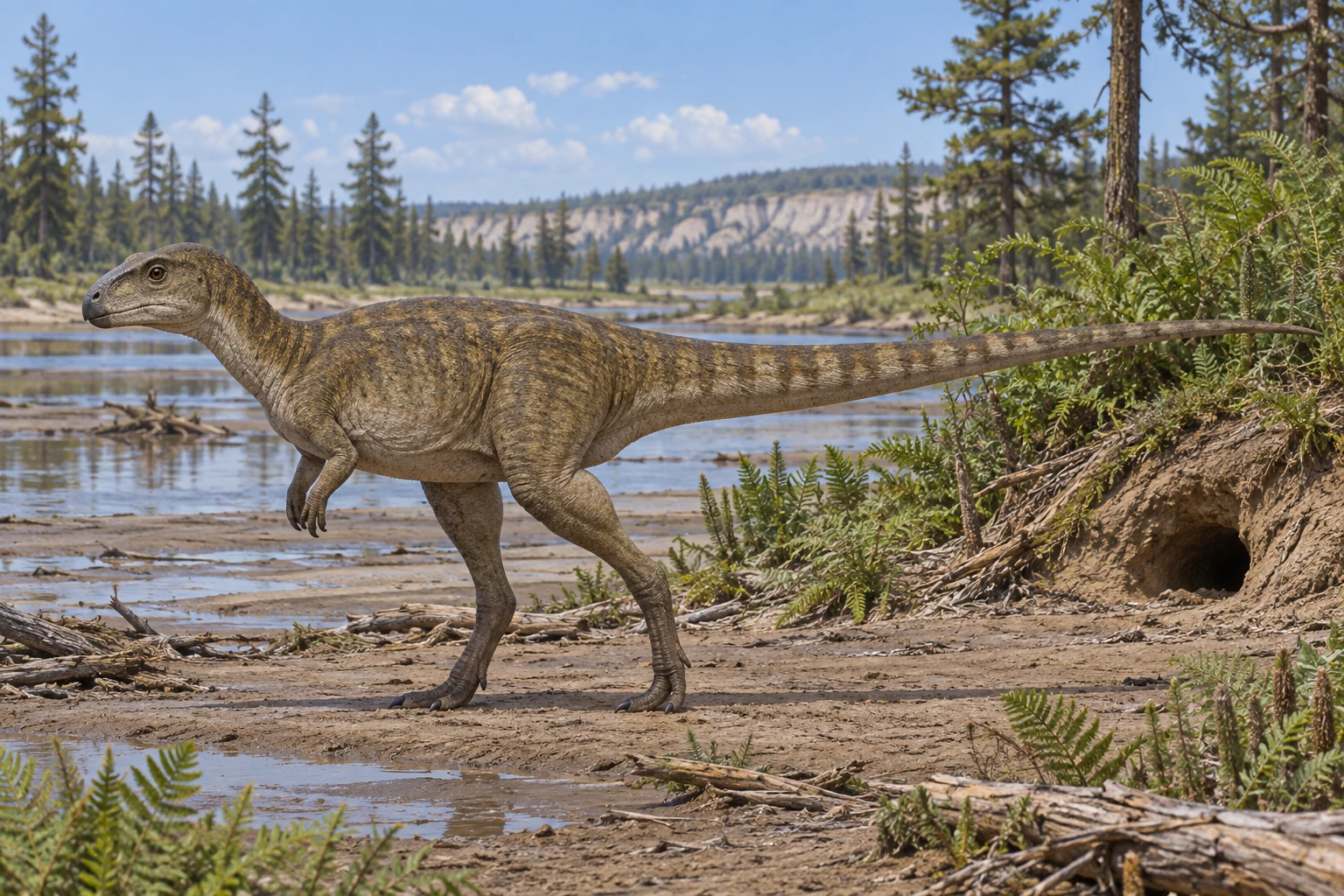
An illustrative reconstruction. Compare its anatomy with the evidence and limitations in the dossier. [3]
Source-informed reconstruction. Appearance evidence [3]. Original illustration; missing anatomy, coloration and scenery include interpretation.
Fossils constrain this life reconstruction. Missing anatomy, coloration and the environmental scene include interpretation; the dossier explains the evidence limits.
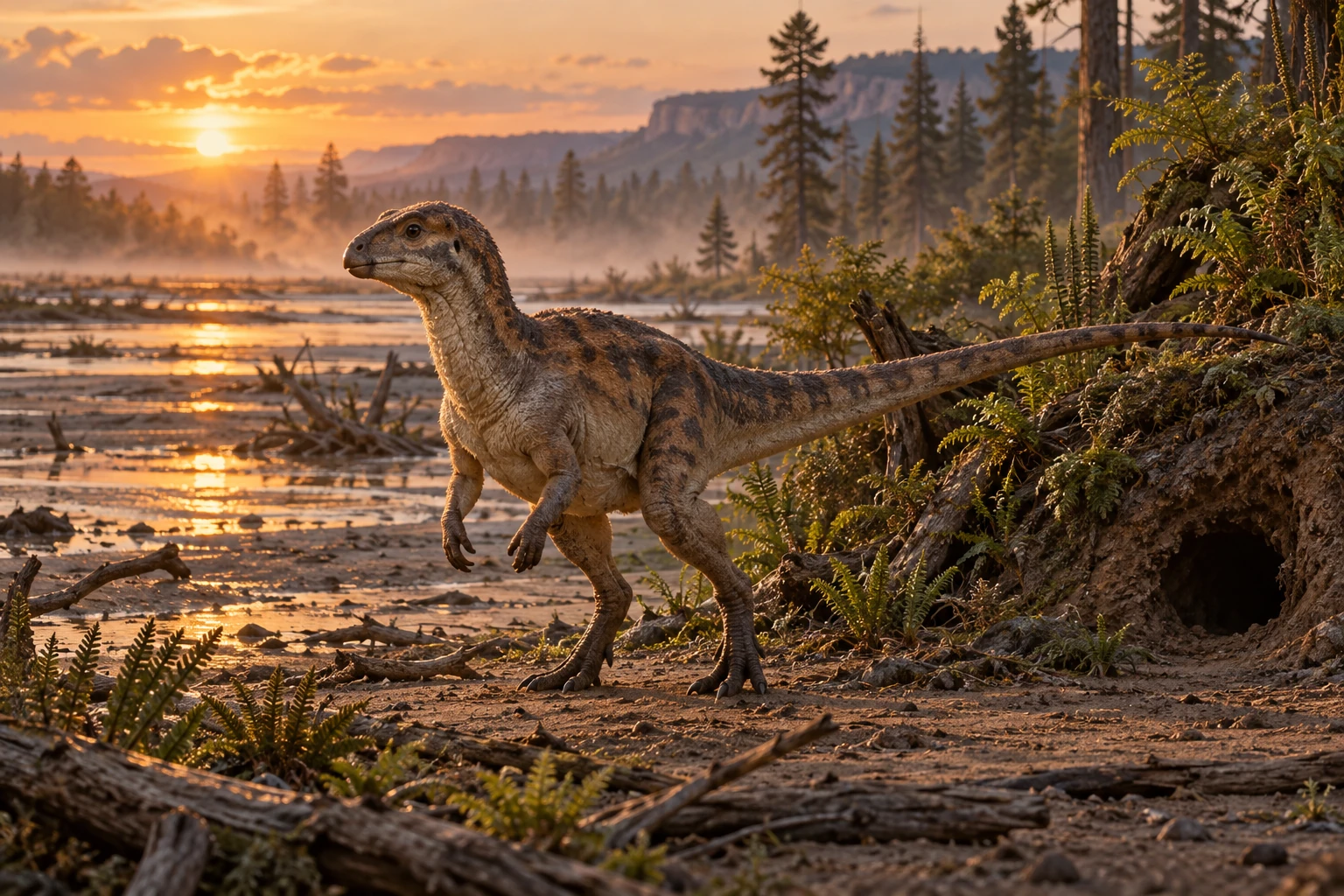
An illustrative reconstruction. Compare its anatomy with the evidence and limitations in the dossier. Lighting, coloration and scenery are artistic choices. This image does not document a fossil locality or behavior.
Original artwork · artistic interpretation.
Scientific view: source-informed reconstruction, credited paleoart or specimen-based imagery. Movie-style view: Original artistic interpretation. Reconstructions involve uncertainty.
MEET THE ANIMAL
Oryctodromeus offers a rare chance to connect a dinosaur with a place it used. Researchers found one adult and two juveniles in the end chamber of a fossil burrow in Montana. The tunnel dimensions fit the adult's reconstructed body. That combination supports the idea that these animals used underground shelter, rather than being unrelated bones accidentally found near a hole. [D1]
Later research described more burrows and fossil associations in Montana and Idaho. The rocks preserve different kinds of burial, including articulated skeletons and scattered remains. Repeated discoveries strengthen the shelter interpretation and suggest care of young animals. They still do not show a courtship dance, the shape of an Oryctodromeus egg, or how many dinosaurs usually traveled together above ground. [D2]
This animal was a small two-legged dinosaur with a remarkably long tail, not a prehistoric rabbit. The tail made up more than half its length and was supported by a network of hardened tendons. Researchers also examined limb bones from different growth stages. Bone tissue and growth lines help estimate how individuals grew while keeping that question separate from mating or nesting behavior. [D3]
PREHISTORIC ANIMAL DOSSIER
The animal, the evidence, and the questions still open.
A long tail, unusual femoral heads and growth evidence complement the burrow discoveries. [D3]
Profile scope: Genus — Oryctodromeus cubicularis; Montana and Idaho material, including adult MOR 1636a and two juveniles. [D2]
Source supported identifies a description documented by the cited source. Inferred marks a reconstruction or functional estimate. Debated marks competing interpretations. Not established means the sources reviewed for this dossier do not support a firm conclusion; it does not mean a behavior never occurred.
A size reference is an estimate, not a population range. Nesting evidence does not by itself establish courtship, mate choice, or lifelong pairing.
About 2.1 m (reconstructed adult)
Applies to the original burrow-associated adult reconstruction, not a species-wide maximum. [D1]
Not established here
Burrow-based mass inference is not adopted as a skeletal estimate. [D1]
Plant feeding inferred
The original paper identifies a herbivorous ornithischian; a particular meal is not preserved. [D1]
River-floodplain deposits and burrows
Montana Vaughn and Idaho Wayan records span Albian–Cenomanian contexts. Different burial facies are not all separate preferred habitats. [D2]
Small bipedal dinosaur
The skeleton combines a long tail with unusual femoral anatomy; burrowing does not imply a rabbit-like body or flexible short tail. [D3]
Long tail with ossified tendons
The tail exceeds half the animal's length. Detailed reconstruction draws on more than the first partial burrow skeleton. [D3]
Possible care within dens
Additional adult–juvenile associations support a care interpretation; reviewed eggshells do not establish this genus's eggs or nesting arrangement. [D2]
Not established here
Reviewed burrow and skeletal evidence does not reveal courtship displays or mating pairs. [D2]
Adult–juvenile association
One adult and two juveniles shared the original burrow. Care is a reasonable inference; ordinary group size and cooperative behavior remain unknown. [D1]
Sources and inspection notes for the claims in this profile.
THE STORY IN THE FOSSILS
The burrow fits the adult's proportions, making a denning interpretation stronger than a story based on bones alone. [1]
Later discoveries strengthen the burrow association without establishing a complete picture of social organization. [2]
The dossier identifies the scope of each reference estimate. A mount, an individual fossil and a species-wide adult range are different measurements. Comparison metrics remain unavailable where adult scope has not been established. Unknown does not mean zero.
Sources support the stated claims and scopes. Refer to the evidence notes for uncertainty.
KEEP EXPLORING
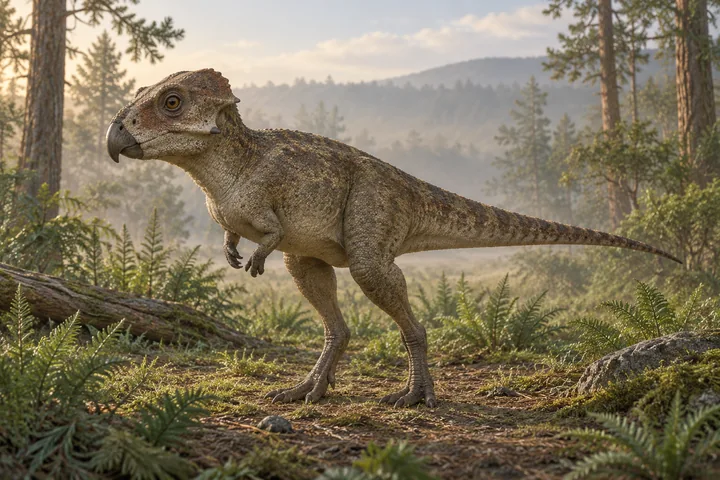
Aquilops americanus
Aquilops was a small early ceratopsian from Montana, distinguished by a hooked beak with a low bump. Its known fossil is a partial skull and jaws.
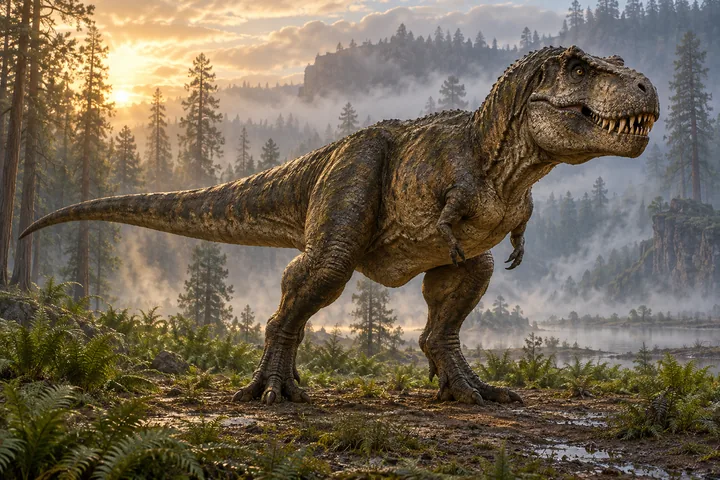
Tyrannosaurus rex
Tyrannosaurus rex was a large meat-eating dinosaur from the final part of the Cretaceous in western North America. Fossil teeth, bite marks and skeletons reveal a powerful animal whose behaviour still invites questions.
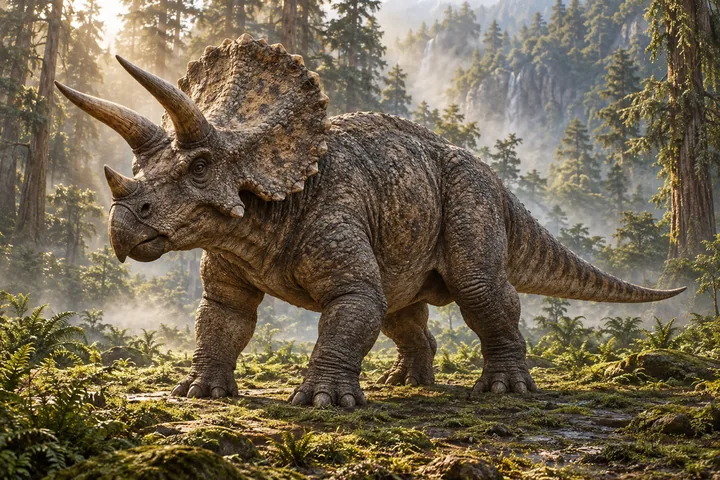
Triceratops horridus
Triceratops horridus was a horned dinosaur of the Late Cretaceous. Skin impressions attributed to this species reveal scales, while skulls and their positions in rock layers help researchers distinguish it from the later Triceratops prorsus.