
Body length
InferredAbout 2 m; museum reference
NHM's rounded genus figure is not a specimen measurement or a complete biological range. [D1]
EXHIBIT 28
Oviraptor
An “egg thief” whose nest association tells a different story.
TWO WAYS TO PICTURE THE PAST
Compare the evidence with the familiar movie image. The illustrations are not to a shared scale.

The artist identifies this reconstruction as Oviraptor. Fossil-informed anatomy: Small bipedal oviraptorid with toothless beak and three clawed fingers; relatively elongated snout, conservative crest outline, inferred feather coat. Incomplete skull and body require inferences from relatives; crest shape, feather distribution, and coloration are interpretive. Depicts Oviraptor, not the commonly mislabeled Citipati. [1] [2] [3]
Oviraptor Restoration.png — PaleoNeolitic. CC BY 4.0. Remote source artwork displayed without additional cropping; Wikimedia supplies any display-size derivative.
Scientific picture served by Wikimedia · internet connection required.
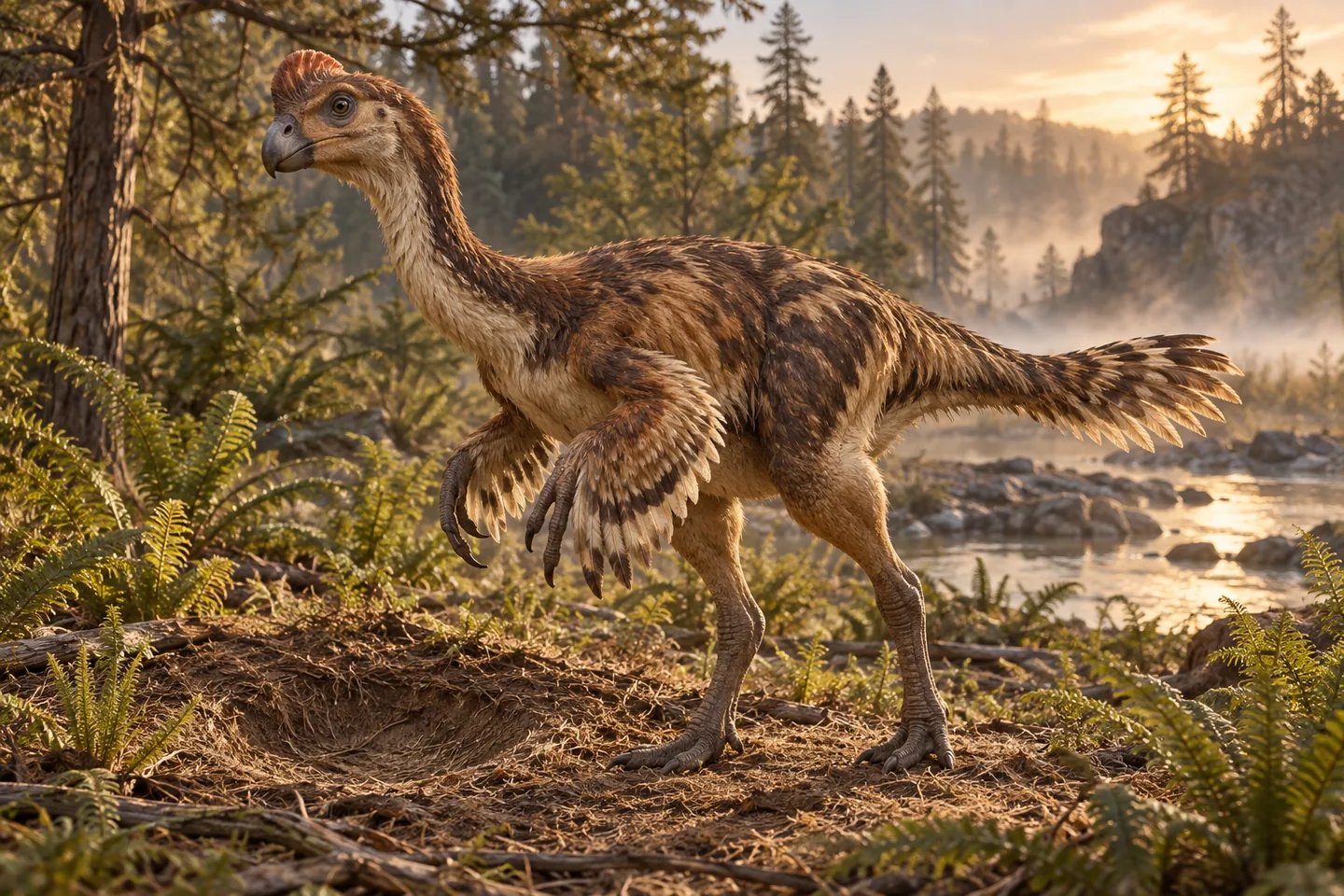
Cinematic Oviraptor with toothless beak, three-fingered hands, modest conservative head profile and plausible inferred feathers; quiet nest-side pose in Mongolia. Dramatic lighting, surface detail and scenery are artistic choices. This is an original cinema-inspired picture, rather than a frame from a film or a documented fossil locality.
Original artwork · artistic interpretation.
Scientific view: credited paleoart interpreting fossil evidence, served online by Wikimedia. Movie-style view: Original artistic interpretation. Colors, soft tissues and settings involve reconstruction.
MEET THE ANIMAL
Oviraptor first became known from fossils collected in Mongolia. Its original description recorded an unusually short, toothless skull and an arm found with it. The skull lay close above a nest of eggs. These details made the discovery memorable, but they also encouraged an early interpretation that the animal had been caught taking another dinosaur's eggs. [S1]
Its name reflects that egg-stealing idea. The nest was initially attributed to Protoceratops, which was common at the site. Later discoveries changed how scientists understood these eggs: an embryo in the same kind of egg belonged to an Oviraptor-like dinosaur. That evidence made an association with the animal's own kind much more plausible than the original theft story. [S2]
The distinction matters because Oviraptor-like does not automatically mean the genus Oviraptor itself. Related dinosaurs supply useful comparisons, but their fossils should keep their own identities. An egg beside a skeleton also cannot, on its own, reveal a complete diet. Oviraptor's story shows why names and familiar reconstructions can outlast the scientific ideas that first inspired them. [S2]
PREHISTORIC ANIMAL DOSSIER
The animal, the evidence, and the questions still open.
Oviraptor was a small beaked theropod from Late Cretaceous Mongolia. Its name arose from a mistaken egg-theft interpretation; later work on related oviraptorids changed the explanation of its association with a nest.
Profile scope: Genus: Oviraptor; comparisons concern O. philoceratops, with Citipati kept separate.
Source supported identifies a description documented by the cited source. Inferred marks a reconstruction or functional estimate. Debated marks competing interpretations. Not established means the sources reviewed for this dossier do not support a firm conclusion; it does not mean a behavior never occurred.
A size reference is an estimate, not a population range. Nesting evidence does not by itself establish courtship, mate choice, or lifelong pairing.
About 2 m; museum reference
NHM's rounded genus figure is not a specimen measurement or a complete biological range. [D1]
About 20 kg; museum estimate
NHM provides this reference value without identifying the specimen, growth stage or calculation method. [D1]
Possible omnivore; exact foods uncertain
NHM classifies Oviraptor as omnivorous and discusses several possible foods. Its name and nest association do not demonstrate habitual egg eating. [D1] [D2]
Late Cretaceous Mongolia
The museum locates its fossils in Mongolia. These sources do not establish one preferred habitat across the genus. [D1]
Walked on two legs
NHM identifies bipedal movement. Speed and detailed foraging behavior are not established here. [D1]
Beaked jaws; relatively elongated snout
NHM identifies a toothless beak, while CT comparison documents a more elongated snout and lower jaw than in other oviraptorids. A famous crested skeleton formerly referred to Oviraptor was rejected as this genus. [D1] [D3]
Nest association suggests brooding
AMNH interprets the original Oviraptor association as tending its own eggs. Direct brooding poses described for Citipati remain evidence for that related genus and are not interchangeable specimens. [D2]
Not established here
The reviewed sources do not establish a mating ritual, pair bond or breeding season for this taxon.
Not established here
The reviewed sources do not establish a taxon-specific group structure or social hierarchy.
Sources and inspection notes for the claims in this profile.
THE STORY IN THE FOSSILS
Oviraptor’s toothless jaws formed a beak rather than a row of cutting teeth. Curved jaw bones suggest an ability to handle hard food, but proposed diets differ. Museum interpretations include plants, small animals and shellfish; none supplies a secure menu for this particular genus. [1] [2]
The first Oviraptor was discovered with eggs thought to belong to Protoceratops, prompting its egg-thief name. An oviraptorid embryo later found in similar eggs changed that interpretation. The association came to be understood as parental care rather than evidence that the dinosaur was robbing a nest. [2]
We have not established a comparable adult total-length estimate for this taxon in this draft. Specimen measurements in the text describe those individuals. The cited dates are approximately 85–75 million years ago. Approximate museum catalogue reference interval for the genus, not an exact duration for every species. Unknown does not mean zero.
Sources and evidence notes for this exhibit.
KEEP EXPLORING
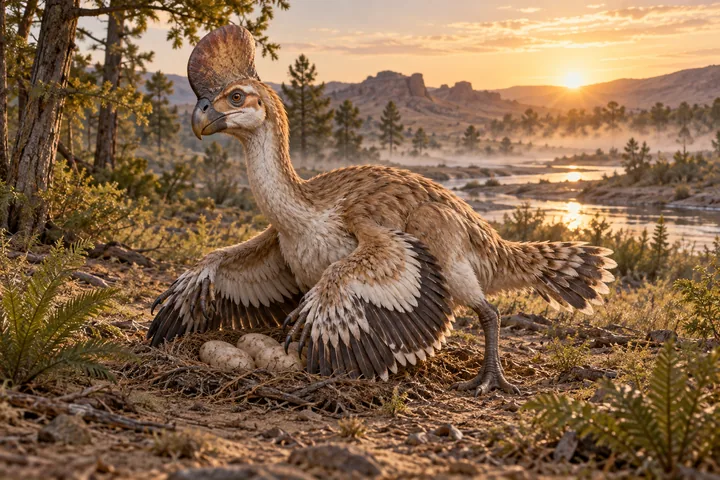
Deinocheirus
The mystery arms belonged to a humped, broad-beaked giant.
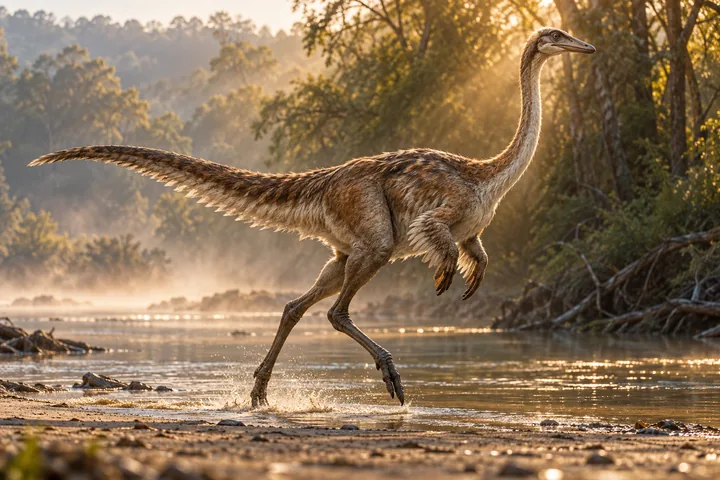
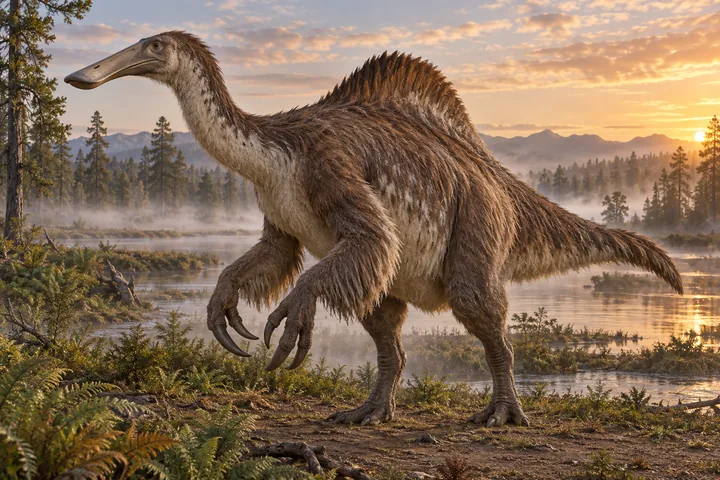
Gallimimus
An ostrichlike runner with a toothless, ducklike beak.