Length
InferredAbout 6–8 m (museum references)
The museum gives this approximate genus-level size span. It is not a measured adult population range or a specimen-based growth series. [D1]
EXHIBIT 40
Pachyrhinosaurus
A broad bony nasal boss took the place of a nose horn.
TWO WAYS TO PICTURE THE PAST
Compare the evidence with the familiar movie image. The illustrations are not to a shared scale.

The artist identifies this reconstruction as Pachyrhinosaurus canadensis. This view illustrates one form within the genus, rather than every species or individual. Fossil-informed anatomy: Large quadrupedal ceratopsid; adult broad nasal and brow bosses, ornamented frill and beak. Do not add a tall rhinoceros-like nose horn. Colour and keratin covering are reconstructed. Frill ornament varies among individuals and species; depicted taxon is P. canadensis. [1] [2]
Pachyrhinosaurus TD.png — TotalDino. CC BY 4.0. Remote source artwork displayed without additional cropping; Wikimedia supplies any display-size derivative.
Scientific picture served by Wikimedia · internet connection required.
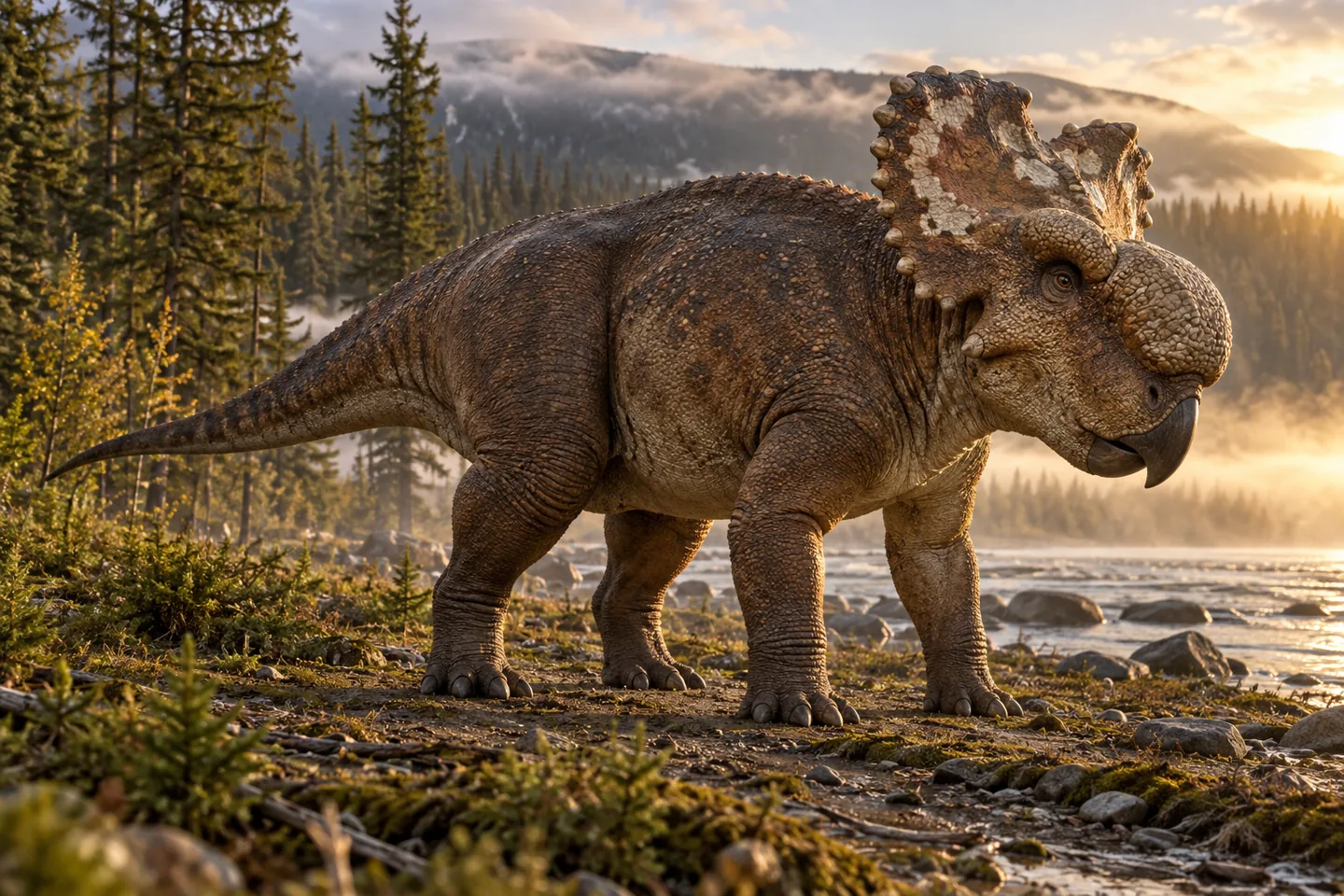
Cinematic mature Pachyrhinosaurus, heavy quadruped with broad thick nasal boss, brow bosses and horned frill; low beaked head, windswept northern floodplain. Dramatic lighting, surface detail and scenery are artistic choices. This is an original cinema-inspired picture, rather than a frame from a film or a documented fossil locality.
Original artwork · artistic interpretation.
Scientific view: credited paleoart interpreting fossil evidence, served online by Wikimedia. Movie-style view: Original artistic interpretation. Colors, soft tissues and settings involve reconstruction.
MEET THE ANIMAL
Pachyrhinosaurus was a plant-eating member of the horned dinosaurs with an unusual face. Instead of relying on a long pointed nasal horn for its familiar outline, it had a thick bony swelling called a boss over the nose. Related swellings were present above the eyes. That structure gives the genus its name, which refers to a thick-nosed lizard. [S1]
One species, Pachyrhinosaurus lakustai, lived in northern Alberta during the Late Cretaceous. Its fossils come from the Pipestone Creek bonebed, where huge numbers of dinosaur remains are concentrated together. The species also has distinctive spikes near the middle of the forehead. These features belong to this species; the genus includes other species with their own anatomical details. [S1]
The museum guide describes three Pachyrhinosaurus species from Alberta and Alaska, making the genus particularly associated with northern North America. Pipestone Creek preserves animals that died together in a catastrophic event, an important clue when investigating their lives. A mass burial, however, is a snapshot of one event rather than a complete record of movements, breeding or social routines throughout the year. [S1]
PREHISTORIC ANIMAL DOSSIER
The animal, the evidence, and the questions still open.
Pachyrhinosaurus is distinguished by thick bony nasal and brow bosses instead of a tall nasal horn. An immature P. perotorum nasal shows that boss development and its keratin covering were more complex than a simple juvenile-to-adult sequence.
Profile scope: Genus: Pachyrhinosaurus; Alaskan growth study specifically examines P. perotorum.
Source supported identifies a description documented by the cited source. Inferred marks a reconstruction or functional estimate. Debated marks competing interpretations. Not established means the sources reviewed for this dossier do not support a firm conclusion; it does not mean a behavior never occurred.
A size reference is an estimate, not a population range. Nesting evidence does not by itself establish courtship, mate choice, or lifelong pairing.
About 6–8 m (museum references)
The museum gives this approximate genus-level size span. It is not a measured adult population range or a specimen-based growth series. [D1]
About 4,000 kg (museum reference)
A rounded museum reference, not a measured population range; the page does not specify the specimen, method or growth stage. [D1]
Plant eater
The museum identifies herbivory. Species-specific plant selection is not established in the reviewed sources. [D1]
Alberta coastal plains; seasonally dark Alaska
The museum reconstructs warm coastal plains and forests in Alberta, with colder and darker winters in Alaska. These settings span different Pachyrhinosaurus species. [D1]
Four-legged ceratopsid reconstruction
Quadrupedal posture follows the ceratopsid skeletal reconstruction. A specific gait or speed is not established here. [D1]
Thick nasal and brow bosses
Adult boss anatomy distinguishes the genus. The immature Alaskan nasal supports an early horn sheath and separate keratin pad, with alternative developmental interpretations. [D1] [D2]
Not established here
The reviewed sources do not establish nest structure, incubation or parental care for Pachyrhinosaurus. Mixed-age burials alone do not establish incubation or parental care.
Not established here
The reviewed sources do not establish a courtship sequence or mating system for Pachyrhinosaurus.
Herd association inferred from mixed-age burials
The museum reports adults and juveniles buried together and interprets herd movement. Association supports grouping without proving stable family units. [D1]
Sources and inspection notes for the claims in this profile.
THE STORY IN THE FOSSILS
Mature Pachyrhinosaurus had a massive thickened nasal boss where related horned dinosaurs carried an upright nose horn. Enlarged bosses also developed above the eyes, and horns ornamented the frill. These structures give the genus a distinctive head shape within the centrosaurine branch of ceratopsids. [2] [1]
Fossils from Alberta and Alaska include multiple growth stages. An immature Alaskan nasal bone complicated the proposed sequence by which juvenile ornament became the adult boss. Bone texture also supplied clues about a cornified covering, showing why a living head cannot be reconstructed from bone shape alone. [2]
We have not established a comparable adult total-length estimate for this taxon in this draft. Specimen measurements in the text describe those individuals. The cited dates are approximately 74–68 million years ago. Approximate museum catalogue reference interval for the genus, not an exact duration for every species. Unknown does not mean zero.
Sources and evidence notes for this exhibit.
KEEP EXPLORING
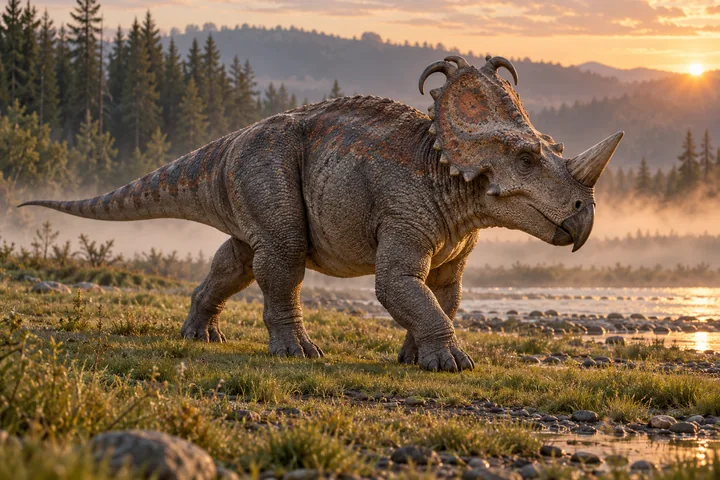
Centrosaurus
A single nose horn — and a fossil that preserves bone cancer.
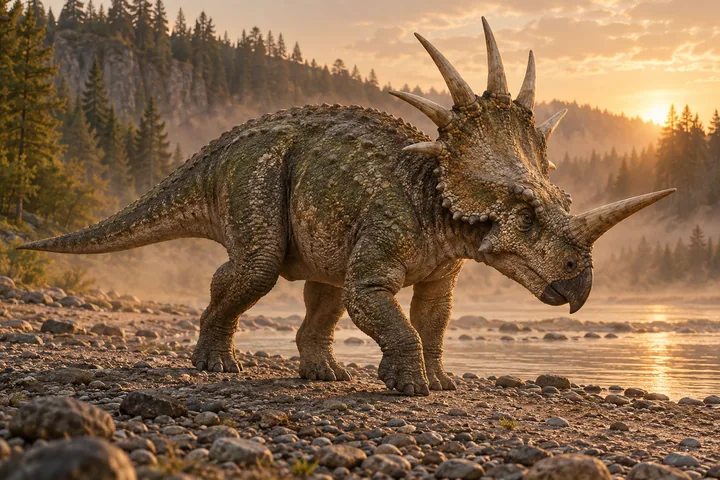
Styracosaurus
A long nose horn framed by a spectacular spiked frill.
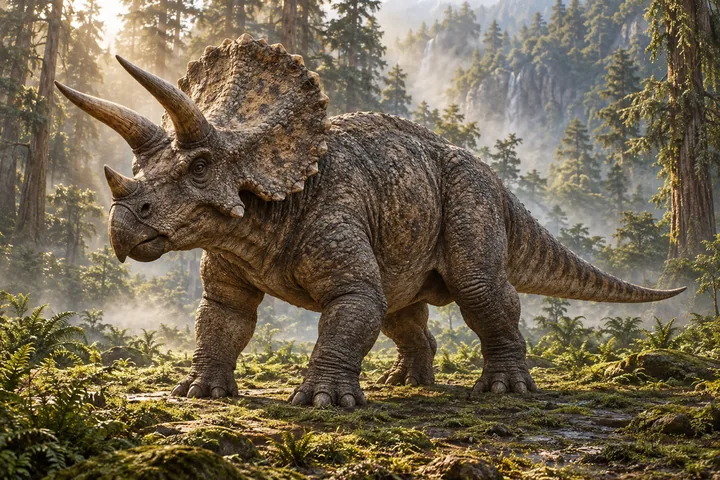
Triceratops horridus
Three horns, a broad frill, and a plant-eater beneath the formidable silhouette.