
Body length
InferredAbout 5.5 m; museum reference
NHM supplies a rounded genus size; the university account describes the studied animal as over 5 m. These are references, not a full species range. [D1] [D2]
EXHIBIT 38
Styracosaurus
A long nose horn framed by a spectacular spiked frill.
TWO WAYS TO PICTURE THE PAST
Compare the evidence with the familiar movie image. The illustrations are not to a shared scale.

The artist identifies this reconstruction as Styracosaurus albertensis. This view illustrates one form within the genus, rather than every species or individual. Fossil-informed anatomy: Robust quadrupedal ceratopsid with long nasal horn and several long frill spikes; no prominent brow horns, spike count variable. Colour and keratin extent are artistic interpretation. Individual frill ornament variation means this is one reconstruction rather than a universal individual appearance. [1] [2]
Styracosaurus TD.png — TotalDino. CC0 1.0. Remote source artwork displayed without additional cropping; Wikimedia supplies any display-size derivative.
Scientific picture served by Wikimedia · internet connection required.
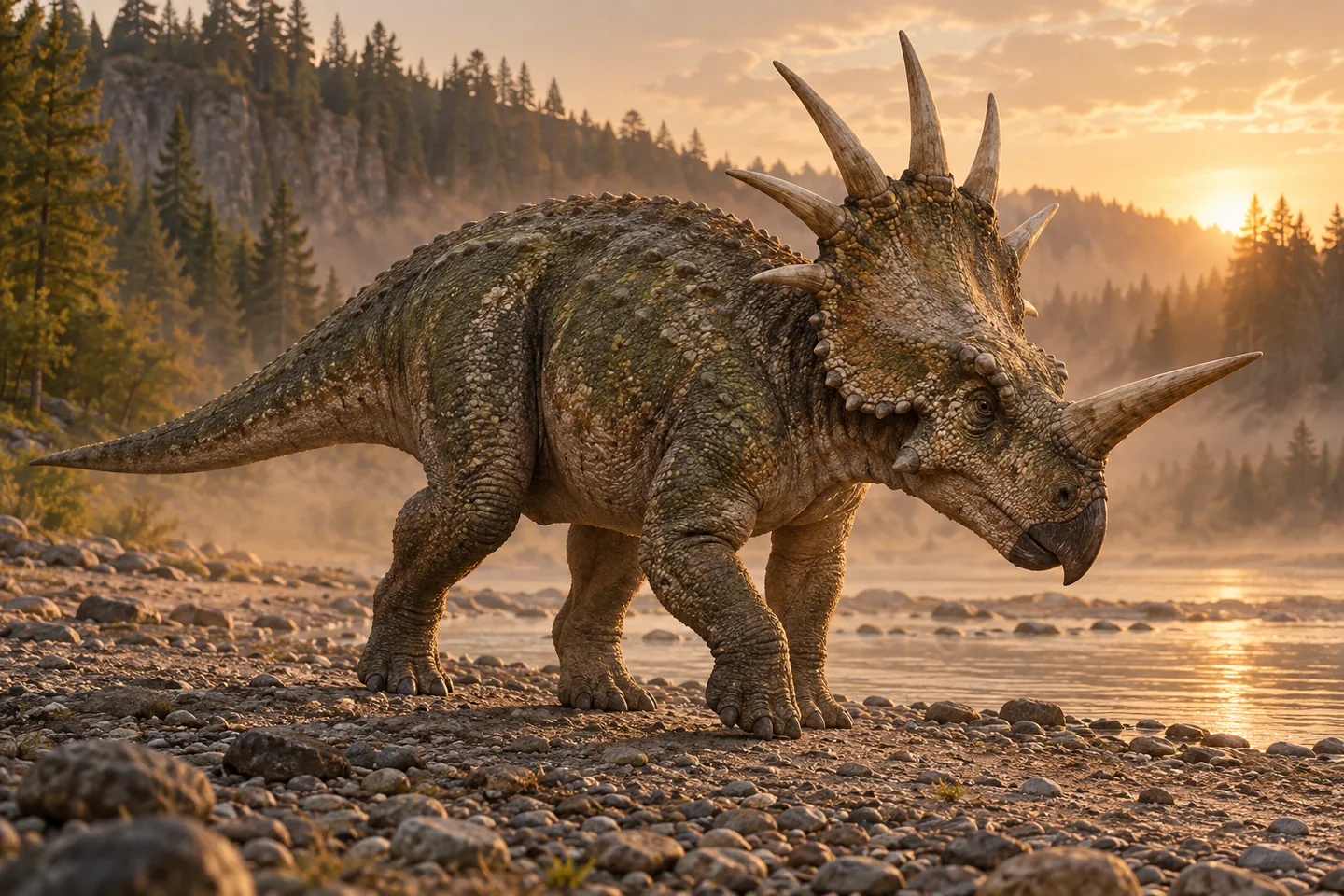
Cinematic Styracosaurus with robust quadrupedal body, a long nose horn and radiating frill spikes; imposing head held low in dusty afternoon light. Dramatic lighting, surface detail and scenery are artistic choices. This is an original cinema-inspired picture, rather than a frame from a film or a documented fossil locality.
Original artwork · artistic interpretation.
Scientific view: credited paleoart interpreting fossil evidence, served online by Wikimedia. Movie-style view: Original artistic interpretation. Colors, soft tissues and settings involve reconstruction.
MEET THE ANIMAL
Styracosaurus was a plant-eating horned dinosaur that lived in what is now Alberta, Canada, during the Late Cretaceous, roughly 75 million years ago. A powerful beak and teeth that were replaced as they wore down helped process vegetation. Its world also contained other large plant eaters, including duck-billed and armored dinosaurs, along an ancient coastal plain. [S1]
Its skull carried conspicuous spikes extending from the bony frill behind the head. A study of a not-yet-adult Styracosaurus albertensis showed that these features changed substantially during growth. The younger animal's frill projections were shorter and flatter than those of larger animals. Its nasal horn also formed part of a growth sequence, rather than being identical at every age. [S2]
Comparing skulls revealed that the frill spikes became longer and thicker as the animals matured. Some details also varied between individuals. This makes growth important when identifying horned dinosaurs: a different-looking skull does not automatically belong to a different species. The fossils reveal changing head shapes, but they do not record the animal's exact colors or a complete display routine. [S2]
PREHISTORIC ANIMAL DOSSIER
The animal, the evidence, and the questions still open.
Styracosaurus was a plant-eating ceratopsid with a prominent nasal horn and spikes around its frill. A studied S. albertensis skull shows pronounced left-right differences, demonstrating that horn symmetry cannot simply be assumed.
Profile scope: Genus: Styracosaurus; skull variation research concerns S. albertensis.
Source supported identifies a description documented by the cited source. Inferred marks a reconstruction or functional estimate. Debated marks competing interpretations. Not established means the sources reviewed for this dossier do not support a firm conclusion; it does not mean a behavior never occurred.
A size reference is an estimate, not a population range. Nesting evidence does not by itself establish courtship, mate choice, or lifelong pairing.
About 5.5 m; museum reference
NHM supplies a rounded genus size; the university account describes the studied animal as over 5 m. These are references, not a full species range. [D1] [D2]
About 2,700 kg; museum estimate
The museum does not identify the specimen, life stage or calculation method behind this rounded estimate. [D1]
Herbivore; beak and shearing teeth
The museum documents plant-eating anatomy. Particular plant taxa are not established by these sources. [D1]
Late Cretaceous North America
NHM records fossils from Canada and the USA; the studied skull was collected in the Alberta badlands. These localities do not establish a narrow ancient habitat preference. [D1] [D2]
Walked on four legs
The museum identifies quadrupedal movement. Speed is reconstructed rather than directly measured. [D1]
Nasal horn; frill spikes; variable asymmetry
S. albertensis skull research documents substantial differences between the left and right horn arrangements. Nicknaming the specimen Hannah does not determine its sex. [D1] [D2]
Not established here
The reviewed sources do not establish taxon-specific nest structure, clutch size or parental care.
Not established here
The reviewed sources do not establish a mating ritual, pair bond or breeding season for this taxon.
Grouping inferred from bonebed evidence
NHM discusses several specimens together as evidence for possible herding. This does not establish herd size, hierarchy or continuous group living. [D1]
Sources and inspection notes for the claims in this profile.
THE STORY IN THE FOSSILS
Styracosaurus combined a large nasal horn with long spikes around the neck frill. Unlike Triceratops, it lacked prominent brow horns. It walked on four legs and had a beak backed by continually replaced shearing teeth, a feeding system suited to plant material. [1]
Frill spike number and arrangement differed between individuals. The skull nicknamed Hannah also preserved striking differences between its left and right sides. University of Alberta researchers found that this asymmetry could complicate species identification when only half a skull is available for comparison. [1] [2]
We have not established a comparable adult total-length estimate for this taxon in this draft. Specimen measurements in the text describe those individuals. The cited dates are approximately 76–75 million years ago. Approximate museum catalogue reference interval for the genus, not an exact duration for every species. Unknown does not mean zero.
Sources and evidence notes for this exhibit.
KEEP EXPLORING
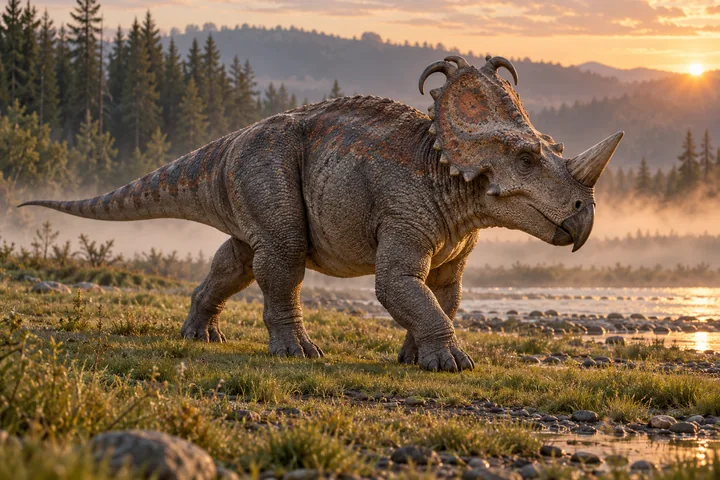
Centrosaurus
A single nose horn — and a fossil that preserves bone cancer.
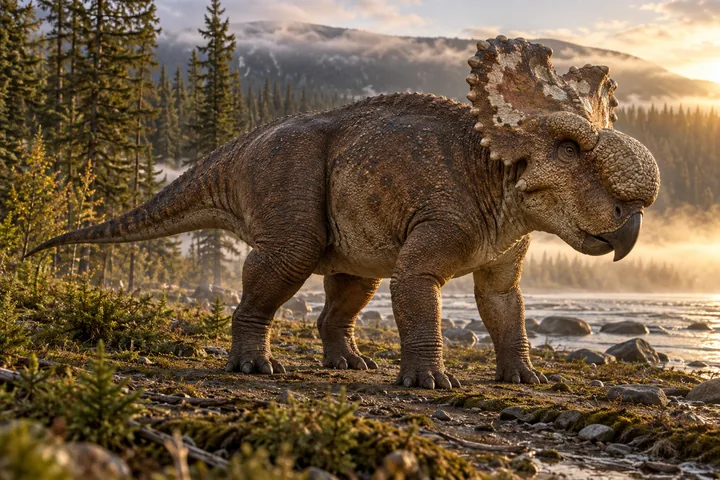
Pachyrhinosaurus
A broad bony nasal boss took the place of a nose horn.
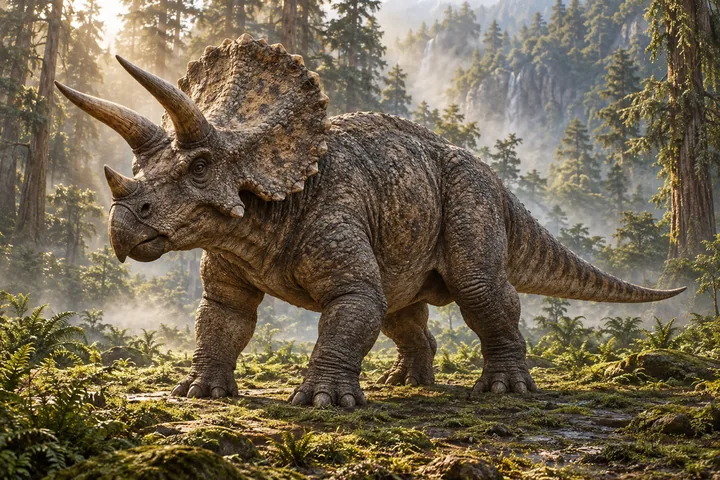
Triceratops horridus
Three horns, a broad frill, and a plant-eater beneath the formidable silhouette.