Body length
InferredMuseum reference estimate: 2.5 m.
The preserved anterior half is not a complete measured body or adult species range. [D2]
EXHIBIT 300
Pelecanimimus polyodon
Dinosaur
A Spanish ornithomimosaur with more than 200 small teeth, unlike its familiar toothless relatives. [1]
TWO WAYS TO PICTURE THE PAST
Compare the evidence with the familiar movie image. The illustrations are not to a shared scale.
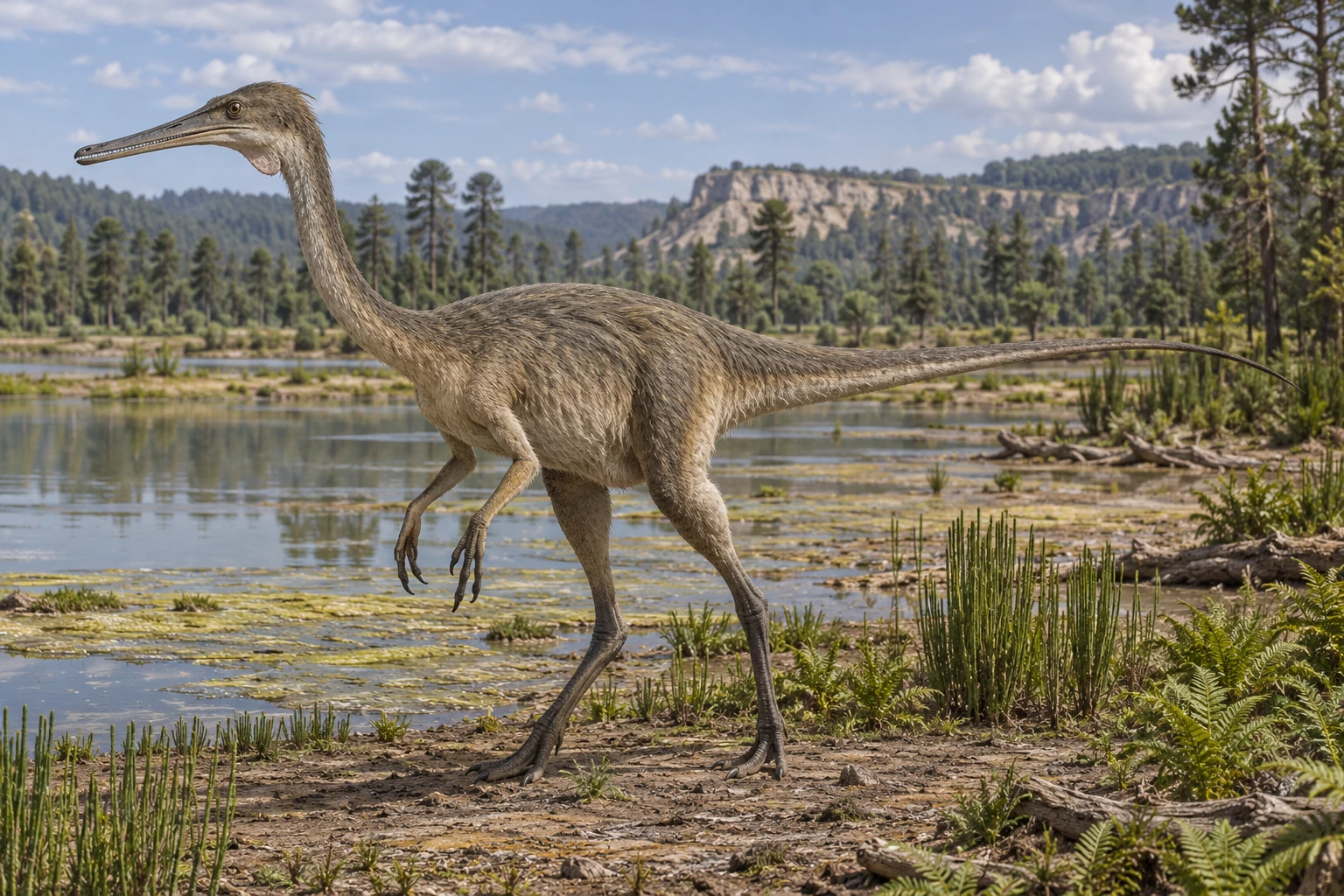
An illustrative reconstruction. Compare its anatomy with the evidence and limitations in the dossier. [1]
Source-informed reconstruction. Appearance evidence [1]. Original illustration; missing anatomy, coloration and scenery include interpretation.
Fossils constrain this life reconstruction. Missing anatomy, coloration and the environmental scene include interpretation; the dossier explains the evidence limits.
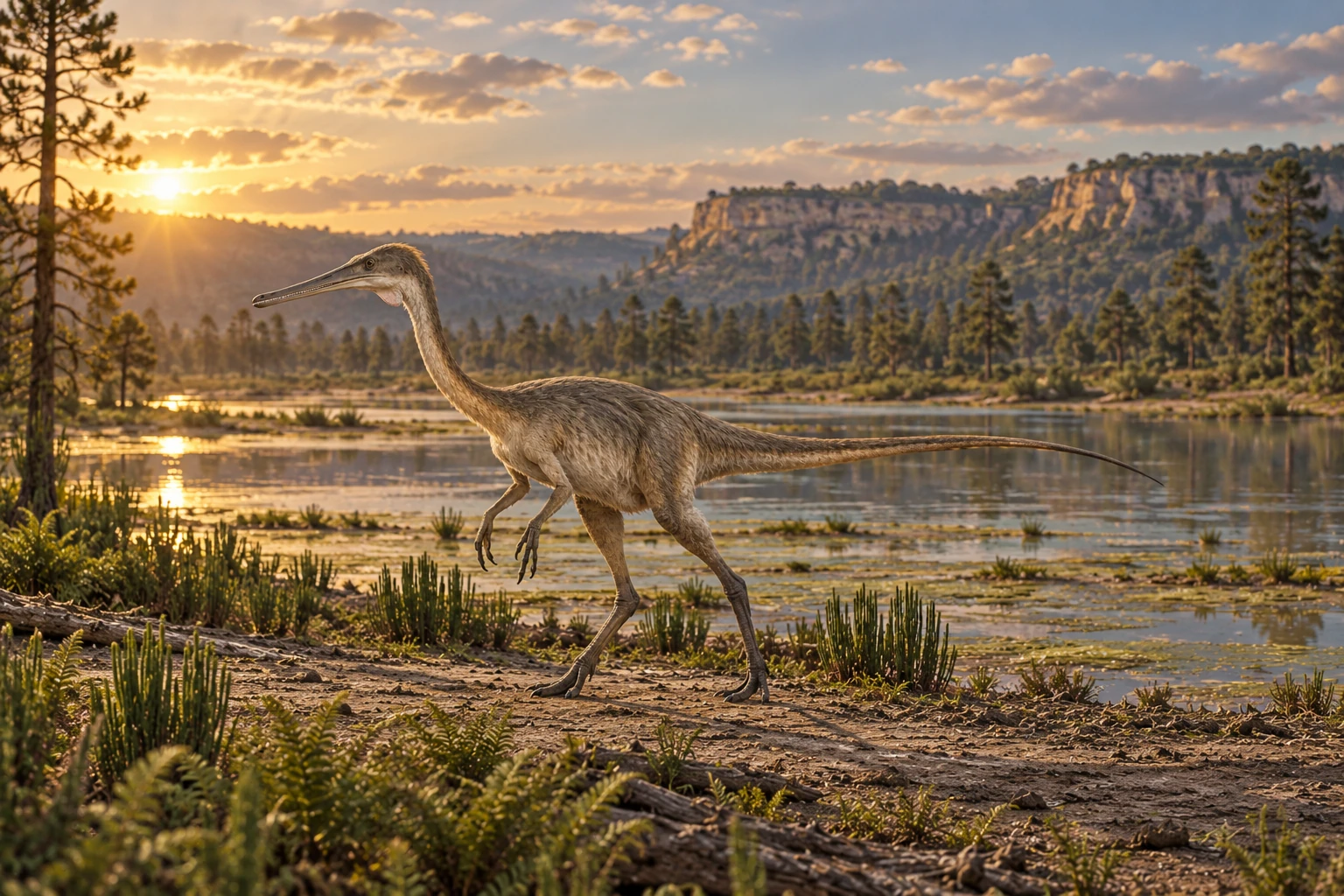
An illustrative reconstruction. Compare its anatomy with the evidence and limitations in the dossier. Lighting, coloration and scenery are artistic choices. This image does not document a fossil locality or behavior.
Original artwork · artistic interpretation.
Scientific view: source-informed reconstruction, credited paleoart or specimen-based imagery. Movie-style view: Original artistic interpretation. Reconstructions involve uncertainty.
MEET THE ANIMAL
Pelecanimimus was a small dinosaur from Early Cretaceous Spain. It belonged to the ornithomimosaurs, a group often compared with ostriches because of their body shape. Many familiar members had toothless beaks, but Pelecanimimus carried more than 200 tiny teeth. Its discovery therefore helped scientists investigate how the group’s feeding structures changed, without assuming that this dinosaur was the direct ancestor of all later members. [D1]
The preserved skeleton is the front half of the body. It includes unusually useful details of the chest and arms, but lacks the hindquarters needed to measure a complete animal. A later study carefully redescribed these bones and compared them with newer discoveries. The result is a revised description, reminding us that a fossil can keep providing information long after it is named. [D3]
Las Hoyas, the fossil site, records a freshwater wetland. Fine sediment and microbial mats helped preserve delicate remains. A microbial mat is a layer of tiny living organisms growing together on a surface. This setting helps explain why soft-tissue traces survived, while leaving the dinosaur’s exact daily habits uncertain. A wetland burial does not prove that Pelecanimimus swam or lived underwater. [D4]
PREHISTORIC ANIMAL DOSSIER
The animal, the evidence, and the questions still open.
The fossil preserves unusual skeletal and integumentary evidence while the hindquarters remain unpreserved. [D1]
Profile scope: This exhibit concerns Pelecanimimus polyodon, its anterior-half holotype from Barremian Las Hoyas, Spain. [D3]
Source supported identifies a description documented by the cited source. Inferred marks a reconstruction or functional estimate. Debated marks competing interpretations. Not established means the sources reviewed for this dossier do not support a firm conclusion; it does not mean a behavior never occurred.
A size reference is an estimate, not a population range. Nesting evidence does not by itself establish courtship, mate choice, or lifelong pairing.
Museum reference estimate: 2.5 m.
The preserved anterior half is not a complete measured body or adult species range. [D2]
Not established here
No adopted mass model established in the reviewed postcranial abstract. [D3]
Museum carnivorous classification.
Tiny teeth inform feeding interpretation; exact prey and pouch function remain unproven. [D2]
Freshwater wetland region.
Limestone burial does not mean it was an aquatic dinosaur. [D4]
Bipedal terrestrial movement inferred.
Hindquarters are missing; precise gait and speed remain comparative. [D3]
Over 200 small teeth; hyoid and sternum preserved.
Integument impressions inform soft-tissue interpretation, not a complete plumage pattern. [D1]
Not established here
Anterior holotype establishes no assigned eggs, nest or reproductive event. [D3]
Not established here
Throat-pouch interpretation does not establish a mating display. [D2]
Not established here
Exceptional preservation of one individual does not establish a flock. [D1]
Sources and inspection notes for the claims in this profile.
THE STORY IN THE FOSSILS
A detailed reexamination revised the postcranial diagnosis instead of relying only on the original 1994 account. [3]
The dossier identifies the scope of each reference estimate. A mount, an individual fossil and a species-wide adult range are different measurements. Comparison metrics remain unavailable where adult scope has not been established. Unknown does not mean zero.
Sources support the stated claims and scopes. Refer to the evidence notes for uncertainty.
KEEP EXPLORING
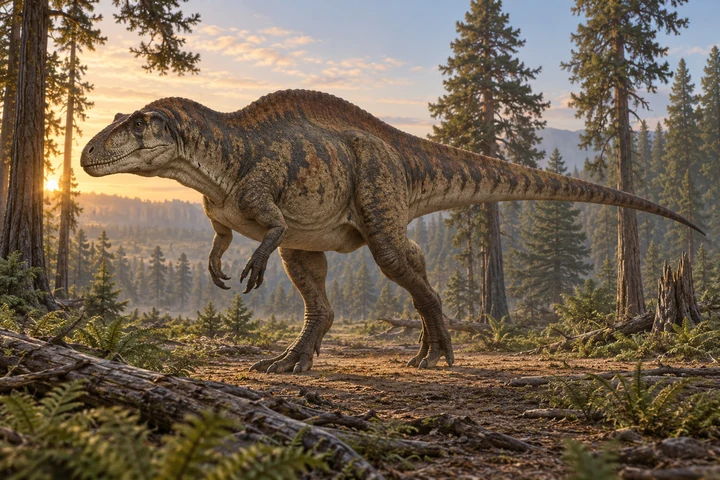
Acrocanthosaurus
This Early Cretaceous carnivore is known from North American fossils. Its high vertebral spines give it a distinctive raised back profile.
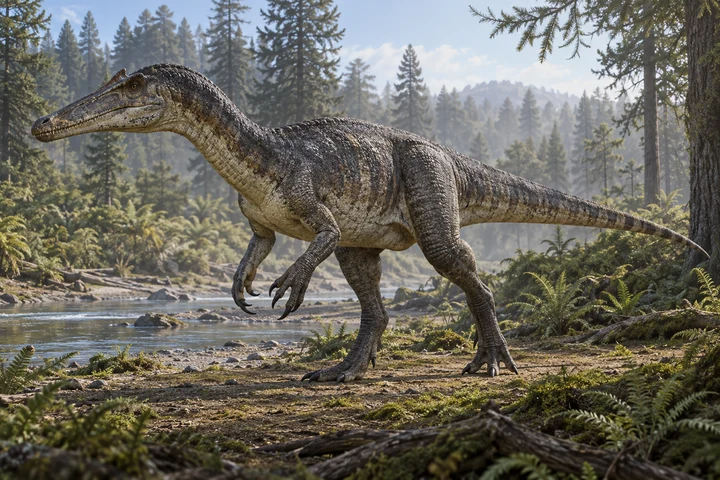
Baryonyx
Baryonyx had a crocodile-like snout and an enlarged hand claw. Its preserved last meal supports a carnivorous diet that included more than fish.
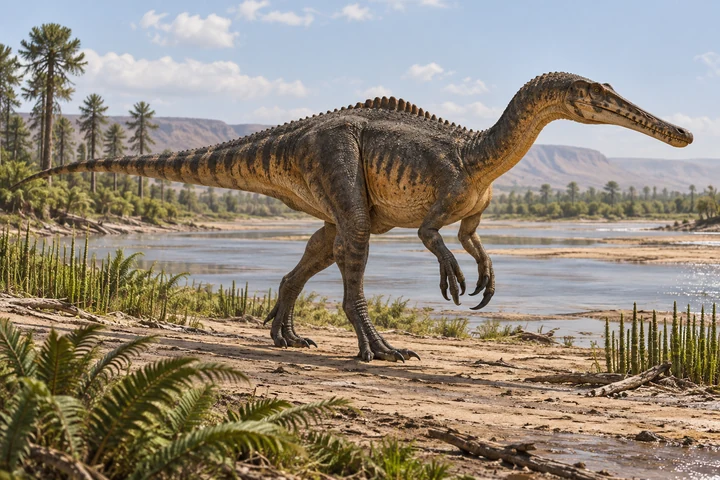
Suchomimus
This Niger spinosaur was closely similar to Baryonyx. Its hooked, rounded teeth suggest a role catching fish in ancient river environments.