
Body length
InferredAbout 7 m (museum display reference)
The roughly23-foot museum reconstruction is a reference, not one complete measured fossil or a species maximum. [D2]
EXHIBIT 239
Peloroplites cedrimontanus
Dinosaur
Peloroplites was a large armored plant eater with a broad beak and powerful jaws. [2]
TWO WAYS TO PICTURE THE PAST
Compare the evidence with the familiar movie image. The illustrations are not to a shared scale.
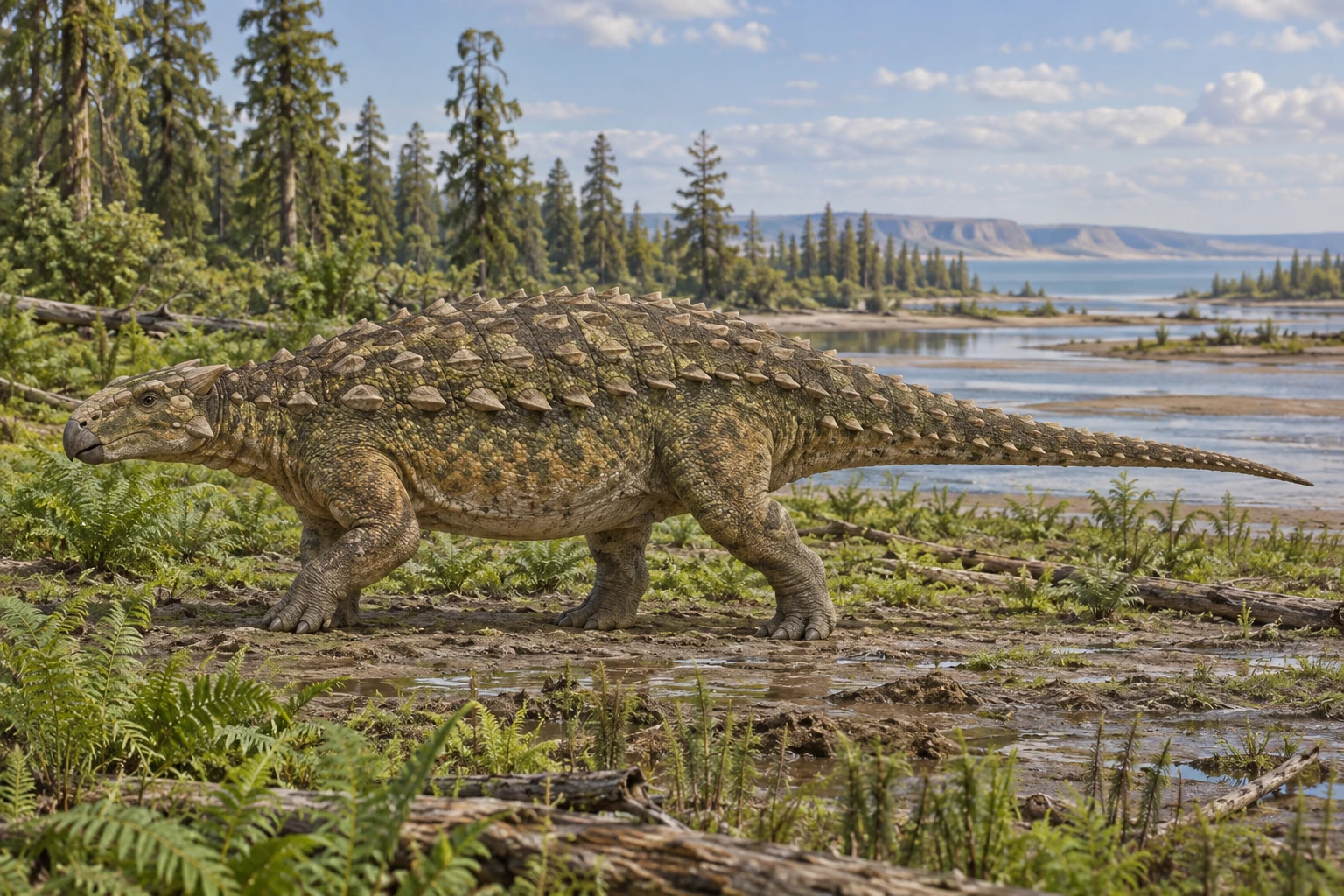
An illustrative reconstruction. Compare its anatomy with the evidence and limitations in the dossier. [1]
Source-informed reconstruction. Appearance evidence [1]. Original illustration; missing anatomy, coloration and scenery include interpretation.
Fossils constrain this life reconstruction. Missing anatomy, coloration and the environmental scene include interpretation; the dossier explains the evidence limits.
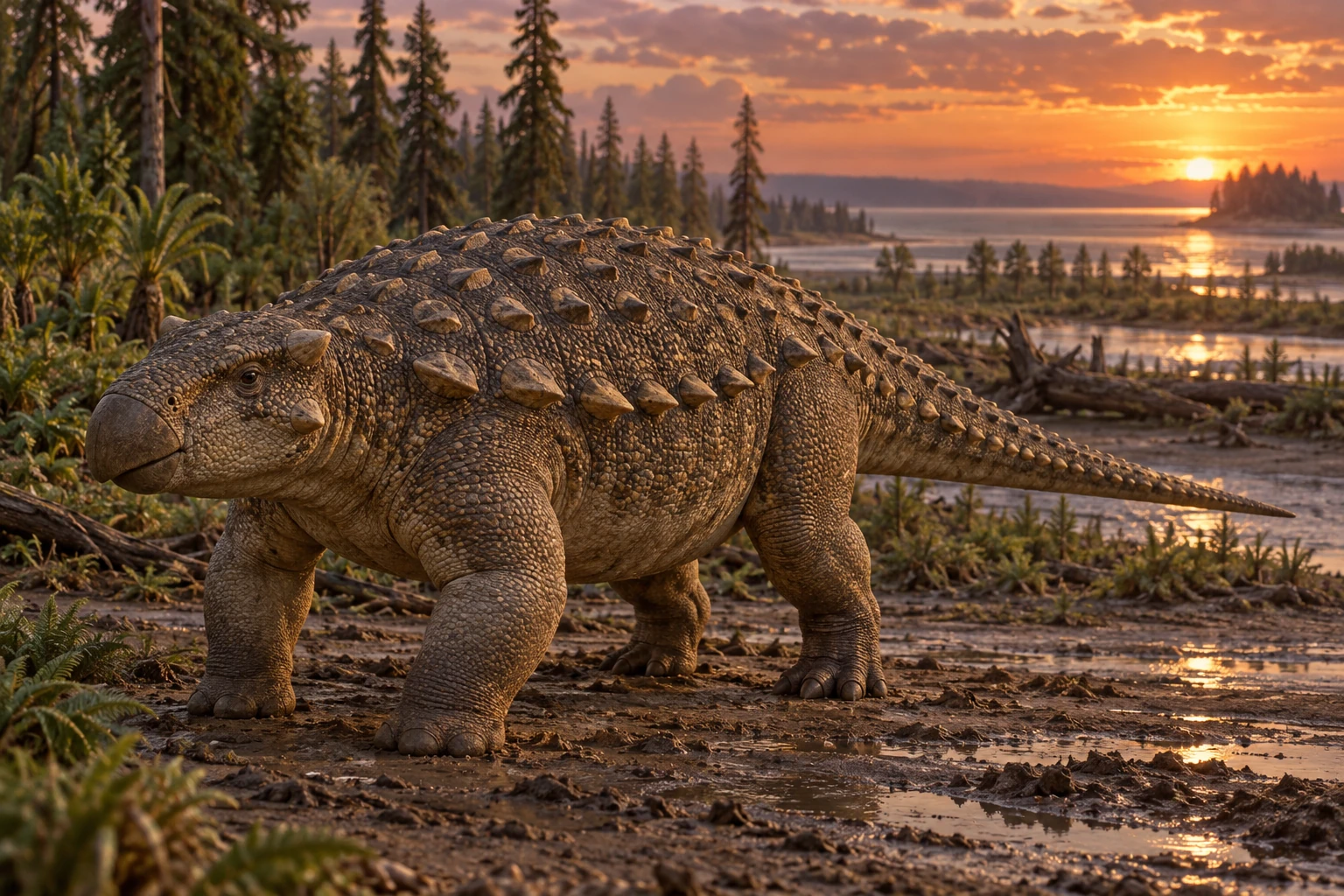
An illustrative reconstruction. Compare its anatomy with the evidence and limitations in the dossier. Lighting, coloration and scenery are artistic choices. This image does not document a fossil locality or behavior.
Original artwork · artistic interpretation.
Scientific view: source-informed reconstruction, credited paleoart or specimen-based imagery. Movie-style view: Original artistic interpretation. Reconstructions involve uncertainty.
MEET THE ANIMAL
Peloroplites was a large, four-legged armored dinosaur from Utah. Its museum reconstruction is about seven meters long, but that display length is not the measurement of one complete fossil animal. A broad beak and powerful jaws helped it process vegetation. Those features suggest plant feeding, possibly including tougher material, while its exact menu remains beyond what the display and bones can tell us. [D2]
The fossil-bearing Mussentuchit Member now falls within the Cenomanian part of the Late Cretaceous. This updates the Early Cretaceous wording found in the original description's title and some older exhibits. Scientists refine dates by investigating rock layers and dating suitable minerals. A regional age framework helps place the dinosaur in time without pretending that each individual fossil has received its own direct numerical date. [D3]
Researchers have also compared the hand bones with those of other armored dinosaurs. The Peloroplites metacarpals were separate when found, but they fit a curved arrangement that may have helped support body weight. This is a careful anatomical inference rather than a preserved footprint from that exact animal. It shows why a complete museum reconstruction can include useful ideas while some details remain uncertain. [D4]
PREHISTORIC ANIMAL DOSSIER
The animal, the evidence, and the questions still open.
The museum reconstruction combines a broad, low armored body with four weight-bearing limbs and an unclubbed tail. [D2]
Profile scope: Genus — Peloroplites cedrimontanus; type skull CEUM 26331 and referred Utah material. [D1]
Source supported identifies a description documented by the cited source. Inferred marks a reconstruction or functional estimate. Debated marks competing interpretations. Not established means the sources reviewed for this dossier do not support a firm conclusion; it does not mean a behavior never occurred.
A size reference is an estimate, not a population range. Nesting evidence does not by itself establish courtship, mate choice, or lifelong pairing.
About 7 m (museum display reference)
The roughly23-foot museum reconstruction is a reference, not one complete measured fossil or a species maximum. [D2]
Not established here
No comparable maturity-qualified numerical body mass is adopted from the exhibit account. [D2]
Plant feeding inferred
Broad beak and robust teeth and jaws suggest cropping vegetation, possibly tougher material; no particular meal is demonstrated. [D2]
Utah Mussentuchit setting
Later regional dating places this member in the Cenomanian Late Cretaceous, updating the original paper's historical age label. [D3]
Quadrupedal reconstruction
Comparative metacarpal evidence suggests a semicircular, supporting hand arrangement; direct articulated hands were not tested. [D4]
Low skull; small rear horns
Referred armor positions require restoration. [D1]
Not established here
No assigned nest in reviewed material. [D1]
Not established here
No mating display in reviewed material. [D1]
Not established here
A multi-individual quarry does not establish herds. [D1]
Sources and inspection notes for the claims in this profile.
THE STORY IN THE FOSSILS
The hands illustrate how careful comparisons can suggest posture while leaving details of a particular animal uncertain. [4]
Rock dating changes the chronology; the original article's title retains its historical age assignment. [3]
The dossier identifies the scope of each reference estimate. A mount, an individual fossil and a species-wide adult range are different measurements. Comparison metrics remain unavailable where adult scope has not been established. Unknown does not mean zero.
Sources support the stated claims and scopes. Refer to the evidence notes for uncertainty.
KEEP EXPLORING
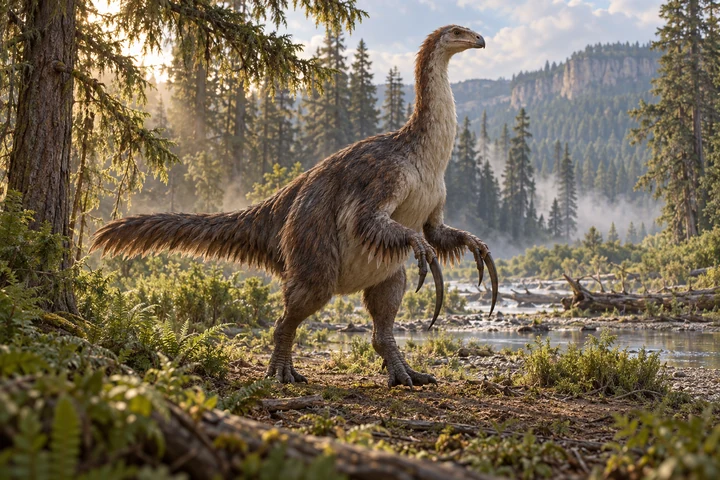
Nothronychus mckinleyi and N. graffami
Dinosaur
Nothronychus was a therizinosaur with a small head, long neck, broad abdomen and impressive hand claws.
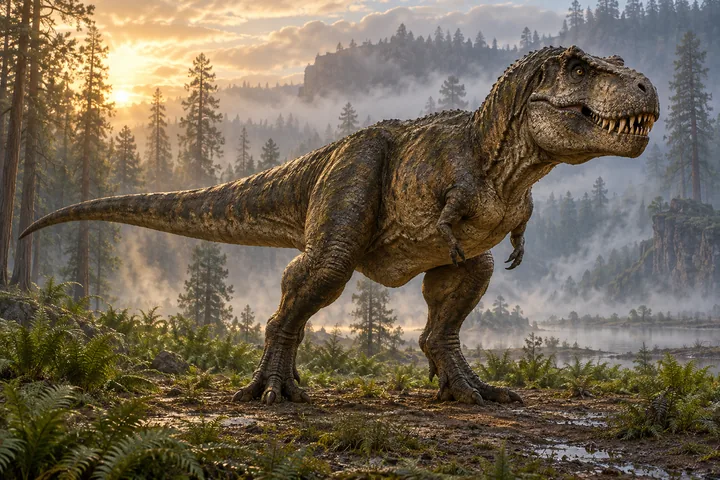
Tyrannosaurus rex
Tyrannosaurus rex was a large meat-eating dinosaur from the final part of the Cretaceous in western North America. Fossil teeth, bite marks and skeletons reveal a powerful animal whose behaviour still invites questions.
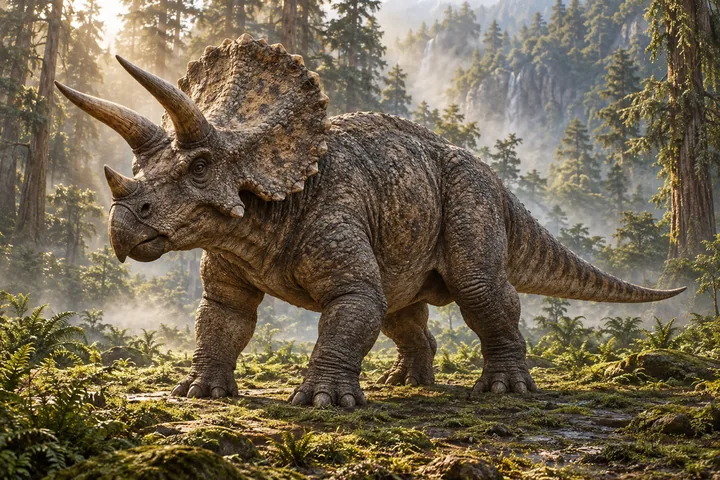
Triceratops horridus
Triceratops horridus was a horned dinosaur of the Late Cretaceous. Skin impressions attributed to this species reveal scales, while skulls and their positions in rock layers help researchers distinguish it from the later Triceratops prorsus.