
Length
Inferred9.90 m preserved length
Measured snout to last preserved caudal vertebra; the original study interprets this individual as subadult. [D1]
EXHIBIT 290
Sachicasaurus vitae
Marine reptile
A large short-necked plesiosaur from Colombia, known from a nearly complete subadult skeleton. [1]
TWO WAYS TO PICTURE THE PAST
Compare the evidence with the familiar movie image. The illustrations are not to a shared scale.
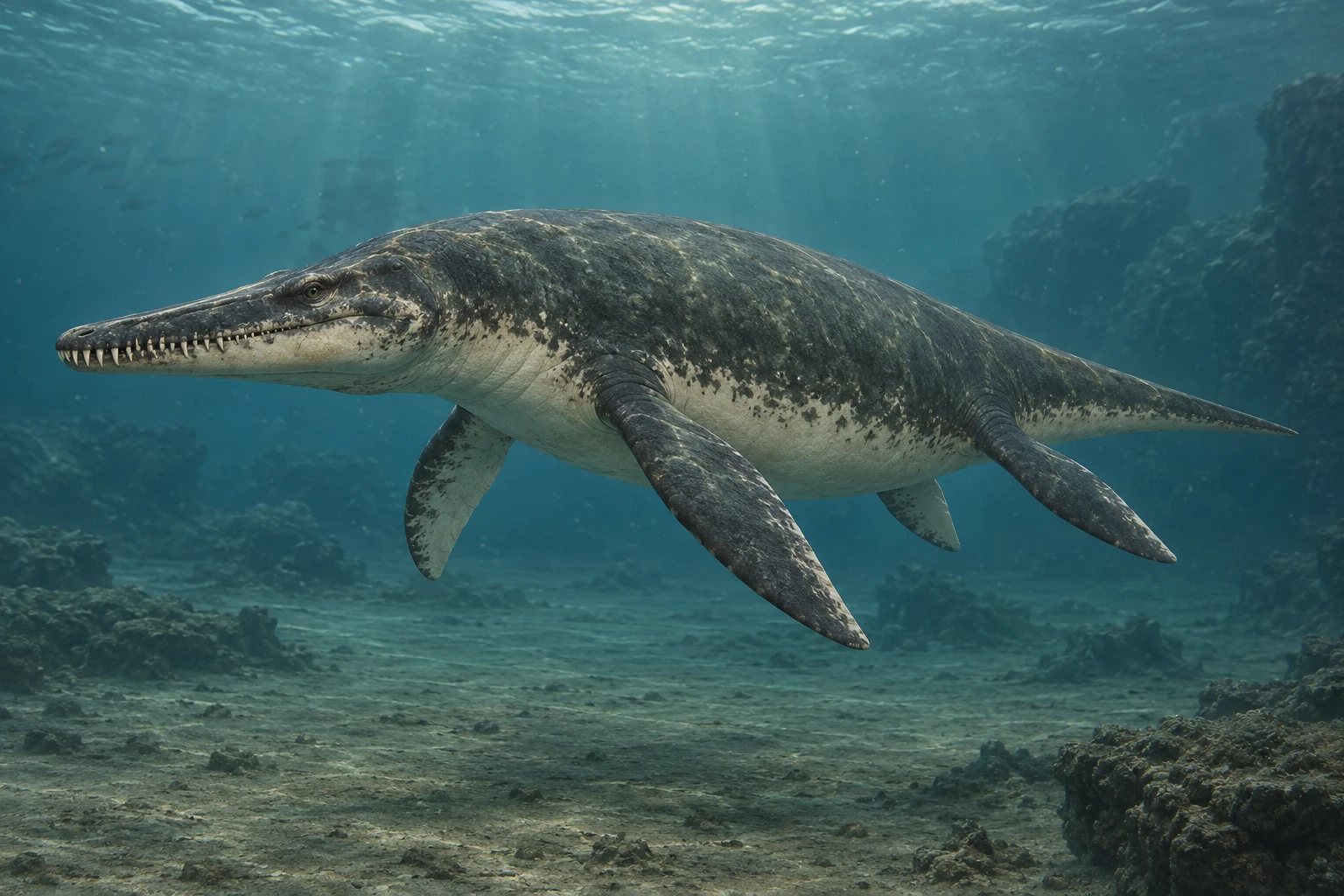
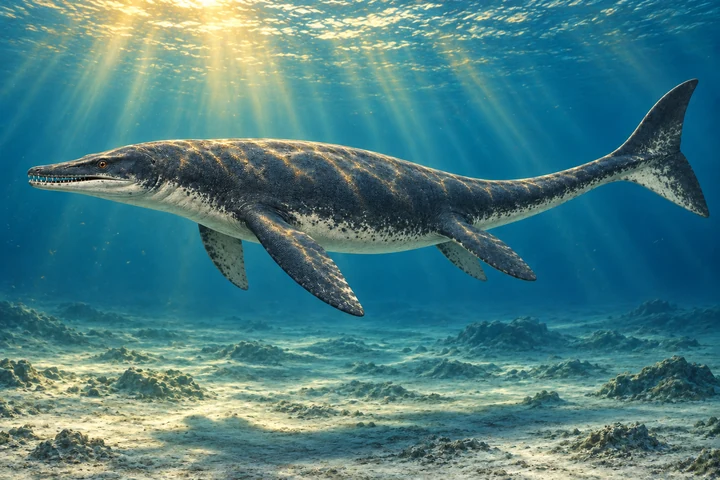
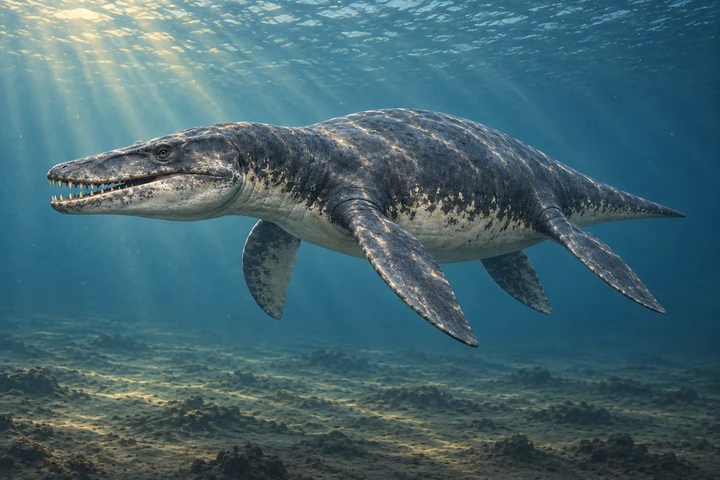
An illustrative reconstruction. Compare its anatomy with the evidence and limitations in the dossier. [1]
Source-informed reconstruction. Appearance evidence [1]. Original illustration; missing anatomy, coloration and scenery include interpretation.
Fossils constrain this life reconstruction. Missing anatomy, coloration and the environmental scene include interpretation; the dossier explains the evidence limits.
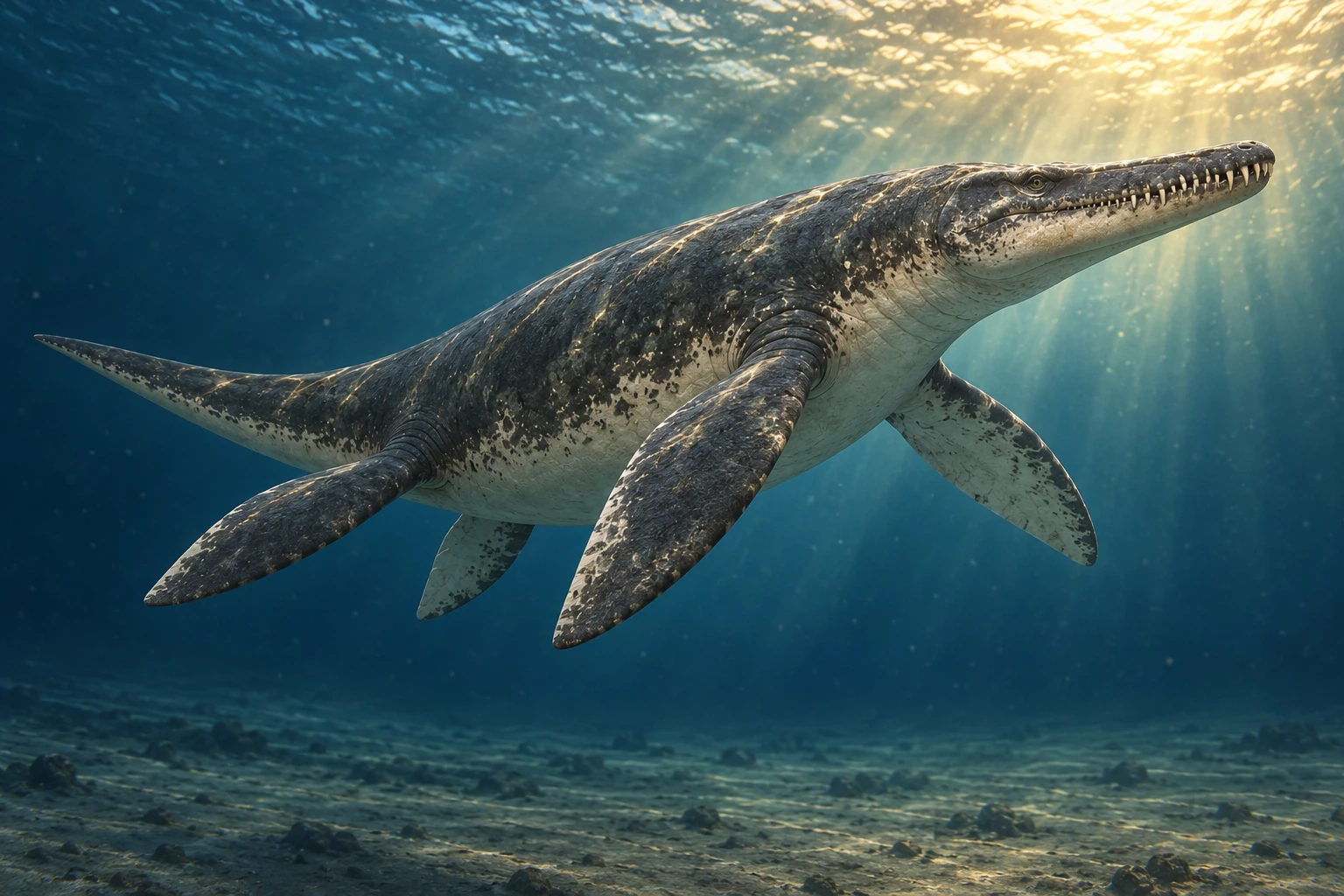
An illustrative reconstruction. Compare its anatomy with the evidence and limitations in the dossier. Lighting, coloration and scenery are artistic choices. This image does not document a fossil locality or behavior.
Original artwork · artistic interpretation.
Scientific view: source-informed reconstruction, credited paleoart or specimen-based imagery. Movie-style view: Original artistic interpretation. Reconstructions involve uncertainty.
MEET THE ANIMAL
Sachicasaurus was one of the reptiles inhabiting the ancient Colombian sea. The National University of Colombia museum introduces visitors to this lost marine world through fossils from Boyacá. Its pliosaur display helps explain that the creatures living alongside dinosaurs included reptiles adapted to a very different environment. [D3]
The skull and teeth helped establish it as a distinct animal. The two halves of its lower jaw joined across an unusually short region. It also had a reduced number of lower-jaw teeth. Scientists compare features such as these to distinguish genera, even when several large marine predators lived in a region. [D1]
A later study modeled missing body portions and estimated a length of 10.354 metres and mass of 12,824 kilograms for the holotype. These values depend on reconstruction choices about bones, tissue and density. They are estimates for one individual, not an adult species range. [D2]
Colombian institutions excavated and prepared the fossil over several years, and museum displays bring the lost sea to visitors. Displayed juvenile dimensions describe a different context from the large holotype. The impressive skeleton is therefore most useful when each measurement remains connected to the animal and method that produced it. [D4] [D3]
PREHISTORIC ANIMAL DOSSIER
The animal, the evidence, and the questions still open.
Skull and lower jaw distinguish a large Barremian pliosaur from Colombia. [D1]
Profile scope: S. vitae holotype MP111209-1; measurements separate preserved remains from reconstructed body. [D1]
Source supported identifies a description documented by the cited source. Inferred marks a reconstruction or functional estimate. Debated marks competing interpretations. Not established means the sources reviewed for this dossier do not support a firm conclusion; it does not mean a behavior never occurred.
A size reference is an estimate, not a population range. Nesting evidence does not by itself establish courtship, mate choice, or lifelong pairing.
9.90 m preserved length
Measured snout to last preserved caudal vertebra; the original study interprets this individual as subadult. [D1]
12,824 kg (individual model)
Zhao (2026) Table 1 estimates MP111209-1 by cross-sectional volumetric-density reconstruction, with assumptions about missing elements and soft tissues. [D2]
Large animal prey inferred
Caniniform teeth support predation; no complete menu established. [D1]
Paja Formation marine environment
Holotype from Sáchica, Boyacá, Arcillolitas Abigarradas Member. Sedimentary occurrence and museum marine context do not define its full geographic range. [D1] [D3]
Four-flipper swimming inferred
Four limbs support reconstructed swimming; missing flipper tips require restoration, with no measured speed. [D1]
Large skull and very short jaw symphysis
Jaw symphysis ends near the fourth tooth; 17–18 mandibular teeth distinguish the holotype. [D1]
Not established here
Focused searches obtained no Sachicasaurus pregnancy fossil. Polycotylus evidence supports comparative live birth, without establishing this genus’s brood or care. [D5]
Not established here
The inspected museum account does not document mating sequences or courtship ornaments. [D3]
Not established here
The institutional excavation history concerns discovery and preparation of individuals, not a demonstrated herd or family group. [D4]
Sources and inspection notes for the claims in this profile.
THE STORY IN THE FOSSILS
Body volume depends on reconstructed ribs, tissues and density assumptions. [2]
Excavation and preparation history preserve the link between a scientific specimen and the local collection caring for it. [4]
The dossier identifies the scope of each reference estimate. A mount, an individual fossil and a species-wide adult range are different measurements. Comparison metrics remain unavailable where adult scope has not been established. Unknown does not mean zero.
Sources support the stated claims and scopes. Refer to the evidence notes for uncertainty.
KEEP EXPLORING
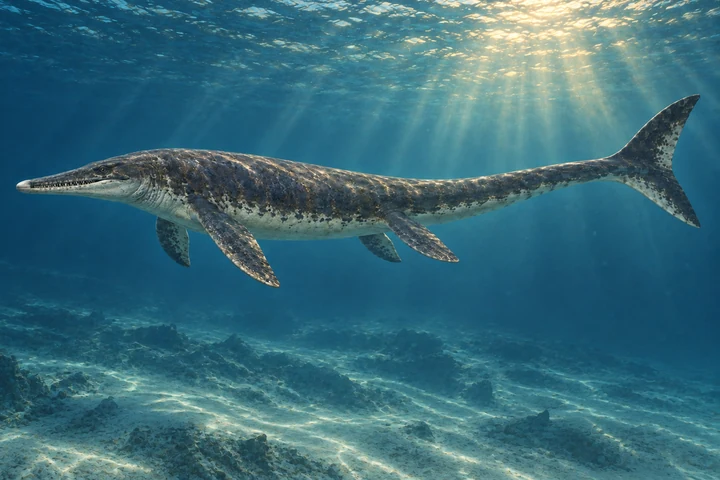
Tylosaurus proriger
Marine reptile
A marine lizard with an elongated adult snout tip, whose fossil identities are still being revised.
Platecarpus tympaniticus
Marine reptile
A streamlined mosasaur known from an exceptional fossil preserving skin traces and digested fish.
Pliosaurus kevani
Marine reptile
A large-skulled pliosaur whose Dorset holotype provides a detailed view of a Jurassic marine predator.