Body length
InferredMuseum reference estimate: 3 m.
Educational reconstruction, not a measured complete individual or adult species range. [D2]
EXHIBIT 298
Saurornithoides mongoliensis
Dinosaur
A small Mongolian troodontid with a long, toothed snout, known securely from one name-bearing fossil. [1]
TWO WAYS TO PICTURE THE PAST
Compare the evidence with the familiar movie image. The illustrations are not to a shared scale.
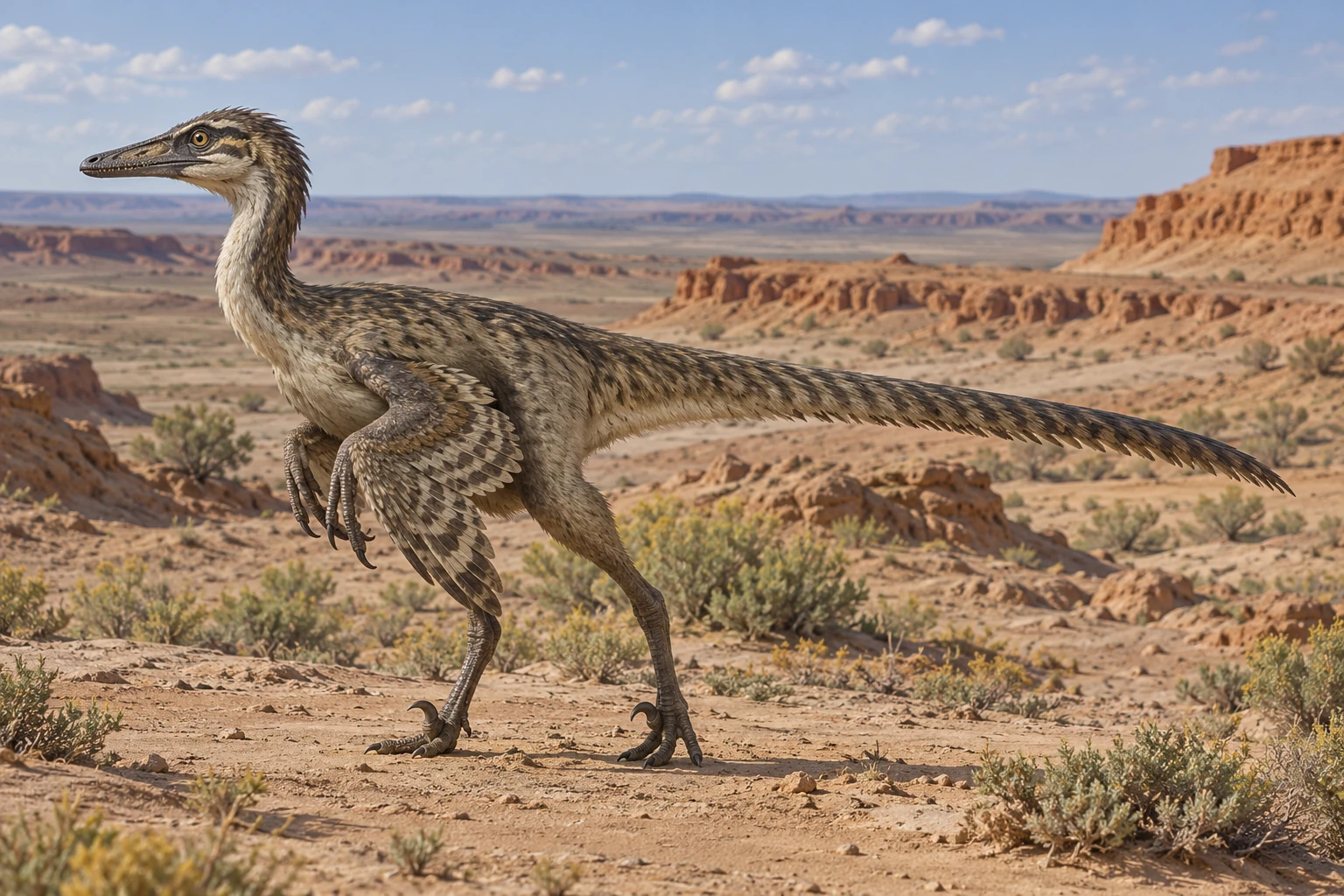
An illustrative reconstruction. Compare its anatomy with the evidence and limitations in the dossier. [1]
Source-informed reconstruction. Appearance evidence [1]. Original illustration; missing anatomy, coloration and scenery include interpretation.
Fossils constrain this life reconstruction. Missing anatomy, coloration and the environmental scene include interpretation; the dossier explains the evidence limits.
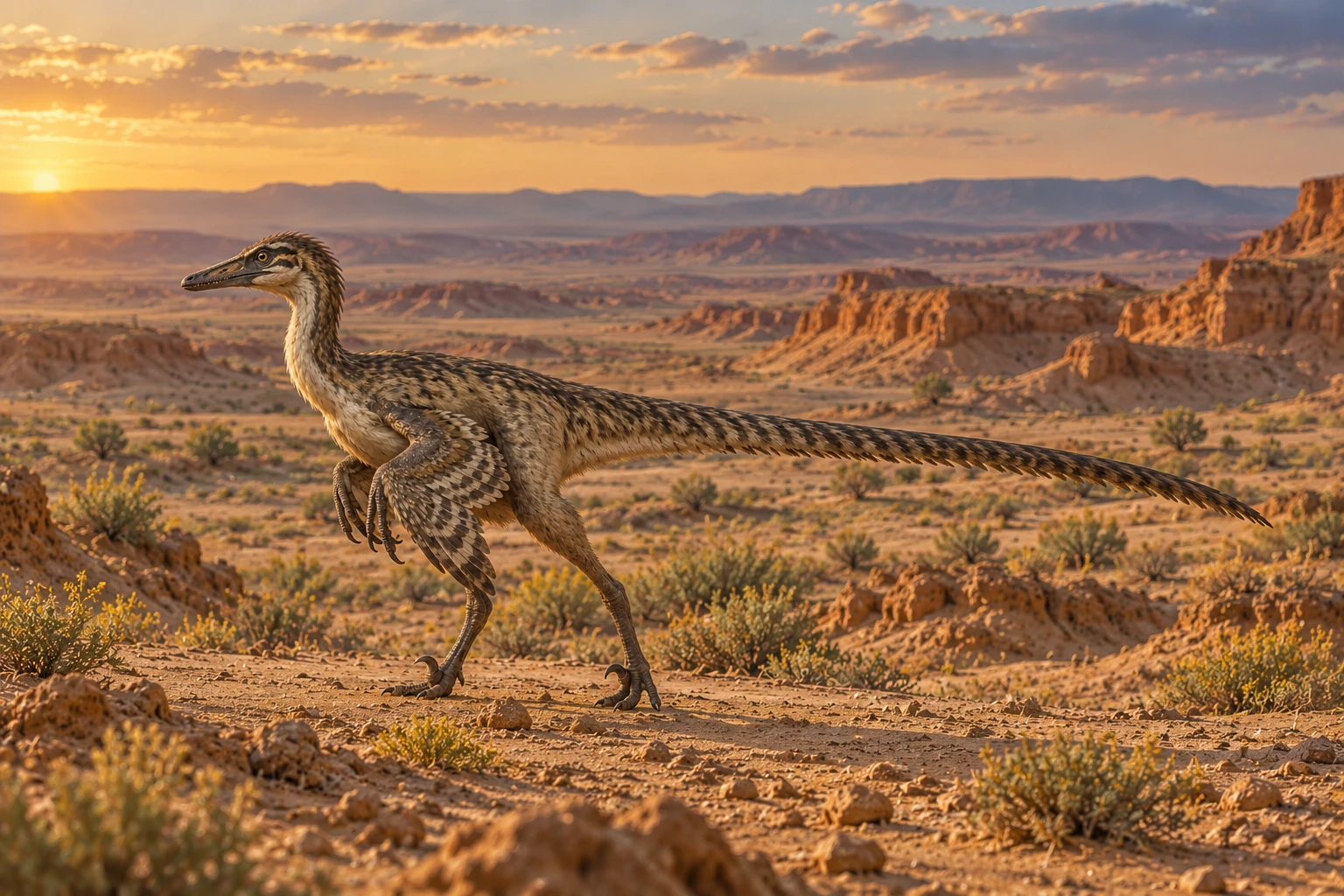
An illustrative reconstruction. Compare its anatomy with the evidence and limitations in the dossier. Lighting, coloration and scenery are artistic choices. This image does not document a fossil locality or behavior.
Original artwork · artistic interpretation.
Scientific view: source-informed reconstruction, credited paleoart or specimen-based imagery. Movie-style view: Original artistic interpretation. Reconstructions involve uncertainty.
MEET THE ANIMAL
Saurornithoides was a small birdlike dinosaur from Late Cretaceous Mongolia. Museum displays often describe it as meat-eating, but a recent scientific review explains that its teeth have supported different feeding interpretations. Its diet therefore remains uncertain. Finding sharp teeth is useful evidence, yet does not by itself reveal every kind of food an extinct animal ate. [D4]
The securely identified fossil includes a weathered skull and only part of the body. Researchers compared its long snout, teeth, braincase and foot bones with other troodontids. A species once placed in the same genus was later moved to Zanabazar. Some supposed young Saurornithoides fossils also lacked the features needed for a confident assignment, so they cannot explain its childhood. [D1]
Scientists scanned the name-bearing skull with X-rays, making hundreds of thin digital slices. This let them investigate internal spaces without relying only on its outer surface. A fossil can reveal much about anatomy while leaving everyday life uncertain. The scans do not show its feather colors, tell us how it courted a mate or demonstrate that it hunted in packs. [D3]
PREHISTORIC ANIMAL DOSSIER
The animal, the evidence, and the questions still open.
Its holotype skull has been studied using high-resolution computed tomography. [D3]
Profile scope: This exhibit concerns Saurornithoides mongoliensis from Bayan Zag; former S. junior belongs to Zanabazar and is excluded. [D1]
Source supported identifies a description documented by the cited source. Inferred marks a reconstruction or functional estimate. Debated marks competing interpretations. Not established means the sources reviewed for this dossier do not support a firm conclusion; it does not mean a behavior never occurred.
A size reference is an estimate, not a population range. Nesting evidence does not by itself establish courtship, mate choice, or lifelong pairing.
Museum reference estimate: 3 m.
Educational reconstruction, not a measured complete individual or adult species range. [D2]
Not established here
No adopted whole-body mass model established by the inspected holotype imaging. [D3]
Not established here
Museum carnivory is one interpretation; the 2026 review discusses conflicting tooth-based evidence. Omnivory remains a hypothesis rather than an established species diet. [D4]
Terrestrial Djadokhta Formation setting.
Bayan Zag occurrence does not establish one exclusive living microhabitat. [D1]
Bipedal terrestrial movement inferred.
Partial hindlimb supports reconstruction; speed unknown. [D1]
Elongated snout, numerous teeth and specialized foot.
Forelimbs, plumage and unpreserved parts require comparison. [D1]
Not established here
Rejected juvenile referrals cannot establish this species’ hatchling maturity or parenting. [D1]
Not established here
CT skull anatomy provides no mating display or sex difference evidence. [D3]
Not established here
One secure holotype establishes no pack or family-group structure. [D3]
Sources and inspection notes for the claims in this profile.
THE STORY IN THE FOSSILS
Some vertebrae once grouped with the skeleton were reassigned to a protoceratopsian; association alone does not establish identity. [1]
The dossier identifies the scope of each reference estimate. A mount, an individual fossil and a species-wide adult range are different measurements. Comparison metrics remain unavailable where adult scope has not been established. Unknown does not mean zero.
Sources support the stated claims and scopes. Refer to the evidence notes for uncertainty.
KEEP EXPLORING
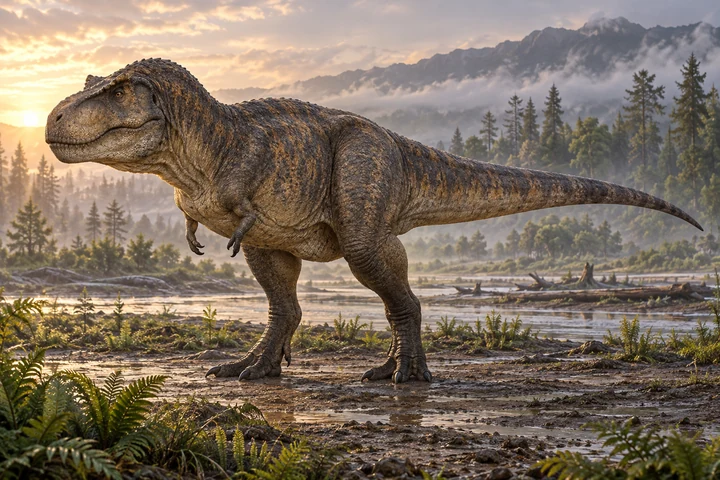
Tyrannosaurus rex
Tyrannosaurus rex was a large meat-eating dinosaur from the final part of the Cretaceous in western North America. Fossil teeth, bite marks and skeletons reveal a powerful animal whose behaviour still invites questions.
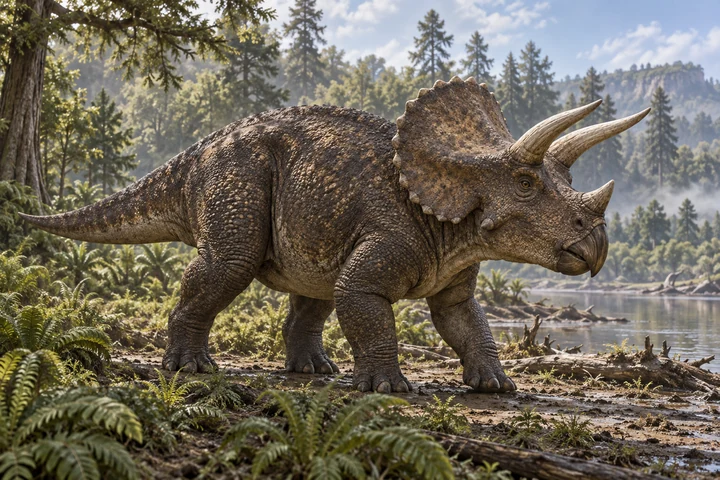
Triceratops horridus
Triceratops horridus was a horned dinosaur of the Late Cretaceous. Skin impressions attributed to this species reveal scales, while skulls and their positions in rock layers help researchers distinguish it from the later Triceratops prorsus.
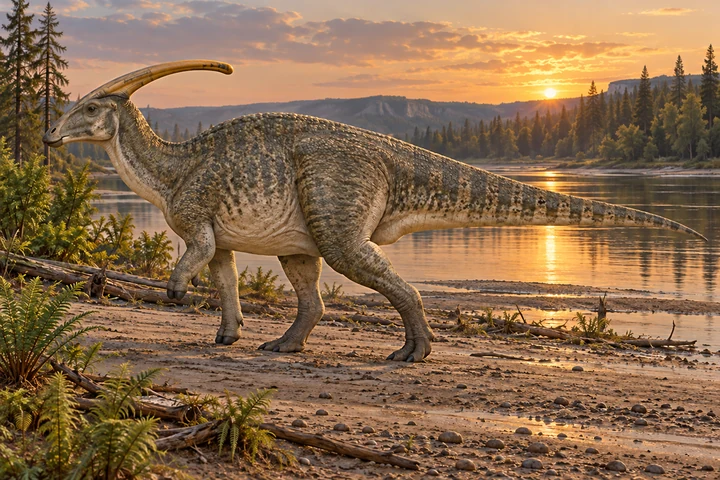
Parasaurolophus walkeri
Parasaurolophus walkeri was a crested duck-billed dinosaur from Late Cretaceous Alberta. Its famous Royal Ontario Museum skeleton preserves both an elongated tubular crest and healed injuries.