
Body length
InferredAbout 4 m; broad museum reference
The museum supplies this figure without an individual, maturity assessment or length calculation. It is retained as an unscoped restoration reference, not a verified adult size range. [D4]
EXHIBIT 189
Segnosaurus galbinensis
Segnosaurus had a downturned lower jaw and unusually complex teeth. These structures support a distinctive plant-feeding interpretation. [1]
TWO WAYS TO PICTURE THE PAST
Compare the evidence with the familiar movie image. The illustrations are not to a shared scale.
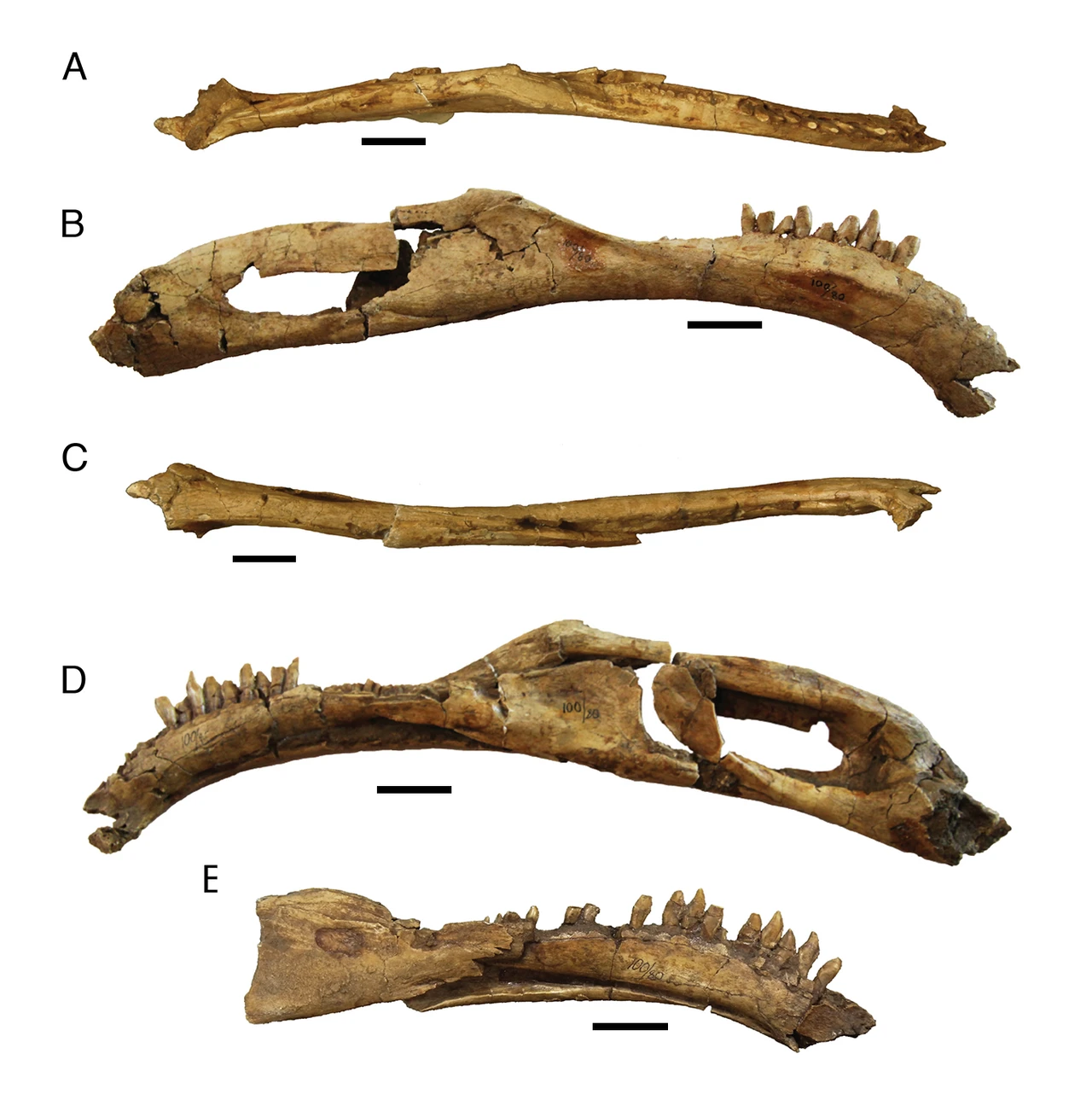
Published views of Segnosaurus galbinensis type jaw material, MPC-D 100/80. The downturned front and teeth are fossil anatomy. These panels are several views of jaw material, not separate animals, a complete head or direct evidence of a particular meal. [1]
Segnosaurus type hemimandibles MPC-D 100/80 · Lindsay E. Zanno, Khishigjav Tsogtbaatar, Tsogtbaatar Chinzorig & Terry A. Gates. CC BY 4.0. Converted to WebP and resized proportionally within verified native dimensions; no anatomical edits. Existing Commons crops or figure revisions are retained under the inspected file license.
The photograph or figure shows the credited fossil material; displayed mounts and labels can include interpretation.
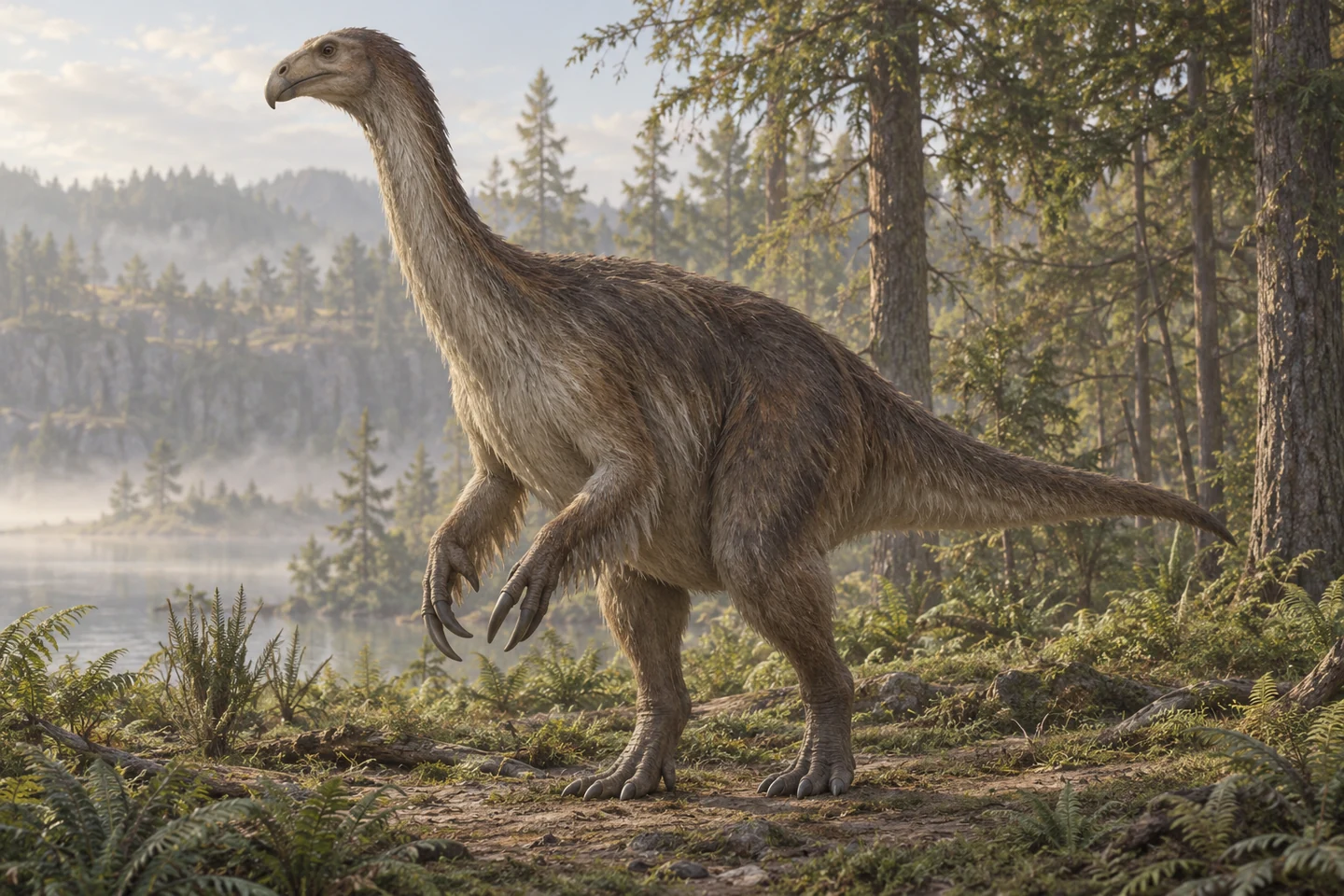
Original cinematic interpretation of Segnosaurus. The distinctive downturned front lower jaw follows the described fossil. Full upper head, covering and living posture remain comparative; complex teeth do not document a meal or mating display. Lighting, colors and scenery are artistic choices; this image does not document directly observed behavior. Lighting, coloration and scenery are artistic choices. This image does not document a fossil locality or behavior.
Original artwork · artistic interpretation.
Scientific view: source-informed reconstruction, credited paleoart or specimen-based imagery. Movie-style view: Original artistic interpretation. Reconstructions involve uncertainty.
MEET THE ANIMAL
Segnosaurus was a therizinosaur with particularly elaborate teeth. Folded cutting edges and additional small points made its tooth surfaces more complex. These features support specialized plant feeding. Differences from Erlikosaurus suggest different feeding roles, although the precise foods of either animal remain uncertain. [D1]
Its Mongolian rock formation records river and lake environments during the Late Cretaceous. That setting helps place the dinosaur in a changing landscape rather than an empty backdrop. Dating the formation establishes a regional time framework; it does not give the exact year when one Segnosaurus individual lived or prove that every fossil locality had identical conditions. [D5]
Body mass has been estimated using the relationship between thigh-bone length and weight. This is a mathematical reconstruction, rather than weighing an intact fossil animal. Such estimates depend on the model and the bones supplied to it. They help convey that Segnosaurus was substantial, while leaving uncertainty about a particular individual's weight and the largest adults. [D3]
Embryos described for other therizinosaur relatives do not identify Segnosaurus's own eggs. Similar family relationships are useful for comparison, but they cannot establish this genus's nest design, clutch size or parental care. [D6]
PREHISTORIC ANIMAL DOSSIER
The animal, the evidence, and the questions still open.
Its dental specialization may have helped divide food resources among therizinosaurs. That interpretation is comparative; fossil jaw anatomy does not preserve particular meals or living social groups. [D3]
Profile scope: Genus profile centered on S. galbinensis and type MPC-D 100/80, historically GIN 100/80. Separate referred limb material is not assumed to be one complete adult. [D2]
Source supported identifies a description documented by the cited source. Inferred marks a reconstruction or functional estimate. Debated marks competing interpretations. Not established means the sources reviewed for this dossier do not support a firm conclusion; it does not mean a behavior never occurred.
A size reference is an estimate, not a population range. Nesting evidence does not by itself establish courtship, mate choice, or lifelong pairing.
About 4 m; broad museum reference
The museum supplies this figure without an individual, maturity assessment or length calculation. It is retained as an unscoped restoration reference, not a verified adult size range. [D4]
Above 1.2 tonnes in the reviewed model set
The 2013 analysis uses femoral-length allometry and identifies Segnosaurus above 1,200 kg. The exact supplementary specimen row was unavailable; neither a precise individual estimate nor adult maximum is established here. [D3]
Herbivory inferred from specialized dentition
Folded cutting edges and extra denticles support specialized feeding. Facultative versus obligate herbivory and exact food choices remain uncertain. [D1]
Bayanshiree river and lake deposits
Reviewed material comes from southeastern Mongolia. Formation-wide chronology is Cenomanian–Santonian; fluvial and lacustrine sediments supply environmental context without directly dating every individual. [D2] [D5]
Bipedal reconstruction with four-digit feet
The original skeletal account documents a broad, noncompact four-digit pes and unusual pelvis. Bone proportions support a two-legged restoration, not a measured walking speed. [D2]
Downturned dentary and 24 tooth positions
Type jaw MPC-D 100/80 preserves complex crown morphology. Some unusual distal triple carinae may be developmental abnormalities, so they are not described as universal adult features. [D1]
Not established here
Chinese therizinosauroid embryos have been described, but the inspected abstract does not securely identify Segnosaurus as their producer. Its clutch size and parental care remain unresolved. [D6]
Not established here
Focused searches did not establish sexes, mate choice, mating seasons or a particular courtship display. Restored colors and feather arrangements are artistic interpretations.
Not established here
Referred material comes from more than one locality. This sampling does not demonstrate one herd or association with contemporaneous therizinosaurs in life. [D2]
Sources and inspection notes for the claims in this profile.
THE STORY IN THE FOSSILS
Differences in body size can suggest distinct feeding niches. The 2013 study tests this proposal for differently sized therizinosaurs; it does not document competition or a particular meal. [3]
The dossier identifies the scope of each reference estimate. A mount, an individual fossil and a species-wide adult range are different measurements. Comparison metrics remain unavailable where adult scope has not been established. Unknown does not mean zero.
Sources support the stated claims and scopes. Refer to the evidence notes for uncertainty.
KEEP EXPLORING
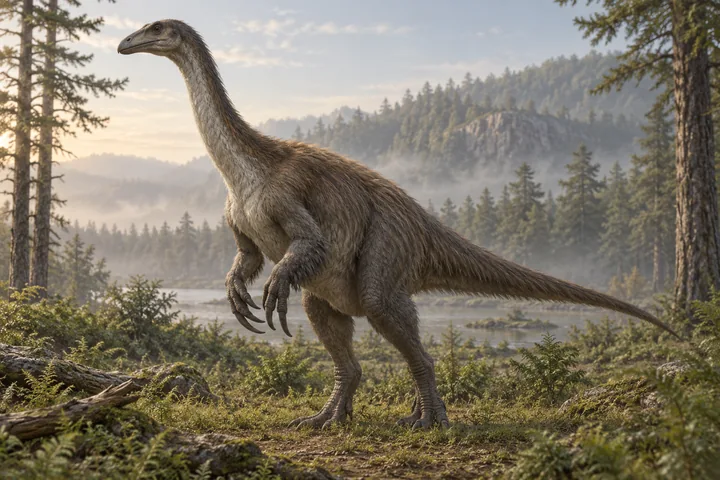
Erlikosaurus andrewsi
Erlikosaurus preserves a nearly complete skull, allowing detailed CT reconstruction. Models investigate how a proposed beak affected plant feeding.
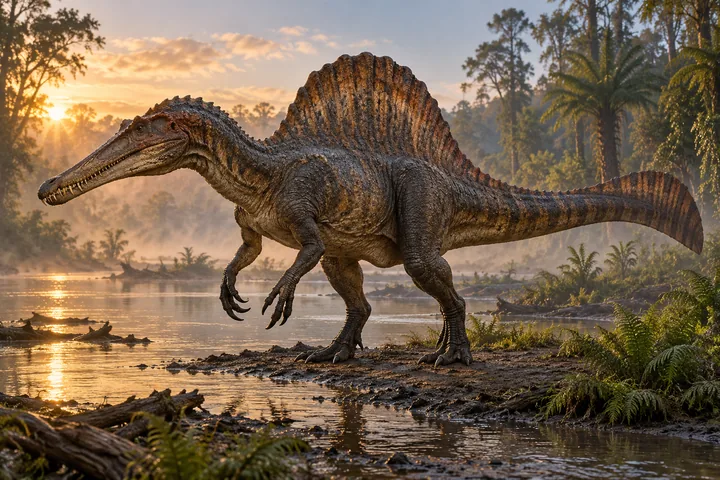
Spinosaurus
This North African spinosaur combined a narrow snout with a tall back sail. Its relationship with water remains actively debated.
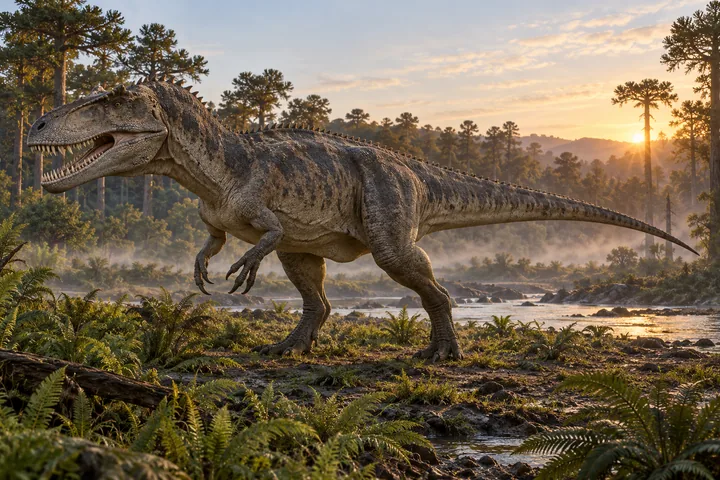
Giganotosaurus
This huge Argentine carnivore belonged to Carcharodontosauridae. Incomplete skeletons make its exact size and prey choices difficult to establish.