Body length
InferredAbout 15 m; museum reference
The directory provides no individual or maturity assessment. A historical mass model uses a separate 17 m outline; neither is a directly measured adult species maximum. [D2]
TWO WAYS TO PICTURE THE PAST
Compare the evidence with the familiar movie image. The illustrations are not to a shared scale.
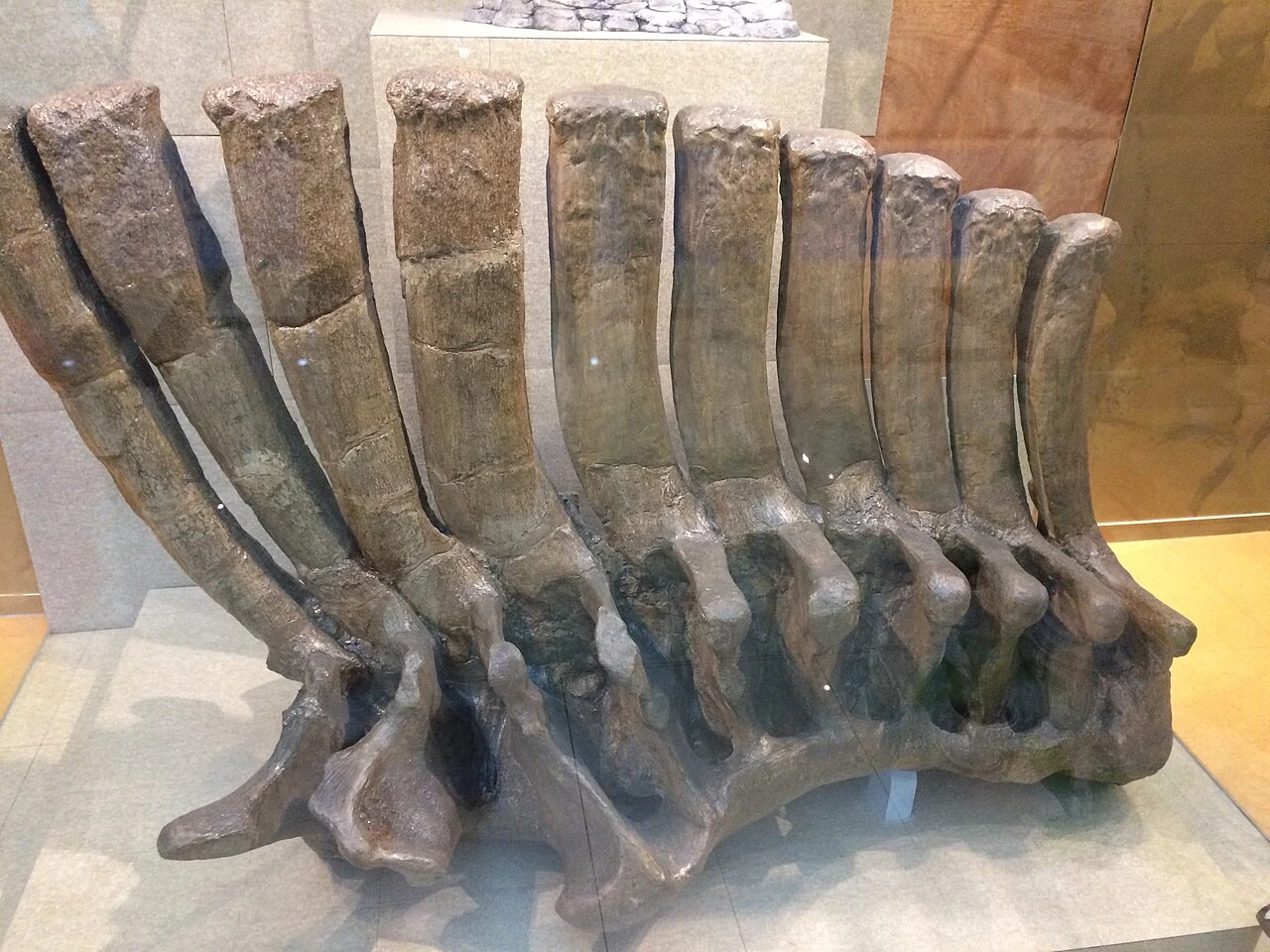
Back vertebrae displayed as Shantungosaurus at the Geological Museum of China. This partial vertebral display does not establish a complete body length, a named individual or an adult maximum. [1]
Giant Shandong Dinosaur fossil, Geological Museum of China · BleachedRice. CC BY-SA 4.0. Resized proportionally and converted to WebP; no anatomical edits. Same source license applies.
The photograph or figure shows the credited fossil material; displayed mounts and labels can include interpretation.
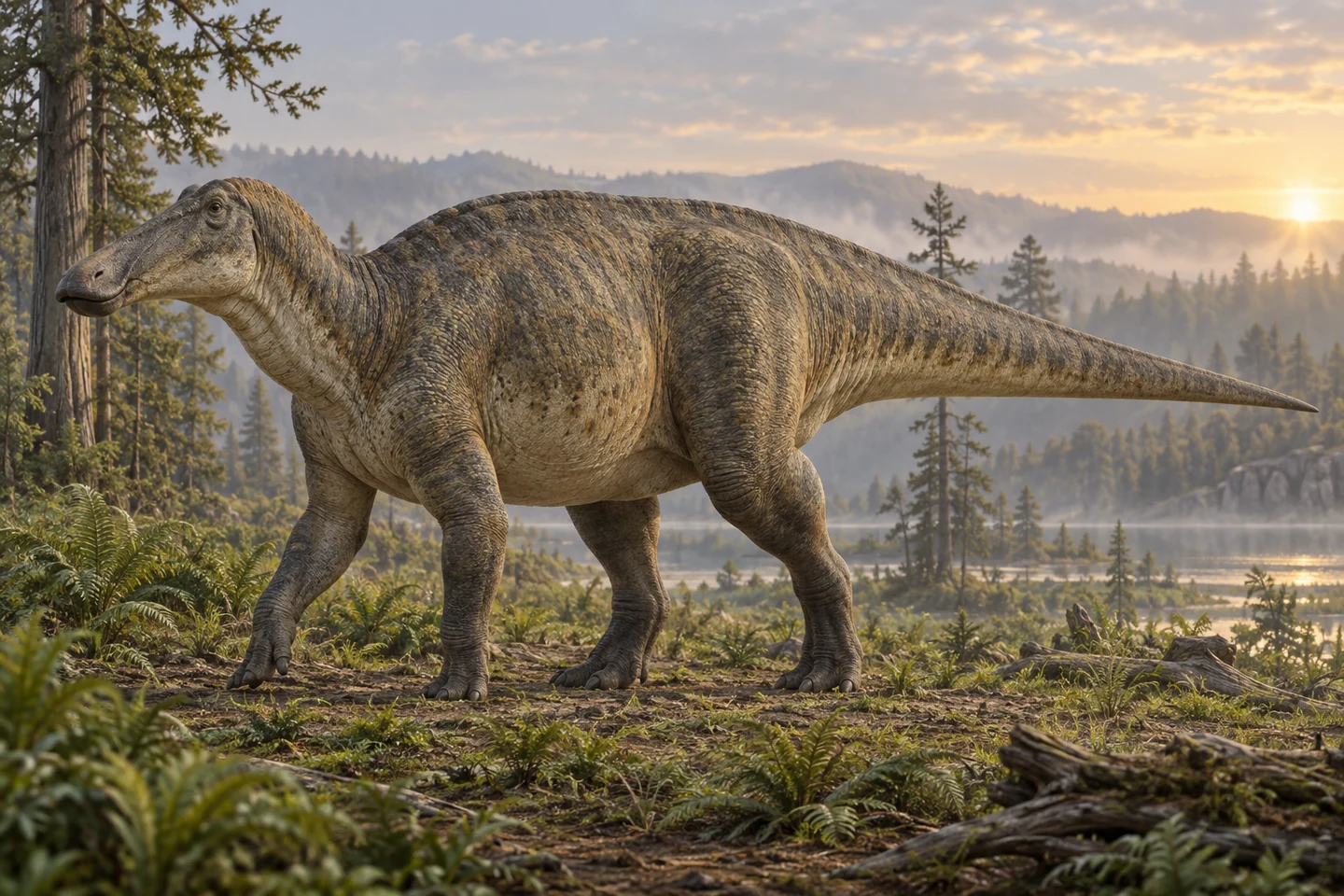
Original cinematic interpretation of Shantungosaurus giganteus. Colors, soft tissues, scenery and missing anatomy are reconstructed artistic choices; this is not a directly observed individual or behavior. Lighting, coloration and scenery are artistic choices. This image does not document a fossil locality or behavior.
Original artwork · artistic interpretation.
Scientific view: source-informed reconstruction, credited paleoart or specimen-based imagery. Movie-style view: Original artistic interpretation. Reconstructions involve uncertainty.
MEET THE ANIMAL
Shantungosaurus was a large plant-eating dinosaur from Late Cretaceous China. A museum reference of about fifteen metres conveys an impressive scale without identifying a complete measured adult. Different reconstructions can use different body outlines, so a headline length should not automatically be paired with a weight estimate calculated for a different outline. [D2]
At Kugou, a remarkable accumulation of disarticulated bones includes 110 thigh bones, implying at least 55 individuals. Their similar sizes and fused skeletal features support an interpretation of an adult aggregation. Rapid burial and the jumbled remains still limit the picture. An adult group gathering at one place is not the same as proof of a permanent herd. [D4]
The wider region also preserves dinosaur eggs, but egg discoveries and named body fossils are documented separately. Those eggs cannot securely be assigned to Shantungosaurus just because they came from the same general area. The distinction keeps reproductive behavior honest: an ancient environment can contain many dinosaurs, and identifying which animal laid a particular egg requires evidence beyond proximity. [D5]
PREHISTORIC ANIMAL DOSSIER
The animal, the evidence, and the questions still open.
Cranial comparisons link it closely to Edmontosaurus while retaining a distinct genus. The reviewed material includes multiple individuals, and proposed adult grouping requires a taphonomic interpretation. [D1] [D4]
Profile scope: Genus profile centered on Shantungosaurus giganteus from Shandong. Zhuchengosaurus and Huaxiaosaurus are included as reviewed junior synonyms; composite mounts and outline models are not individual adult ranges. [D1]
Source supported identifies a description documented by the cited source. Inferred marks a reconstruction or functional estimate. Debated marks competing interpretations. Not established means the sources reviewed for this dossier do not support a firm conclusion; it does not mean a behavior never occurred.
A size reference is an estimate, not a population range. Nesting evidence does not by itself establish courtship, mate choice, or lifelong pairing.
About 15 m; museum reference
The directory provides no individual or maturity assessment. A historical mass model uses a separate 17 m outline; neither is a directly measured adult species maximum. [D2]
About 22.5 tonnes; historical outline model
Seebacher’s model integrates a reconstructed 17 m outline using width and density assumptions. No inventory or maturity is specified; it is not the mass of the museum’s 15 m reference. [D3]
Plants
The museum identifies herbivory. Extensive dental batteries processed vegetation, but no specific diet of named plants or daily intake is established here. [D2] [D1]
Wangshi Group, Shandong
The systematic revision places material from the upper Xingezhuang to middle Hongtuya formations in the middle–late Campanian. This supports Late Cretaceous China; individual habitat preferences remain unresolved. [D1]
Quadrupedal walking plausible; bipedality possible
Hadrosaur limb anatomy supports four-legged walking at group level. Hone’s author account sees no reason to exclude bipedal movement; neither source measures Shantungosaurus gait frequency or speed. [D6] [D4]
Broad beak and deep dental batteries
The revision records up to seven teeth per alveolus in the middle lower-jaw row, including replacement teeth. This is not seven simultaneously functional teeth at every position. [D1]
Not established here
The regional review lists dinosaur eggs separately from body-fossil taxa. It does not establish a Shantungosaurus clutch, nest design, incubation strategy or parental care. [D5]
Not established here
Reviewed skull anatomy and focused searches do not establish mating displays, calls, mate choice or sexual dimorphism. Crest absence alone cannot answer these questions.
Adult aggregation inferred
Hone reports 110 femora, implying at least 55 individuals at Kugou. Narrow size distribution and fused sacra support an adult-group interpretation; rapid burial does not prove permanent herds or juvenile care. [D4]
Sources and inspection notes for the claims in this profile.
THE STORY IN THE FOSSILS
Shantungosaurus is distinct from Edmontosaurus, although their skulls and tooth batteries share detailed features. Treating Zhuchengosaurus and Huaxiaosaurus as reviewed synonyms avoids counting the same genus three times. [1]
Kugou preserves thousands of disarticulated bones. Their size distribution suggests a remarkable adult aggregation, while the jumble of remains and burial process limit how much of everyday social life can be reconstructed. [4]
The dossier identifies the scope of each reference estimate. A mount, an individual fossil and a species-wide adult range are different measurements. Comparison metrics remain unavailable where adult scope has not been established. Unknown does not mean zero.
Sources support the stated claims and scopes. Refer to the evidence notes for uncertainty.
KEEP EXPLORING
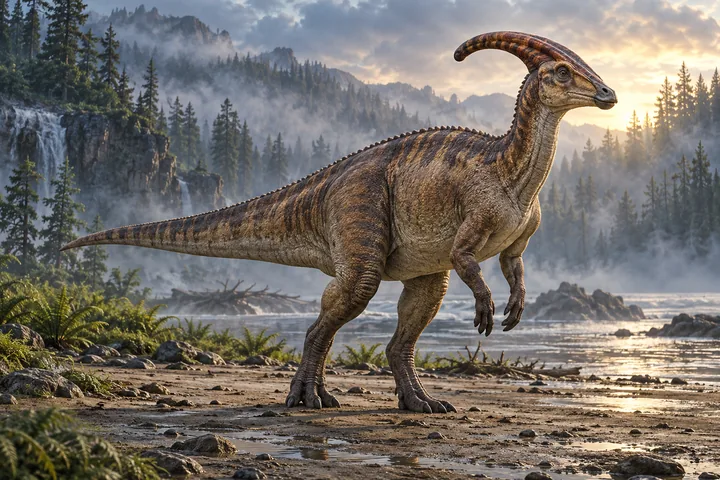
Parasaurolophus walkeri
Parasaurolophus walkeri was a crested duck-billed dinosaur from Late Cretaceous Alberta. Its famous Royal Ontario Museum skeleton preserves both an elongated tubular crest and healed injuries.
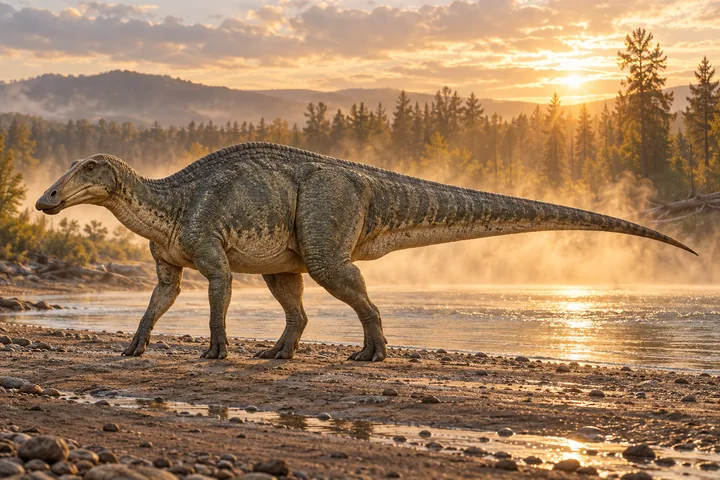
Edmontosaurus
Edmontosaurus was a large Late Cretaceous plant eater with a broad beak and grinding cheek teeth. Exceptional specimens preserve skin texture as well as bone.
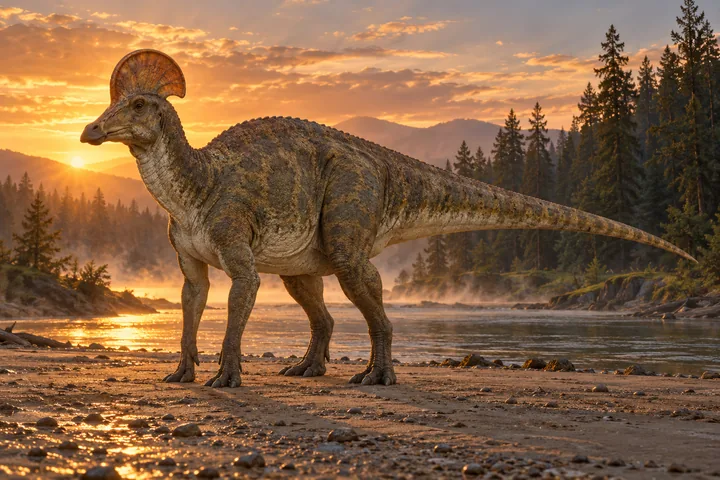
Corythosaurus
Corythosaurus was a Late Cretaceous duck-billed plant eater with a crescent-shaped head crest. One Alberta specimen preserves skin impressions and a network of calcified tendons.