
Body length
InferredAbout 1.1 m; museum reference
NHM provides a rounded genus reference without a specified specimen or life stage. [D1]
EXHIBIT 34
Sinosauropteryx
A fuzzy predator with a banded tail and inferred eye mask.
TWO WAYS TO PICTURE THE PAST
Compare the evidence with the familiar movie image. The illustrations are not to a shared scale.

The artist identifies this reconstruction as Sinosauropteryx prima. This view illustrates one form within the genus, rather than every species or individual. Fossil-informed anatomy: Small long-tailed bipedal theropod with short arms and simple filamentous feathers; banded tail, dark eye stripe and pale underside are evidence-based reconstructions. Life contours remain reconstructed despite fossil-informed colour pattern. Derivative cropped version credited to the listed scientific authors; Commons uploader Chermundy removed the scale bar. [1] [2] [3]
Sinosauropteryx color (without scale bar).jpg — Fiann M. Smithwick, Robert Nicholls, Innes C. Cuthill, Jakob Vinther. CC BY-SA 4.0. Remote source artwork displayed without additional cropping; Wikimedia supplies any display-size derivative.
Scientific picture served by Wikimedia · internet connection required.
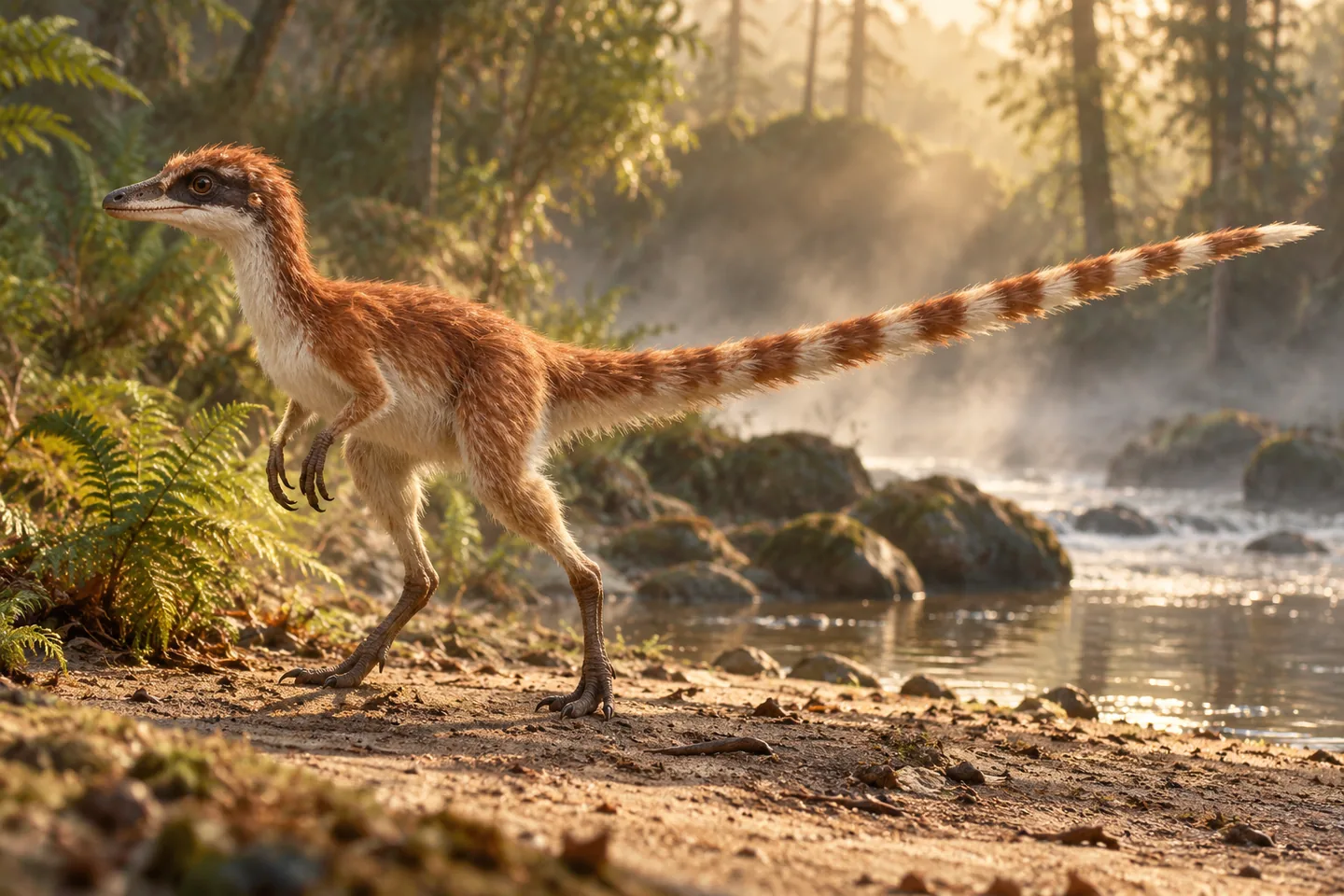
Cinematic Sinosauropteryx, small fuzzy theropod with long banded tail, short arms, dark eye mask and pale belly; low vegetation and warm open-habitat light. Dramatic lighting, surface detail and scenery are artistic choices. This is an original cinema-inspired picture, rather than a frame from a film or a documented fossil locality.
Original artwork · artistic interpretation.
Scientific view: credited paleoart interpreting fossil evidence, served online by Wikimedia. Movie-style view: Original artistic interpretation. Colors, soft tissues and settings involve reconstruction.
MEET THE ANIMAL
Sinosauropteryx prima is known from Early Cretaceous rocks in northeastern China. Additional material described from western Liaoning helped researchers compare finds from different localities. That study highlighted short forelimbs relative to the hind limbs and a long claw on the first finger. Even small pieces of a skeleton can add information when their identity and geological setting are carefully established. [S1]
This small meat-eating dinosaur moved on two legs and had a long tail. Its most striking feature was a covering of short, feather-like filaments preserved around the body. These were simple structures, quite different from the broad flight feathers of a modern bird's wing. The fossils made Sinosauropteryx an important example in research on dinosaur coverings. [D3]
Feather-like coverings did not make this animal a flyer. Its short arms and ground-living body differed from wings built for flight. Sinosauropteryx helps separate two ideas: a dinosaur could have a feather-like covering without flying, and those fossilized structures can reveal an appearance that bare bones leave hidden. [D3]
PREHISTORIC ANIMAL DOSSIER
The animal, the evidence, and the questions still open.
Sinosauropteryx was a small feathered theropod from Early Cretaceous China. Preserved food remains and pigment patterns offer evidence beyond bones, including animal meals and probable camouflage.
Profile scope: Genus: Sinosauropteryx; inspected museum anatomy includes S. prima; color interpretations refer to studied specimens.
Source supported identifies a description documented by the cited source. Inferred marks a reconstruction or functional estimate. Debated marks competing interpretations. Not established means the sources reviewed for this dossier do not support a firm conclusion; it does not mean a behavior never occurred.
A size reference is an estimate, not a population range. Nesting evidence does not by itself establish courtship, mate choice, or lifelong pairing.
About 1.1 m; museum reference
NHM provides a rounded genus reference without a specified specimen or life stage. [D1]
Not established here
The reviewed sources do not establish a numerical body-mass estimate for this record.
Small animals; lizard meal preserved
NHM reports a lizard preserved in a specimen's stomach and mammal remains in another attributed specimen. Consumption evidence does not establish the complete diet of every species. [D1]
Open areas within the Jehol landscape inferred
Researchers compare the pattern of countershading to living animals and infer relatively open habitat. This specimen-based inference complements a regional ecosystem containing trees; it is not proof of treeless conditions everywhere. [D2]
Bipedal; long tail used for balance
The Australian Museum describes S. prima running on its hindlegs with a balancing tail. Exact speed is not established here. [D3]
Filamentous feathers; striped tail; countershaded body
Fossils preserve feather-like filaments and pigment distribution. Their interpretation as camouflage involves comparison with living animals. [D1] [D2]
Not established here
The reviewed sources do not establish taxon-specific nest structure, clutch size or parental care.
Not established here
The reviewed sources do not establish a mating ritual, pair bond or breeding season for this taxon.
Not established here
The reviewed sources do not establish a taxon-specific group structure or social hierarchy.
Sources and inspection notes for the claims in this profile.
THE STORY IN THE FOSSILS
Thin, hairlike feathers covered Sinosauropteryx, making it an important discovery in the study of dinosaur plumage. It lived in what is now northern China. A lizard preserved inside one specimen supplies direct evidence that this small dinosaur ate other vertebrates. [1]
Mapping dark pigment traces revealed a banded tail, dark eye stripe and a darker back above a pale belly. Researchers compared this countershading with living animals and models. Their results suggested camouflage suited to more open habitats, showing how color evidence can inform ecological interpretation. [2]
We have not established a comparable adult total-length estimate for this taxon in this draft. Specimen measurements in the text describe those individuals. The cited dates are approximately 125–122 million years ago. The NHM catalogue gives approximately 125–122 Ma; the cited Bristol research report uses approximately 130 Ma. These museum and university summaries differ in their approximate dating. Unknown does not mean zero.
Sources and evidence notes for this exhibit.
KEEP EXPLORING
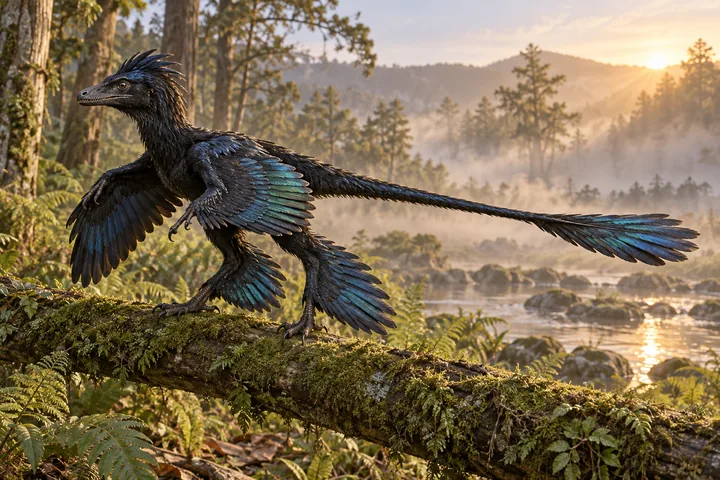
Microraptor
Flight feathers grew on its hind legs as well as its arms.
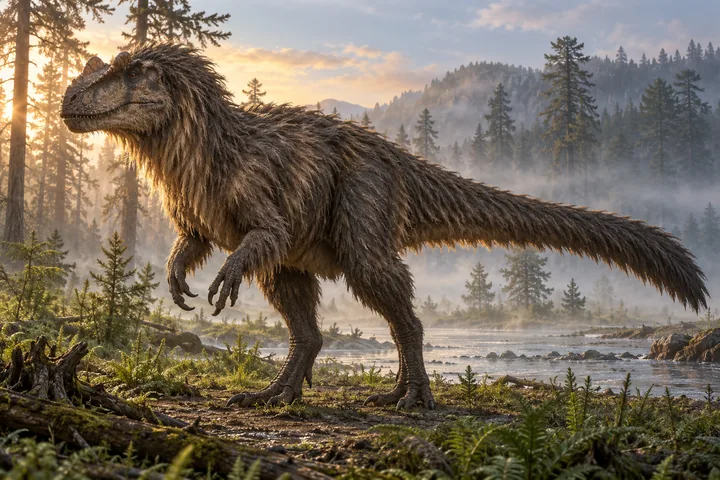
Yutyrannus huali
Yutyrannus preserves direct evidence of long filamentous feathers on a giant theropod.
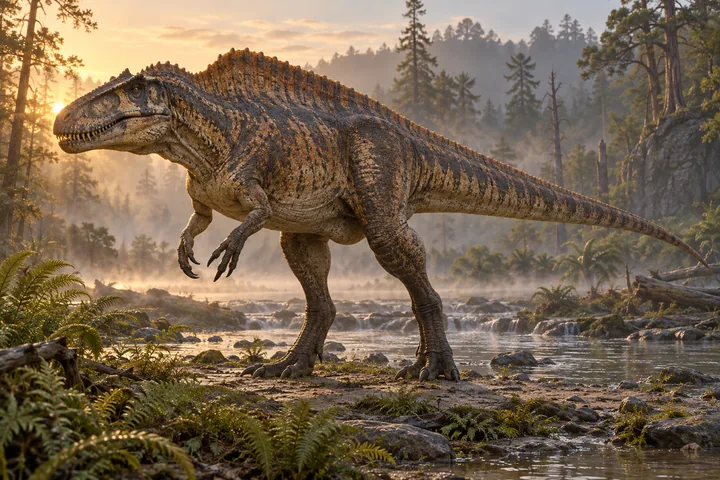
Acrocanthosaurus
Acrocanthosaurus carried unusually tall spines on its back, hip and tail vertebrae.