EXPLORE PREHISTORY 220 prehistoric animal profiles · Scientific & movie-style image galleries

EXHIBIT 169

Spinophorosaurus

Spinophorosaurus nigerensis

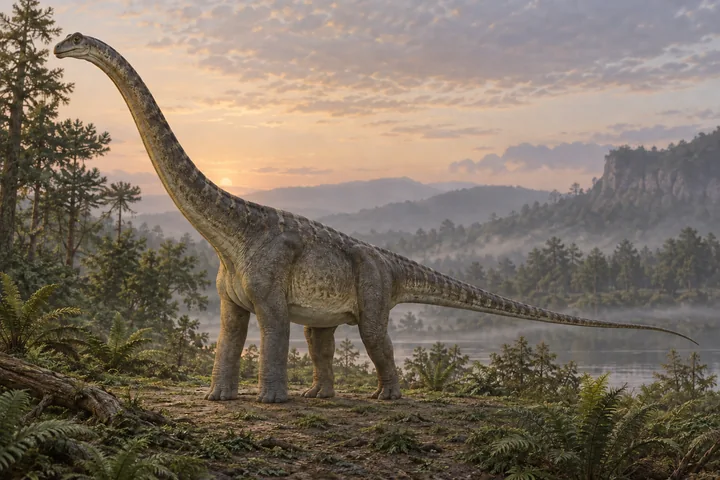
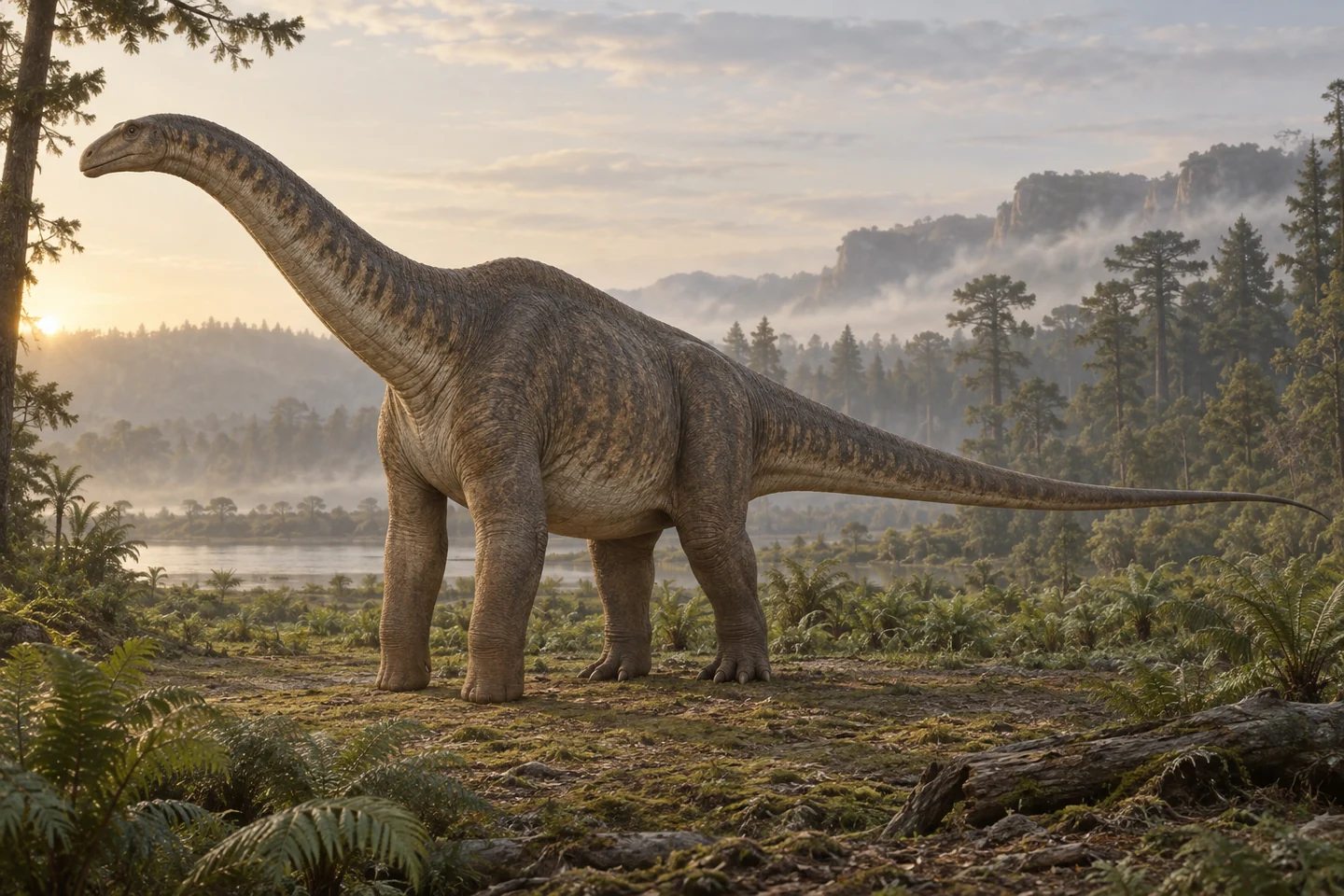
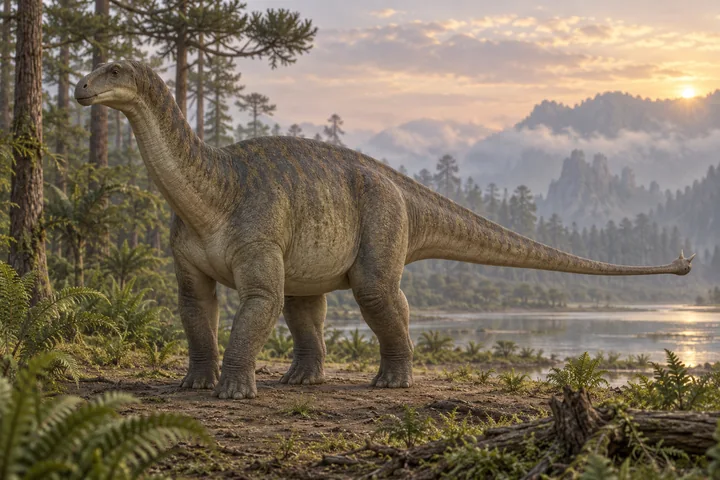
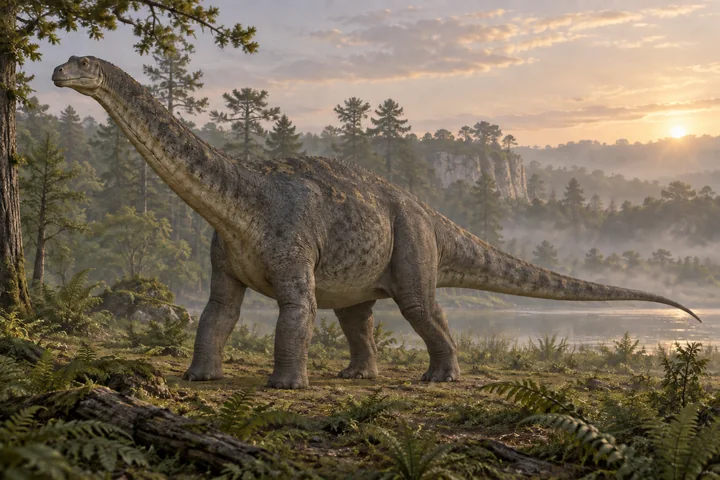
Spinophorosaurus was a Nigerien sauropod whose virtual skeleton reveals elevated shoulders and potential high browsing. Its supposed tail spikes were reinterpreted as shoulder bones. [2] [4]

Evidence profile
PERIODMiddle Jurassic[1]
DIETHerbivoreEvidence and uncertainty in the dossier
TOTAL LENGTHSee the dossierEstimate scope matters
FOSSILS FOUNDNiger[1]
CompareRead the dossierView the sources

MEET THE ANIMAL

Meet Spinophorosaurus

Spinophorosaurus was a sauropod from Jurassic Niger. Its fossils came from beds below the Tiouarén Formation. The precise age remains uncertain, with both Middle Jurassic and earlier possibilities discussed in the reviewed evidence. [D1]

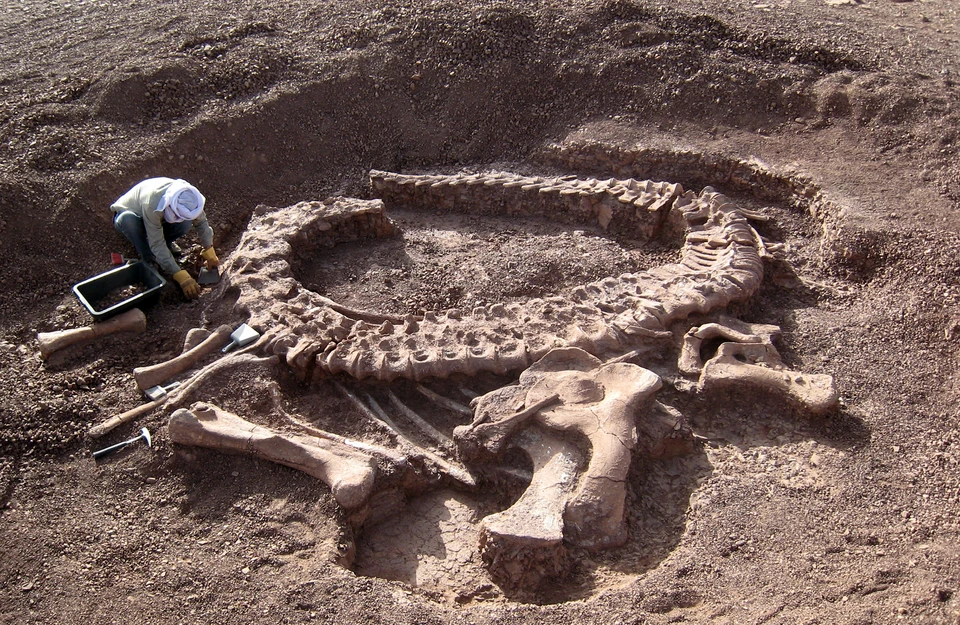
A digital reconstruction raises the shoulders through wedge-shaped parts of the backbone. This suggests a capacity to reach relatively high vegetation. Missing extremities still require comparison with other dinosaurs, so the model is not a complete, untouched skeleton. [D2]

Virtual neck models test movement by fitting the preserved joint surfaces together. They help explore possible reach, but missing cartilage and restored parts affect the result. A workable pose is not proof that the living animal always held its neck that way, nor does it identify the particular plants eaten or a measured running speed. [D3]

Some bones originally interpreted as tail spikes were later identified as clavicles, parts of the shoulder girdle. The change removes support for that reconstructed tail weapon. The dinosaur's name preserves the history of an interpretation, while later preparation and anatomical comparisons can improve the picture without changing the animal itself. [D4]

PREHISTORIC ANIMAL DOSSIER

A life in profile.

The animal, the evidence, and the questions still open.

Digital reconstruction changes the body’s slope and feeding reach. Joint models and growth tissues help test capabilities, while the deposits’ precise age and the animal’s reproductive behavior remain uncertain. [D2] [D6]

Profile scope: Genus profile centered on type GCP-CV-4229, also catalogued partly as NMB-1699-R. Paratype NMB-1698-R is a separate, larger individual; reconstructed missing extremities are not complete type anatomy. [D1]

Time
Middle Jurassic
Fossil locations in this exhibit
Niger
How to read the evidence

Source supported identifies a description documented by the cited source. Inferred marks a reconstruction or functional estimate. Debated marks competing interpretations. Not established means the sources reviewed for this dossier do not support a firm conclusion; it does not mean a behavior never occurred.

A size reference is an estimate, not a population range. Nesting evidence does not by itself establish courtship, mate choice, or lifelong pairing.

Body length

Inferred

Axial reconstruction under 13 m

The original description reports the type’s vertebral-column reference, not a measured complete living body. Missing anatomy, cartilage and pose affect a whole-body reconstruction; the type was tentatively considered subadult, so this is not an adult maximum. [D1]
Body mass

Inferred

About 7.1 tonnes; type reconstruction model

Table 10 models GCP-CV-4229 at 7,126 kg from restored volumes and regional densities. The type’s maturity remains tentative; this is not the larger paratype’s mass or an adult species range. [D5] [D3]

Diet

Inferred

High browsing capability proposed

The digital skeleton’s raised forequarters and modeled neck motion support a capacity to reach relatively high vegetation. Joint surfaces constrain a model, not observed feeding heights, foods or daily habits. [D2]

Habitat & fossil setting

Inferred

Jurassic Niger; precise age uncertain

The fossils came from beds below the Tiouarén Formation near Aderbissinat. Middle Jurassic placement is tentative, with an Early Jurassic age not excluded in the reviewed evidence; no precise radiometric date is established here. [D1] [D6]

Movement

Inferred

Quadrupedal skeleton with elevated shoulders

Sacral and posterior dorsal wedging lifts the front of the trunk in the digital reconstruction. Forearms, hands and feet require comparative restoration; pose and modeled neck limits do not establish speed or a fixed habitual stance. [D2] [D3]

Distinctive anatomy

Source supported

Former “tail spikes” are clavicles

The appendicular revision identifies the supposed spikes as shoulder-girdle bones. Reconstructing a paired tail weapon would perpetuate the earlier interpretation; their reinterpretation does not change the valid genus name. [D4]

Reproduction & life together

Reproduction & nesting

Not established

Not established here

Histology concerns the separate adult paratype and possible abnormal bone growth. It does not establish eggs, nests, clutch size, incubation, reproductive maturity or parental care. [D6]

Courtship & mating

Inferred

Virtual mating postures tested; behavior unknown

A conference paper tests whether reconstructed bones permit hypothetical mating postures. Its feasibility results do not identify sexes, preserved genital anatomy, actual copulation, display, calls or mate choice. [D7]

Social behavior

Not established

Not established here

Type and paratype were discovered nearby in the same horizon. This fossil association does not establish a herd, family relationship or coordinated living behavior. [D1]

Dossier research & sources

Sources and inspection notes for the claims in this profile.

  1. A New Basal Sauropod Dinosaur from the Middle Jurassic of Niger and the Early Evolution of SauropodaPLOS ONE; Remes and colleagues (2009) · Accessed 2026-10-02Original thirteen-page PDF inspected: type/paratype identity, reconstructed axial-column length under 13 m, tentative subadult stage, locality and uncertain Early–Middle Jurassic stratigraphy. Original supposed tail spikes superseded by later reinterpretation. · Inspected: page
  2. High browsing skeletal adaptations in Spinophorosaurus reveal an evolutionary innovation in sauropod dinosaursScientific Reports; Vidal, Mocho, Aberasturi, Sanz & Ortega (2020) · Accessed 2026-10-02Original full text through Europe PMC XML inspected: wedged sacral/posterior dorsal vertebrae, raised shoulders, comparative restoration of missing extremities and inferred high browsing. · Inspected: page
  3. Ontogenetic similarities between giraffe and sauropod neck osteological mobilityPLOS ONE; Vidal, Mocho, Páramo, Sanz & Ortega (2020) · Accessed 2026-10-02Original full text/XML inspected: virtual neck mobility, juveniles and uncertain holotype maturity. Figure’s adult-composite label does not override Methods’ tentative subadult interpretation. · Inspected: page
  4. New information about the appendicular skeleton of Spinophorosaurus nigerensis (Middle Jurassic, Niger)XVI EAVP meeting; Mocho, Vidal, Aberasturi, Kosma & Ortega (2018), institutional abstract book · Accessed 2026-10-02Original conference abstract, printed p124, inspected: clavicles previously interpreted as tail spikes and appendicular revision. This is an abstract, not a complete peer-reviewed osteological account. · Inspected: abstract
  5. A review and reappraisal of the specific gravities of present and past multicellular organisms, with an emphasis on tetrapodsThe Anatomical Record; Larramendi, Paul & Hsu (2021 issue; 2020 online) · Accessed 2026-10-02Original full publisher text inspected, Methods and Table10: GCP-CV-4229 volume 7,536 L and mass 7,126 kg from reconstructed body regions and density assumptions. · Inspected: page
  6. Case study of radial fibrolamellar bone tissues in the outer cortex of basal sauropodsPhilosophical Transactions of the Royal Society B; Jentgen-Ceschino, Stein & Fischer (2020) · Accessed 2026-10-02Original full text inspected: adult paratype NMB-1698-R humeral histology, unusual outer-cortex tissue and possible systemic pathology. This is not the modeled holotype’s maturity diagnosis. · Inspected: page
  7. Could sauropods perform a “cloacal kiss”? Evidence of mating capabilities from a virtual SpinophorosaurusXVI EJIP, Zarautz; Daniel Vidal (2018), author-uploaded conference paper · Accessed 2026-10-02Original four-page conference paper, pp111–114, inspected through author-uploaded full text: hypothetical skeletal mating postures and joint limits. It does not preserve reproductive organs or actual mating behavior. · Inspected: page

THE STORY IN THE FOSSILS

Meet Spinophorosaurus.

The virtual skeleton raises the shoulders through the shape of the backbone itself. Added soft tissues and missing extremities still make exact reach and posture conditional. [2]

The name preserves an early interpretation that later preparation changed. “Spine bearer” is historical nomenclature, while the supposed tail weapon is now interpreted as clavicles. [4]

A note on scale and time

The dossier identifies the scope of each reference estimate. A mount, an individual fossil and a species-wide adult range are different measurements. Comparison metrics remain unavailable where adult scope has not been established. Unknown does not mean zero.

Sources & editorial notes

Sources support the stated claims and scopes. Refer to the evidence notes for uncertainty.

  1. A New Basal Sauropod Dinosaur from the Middle Jurassic of Niger and the Early Evolution of SauropodaPLOS ONE; Remes and colleagues (2009) · Accessed 2026-10-02Original thirteen-page PDF inspected: type/paratype identity, reconstructed axial-column length under 13 m, tentative subadult stage, locality and uncertain Early–Middle Jurassic stratigraphy. Original supposed tail spikes superseded by later reinterpretation. · Inspected: page
  2. High browsing skeletal adaptations in Spinophorosaurus reveal an evolutionary innovation in sauropod dinosaursScientific Reports; Vidal, Mocho, Aberasturi, Sanz & Ortega (2020) · Accessed 2026-10-02Original full text through Europe PMC XML inspected: wedged sacral/posterior dorsal vertebrae, raised shoulders, comparative restoration of missing extremities and inferred high browsing. · Inspected: page
  3. Ontogenetic similarities between giraffe and sauropod neck osteological mobilityPLOS ONE; Vidal, Mocho, Páramo, Sanz & Ortega (2020) · Accessed 2026-10-02Original full text/XML inspected: virtual neck mobility, juveniles and uncertain holotype maturity. Figure’s adult-composite label does not override Methods’ tentative subadult interpretation. · Inspected: page
  4. New information about the appendicular skeleton of Spinophorosaurus nigerensis (Middle Jurassic, Niger)XVI EAVP meeting; Mocho, Vidal, Aberasturi, Kosma & Ortega (2018), institutional abstract book · Accessed 2026-10-02Original conference abstract, printed p124, inspected: clavicles previously interpreted as tail spikes and appendicular revision. This is an abstract, not a complete peer-reviewed osteological account. · Inspected: abstract
  5. A review and reappraisal of the specific gravities of present and past multicellular organisms, with an emphasis on tetrapodsThe Anatomical Record; Larramendi, Paul & Hsu (2021 issue; 2020 online) · Accessed 2026-10-02Original full publisher text inspected, Methods and Table10: GCP-CV-4229 volume 7,536 L and mass 7,126 kg from reconstructed body regions and density assumptions. · Inspected: page
  6. Case study of radial fibrolamellar bone tissues in the outer cortex of basal sauropodsPhilosophical Transactions of the Royal Society B; Jentgen-Ceschino, Stein & Fischer (2020) · Accessed 2026-10-02Original full text inspected: adult paratype NMB-1698-R humeral histology, unusual outer-cortex tissue and possible systemic pathology. This is not the modeled holotype’s maturity diagnosis. · Inspected: page
  7. Could sauropods perform a “cloacal kiss”? Evidence of mating capabilities from a virtual SpinophorosaurusXVI EJIP, Zarautz; Daniel Vidal (2018), author-uploaded conference paper · Accessed 2026-10-02Original four-page conference paper, pp111–114, inspected through author-uploaded full text: hypothetical skeletal mating postures and joint limits. It does not preserve reproductive organs or actual mating behavior. · Inspected: page

FOLLOW YOUR CURIOSITY

Who will you meet next?

KEEP EXPLORING

More from the collection