
Body length
Not establishedNot established here
Only an isolated braincase and separately referred bones underpin the reconstruction. The inspected naming paper provides no measured whole-body length or adult maximum. [D1]
EXHIBIT 181
Timurlengia euotica
Timurlengia’s braincase reveals advanced tyrannosauroid sensory anatomy before the group reached giant body sizes. [4]
TWO WAYS TO PICTURE THE PAST
Compare the evidence with the familiar movie image. The illustrations are not to a shared scale.
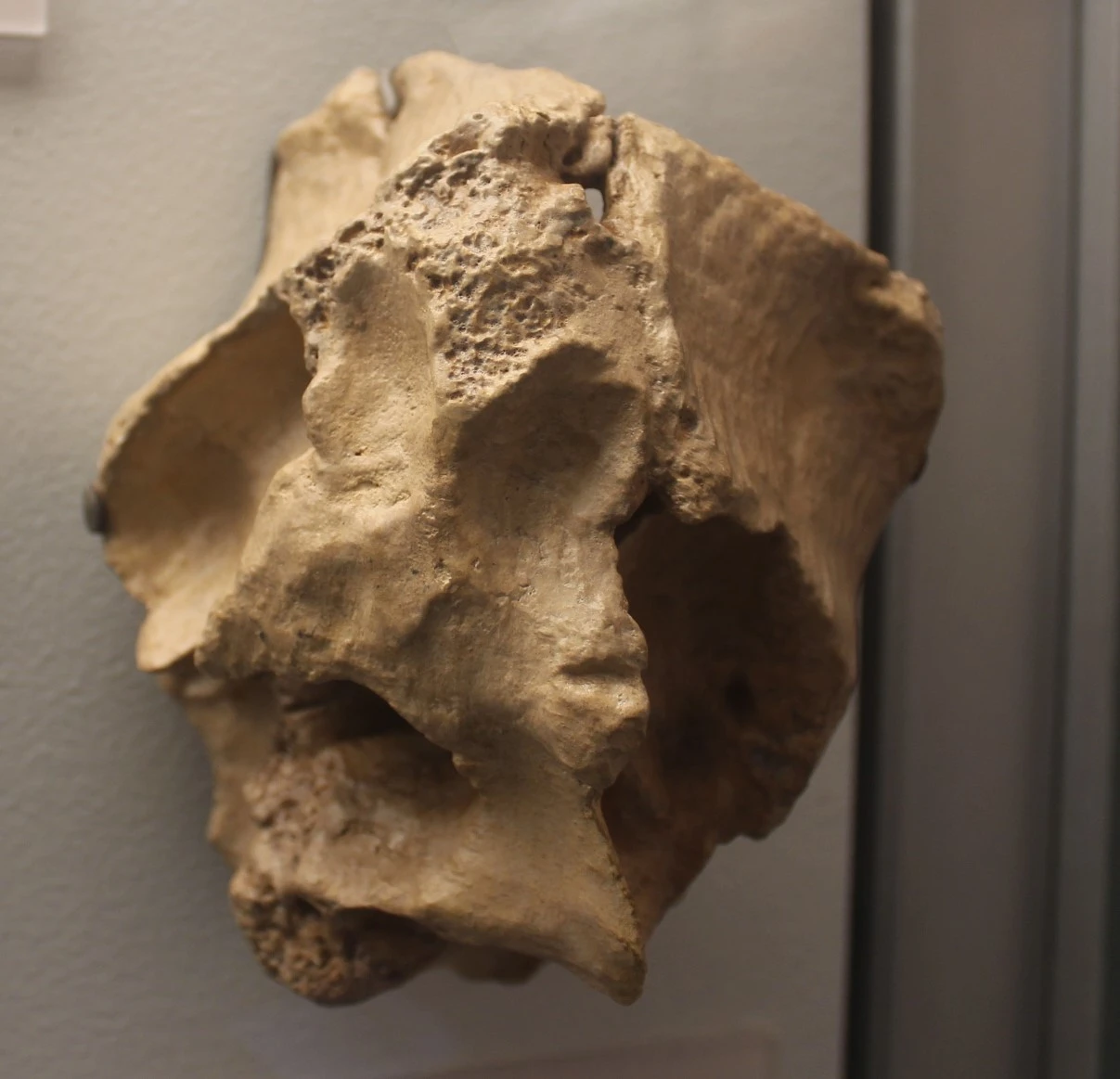
Three-dimensional printed cast of Timurlengia euotica holotype braincase ZIN PH 1146/16, photographed by JonathanChen at Smithsonian National Museum of Natural History in 2024. This display reproduces the internal-head specimen rather than original fossil material. It does not establish a complete head, body outline, feather covering or adult size. [4]
Timurlengia braincase NMNH.jpg · JonathanChen. CC BY-SA 4.0. Current licensed Commons image converted to WebP and proportionally reduced for the thumbnail, without upsampling. No additional cropping, mirroring, anatomical edits or compositing. Existing source restoration and scale annotations retained. CC BY-SA 4.0 applies to these versions.
The photograph or figure shows the credited fossil material; displayed mounts and labels can include interpretation.
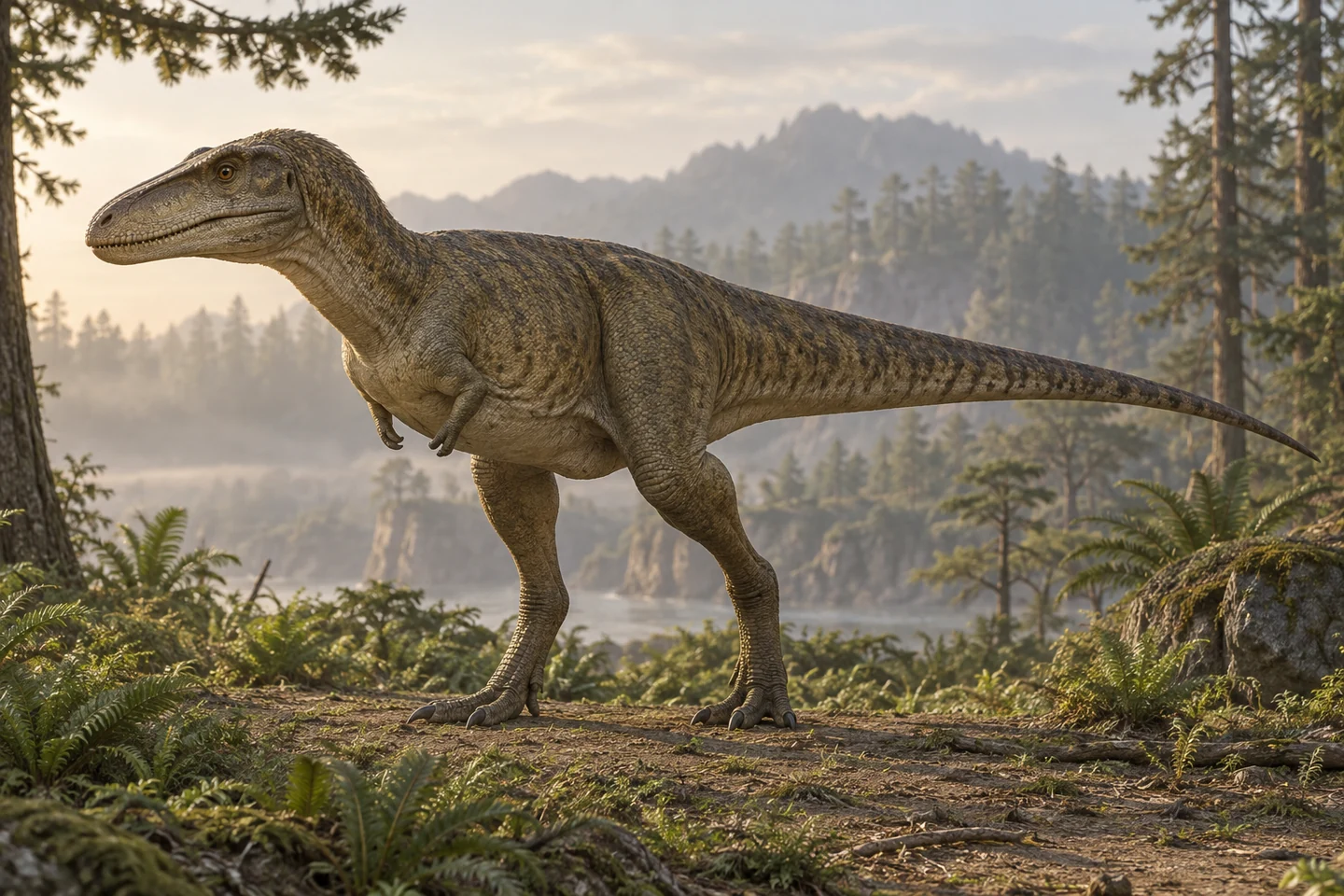
Original cinematic interpretation of Timurlengia. The diagnostic braincase and provisionally referred isolated bones constrain only parts of the animal. The complete snout, body, hands and external covering remain comparative reconstructions. Lighting, colors and scenery are artistic choices; this image does not document directly observed behavior. Lighting, coloration and scenery are artistic choices. This image does not document a fossil locality or behavior.
Original artwork · artistic interpretation.
Scientific view: source-informed reconstruction, credited paleoart or specimen-based imagery. Movie-style view: Original artistic interpretation. Reconstructions involve uncertainty.
MEET THE ANIMAL
Timurlengia was a meat-eating relative of the tyrannosaurs, but it was much smaller than the giants that later made this family famous. Its fossils come from Uzbekistan. Sharp, blade-shaped teeth suggest that it sliced meat. A restored long-legged body is a useful picture of the animal, rather than one complete skeleton that was found together. [D3]
An important fossil is the braincase: the bones that surrounded the brain. Scans also allowed researchers to reconstruct parts of the inner ear. Its shape suggests sensitivity to low-frequency sounds. This helps explain how some advanced senses developed in tyrannosaur relatives before their bodies became enormous. It does not tell us what Timurlengia's calls sounded like. [D4]
Much of the rest of the picture comes from separate bones. Earlier studies described isolated jaws and other remains from different individuals, rather than a single animal with its whole body preserved. That distinction matters when imagining its appearance or daily life. Several fossils from an area do not, by themselves, show that these dinosaurs lived or hunted in a pack. [D2]
PREHISTORIC ANIMAL DOSSIER
The animal, the evidence, and the questions still open.
A reconstructed inner ear provides evidence about hearing potential. Its missing body and provisional bone referrals prevent a measured adult whole-body profile. [D4] [D2]
Profile scope: Genus — Timurlengia; T. euotica, type braincase ZIN PH 1146/16 and separately referred isolated remains. [D1]
Source supported identifies a description documented by the cited source. Inferred marks a reconstruction or functional estimate. Debated marks competing interpretations. Not established means the sources reviewed for this dossier do not support a firm conclusion; it does not mean a behavior never occurred.
A size reference is an estimate, not a population range. Nesting evidence does not by itself establish courtship, mate choice, or lifelong pairing.
Not established here
Only an isolated braincase and separately referred bones underpin the reconstruction. The inspected naming paper provides no measured whole-body length or adult maximum. [D1]
Approximately 170–270 kg (cranial comparison)
Braincase-size comparison with Xiongguanlong; the type may be immature. This is a provisional reconstruction, not an adult species range. [D1]
Carnivory inferred
Slender, blade-like teeth were interpreted as suited to slicing meat. Suggested pursuit hunting and prey choices remain interpretations, without an observed meal. [D3]
Bissekty Formation, Uzbekistan
Dzharakuduk in the Kyzylkum Desert; middle–upper Turonian, approximately 90–92 million years ago. [D1]
Terrestrial biped inferred
Referred hindlimb material informs a provisional long-legged reconstruction. Speed is an author inference; separate bones do not certify one complete animal. [D2] [D3]
Braincase and elongated cochlear duct
CT reconstruction supports sensitivity to low frequencies. Comparative research places advanced sensory anatomy before the evolution of giant tyrannosauroid bodies. [D4]
Not established here
The braincase’s possible immaturity does not establish breeding age. Focused searches found no Timurlengia nest, eggs or reproductive tissues. [D1]
Not established here
An elongated inner-ear duct supports a hearing inference. It does not demonstrate mating calls, a display sequence or mate choice. [D4]
Not established here
The earlier skeletal sample contains isolated remains from separate individuals. Abundance across a formation does not itself establish a pack or family group. [D2]
Sources and inspection notes for the claims in this profile.
THE STORY IN THE FOSSILS
CT scans reconstruct internal sensory spaces that external skull shape alone cannot show. Their evolutionary comparison tests the timing of sensory changes, rather than the animal’s intelligence or social behavior. [4]
The original skeletal descriptions preceded naming Timurlengia. Keeping those isolated specimens separate prevents a composite reconstruction from becoming a fictitious complete fossil. [2]
The dossier identifies the scope of each reference estimate. A mount, an individual fossil and a species-wide adult range are different measurements. Comparison metrics remain unavailable where adult scope has not been established. Unknown does not mean zero.
Sources support the stated claims and scopes. Refer to the evidence notes for uncertainty.
KEEP EXPLORING
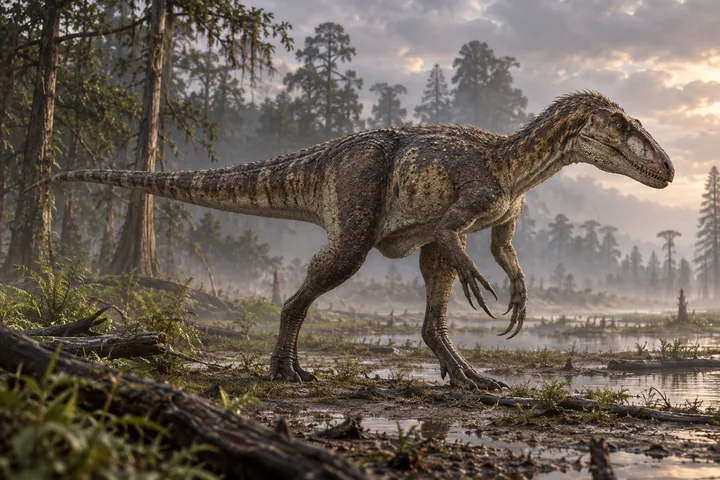
Dryptosaurus aquilunguis
Dryptosaurus was an eastern North American tyrannosauroid with a short upper arm and unusually large hand. Its partial skeleton and changing restorations reveal how evidence and imagination interact.
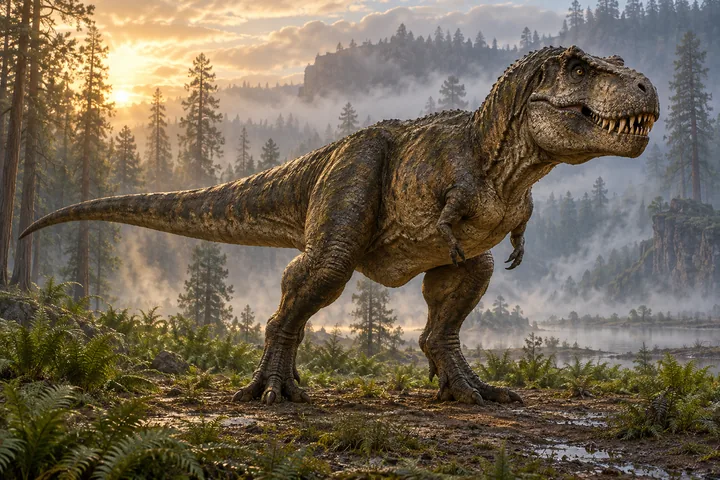
Tyrannosaurus rex
Tyrannosaurus rex was a large meat-eating dinosaur from the final part of the Cretaceous in western North America. Fossil teeth, bite marks and skeletons reveal a powerful animal whose behaviour still invites questions.
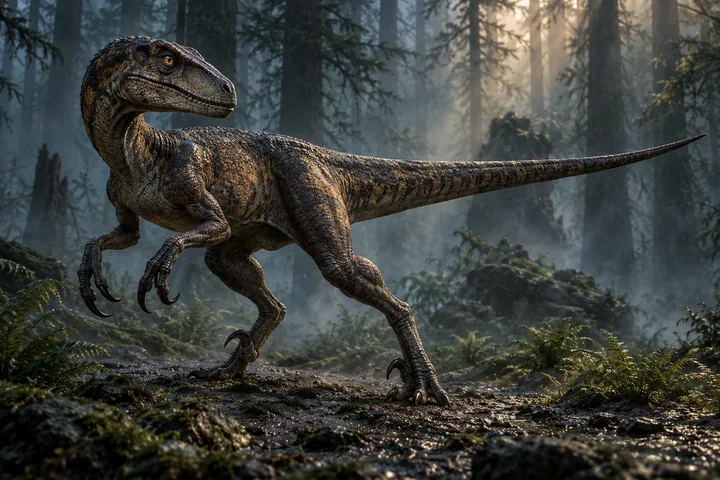
Velociraptor mongoliensis
Velociraptor mongoliensis was a lightly built meat-eater from Late Cretaceous Mongolia. Its long limbs, teeth and enlarged foot claws made it distinctive, while the Fighting Dinosaurs specimen records a remarkable interaction with a horned dinosaur.