Body length
Not establishedNot established here
No whole-body estimate with adequately inspected specimen method is adopted here. [D1]
EXHIBIT 295
Tlatolophus galorum
Dinosaur
A Mexican plant-eating hadrosaur with a broad, high crest shaped like an inverted comma. [1]
TWO WAYS TO PICTURE THE PAST
Compare the evidence with the familiar movie image. The illustrations are not to a shared scale.
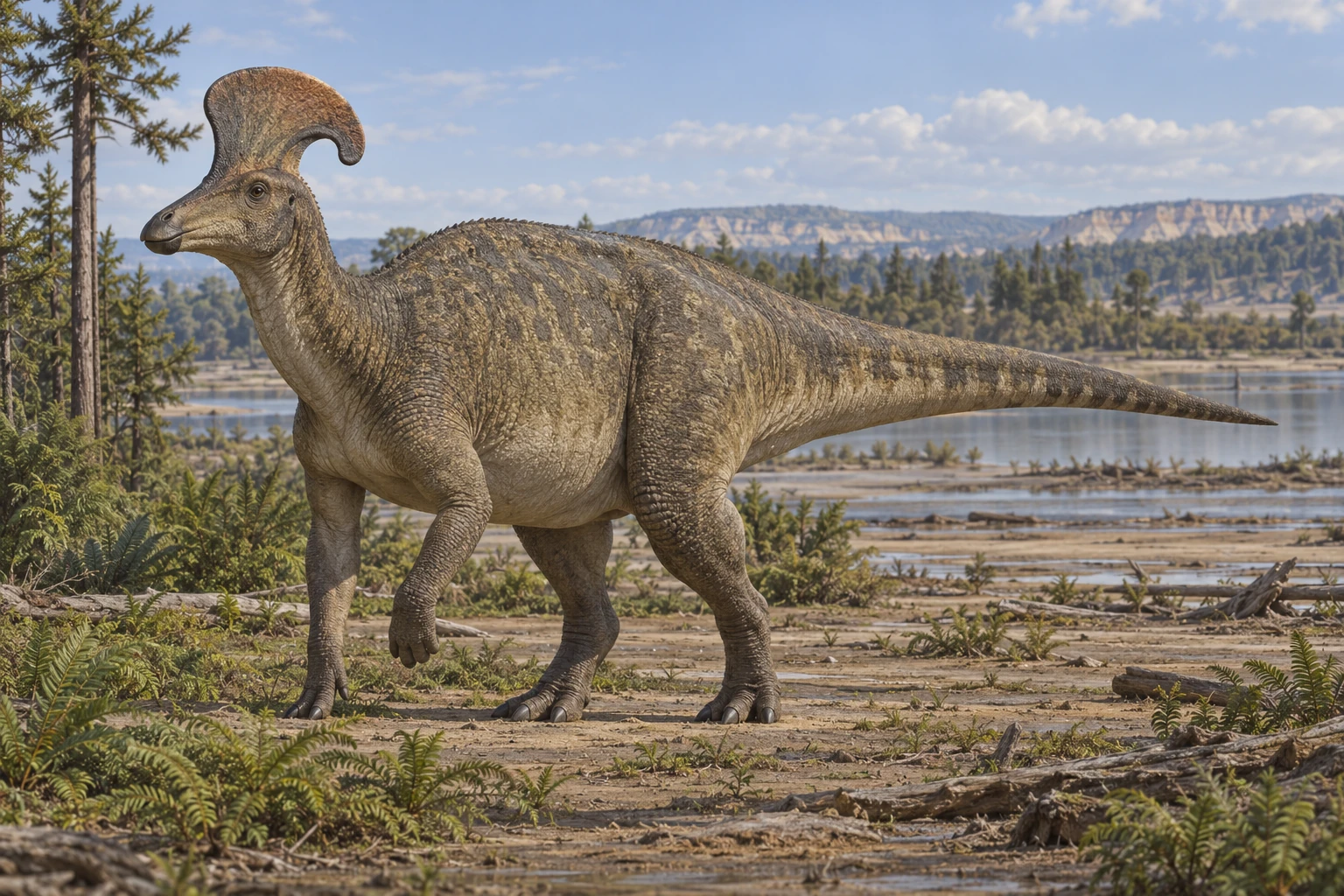
An illustrative reconstruction. Compare its anatomy with the evidence and limitations in the dossier. [1]
Source-informed reconstruction. Appearance evidence [1]. Original illustration; missing anatomy, coloration and scenery include interpretation.
Fossils constrain this life reconstruction. Missing anatomy, coloration and the environmental scene include interpretation; the dossier explains the evidence limits.
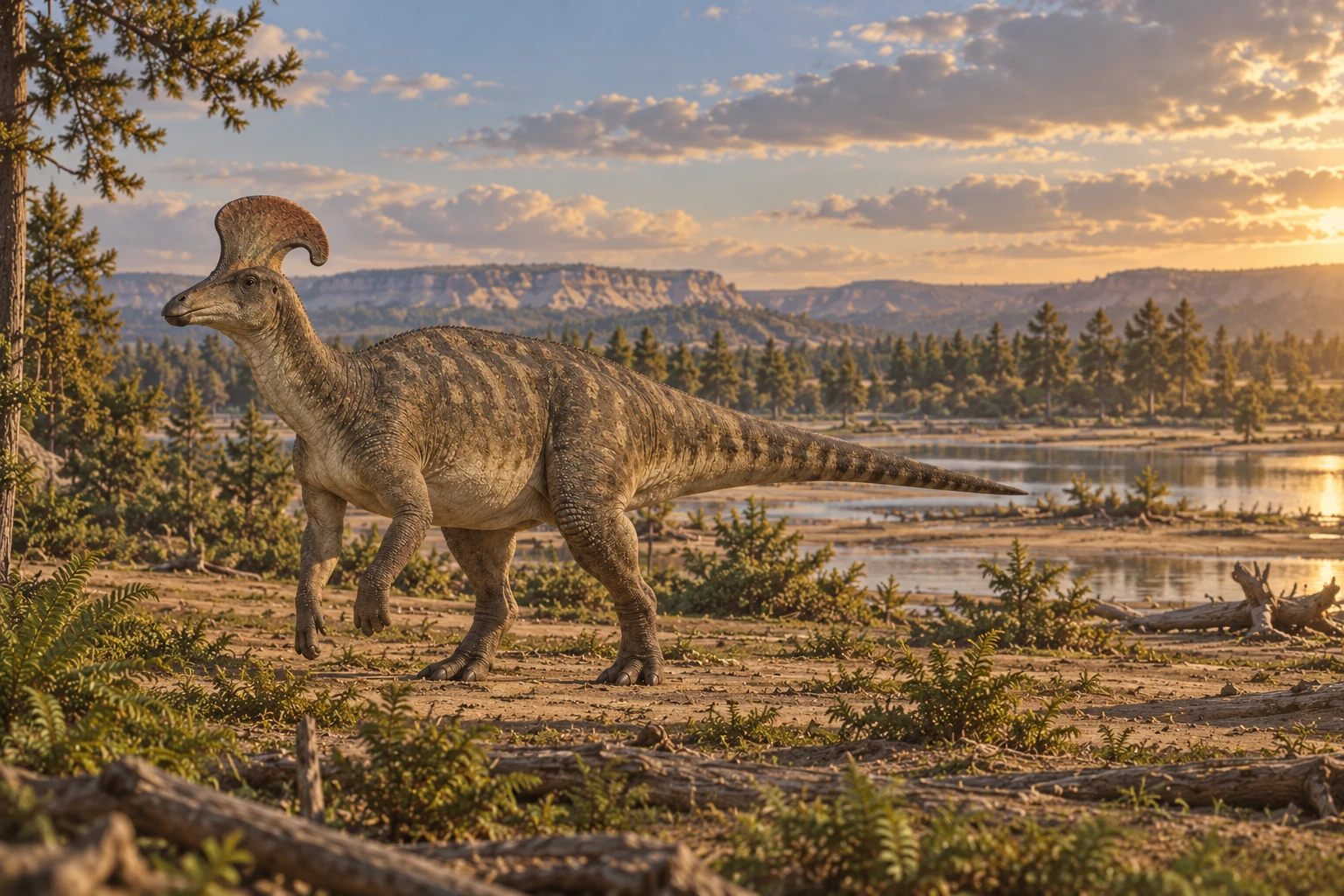
An illustrative reconstruction. Compare its anatomy with the evidence and limitations in the dossier. Lighting, coloration and scenery are artistic choices. This image does not document a fossil locality or behavior.
Original artwork · artistic interpretation.
Scientific view: source-informed reconstruction, credited paleoart or specimen-based imagery. Movie-style view: Original artistic interpretation. Reconstructions involve uncertainty.
MEET THE ANIMAL
Tlatolophus was a plant-eating dinosaur from what is now Coahuila in northern Mexico. Researchers recovered a connected tail, then found other parts of the skeleton, including much of its head. The discovery required years of excavation, cleaning and comparison. The head became especially useful because its crest differed from those of other known Mexican hadrosaurs. [D2]
Its crest was broad and high, with an outline like an upside-down comma. A hadrosaur is a dinosaur from the duck-billed group; Tlatolophus belonged to the branch with hollow head crests. Although related to tube-crested dinosaurs, it had its own combination of skull features. The original description named Tlatolophus galorum as a distinct genus and species rather than treating it as another name for a familiar dinosaur. [D1]
The fossil comes from Late Cretaceous deposits, about 72–73 million years old. Sediment-rich water apparently helped bury and protect the body. That explanation concerns what happened after death. It does not show that the dinosaur lived underwater, moved in a particular kind of herd or used its crest in a proven courtship ritual. [D3]
PREHISTORIC ANIMAL DOSSIER
The animal, the evidence, and the questions still open.
Excavation that began with an articulated tail later recovered much of its diagnostic head. [D2]
Profile scope: This exhibit concerns Tlatolophus galorum, specimen CIC/P/147 from the Campanian Cerro del Pueblo Formation. [D1]
Source supported identifies a description documented by the cited source. Inferred marks a reconstruction or functional estimate. Debated marks competing interpretations. Not established means the sources reviewed for this dossier do not support a firm conclusion; it does not mean a behavior never occurred.
A size reference is an estimate, not a population range. Nesting evidence does not by itself establish courtship, mate choice, or lifelong pairing.
Not established here
No whole-body estimate with adequately inspected specimen method is adopted here. [D1]
Not established here
The reviewed source excerpts do not establish an adopted quantitative mass model. [D1]
Plant-eating hadrosaur.
Its preferred plants and exact feeding menu remain unresolved. [D2]
Terrestrial Coahuila landscape.
Sediment-rich water buried the carcass; this is taphonomy, not proof of aquatic habits. [D3]
Terrestrial movement inferred from hadrosaur limbs.
Recovered femur and shoulder material do not establish running speed. [D2]
High, spatulate inverse-comma crest.
Preserved cranial traits distinguish it from tube-crested relatives. [D1]
Not established here
No assigned eggs or nest established by the inspected discovery accounts. [D3]
Not established here
Sound and display proposals do not establish a mating ritual or bright fossil coloration. [D2]
Not established here
One associated skeleton does not establish herd structure or coordinated communication. [D3]
Sources and inspection notes for the claims in this profile.
THE STORY IN THE FOSSILS
The crest’s bony geometry contributes to diagnosis independently of proposed acoustic functions. [1]
Rapid burial helps explain preservation without reconstructing the animal’s daily habits. [3]
The dossier identifies the scope of each reference estimate. A mount, an individual fossil and a species-wide adult range are different measurements. Comparison metrics remain unavailable where adult scope has not been established. Unknown does not mean zero.
Sources support the stated claims and scopes. Refer to the evidence notes for uncertainty.
KEEP EXPLORING
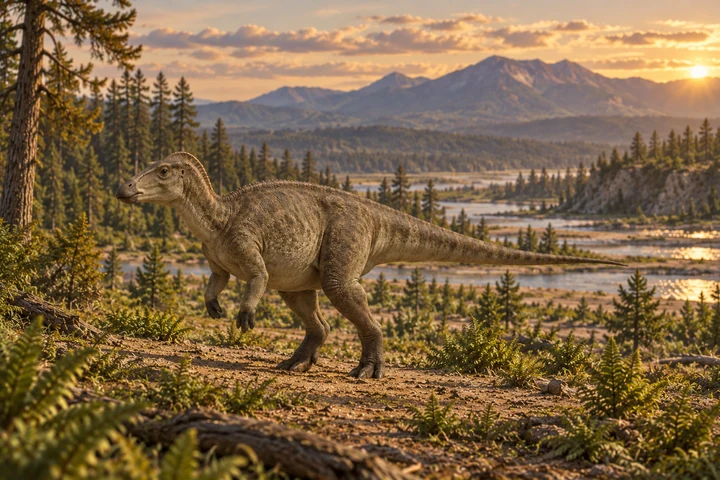
Nipponosaurus sachalinensis
Dinosaur
A plant-eating hadrosaur from southern Sakhalin whose name-bearing skeleton was still growing.
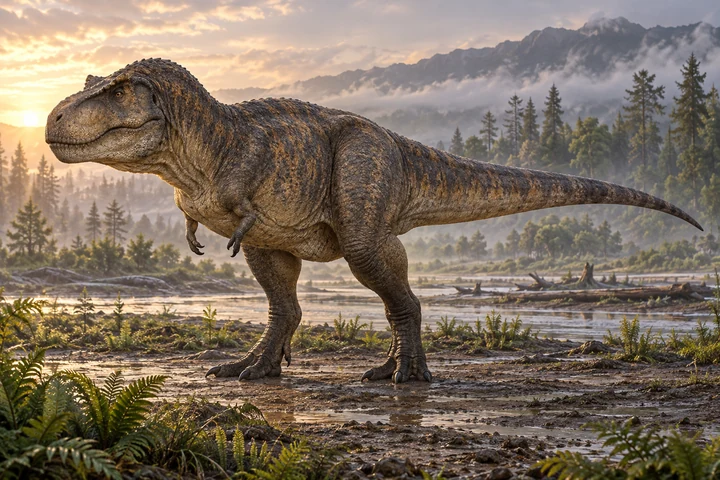
Tyrannosaurus rex
Tyrannosaurus rex was a large meat-eating dinosaur from the final part of the Cretaceous in western North America. Fossil teeth, bite marks and skeletons reveal a powerful animal whose behaviour still invites questions.
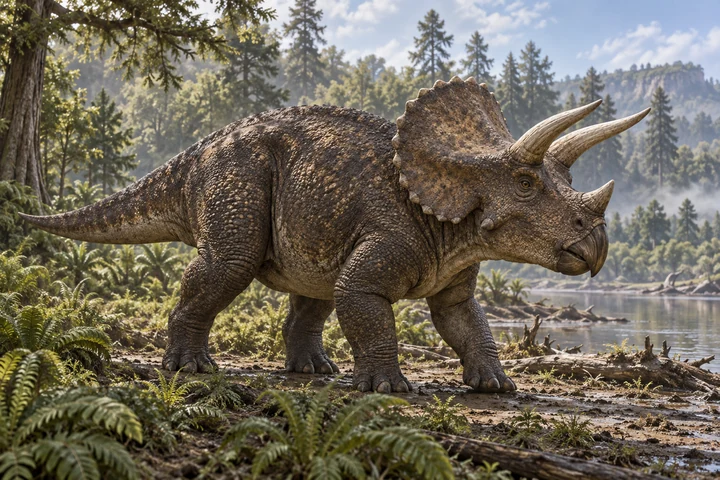
Triceratops horridus
Triceratops horridus was a horned dinosaur of the Late Cretaceous. Skin impressions attributed to this species reveal scales, while skulls and their positions in rock layers help researchers distinguish it from the later Triceratops prorsus.