
Size reference
Source supported6 mm including wax egg sac
Adult female BA14011 reference; ovisac3 mm long, first instars~0.3 mm; these are different stages and structures. [D1]
EXHIBIT 224
Wathondara
Prehistoric insect
Wathondara was a Cretaceous scale insect whose amber fossil preserves a female, wax egg sac and young. [3]
TWO WAYS TO PICTURE THE PAST
Compare the evidence with the familiar movie image. The illustrations are not to a shared scale.
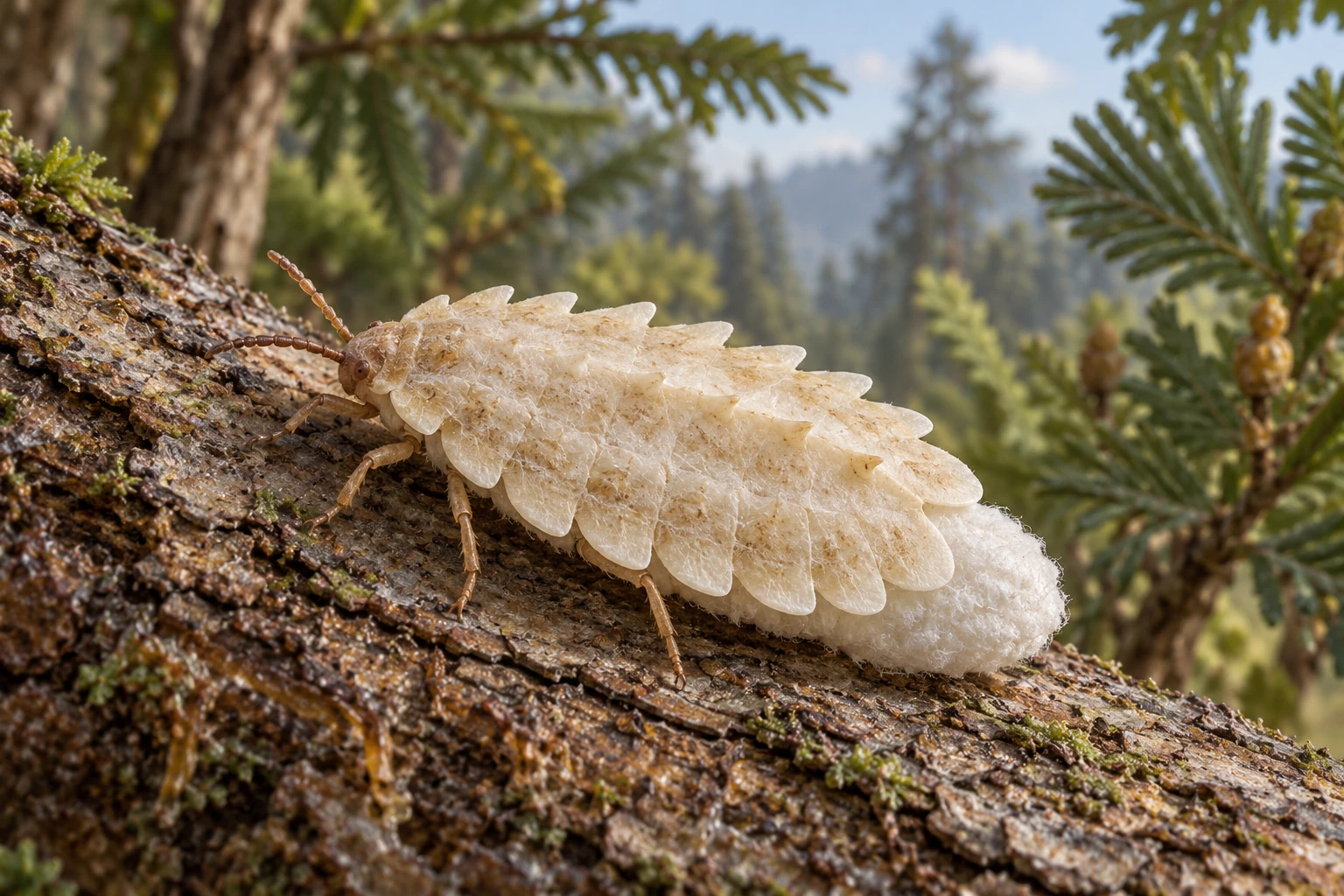
An illustrative reconstruction. Compare its anatomy with the evidence and limitations in the dossier. [1]
Source-informed reconstruction. Appearance evidence [1]. Original illustration; missing anatomy, coloration and scenery include interpretation.
Fossils constrain this life reconstruction. Missing anatomy, coloration and the environmental scene include interpretation; the dossier explains the evidence limits.
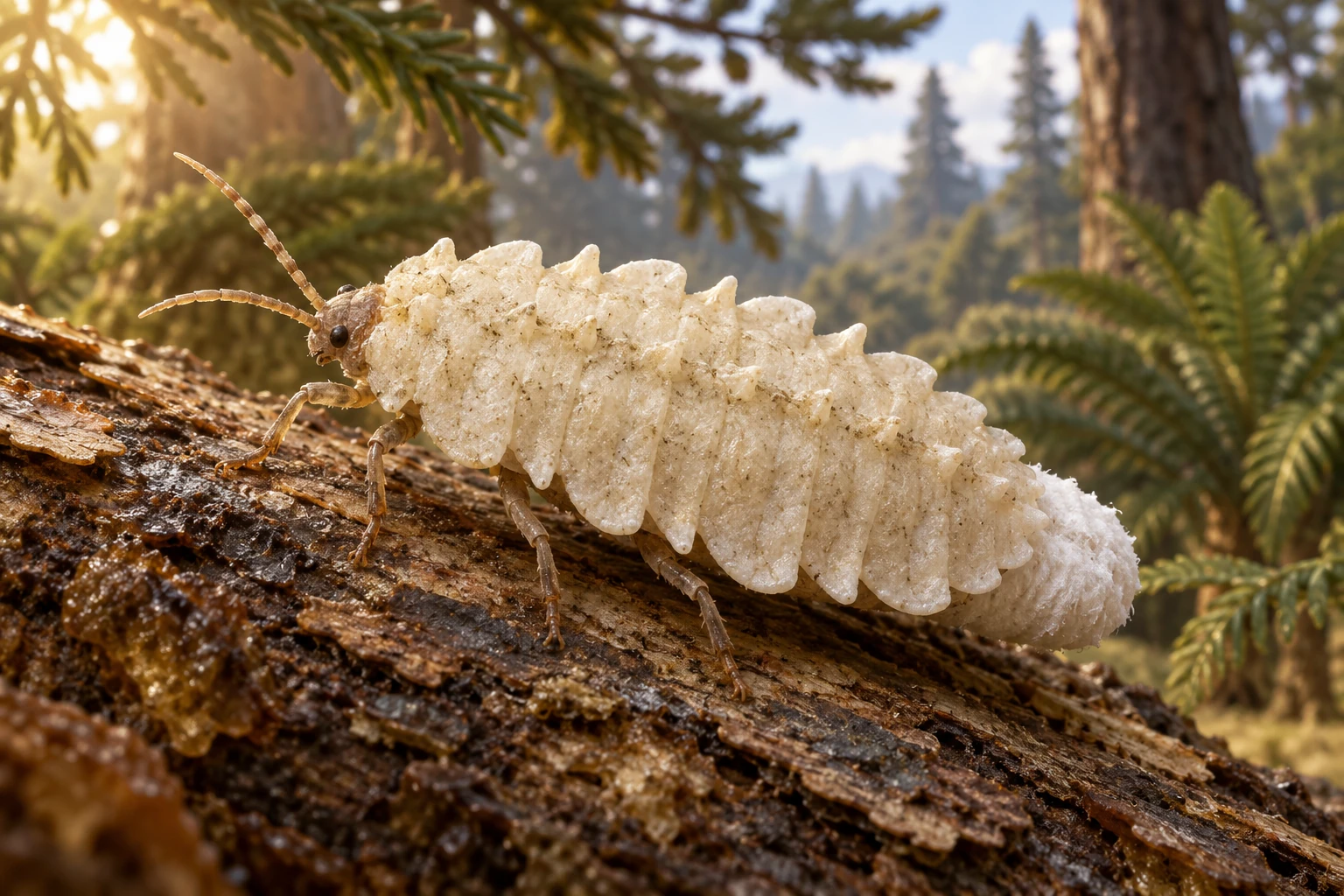
An illustrative reconstruction. Compare its anatomy with the evidence and limitations in the dossier. Lighting, coloration and scenery are artistic choices. This image does not document a fossil locality or behavior.
Original artwork · artistic interpretation.
Scientific view: source-informed reconstruction, credited paleoart or specimen-based imagery. Movie-style view: Original artistic interpretation. Reconstructions involve uncertainty.
MEET THE ANIMAL
Wathondara was a tiny scale insect from the Cretaceous forest recorded in Kachin amber in Myanmar. Amber forms from tree resin, which can trap small animals. The main fossil preserves an adult female together with eggs and newly hatched young. It is an insect in the ensign scale-insect family, rather than a dinosaur or a beetle. [D3]
Its wax covering made a shelter for the next generation. The female carried roughly 60eggs in a wax egg sac, and six young were preserved nearby. The researchers interpreted that shelter as protection from drying out and predators. This is unusually clear fossil evidence of brood care. It does not show that the insects lived in an ant-like colony or that several adults shared the work. [D2]
The described adult measures6 millimeters long including its egg sac. The tiny first-stage young measure about 0.3 millimeter, so those numbers must not be mixed into one adult size range. The amber piece weighs0.8 gram, but that is not the insect’s weight. Even with a rich fossil like this, the exact living host plant and the insect’s body mass remain unknown. [D1]
PREHISTORIC ANIMAL DOSSIER
The animal, the evidence, and the questions still open.
Resin preserved reproductive evidence; the amber’s weight is not the insect’s body mass. [D1]
Profile scope: Genus — Wathondara; anchored to W. kotejai adult female BA14011, Kachin amber, Myanmar, about 99 million years old. [D1]
Source supported identifies a description documented by the cited source. Inferred marks a reconstruction or functional estimate. Debated marks competing interpretations. Not established means the sources reviewed for this dossier do not support a firm conclusion; it does not mean a behavior never occurred.
A size reference is an estimate, not a population range. Nesting evidence does not by itself establish courtship, mate choice, or lifelong pairing.
6 mm including wax egg sac
Adult female BA14011 reference; ovisac3 mm long, first instars~0.3 mm; these are different stages and structures. [D1]
Not established here
The paper’s0.8 g measurement concerns the amber piece, not the insect. [D1]
Plant sap feeding inferred
Scale-insect comparison suggests sap feeding; the actual host plant is unidentified. [D3]
Resin-producing woodland inferred
Kachin amber supplies burial context; a particular living tree or leaf host remains unidentified. [D2]
Legged female; wingless
The adult has developed legs and no wings; activity and speed are not preserved. [D1]
Flattened body and wax lobes
The female has segmented antennae and a dorsal wax covering with nine paired marginal lobes. [D1]
Egg sac and first instars preserved
About60eggs and six first-instar nymphs occur with the adult female and wax ovisac. [D1]
Not established here
The described female and brood provide no male or mating sequence. [D2]
Maternal brood protection
A carried wax sac protected offspring; this does not demonstrate cooperative colony behavior. [D2]
Sources and inspection notes for the claims in this profile.
THE STORY IN THE FOSSILS
A preserved brood can reveal more than an isolated adult. The wax shelter supports offspring protection, while the female’s mating behavior and any social colony remain unrecorded. [2]
The dossier identifies the scope of each reference estimate. A mount, an individual fossil and a species-wide adult range are different measurements. Comparison metrics remain unavailable where adult scope has not been established. Unknown does not mean zero.
Sources support the stated claims and scopes. Refer to the evidence notes for uncertainty.
KEEP EXPLORING
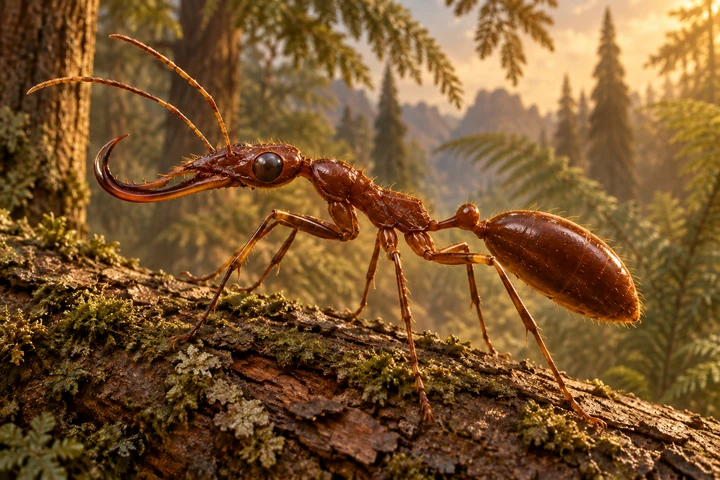
Haidomyrmex
Prehistoric insect
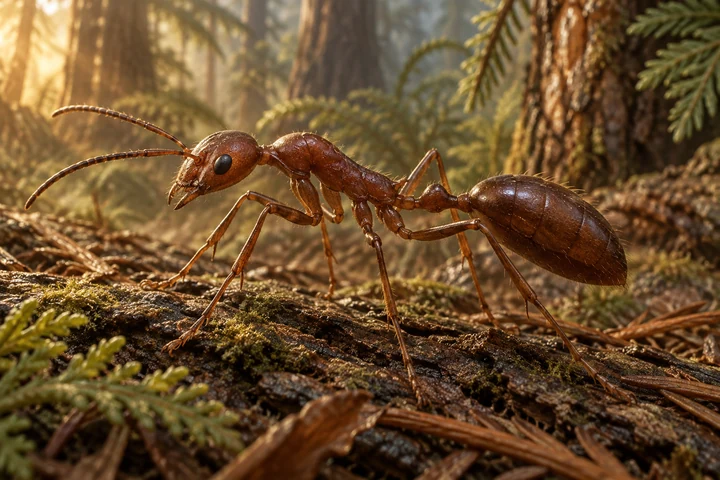
Haidomyrmex was a Cretaceous hell ant with upcurved jaws; its diet and arboreal habits are anatomical inferences.
Gerontoformica
Prehistoric insect
Gerontoformica was a stem ant preserved in Cretaceous amber, with fossil evidence informing early cooperation.
Tyrannosaurus rex
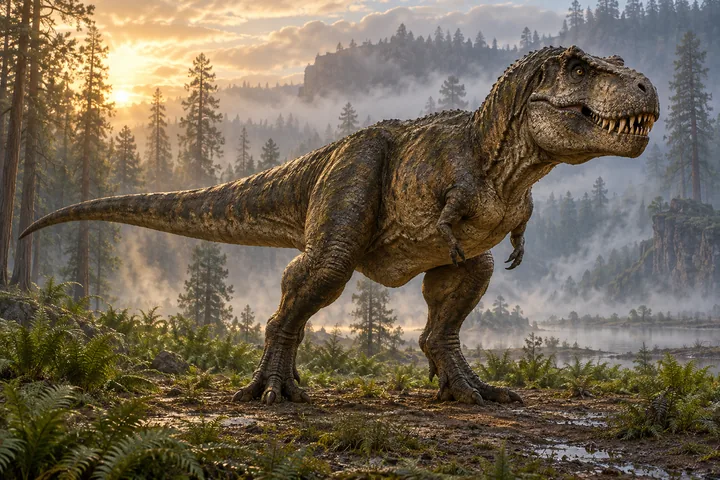
Tyrannosaurus rex was a large meat-eating dinosaur from the final part of the Cretaceous in western North America. Fossil teeth, bite marks and skeletons reveal a powerful animal whose behaviour still invites questions.