
Size reference
Not establishedNot established here
The type has an obscured gaster; 0.66 mm head depth and 1.40 mm mesosoma are separate structures. [D1]
EXHIBIT 286
Zigrasimecia
Prehistoric insect
Zigrasimecia was a Cretaceous ant with comb-like pegs and stiff mouthpart hairs; its feeding mechanism remains debated. [1]
TWO WAYS TO PICTURE THE PAST
Compare the evidence with the familiar movie image. The illustrations are not to a shared scale.
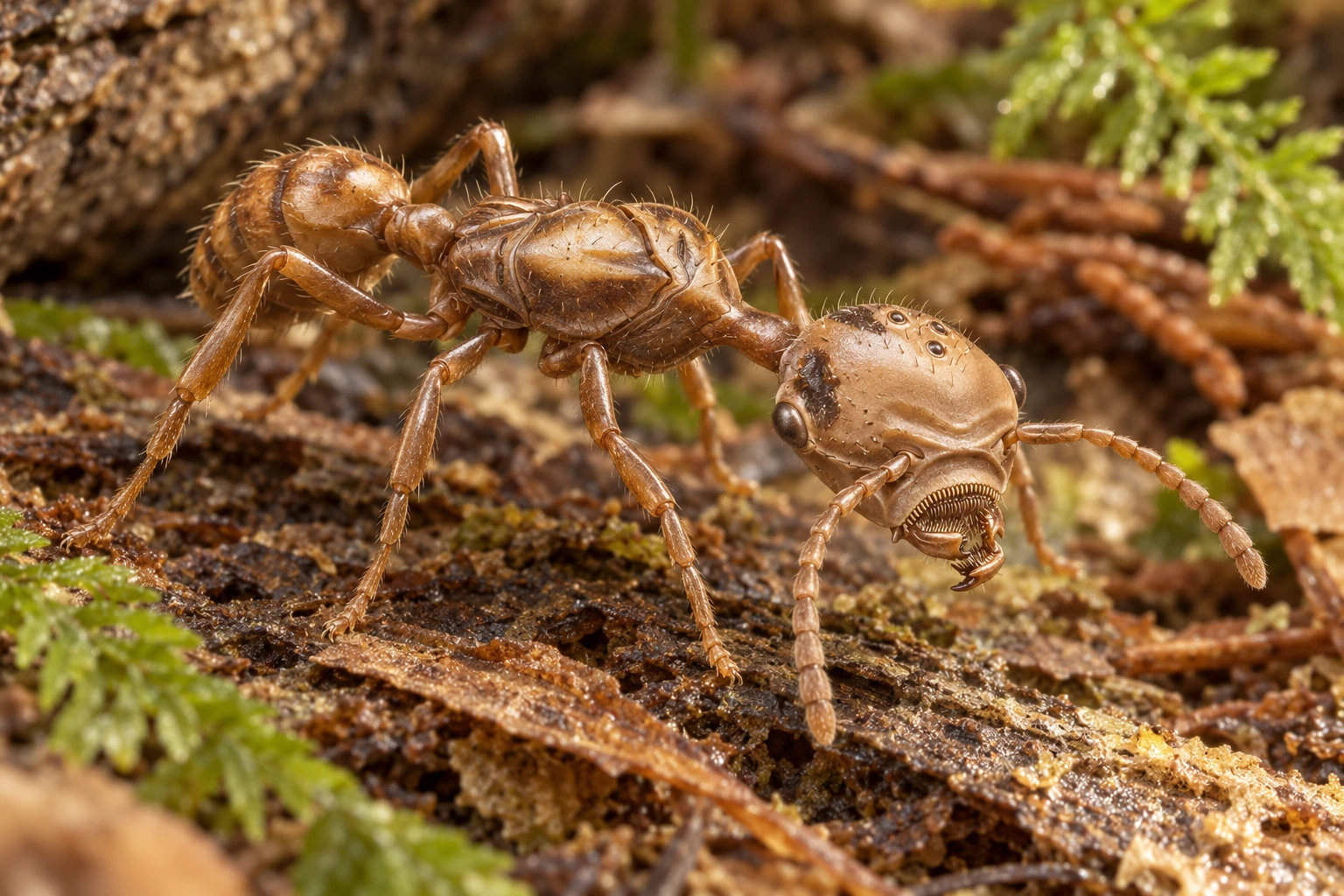
An illustrative reconstruction. Compare its anatomy with the evidence and limitations in the dossier. [1]
Anatomical reference: Zigrasimecia, figures 4–5 in Barden & Grimaldi (2013) · Phillip Barden and David Grimaldi; copyright 2013 Magnolia Press. CC BY 3.0. Anatomical reference adapted into new gallery compositions and related fictional game designs, with new background, coloration and restored details. Credit and license apply to the underlying reference. No endorsement is implied.
Fossils constrain this life reconstruction. Missing anatomy, coloration and the environmental scene include interpretation; the dossier explains the evidence limits.
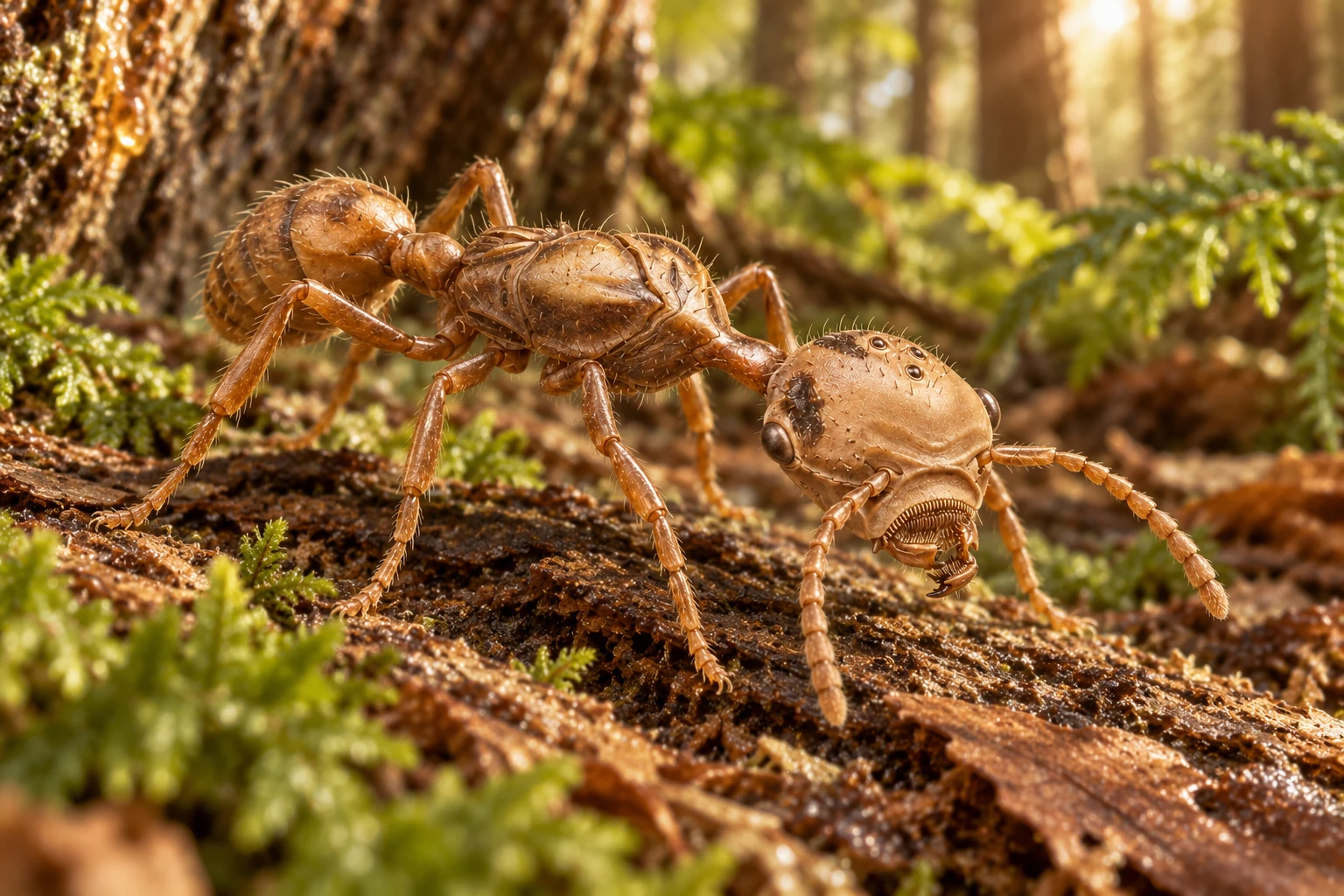
An illustrative reconstruction. Compare its anatomy with the evidence and limitations in the dossier. Lighting, coloration and scenery are artistic choices. This image does not document a fossil locality or behavior.
Anatomical reference: Zigrasimecia, figures 4–5 in Barden & Grimaldi (2013) · Phillip Barden and David Grimaldi; copyright 2013 Magnolia Press. CC BY 3.0. Anatomical reference adapted into new gallery compositions and related fictional game designs, with new background, coloration and restored details. Credit and license apply to the underlying reference. No endorsement is implied.
Scientific view: source-informed reconstruction, credited paleoart or specimen-based imagery. Movie-style view: Original artistic interpretation. Reconstructions involve uncertainty.
MEET THE ANIMAL
Zigrasimecia was an ant with a broad head and a mouth bordered by rows of tiny pegs and stiff hairs. The type of Z. tonsora is a female that had lost its wings. Much of its rear abdomen is hidden by a bubble in the amber, so its total body length is not established here. Scientists proposed several uses for the mouthpart structures instead of claiming a known menu. [D1]
The genus now includes fossils with different combinations of features. A 2023 revision described five new species and reconsidered earlier identifications. It also explained why comparing workers with reproductive females is difficult, especially when parts are poorly preserved. A different caste or damaged fossil must be examined carefully before scientists call it a different species. [D2]
Another study scanned a reproductive female assigned to Zigrasimecia without settling its species. The scan revealed unusually well-preserved internal organs, including muscles associated with flight. That evidence adds to what is known about the genus, but it does not identify the eggs, nest or courtship of Z. tonsora. Fossil anatomy can be wonderfully detailed while behavior, living colors and exact habitat remain uncertain. [D3]
PREHISTORIC ANIMAL DOSSIER
The animal, the evidence, and the questions still open.
Revisions recognize diverse species but emphasize preservation and caste difficulties; hypotheses are not observed meals. [D2]
Profile scope: Genus — Zigrasimecia; Z. tonsora dealate-female holotype JZC Bu-159 anchors anatomy. Its mostly obscured gaster requires restoration. [D1]
Source supported identifies a description documented by the cited source. Inferred marks a reconstruction or functional estimate. Debated marks competing interpretations. Not established means the sources reviewed for this dossier do not support a firm conclusion; it does not mean a behavior never occurred.
A size reference is an estimate, not a population range. Nesting evidence does not by itself establish courtship, mate choice, or lifelong pairing.
Not established here
The type has an obscured gaster; 0.66 mm head depth and 1.40 mm mesosoma are separate structures. [D1]
Not established here
The tissue study reports no reconstructed mass. [D3]
Feeding mechanism unresolved
The original proposes liquid handling or trapping small arthropods; no identified meal. [D1]
Terrestrial resin woodland inferred
The later studied gyne is preserved in Kachin amber; its precise living substrate is unestablished. [D3]
Walking; reproductive flight inferred
A studied genus-level gyne has flight musculature; this does not prove wing condition of every species/caste. [D3]
Comb-like pegs around mouth
The type has a broad flattened head with stiff brushes on jaws/labrum and short toothed mouthparts. [D1]
Reproductive females known
The genus-level tissue specimen is a gyne; eggs, nests and a complete species growth series are not established here. [D3]
Not established here
Internal anatomy does not reveal mate choice or a courtship sequence. [D3]
Not established here
A reproductive caste does not identify colony size or taxon-specific cooperative behavior. [D3]
Sources and inspection notes for the claims in this profile.
THE STORY IN THE FOSSILS
The revision highlights the difficulty of comparing winged reproductive females with workers and poorly preserved fossils. An uncertain identification is not another exhibit. [2]
The dossier identifies the scope of each reference estimate. A mount, an individual fossil and a species-wide adult range are different measurements. Comparison metrics remain unavailable where adult scope has not been established. Unknown does not mean zero.
Sources support the stated claims and scopes. Refer to the evidence notes for uncertainty.
KEEP EXPLORING
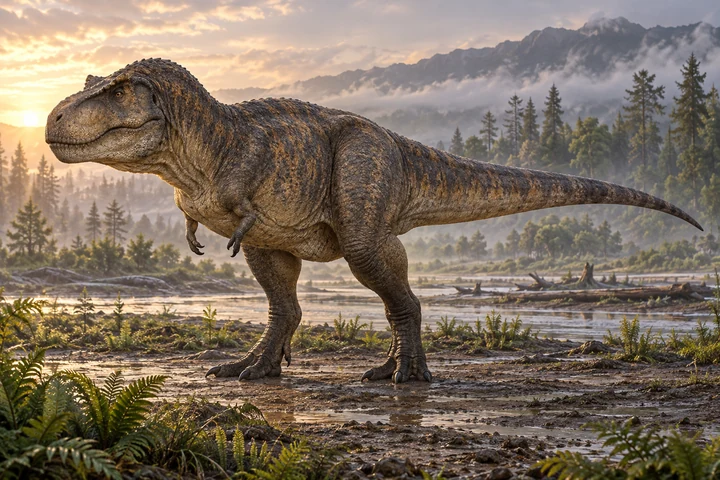
Tyrannosaurus rex
Tyrannosaurus rex was a large meat-eating dinosaur from the final part of the Cretaceous in western North America. Fossil teeth, bite marks and skeletons reveal a powerful animal whose behaviour still invites questions.
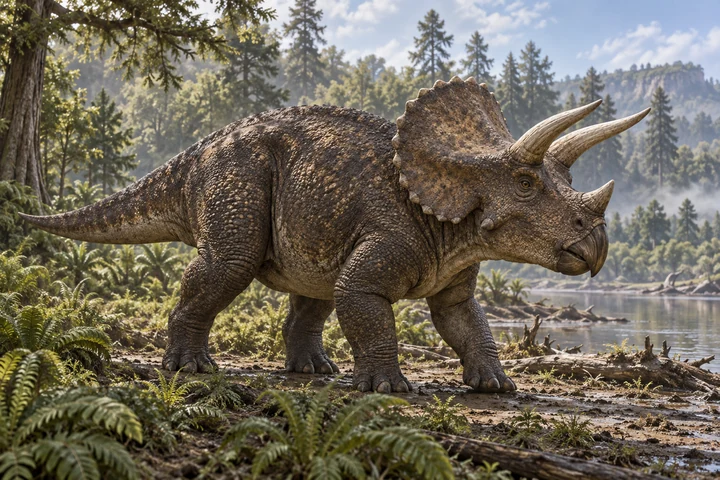
Triceratops horridus
Triceratops horridus was a horned dinosaur of the Late Cretaceous. Skin impressions attributed to this species reveal scales, while skulls and their positions in rock layers help researchers distinguish it from the later Triceratops prorsus.
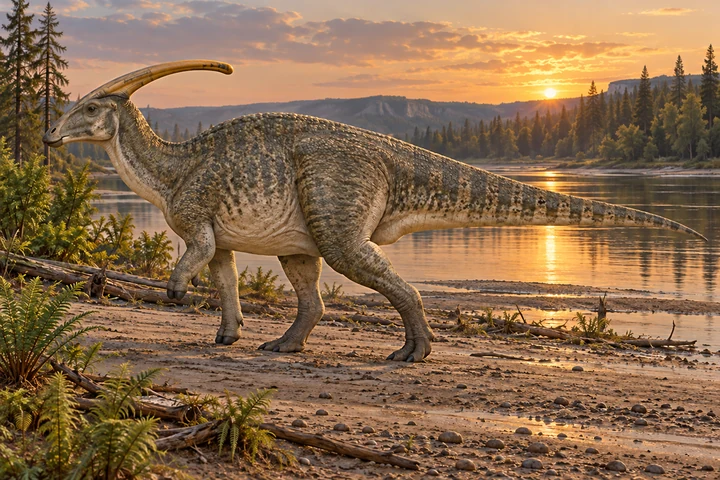
Parasaurolophus walkeri
Parasaurolophus walkeri was a crested duck-billed dinosaur from Late Cretaceous Alberta. Its famous Royal Ontario Museum skeleton preserves both an elongated tubular crest and healed injuries.